


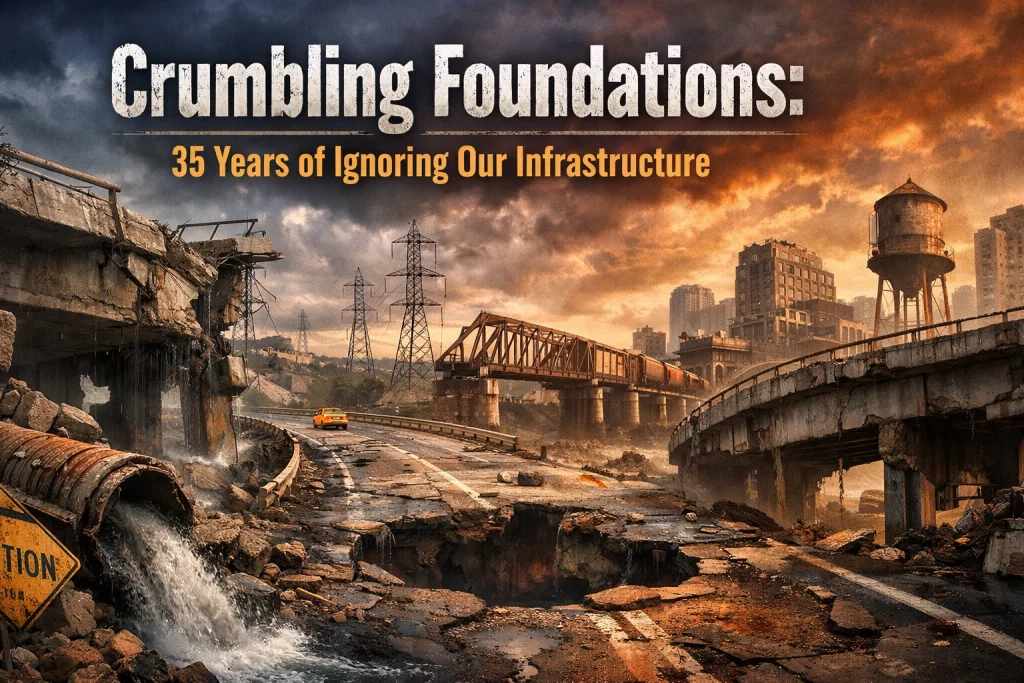
Crumbling Foundations: 35 Years of Ignoring Our Infrastructure
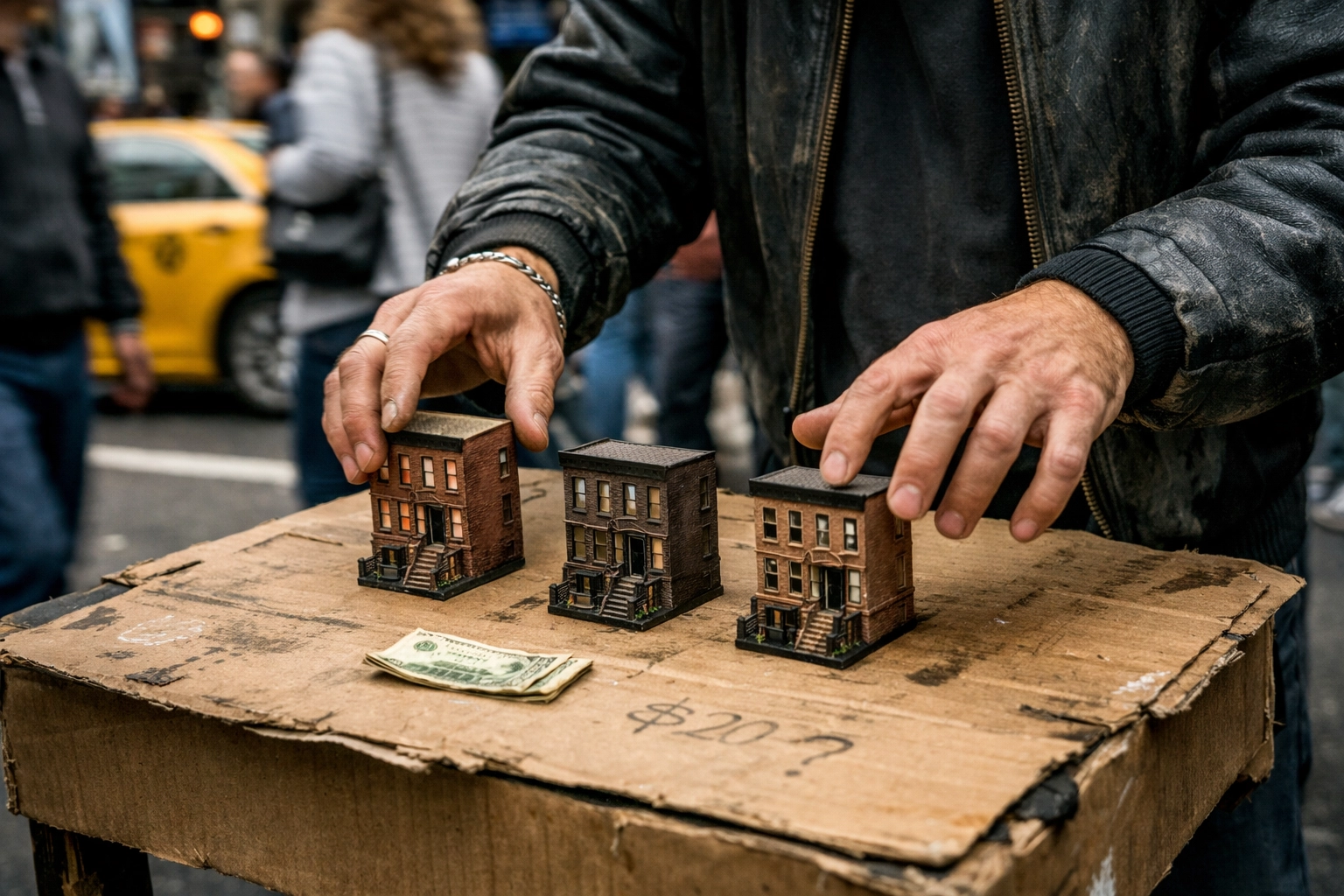
If you’ve ever owned a house, you know the deal. You see a tiny water spot on the ceiling in the guest room. You could call a roofer today for $500, or you could put a bucket under it and tell yourself you’ll get to it "next season." Fast forward five years, and suddenly you aren’t looking at a $500 shingle repair; you’re looking at a $20,000 mold remediation project and a collapsed roof.
America has been putting a bucket under the leak for about thirty-five years.
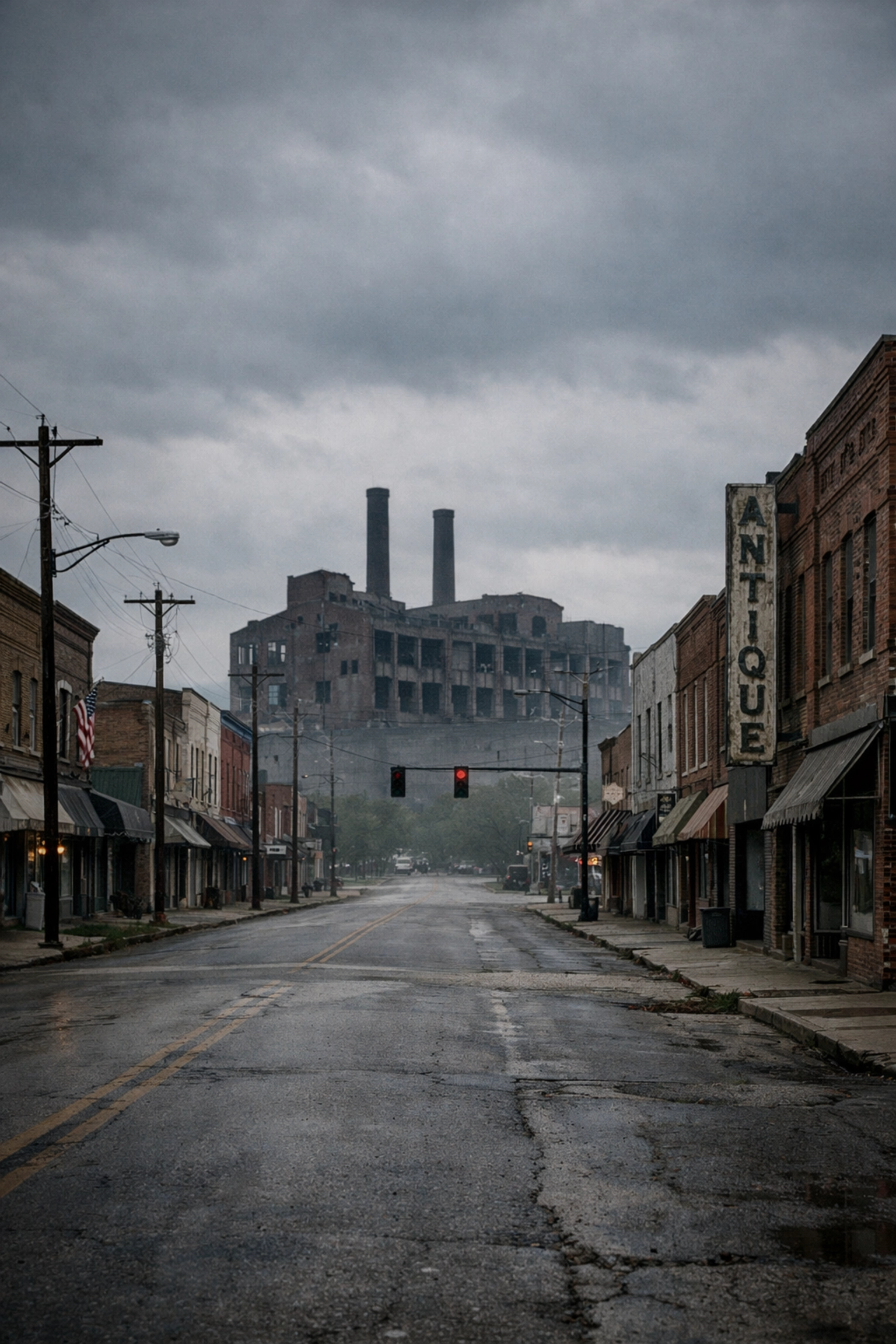
Since roughly the mid-to-late 1980s, we’ve essentially been living on the "interest" of our grandparents' investments. We’re riding on the highways they built, using the bridges they engineered, and relying on the water mains they laid down when "I Love Lucy" was still in first-run syndication. But here’s the thing about infrastructure: it has an expiration date. And for a huge chunk of the American landscape, that date was about ten years ago.
The 35-Year Maintenance Nap
Why thirty-five years? Because that’s roughly the point where the "New" wore off the post-war expansion and we entered the era of the "Deferred Maintenance Trap." In the world of economics, deferred maintenance is a fancy way of saying "I’ll pay for it later." The problem is that in the real world, "later" always comes with a massive interest rate.
Research shows that the federal government’s backlog of deferred maintenance has more than doubled just since 2017, skyrocketing from $171 billion to an estimated $370 billion in 2024. That’s just the federal stuff. If you zoom out to the nationwide backlog for all public facilities, we’re looking at a staggering one trillion dollars. That is roughly four percent of our entire GDP just sitting there, waiting for something to break.
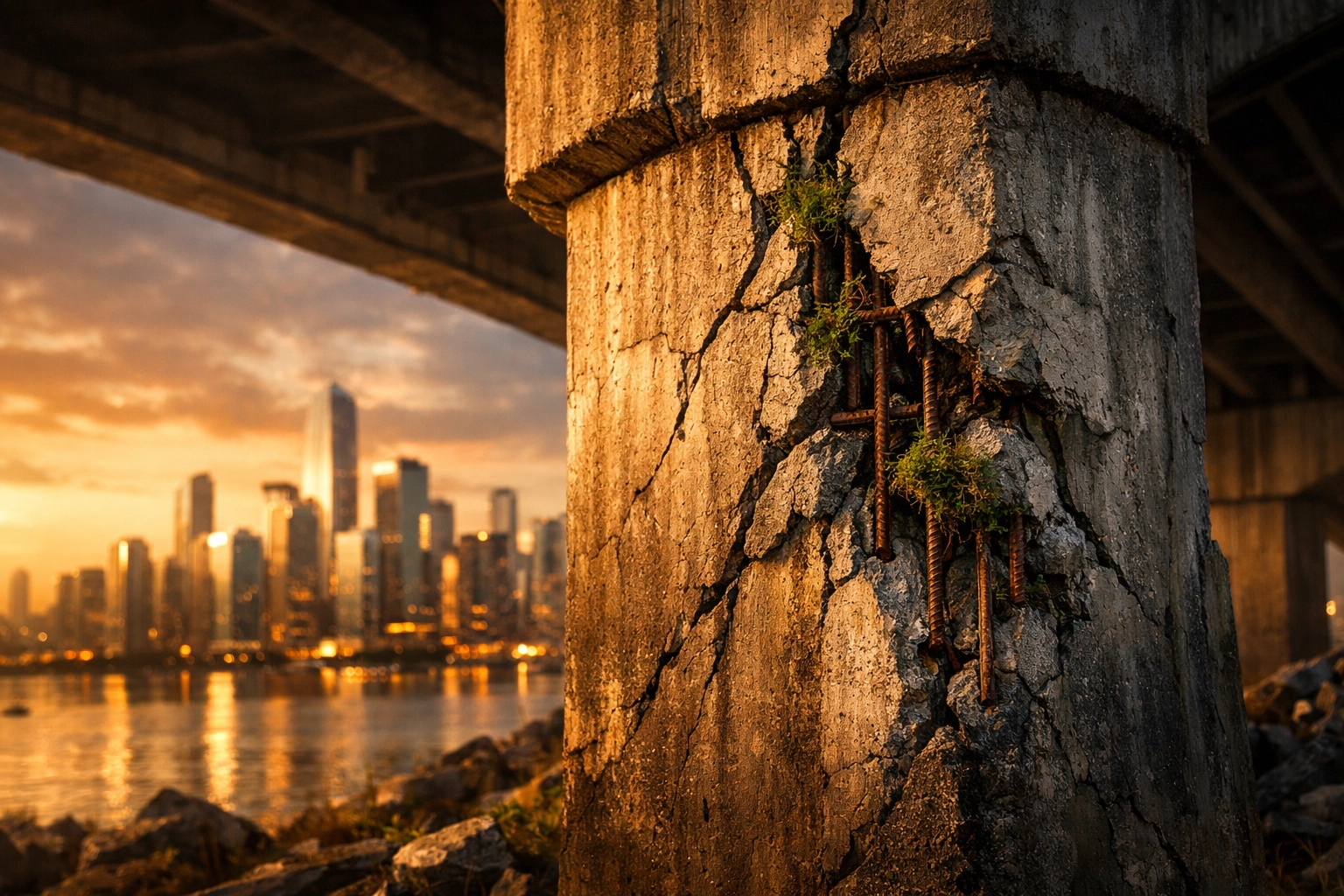
We’ve spent the last three and a half decades prioritizing the "now" over the "next." We wanted lower taxes today, more services today, and flashier projects today. Meanwhile, the boring stuff, the HVAC systems in courthouses, the rebar in bridge pilings, and the transit tunnels under our cities, got the "we’ll fix it next year" treatment. Well, it’s 2026, and "next year" has officially arrived.
The $3.7 Trillion Elephant in the Room
Let’s talk numbers, because the math of neglect is brutal. Experts estimate that America faces a $3.7 trillion infrastructure funding gap through 2033. To put that in perspective, that’s not just a big number on a spreadsheet; that’s the cost of keeping our society from literally grinding to a halt.
Most of our critical systems were installed 30 to 50 years ago. They are all reaching the end of their useful life at the exact same time. It’s like every appliance in your house, the fridge, the washer, the water heater, and the furnace, all deciding to die on the same Tuesday.
But unlike your fridge, you can’t just go to a big-box store and swap out a municipal transit system. These are complex, massive projects that take years of planning and billions in capital. Because we’ve waited so long, we are no longer in the "preventative maintenance" phase. We are in the "emergency room" phase.
The "Hidden Tax" on Your Groceries
You might be thinking, "Hey, I don’t drive over many bridges, why do I care?" Here’s why: you eat. You buy stuff. You live in an economy that moves on wheels.
Manufacturers currently pay an estimated $25 billion annual surcharge simply to move goods through our congested, crumbling highway system. When a trucker is stuck in a three-hour bottleneck because a lane is closed for emergency repairs on a 60-year-old overpass, that trucker is still getting paid. The diesel is still burning. The company isn’t just going to eat those costs out of the goodness of their hearts. They’re going to pass them on to you.
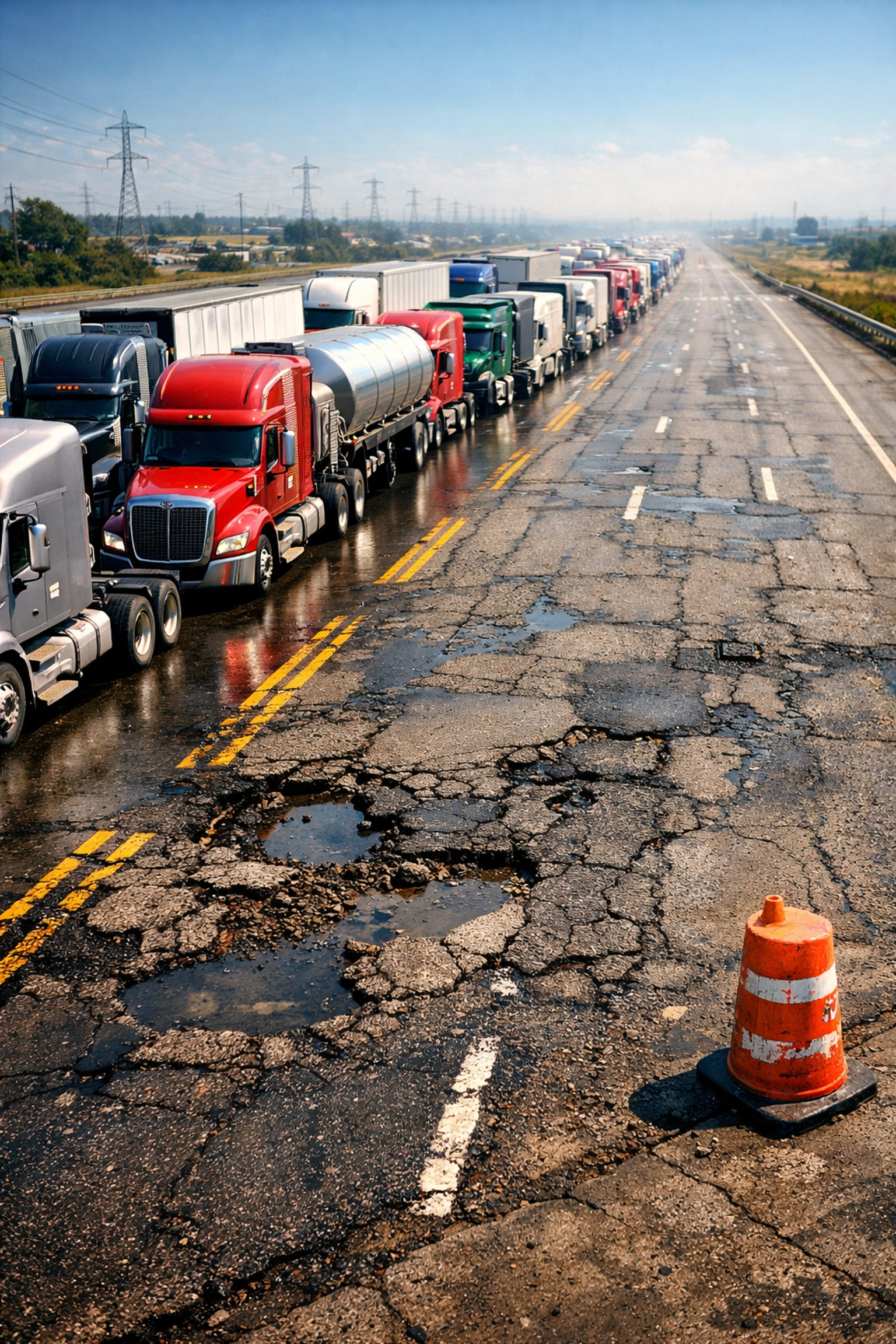
Every time you see a price hike at the grocery store, a tiny slice of that is the "Infrastructure Tax." It’s the cost of inefficiency. We have a $684 billion roadway funding gap and a $400 billion bridge repair backlog. When the arteries of commerce are clogged, the whole body of the economy gets high blood pressure.
The Ghost in the Machine: Hospitals and Schools
Infrastructure isn't just asphalt and concrete. It’s the "life systems" that keep our public buildings running. Think about hospitals, research labs, and universities. Many of these institutions, especially in places like New England, are operating out of buildings that are decades old.
The research is clear: critical systems like HVAC, mechanical, and life safety systems are failing. But here’s the kicker: you can’t just shut down a level-one trauma center for six months to replace the pipes. These facilities have to stay operational 24/7. This makes the cost of repairs skyrocket. We are forced to work within "zero-tolerance" policies for disruptions, which means we’re paying a premium for the privilege of fixing things we should have maintained twenty years ago.
It’s the ultimate irony of "Regular Guy Economics": by trying to save money in the 90s and 2000s by skipping the boring maintenance, we’ve guaranteed that we’ll pay triple the price today.
2026: The Year the Music Might Stop
We are standing at a bit of a precipice. The Congressional Budget Office is projecting a $33 billion shortfall in 2026 for the Highway Trust Fund. This is the primary bucket of money used to fix our roads. If that bucket runs dry, projects across the country will simply stop.
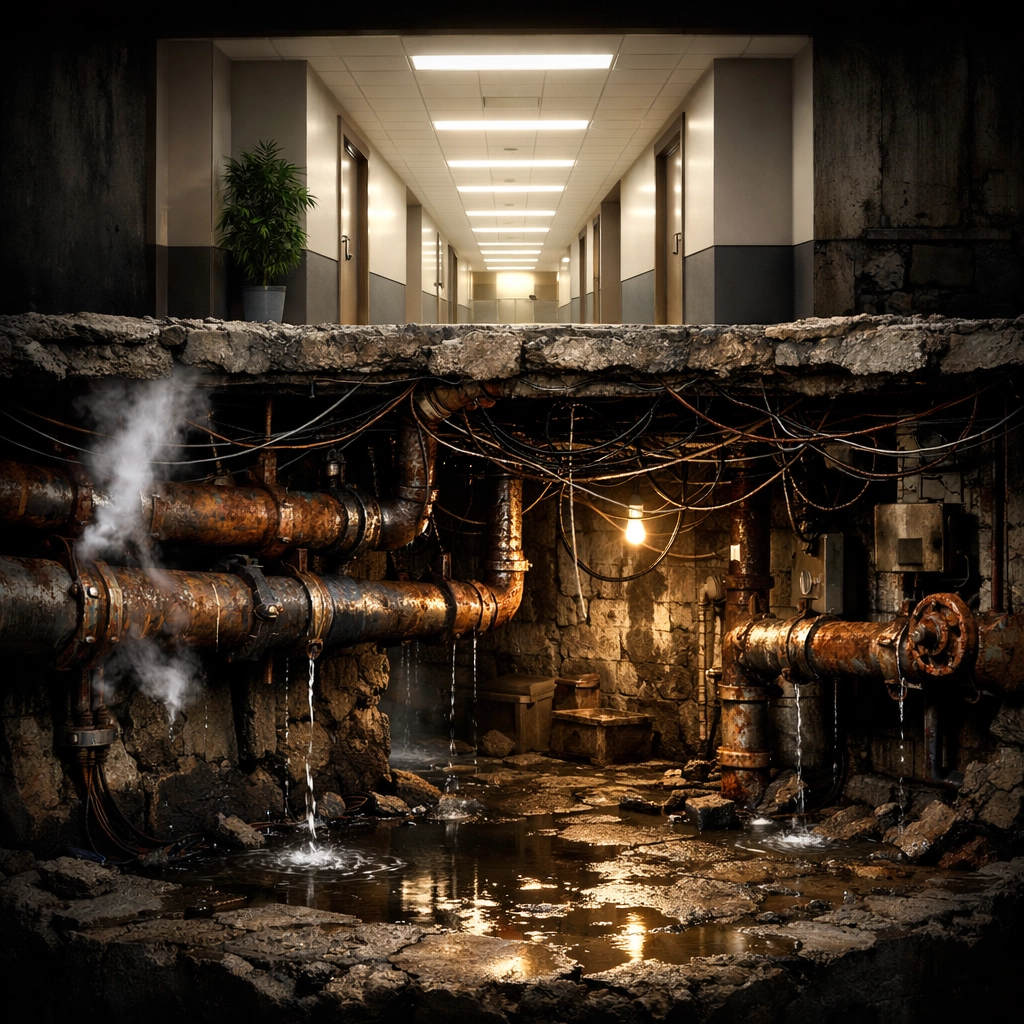
We’ve had some federal funding flowing through recent multi-year authorizations, but it’s a drop in the bucket compared to the $3.7 trillion gap. We are essentially trying to put out a forest fire with a garden hose.
Furthermore, as we push for more "high-tech" everything: from healthcare to climate goals: our aging grid and buildings can't handle the load. We’re trying to run 2026 software on 1985 hardware. It’s starting to glitch, and the "blue screen of death" for a bridge or a power grid is a lot scarier than it is for a laptop.
The Real Cost of Neglect
Infrastructure is the foundation of everything. It’s the silent partner in every business deal, every commute, and every grocery trip. For thirty-five years, we’ve treated it like a luxury we could afford to ignore. We looked at the budget and decided that "fixing the pipes" wasn't as sexy as "new initiatives."
But economics is a cold mistress. You can ignore the pipes, but you can’t ignore the flood when they finally burst. We are now entering an era where we will be forced to pay the "Neglect Premium." Whether it’s through higher taxes, increased tolls, or just the creeping inflation of goods that take longer to ship, the bill is coming due.
It’s time to stop looking for the "quick fix" and start realizing that a country is only as strong as the stuff buried under its feet. If we want a booming economy in the 2030s, we have to start paying for the mistakes of the 1990s today. It won't be cheap, and it won't be pretty, but the alternative is watching the foundation of the world’s largest economy continue to crumble.
Be mindful, be watchful and good luck.