



Thursday, August 20, 2026
The unemployment rate went down in July.
That sounds like good news. It is the kind of number that gets placed at the top of a television graphic, followed by the words “resilient labor market” and a panel of people nodding seriously.
But the United States also lost 23,000 jobs in July.
Those two facts can exist at the same time. That is the problem.
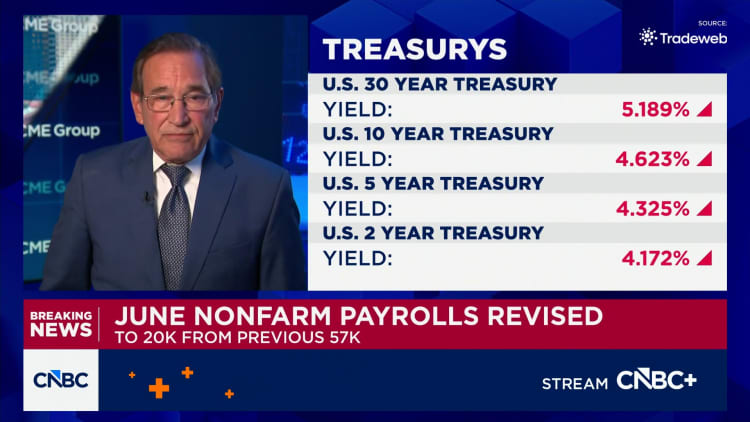
According to the Bureau of Labor Statistics employment report, the unemployment rate edged down to 4.1%, while nonfarm payroll employment fell by 23,000. May and June were revised lower by a combined 103,000 jobs. The labor-force participation rate slipped to 61.4%, and the number of people in the labor force fell by roughly 264,000.
The unemployment rate did not improve because employers suddenly opened the hiring floodgates.
It improved because fewer people were working or looking for work.
That is not a recovery. That is a shrinking line at the employment office.
The headline is technically true and practically misleading
The unemployment rate measures the share of people in the labor force who do not have a job but are actively looking for one.
That definition matters.
If someone loses a job and keeps applying, that person is counted as unemployed. If the same person becomes discouraged, stops searching, or decides the effort is pointless, that person leaves the labor force and is no longer counted as unemployed.
The rate can fall even though the person still does not have a job.
It is a statistical magic trick with a very ordinary human explanation: people gave up.
The July report showed household employment falling by about 87,000. At the same time, the labor force shrank by approximately 264,000. Because the labor force declined faster than employment, the unemployment rate ticked downward.
Think of it this way: a school does not have a better attendance rate because absent students stop being listed on the roster.
The headline says 4.1%. The household reality says fewer people are participating.

Two years of hiring slowdown
The most important part of this story is not one ugly month. It is the trend.
Employers added an average of only about 26,000 jobs per month over the past year, compared with roughly 142,000 jobs per month two years ago. Even the BLS’s own current estimate, which puts the prior 12-month average closer to 34,000 jobs per month, tells the same story: hiring has slowed dramatically.
The exact average depends on the reporting window and revisions. The direction does not.
Two years ago, the economy was adding jobs at a pace that could absorb new workers, recent graduates, immigrants, career changers, and people returning to the workforce. Today, the economy is adding jobs at a pace barely larger than the margin of error in a country of more than 330 million people.
That creates a very different experience for the regular guy.
A business does not have to announce mass layoffs to make the labor market worse. It can simply stop replacing workers who leave. It can eliminate open positions, reduce hours, postpone expansion, rely on contractors, or make one employee do the work previously handled by two.
The result may not produce dramatic unemployment headlines. It produces longer job searches, fewer opportunities, weaker bargaining power, and workers who accept less favorable jobs because the alternatives have disappeared.
The labor market can deteriorate quietly.
The revisions are waving a red flag
The government revises payroll data because the first estimate is based on incomplete information. More businesses report their employment figures later, and the numbers are adjusted.
That is normal.
What matters is the direction of the revisions. When revisions repeatedly move downward, the original headline was too optimistic.
May and June were revised lower by a combined 103,000 jobs. That means the economy was weaker than earlier reports suggested. It also means businesses and policymakers may have been operating with an inflated view of hiring momentum.
By the time the revisions arrive, the damage may already be visible in the real economy:
- A household delays buying a car.
- A recent graduate moves back home.
- A small business freezes hiring.
- A worker accepts part-time employment.
- A family adds groceries to a credit card.
- A long-term unemployed person stops applying altogether.
The revision does not create the weakness. It reveals weakness that was already there.
A “good” unemployment number can be bad news
There are several reasons people leave the labor force. Retirement, school, illness, caregiving, and military service all play a role.
Not every departure is a crisis.
But the timing matters. When payrolls are falling, hiring has slowed for two years, wage growth is cooling, and the labor-force participation rate is declining, economists have to ask whether more people are becoming disillusioned with the search.
The broader U-6 underemployment rate, which includes discouraged workers and people working part-time for economic reasons, remained around 7.9% in July. That is a much less comfortable picture than the 4.1% headline.
The regular guy does not need a graduate degree in labor economics to understand this. If a friend says, “I am not unemployed because I stopped looking,” the household knows that person is not suddenly thriving.
The statistics may improve. The kitchen-table economy does not.

Why this matters beyond the job search
A weak labor market does more than make finding a job harder. It changes the balance of power between employers and workers.
When jobs are plentiful, workers can leave a bad employer, negotiate higher pay, or search for a better schedule. When hiring slows, workers become more cautious. They stay in positions they dislike. They accept smaller raises. They avoid asking for flexibility. They tolerate more uncertainty because the next opportunity is harder to find.
That is how a slowdown reaches people who still have jobs.
Wage growth in July also weakened. Average hourly earnings rose by just two cents over the month, while the 12-month increase slipped to about 3.2%, the slowest pace since 2021. Even if a worker remains employed, a smaller raise means less ability to absorb rent increases, higher insurance premiums, medical bills, and grocery prices.
Employment is not merely a yes-or-no question. The quality of the job matters.
Are hours stable? Is the pay keeping pace with living costs? Are benefits available? Is there a path to advancement? Can a worker afford to quit if the workplace becomes unsafe or abusive?
A low unemployment rate tells us none of that.
The Fed has a nasty decision to make
The Federal Reserve now faces the economic equivalent of choosing between two unpleasant sandwiches.
Inflation remains sticky. That argues for keeping rates high or even raising them. But the labor market is weakening. That argues for cutting rates to reduce pressure on businesses and households.
The July jobs report makes another rate hike harder to justify, but it also makes a possible rate cut more ominous. A cut would not necessarily mean the economy is healthy. It could mean policymakers are finally responding to a labor market that has been deteriorating beneath the headline numbers.
Financial markets may cheer lower rates. Borrowers may eventually benefit. But cheaper money cannot instantly replace a lost job, restore a career interrupted by long-term unemployment, or convince an employer to hire in an uncertain economy.
As explained in the earlier “Why Wall Street Cheered Your Bad News”, investors may celebrate weak economic data if it reduces the chance of higher interest rates. That does not make the data good for workers.
Wall Street is watching the Fed.
Main Street is watching the next paycheck.
What households should do now
One weak jobs report does not mean every household should panic. But a two-year slowdown in job creation deserves more than a shrug.
Workers should take the warning seriously while conditions are still manageable:
- Build or protect an emergency fund. Even a few hundred dollars creates options when hours are cut or a job disappears.
- Reduce high-interest debt. A credit-card balance becomes much more dangerous when income is uncertain.
- Keep the resume current. Record accomplishments, certifications, and measurable results before the information gets buried.
- Maintain professional relationships. Networking works better before desperation enters the room.
- Learn a useful skill. Focus on something that saves money, increases revenue, improves efficiency, or serves customers.
- Understand unemployment and benefit rules. The Department of Labor provides links to state unemployment systems.
- Watch the details, not just the headline. Participation, wage growth, hours, revisions, and underemployment often reveal more than the unemployment rate.
For more practical guidance, read the Job-Security Playbook.
The point is not to predict a recession perfectly. Nobody can. The point is to avoid being surprised by a labor market that has been slowing in plain sight.
The number went down because the people disappeared
The July unemployment rate fell to 4.1%.
That is the headline.
But the economy lost 23,000 jobs. Hiring has slowed from roughly 142,000 monthly jobs two years ago to around 26,000 over the past year. Prior months were revised lower. Participation declined. Wage growth cooled. And some workers appear to be leaving the search entirely.
The unemployment rate went down because the labor force got smaller.
That is not the kind of improvement worth celebrating.
A good economy does not merely reduce the percentage of people officially classified as unemployed. It creates enough worthwhile jobs that people want to participate, employers want to hire, and workers can build a future instead of simply surviving the next billing cycle.
Until that happens, the 4.1% headline deserves a warning label.
Be mindful, be watchful and good luck.