



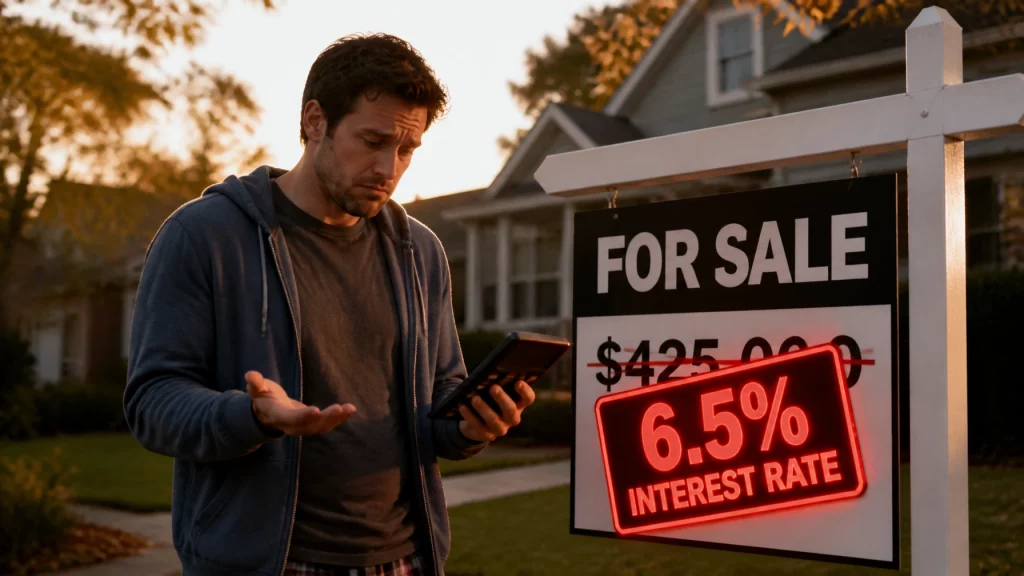
Remember 2021? It feels like a fever dream now. People were trading Bored Ape JPEGs for the price of a mid-sized sedan, and you could snag a 30-year fixed mortgage for 2.75%. Back then, money was basically free. If you had a pulse and a decent credit score, the bank was practically throwing keys at you.
Fast forward to Friday, May 29, 2026. The world looks a little different. We’ve traded the NFT hype for AI-powered everything, but the "free money" era didn't just leave: it took the house, the dog, and probably your patio furniture. As of this morning, average 30-year mortgage rates are still hovering near 6.6%, and the collective question from every regular guy and gal in America is the same: Are rate cuts actually dead, or are we just trapped in a very expensive waiting room?
The 3% Ghost That Won't Stop Haunting Us
There’s a specific kind of trauma associated with missing out on a once-in-a-century low. It’s like being the only guy who left the party five minutes before the pizza arrived. For the last few years, the "wait and see" strategy was the dominant move. "I'll wait until rates drop back to 3%," people said in 2023. Then they said it in 2024. Then in 2025.
Now, at the end of May 2026, the skeleton sitting on the porch is still waiting, and frankly, he may want to order takeout.
The market has finally started to get the message. The old fantasy was that the Fed would sprinkle a little magic dust on the economy, inflation would behave, and we’d all glide back toward cheap mortgages. The new reality is uglier. With inflation still hotter than the Fed wants and growth slowing at the same time, Wall Street is now shoving rate-cut expectations farther and farther out, with a growing pile of bets pointing into 2027 before anything meaningful happens.

Here’s the cold, hard truth: 3% mortgages were an anomaly. They were the result of a global pandemic and a Federal Reserve that decided to flood the engine with cheap gasoline just to keep the car from stalling. Historically speaking, mortgage rates have averaged around 7.74% over the last 50 years. We aren't living through "high" rates right now; we’re living through normal rates. But try telling that to someone who saw their neighbor lock in a $2,000 monthly payment for a mansion while they’re looking at a $4,000 payment for a fixer-upper with a "charming" mold problem.
Why Daddy (The Fed) Isn't Coming to the Rescue
We’ve all been watching the Federal Reserve like hawks. Every time Jerome Powell steps up to the microphone, the world holds its breath, hoping for that sweet, sweet 0.25% cut. But as we’ve discussed in our post about The Stock Market vs. Your Wallet, what happens on Wall Street rarely matches what’s happening in your checking account.
Friday’s inflation data did absolutely nothing to revive the "cuts are coming soon" crowd. The latest PCE report showed headline inflation at 3.8% and core PCE at 3.3% year over year. That matters because PCE is the Fed’s preferred inflation gauge. In plain English, the Fed doesn’t really care that you’re tired of high rates. If inflation is still running well above 2%, they’re not reaching for the rescue button.
Then came Fed Vice Chair Michelle Bowman, who basically gave us the official version of "not so fast." She called the 3.8% inflation spike temporary, largely tied to energy and one-off pressures, but she also signaled that rate cuts are basically off the table for now. That’s the key point. Even if the Fed thinks part of the spike is temporary, they’re not eager to gamble that everything will magically cool on schedule.

And here’s where it gets really annoying for homebuyers: the economy is cooling, but not in a way that helps you. Revised Q1 GDP came in at just 1.6%, which is a pretty decent poster child for a stagflationary setup: slower growth, stubborn inflation, and everybody getting the worst of both worlds. It’s like ordering a burger and getting billed for steak while someone steals the fries.
If the Fed cuts rates too fast, they risk lighting the inflation fire all over again. So yes, they’re keeping things "higher for longer," and the market has started to believe them. For the regular guy, this means the Fed isn't the superhero coming to save your house hunt. They’re more like the strict librarian telling you to be quiet and deal with the 6.6% reality. At this point, the bigger shock would be an early cut, not another long stretch of nothing.
The "Golden Handcuffs" and the Frozen Market
This interest rate environment has created a phenomenon we call the "Golden Handcuffs." Imagine you’re living in a house you bought in 2020 with a 2.9% rate. You want to move. Maybe you need an extra bedroom for a new kid, or maybe you just hate your neighbors.
But then you look at the math. To move into a similar house today, your monthly payment would still get smacked by a mortgage rate near 6.6%. So, what do you do? You stay put. You renovate the basement. You buy a bigger shed. You do anything except sell that 2.9% asset.

This has frozen the housing market. There are no "starter homes" because the people in them can’t afford to leave. This lack of supply keeps prices high, even though rates are also high. It’s a double whammy of madness that defies traditional economic logic. Usually, when rates go up, prices go down. In 2026, rates are up, prices are up, and everyone is just… stuck.
And if you were hoping the bond market would ride in like a white knight, not so much. With traders now pushing the real rate-cut story deeper into 2027, mortgage relief looks less like an imminent event and more like one of those movie release dates that keeps getting pushed back.
Medicine, Housing, and the Madness of Modern Costs
At Regular Guy Economics, we like to look at the bigger picture. The madness of the housing market isn’t an isolated incident. It’s part of a broader trend where the essentials of life: shelter and health: are being eaten by a mix of corporate interests and bad math.
Take the medical industry, for example. In 1960, medical costs were 5% of our GDP. By 2025, they hit 20%. Much like the housing market, we are paying more for "care" that doesn't actually result in better outcomes. We have more obesity, more diabetes, and more drug dependency, yet the costs keep trending up.
Medicine and Housing have both become part of a "profit-at-all-costs" capitalism that violates the spirit of what they should be. Just as insurance companies define how medicine works, mortgage-backed securities and Fed policy define how shelter works. We’ve turned the basic human need for a roof and a healthy body into a high-stakes gambling hall for shareholders.
The New Math: How to Buy in 2026
So, if you’re a regular guy looking at a mortgage rate near 6.6% today, what do you do? Throw in the towel and rent forever? Not necessarily. But you have to change your strategy for a world where "higher for longer" is no longer a slogan. It’s the house rule.
- Date the Rate, Marry the House… But Don’t Assume a Quick Refi: This is still the oldest cliche in the book, but it needs an update. Yes, you can refinance later if rates fall. But with markets now pushing meaningful cut expectations into 2027, don’t buy a house that only works if the Fed bails you out in six months. Underwrite your life with today’s payment, not tomorrow’s fantasy.
- Buy the Payment, Not the Price Tag: In a stagflationary economy with 1.6% GDP growth and sticky inflation, monthly cash flow matters more than bragging rights. Figure out what payment fits your real budget after groceries, insurance, childcare, and the thousand little surprise bills modern life throws at you.
- Look for Seller Concessions and Rate Buy-Downs: Because financing is still expensive, ask for closing-cost help or a temporary buy-down. This is one of the few ways to make the numbers less ridiculous without waiting around for Jerome Powell to develop a soft spot for Zillow.
- Keep More Cash Than Your Ego Wants: In a slower economy, liquidity matters. Don’t vaporize your emergency fund just to impress a lender or hit some mythical perfect down payment number. Houses are expensive. Repairs are expensive. Life is expensive. Cash is not laziness; it’s armor.
- Stop Comparing to 2021: Seriously. Stop it. It’s like comparing your current girlfriend to a supermodel you dated once for three days. It’s not productive and it’s making you miserable.

Final Thoughts
Are rate cuts dead? Not entirely. But as of Friday, May 29, 2026, the dream of a fast return to cheap money looks deader than disco. With headline PCE at 3.8%, core at 3.3%, Q1 GDP revised down to 1.6%, and Fed officials like Bowman saying the inflation spike may be temporary while still keeping cuts basically sidelined, the message is pretty clear: this is a higher-for-longer world until proven otherwise.
That’s why 30-year mortgage rates are still hanging around 6.6%, and why markets have started kicking real cut expectations into 2027. The economy is cooling, but not in the friendly, "mortgages are about to get cheap again" kind of way. It’s cooling in the annoying, stagflation-lite way where growth slows, prices stay high, and regular people get squeezed from both directions.
We need to start looking at our finances: and our health: as things we control through better choices, not things we wait for the government to fix. Whether it's investing in a gym membership to avoid the $50,000 colon cancer bill, building a bigger cash cushion, or negotiating a rate buy-down on a townhome, the power has to shift back to the individual. The easy-money era is over. The smart-money era is what comes next.
Be mindful, be watchful and good luck.