



Remember back in early 2024? Life felt simpler. The big debate wasn’t if the Federal Reserve would cut interest rates, but how many times they’d do it. Market "experts" were betting on six or seven cuts. We were all picking out paint colors for the new houses we’d buy once mortgage rates hit 5% again.
Well, fast forward to today: Saturday, May 30, 2026: and the vibes have officially shifted from "hopeful" to "ghosted."
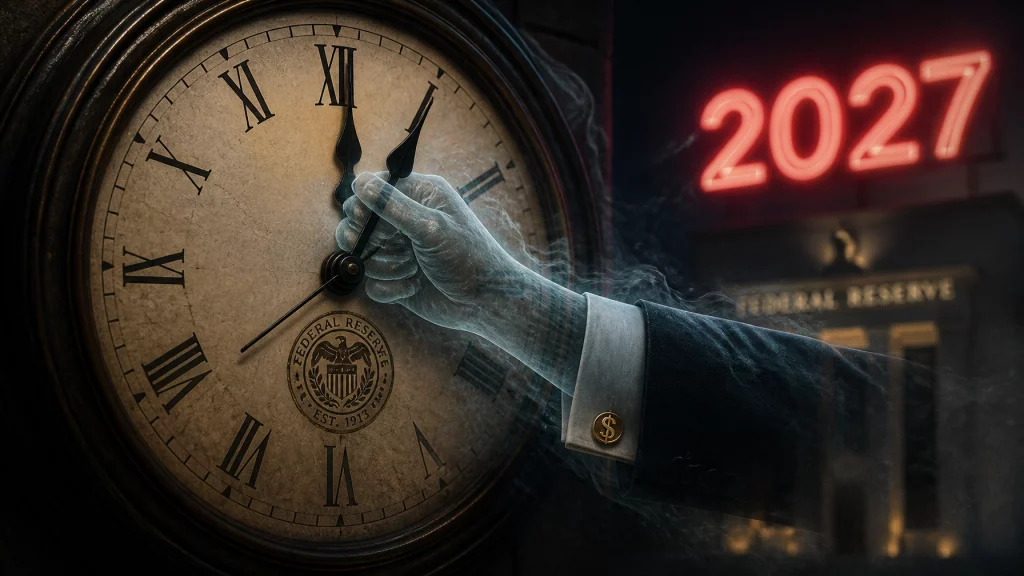
Yesterday’s PCE (Personal Consumption Expenditures) data dropped like a lead balloon, and if you were waiting for a rate cut to save your budget, I’ve got some bad news. The Fed hasn’t just put rate cuts on the back burner; they’ve moved them to a different kitchen in a different house in the year 2027.
Let’s break down the madness of this "long, slow ghosting" and why your financial relief just got pushed back until your toddler is practically in kindergarten.
The 3.8% Punch in the Gut
If the Fed’s inflation target is a nice, cool 2%, yesterday’s report showed we’re currently sitting in a financial sauna. The headline PCE price index for April 2026 came in at a scorching 3.8% year-over-year.

That is the highest reading we’ve seen in nearly three years. For the "Regular Guy" trying to buy eggs, gas, or a decent pair of shoes, this isn't just a statistic: it’s a tax on existence. While the talking heads on TV like to strip out "food and energy" (the things we actually need to survive) to show "Core PCE," even that number is stuck at 3.3%.
Basically, inflation isn’t just "sticky": it’s glued to the floor with industrial-strength epoxy. We’ve written before about whether rate cuts are officially dead, and after yesterday, the autopsy is looking pretty conclusive for 2026.
Governor Bowman and the "No Relief" Tour
Enter Governor Michelle Bowman. If the Fed were a rock band, Bowman would be the one turning off the amplifiers and telling everyone to go home because the neighbors complained.
In her latest comments following the PCE spike, Bowman didn’t mince words. While the market was desperately looking for a "maybe in December" hint, she basically said, "Don't hold your breath." The hawkish tone coming out of the Fed right now is the strongest we’ve heard in years. Chair Kevin Warsh even floated the idea that if these numbers don’t move, the next move might actually be a rate hike.

Think about that. We spent two years waiting for the elevator to go down, only for the Fed to tell us we might be headed up to the penthouse of high interest rates instead. This isn't just "higher for longer." This is "high until the decade is half over."
The Mortgage Trap: 2027 is the New Goalpost
This brings us to the real-world casualty of this economic ghosting: your house.
If you’re currently renting and waiting for mortgage rates to drop so you can finally own a piece of the American Dream, the math just got uglier. With the Fed signaling that cuts are likely a 2027 story, those 7% and 8% mortgage rates are the new roommates you can't get rid of.

Think about the timeline here. If you have a toddler today, they’ll be starting school by the time the Fed finally gets around to easing the pressure on the housing market. We’re looking at a "lost half-decade" for first-time homebuyers. The Fed is essentially ghosting an entire generation of buyers, leaving them on "read" while the cost of borrowing stays in the stratosphere.
Why 2027? (And Why Not Sooner?)
Why is the Fed being such a buzzkill? It comes down to credibility. They spent 2021 and 2022 telling us inflation was "transitory" (the economic version of "it’s just a prank, bro"). They were wrong then, and they are terrified of being wrong now.
If they cut rates too early and inflation spikes to 5% or 6%, they lose the last shred of trust the public has in them. So, they’re choosing to overcorrect. They’d rather keep the economy in a chokehold for an extra year than let inflation run wild again.

The market is finally starting to believe them. The "pivot" that everyone promised in 2024, then 2025, and then 2026 has been pushed to the 2027 calendar. It’s the long, slow walk to a reality where money isn’t cheap anymore, and it won’t be for a long time.
What’s a Regular Guy to Do?
So, where does that leave us?
First, stop waiting for a "save the day" moment from the Fed. If you’re waiting for 3% mortgage rates to return before you make a move, you’re going to be waiting until that toddler of yours is asking for the car keys.
Second, watch the data, not the drama. The 3.8% PCE number is the only number that matters. Until that starts a consistent, monthly slide toward 2%, the Fed is going to keep ghosting our requests for lower rates.
It’s a tough pill to swallow, but at Regular Guy Economics, we’re all about seeing the madness for what it is. The Fed isn't coming to the rescue this year. Or next year. 2027 is the new 2024, and the sooner we accept that, the better we can plan for the long haul.
Be mindful, be watchful and good luck.