



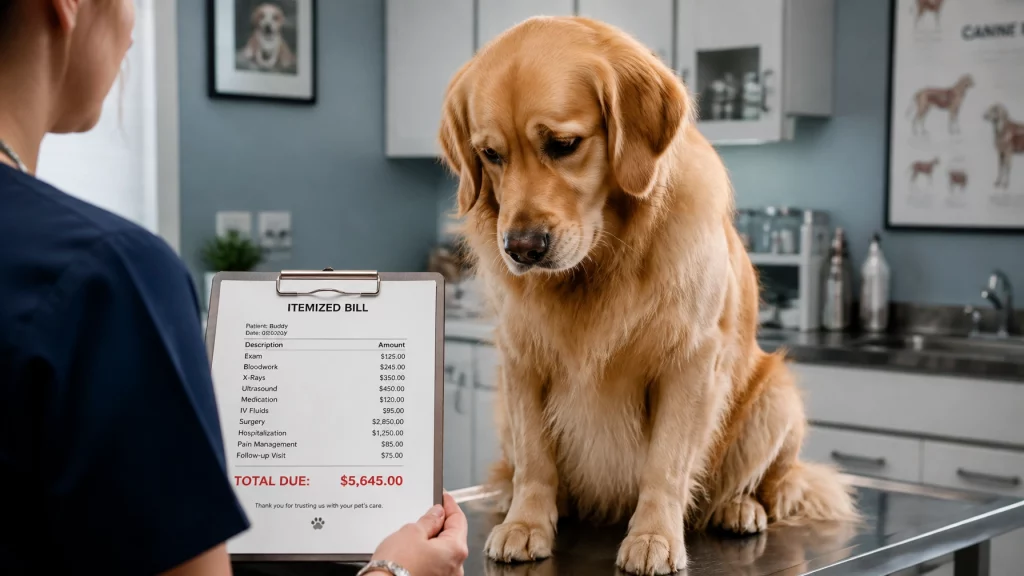
You know the feeling. You walk into the vet’s office with a dog that has a minor ear infection or needs a quick set of shots. You walk out three hours later with a lighter wallet, a dazed expression, and a bill that looks like the down payment on a mid-sized sedan.
If you’ve been looking at your bank statement and wondering if your Golden Retriever secretly developed a taste for vintage champagne and caviar, you aren't alone. Vet care prices are up roughly 60% since 2014, outstripping general inflation by a mile. But here’s the kicker: it’s not because the cost of kibble went up or because stethoscopes suddenly became high-tech luxury items.
The reality is much more clinical, and much more cynical. Your neighborhood vet, the one you’ve trusted for a decade, might not actually be "Doc Smith" anymore. There’s a high probability that "Doc Smith" is now a subsidiary of a multi-billion dollar private equity firm or a massive global conglomerate that also happens to sell candy bars and floor cleaner.
The Great Pet Takeover
The numbers tell a story of a silent, massive consolidation that would make a 19th-century oil tycoon blush. Back in 2011, corporate and private equity (PE) firms owned about 8% of veterinary clinics. Fast forward to today, and that number has exploded to somewhere between 25% and 50% of all general practices.
If your pet has a real emergency? Forget about it. 75% of specialty and emergency clinics are now corporately owned.

Since 2017, over $50 billion has been poured into acquiring vet practices. In 2025 alone, we saw 532 merger and acquisition transactions, a 41% jump in just one year. The big players have names you might recognize, even if you didn't know they were your vet’s boss:
- Mars Petcare: (Yes, the M&M folks) owns VCA, Banfield, and BluePearl.
- JAB Holding: Owns NVA and Ethos.
- KKR: The private equity giants behind PetVet.
- TSG: Owners of the Thrive network.
The Private Equity Playbook
When a private equity firm buys a business, they aren't doing it because they love puppies. They are doing it because veterinary care is "recession-proof." People will skip a vacation before they let their cat suffer. That emotional bond is a goldmine for an investor looking for a "guaranteed" return.
Here is how the "optimization" works, and why your bill is the one getting squeezed:
- Debt Loading: PE firms often borrow massive amounts of money to buy these clinics, then stick the debt on the clinic’s books. To pay off that debt and still hit 15-20% profit margins, the clinic has to hike prices.
- Standardized Pricing: Within 12 to 24 months of an acquisition, prices are typically "standardized" (read: raised) across the board. The local "Regular Guy" discount disappears in favor of a corporate spreadsheet.
- Production-Based Pay: Many vets are moved to a "pro-sal" (production plus salary) model. This means the vet gets a cut of the revenue they generate. While it sounds fair, it creates an inherent incentive to run "one more test" or suggest that $800 teeth cleaning for a dog that’s only three years old.

The Irony of the "Death Spiral"
We are reaching a tipping point where the math stops making sense. Despite the skyrocketing prices, visit volumes are actually declining. Regular guys are being priced out of basic care.
About 81% of veterinarians report that their clients are showing "extreme price sensitivity." People are delaying checkups, skipping preventative meds, and waiting until a problem is a full-blown crisis before heading to the clinic. Yet, even as fewer people walk through the door, the prices keep climbing. Why? Because the consolidators have the pricing power. If they own the only emergency clinic within 50 miles, they know you’ll pay whatever they ask when Buddy starts wheezing at 2 AM.
It’s the same "buzz saw of madness" we see in human healthcare. We are treating medicine: whether for two legs or four: as a purely capitalistic playground. But as we’ve argued before at Regular Guy Economics, when you prioritize the shareholder over the bedside (or the kennel-side), the outcomes always suffer.
The Fight for the Front Desk
There is some movement on the horizon. The proposed Save Our Pets Act aims to ban non-veterinarian ownership of practices, effectively trying to kick the suits out of the exam room. The idea is simple: if you don’t have a medical license, you shouldn't be making decisions about medical pricing or protocols.
In the meantime, the best thing you can do is be an informed consumer. Check out sites like PrivateEquityVet.org to see who actually owns your local clinic. If you have the choice, support the truly independent vet: the one who still makes their own decisions and doesn't have to answer to a boardroom in Manhattan.

We spend a fortune on our pets because they are family. It’s high time we stopped letting Wall Street treat our family members like line items on a quarterly earnings report. It’s an unsustainable situation, and it’s about time someone cast the first stone for change in the veterinary world, too.
Be mindful, be watchful and good luck.