



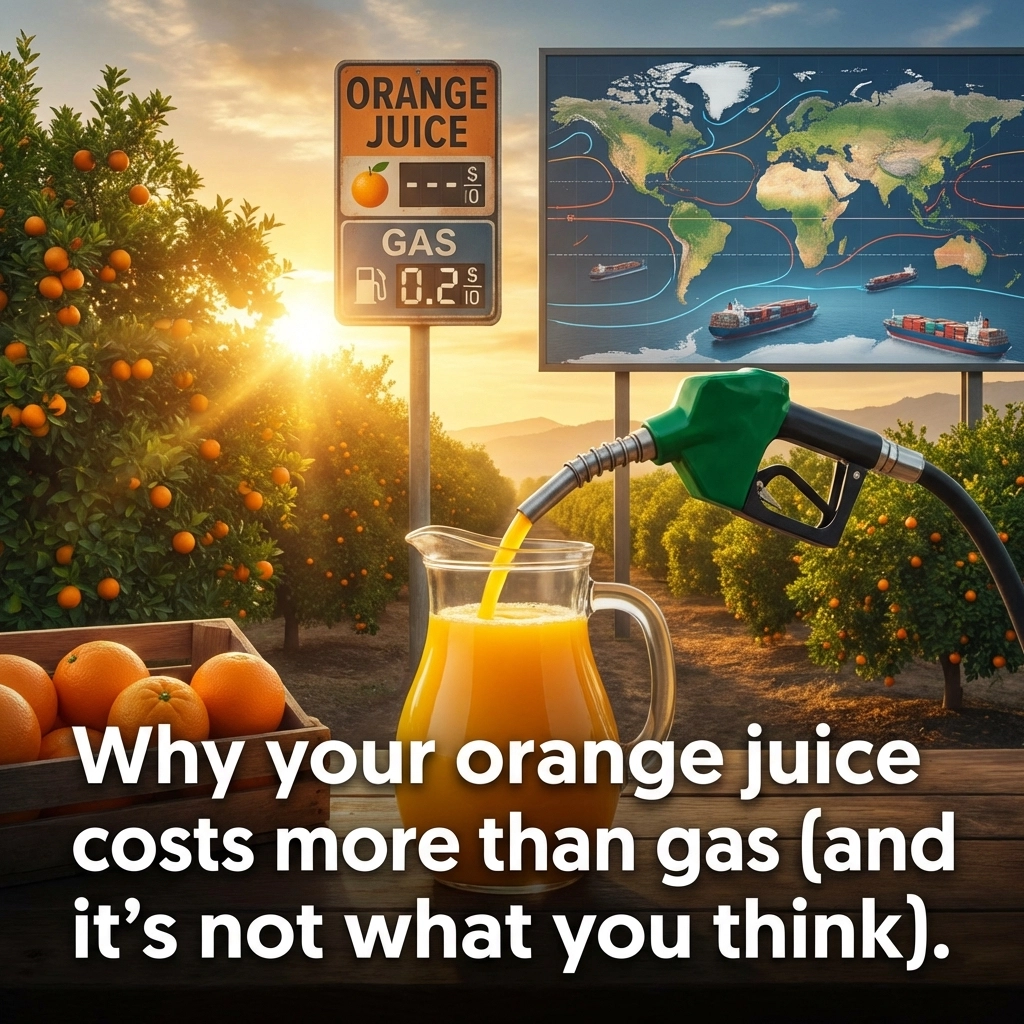
Remember when a gallon of gas cost more than a small carton of orange juice? Yeah, me too. Those days are officially dead and buried. Walk into any grocery store today and you'll find yourself doing double-takes at the juice aisle while barely flinching at the gas pump. It's like we're living in some weird economic alternate universe.
So what the heck happened? Why does it now cost more to squeeze an orange than to drill oil out of the ground? The answer isn't what you'd expect, and it's definitely not about greedy juice companies trying to fleece us.
The Real Culprit: Mother Nature's Revenge Tour
Here's the thing nobody wants to talk about: orange trees are basically dying. Not from old age or neglect, but from something that sounds like a sci-fi horror movie – citrus greening disease. This bacterial infection, with the fancy name Huanglongbing, is systematically murdering orange groves across the globe. And here's the kicker: there's no cure.
Think about that for a second. We can split atoms, send people to space, and create artificial intelligence, but we can't figure out how to save an orange tree from a bacteria. It's like nature is trolling us.
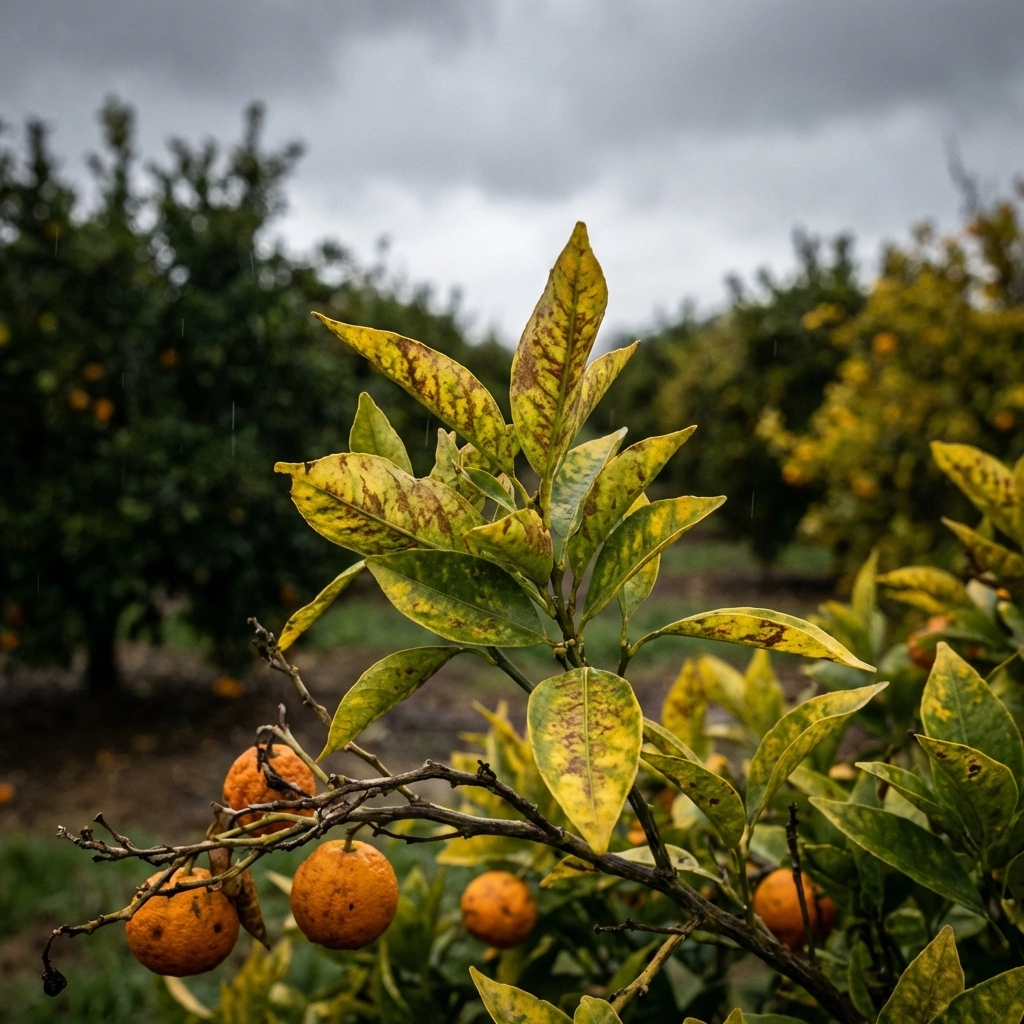
In Florida, which used to pump out oranges like a juice factory, this disease has been absolutely devastating. Production per tree dropped from 2.3 boxes in the early 2010s to just 0.4 boxes recently. That's not a decline – that's a complete collapse. It's like going from a full-time job to working one day a week.
But wait, there's more! In 2022, Hurricane Ian decided to finish what the disease started and wiped out 90% of Florida's remaining orange groves. Ninety percent! That's not a setback; that's basically a knockout punch to an industry that was already on the ropes.
Brazil's Bad Year (And It's a Really Big Deal)
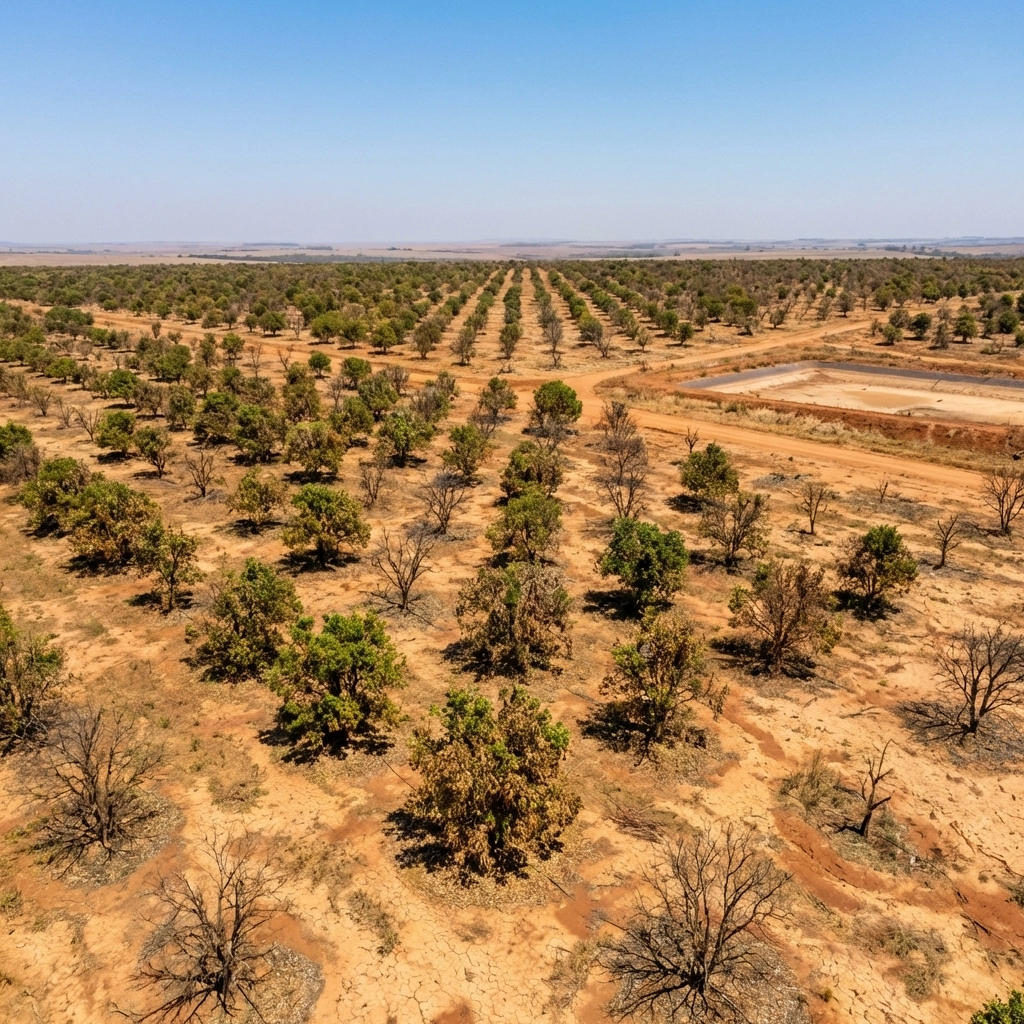
Now let's talk about Brazil, because when Brazil sneezes, the orange juice world catches pneumonia. Brazil produces more oranges than anyone else on the planet – they're basically the Saudi Arabia of citrus. In 2024, they reported their lowest orange yield since 1989. Let that sink in. We're talking about production levels from when the Berlin Wall was still standing and people thought the internet was just a fad.
The perfect storm hit Brazil hard. First, the same citrus greening disease that's plaguing Florida showed up uninvited. Then drought decided to crash the party. Rainfall from July 2023 to March 2024 was 24% lower than the year before. For orange trees, that's like trying to run a marathon while severely dehydrated.
Production per tree in Brazil fell from 2.12 boxes in 2011/12 to 1.8 boxes in 2023/24. That might not sound like much, but when you're talking about millions of trees, those decimal points add up to massive shortages.
The Economics Are Bonkers
Here's where it gets really weird. Orange juice consumption actually dropped by 17% in 2023/24. You'd think that would help bring prices down, right? Wrong. Prices stayed sky-high because there simply wasn't enough juice to go around, even with fewer people drinking it.
It's basic supply and demand, but on steroids. When supply crashes harder than demand, prices go crazy. Frozen concentrated orange juice futures hit record highs over $4 per pound in late 2023, up from around $3.50 per pound in 2024. For context, that's like your morning glass of OJ becoming a luxury item.
Meanwhile, at the Gas Station…
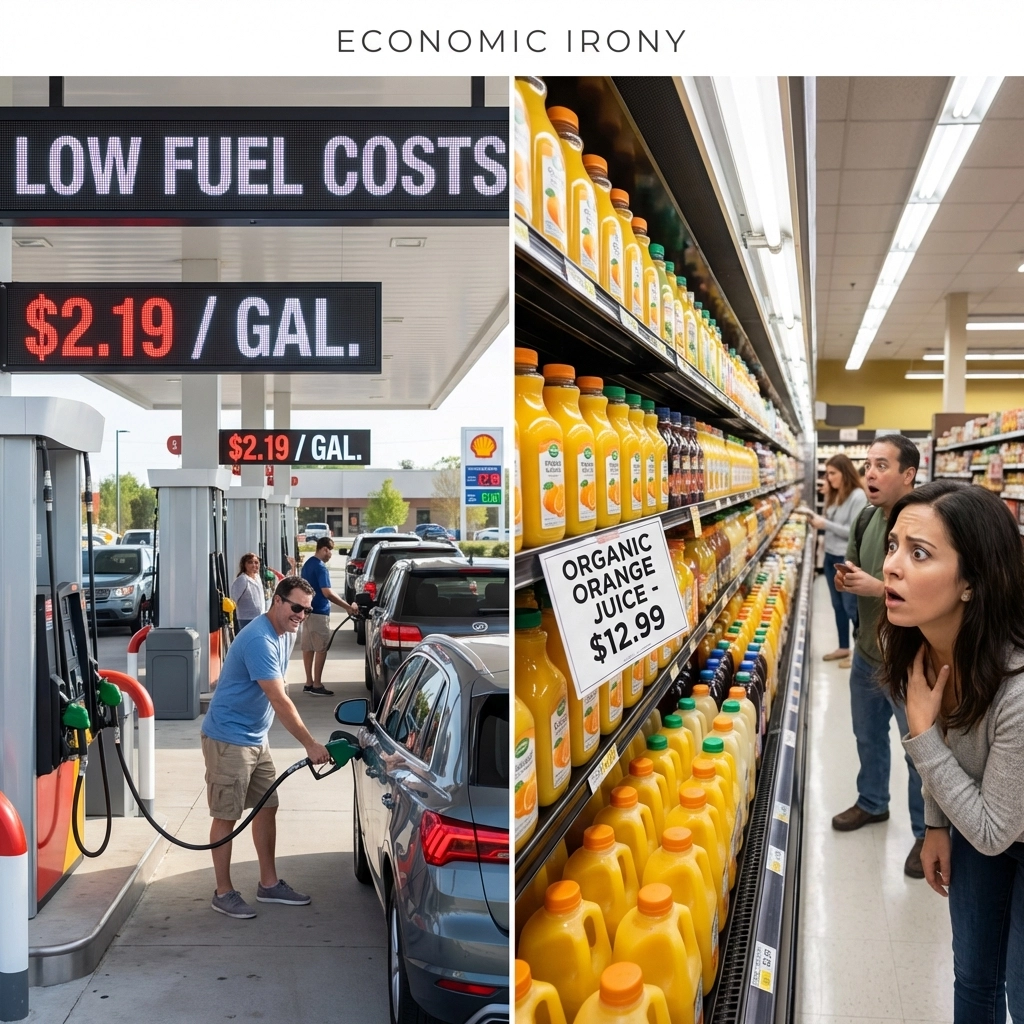
While orange juice prices were going to the moon, gas prices were doing the opposite. Thanks to increased domestic oil production, strategic reserve releases, and a shift toward renewable energy reducing long-term demand, gas became relatively cheap again.
It's the ultimate economic irony: the stuff that comes from the ground got easier to get, while the stuff that grows on trees became nearly impossible to produce. We're living in a world where drilling for oil is more reliable than growing fruit.
The Climate Change Connection Nobody Talks About
Here's the part that should worry everyone: this isn't a temporary glitch. Climate change is making orange growing increasingly difficult in traditional regions. Extreme weather events, unpredictable rainfall patterns, and temperature swings are creating perfect conditions for diseases like citrus greening to spread.
Scientists are predicting that orange juice prices will continue climbing as climate change makes growing conditions even more challenging. It's not just about this year or next year – we might be looking at a permanent shift in how much real orange juice costs.
What This Means for Regular People
For most of us, expensive orange juice is annoying but not life-changing. We can switch to other drinks or buy the cheaper, artificial stuff. But this situation is a perfect example of how seemingly small changes in supply chains can create massive price swings that hit consumers hard.
It's also a preview of what might happen to other foods as climate change and disease pressure continue mounting. Today it's orange juice; tomorrow it might be coffee, chocolate, or something else we take for granted.
The Bigger Picture
What's really fascinating about this whole orange juice saga is how it illustrates the fragility of our global food system. We got so used to cheap, abundant food that we forgot how vulnerable agriculture really is. A disease here, a hurricane there, some bad weather in Brazil, and suddenly your breakfast costs twice as much.

This isn't just about economics – it's about recognizing that our food supply depends on factors completely outside human control. Mother Nature doesn't care about quarterly earnings or consumer price indexes. She plays by her own rules, and those rules are becoming increasingly unpredictable.
Looking Forward
The orange juice industry isn't giving up. Scientists are working on disease-resistant varieties, and some producers are exploring indoor growing methods. But these solutions take time – years or even decades to implement at scale.
In the meantime, we're stuck in this bizarre reality where filling up your car costs less than filling up your orange juice glass. It's a reminder that the prices we pay for things aren't always logical or predictable. Sometimes, the market gets turned upside down by factors nobody saw coming.
The next time you're at the grocery store and see that $8 carton of orange juice sitting next to a display showing gas prices under $3 per gallon, remember: you're witnessing economic history in real time. This is what happens when nature decides to rewrite the rules of supply and demand.
So whether you're reaching for that expensive OJ or filling up your tank with cheap gas, remember that behind every price tag is a story. And sometimes, those stories are a lot weirder than we expect.
Be mindful, be watchful and good luck!