



Regular Guy Economics : Wednesday, August 19, 2026
The next time the price on the gas pump makes you mutter something unprintable, look beyond the station down the street.
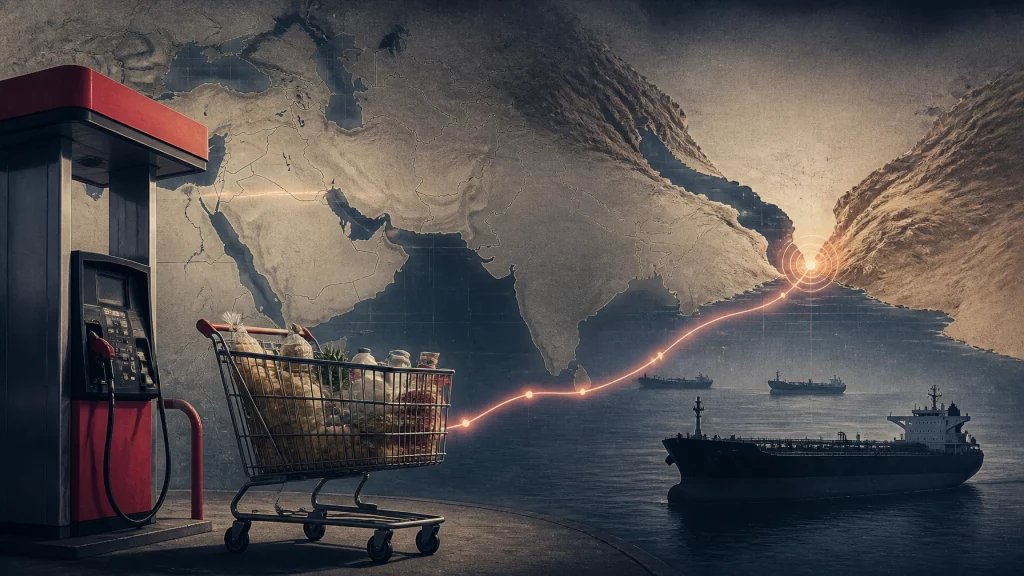
The number may have been set thousands of miles away, in a narrow strip of water between Iran and Oman called the Strait of Hormuz.
Brent crude is hovering near $88.50 per barrel, after climbing roughly 6% last week as the Iran conflict kept fears of supply disruptions alive. That price does not stay on a commodities trading screen. It travels through refineries, pipelines, trucks, delivery fleets and supermarket distribution centers.
Eventually, it arrives at your household ledger.
That is the part of geopolitics most people understand only after the damage is done. A conflict in the Middle East is not just a foreign-policy story. It can become a higher gasoline bill, a more expensive grocery run and another reason the paycheck seems to disappear before the month does.
The world’s oil passes through a very narrow doorway
The Strait of Hormuz is only about 21 miles wide at its narrowest point. Yet under normal conditions, approximately 20 million barrels of oil and petroleum products pass through it every day.
According to the U.S. Energy Information Administration, that represents roughly 20% of global petroleum liquids consumption and about one-quarter of global seaborne oil trade.
That is an extraordinary amount of the world’s energy moving through one vulnerable maritime chokepoint.
The United States does not import every barrel that travels through Hormuz. That does not mean Americans are insulated from a disruption there. Oil is traded in a global market. If supply becomes harder, slower or riskier to move anywhere in the world, buyers compete for the barrels that remain available.
The price rises globally.
Think of it like a nationwide auction. A refinery in Texas may not be buying oil directly from a tanker passing through Hormuz. But if Asian and European buyers suddenly need to replace delayed Middle Eastern shipments, they compete for other available supplies. That competition raises the price for everybody.
Oil does not need a passport to become more expensive.

From Brent crude to your gas tank
Brent crude is a global benchmark. It helps establish the price for oil produced and purchased around the world, including oil that eventually influences American gasoline markets.
When Brent moves higher, the first impact is felt by refiners. Crude oil is the primary raw material used to make gasoline, diesel and jet fuel. The EIA explains that crude oil is generally the largest component of the retail price of gasoline, often accounting for around half of the price at the pump.
The rest comes from refining, transportation, marketing and taxes. Those costs matter, but crude is the big one.
A useful rule of thumb is that a $1 increase in the price of a barrel of oil can add roughly 2.4 cents to a gallon of gasoline, assuming other conditions remain unchanged. A $10 increase can therefore translate into roughly 24 cents per gallon.
Real life is messier. Refineries have outages. Gasoline demand rises during driving season. Fuel inventories fluctuate. Regional pipeline constraints create different prices in different states. Taxes vary widely.
Still, the basic chain is not complicated:
- Conflict threatens oil shipments.
- Traders price in the possibility of reduced supply.
- Brent crude rises.
- Refiners pay more for their raw material.
- Wholesale gasoline prices rise.
- Retail prices follow.
The gas station owner is not holding a meeting with the Iranian government every morning. The price is being transmitted through a global market that reacts to risk at electronic speed.
Why the price can rise before a barrel is actually missing
Markets do not wait for the tanker fleet to stop completely.
Prices move based on what traders believe could happen next. If shipping companies face greater danger, they may avoid the route, pay higher insurance premiums or take longer alternatives. Those added costs become part of the price of getting oil to market.
The market also has to account for the possibility that a disruption lasts days, weeks or months. A temporary scare and a prolonged supply shortage are very different economic events, but markets begin preparing for both before anyone knows which one will occur.
That is why oil prices can rise even when gas stations still have fuel and the shelves are still stocked. The price reflects anticipated scarcity, not only current scarcity.
It is the same reason homeowners sometimes rush to buy generators before a hurricane arrives. The generator may be sitting in the warehouse today. But if everyone believes the warehouse could be empty tomorrow, the price changes immediately.
The grocery store gets pulled into the story
Gasoline is the obvious connection between Hormuz and the household budget. You see the price every time you fill the tank.
The grocery-store connection is less visible, but just as real.
Almost everything in a supermarket has traveled. Produce, meat, canned goods, frozen food, bottled beverages and household supplies move through a network of farms, processing plants, warehouses, trucks, railroads and delivery vehicles.
Diesel fuel powers much of that system. Higher energy prices increase the cost of:
- Moving raw materials to factories
- Transporting finished goods to distribution centers
- Delivering products from warehouses to stores
- Refrigerating food during storage and transportation
- Operating farms, processing plants and manufacturing facilities
- Producing and transporting packaging materials

Fuel is not the only cost in a loaf of bread or a package of chicken. But it is embedded in many of the costs that eventually determine the shelf price.
There is also a psychological effect. When households see gasoline moving higher, they become more concerned about future prices. Businesses notice those concerns and begin reviewing their own pricing plans. Workers ask whether wages are keeping up. Consumers pull back or change what they buy.
The shock spreads beyond the original barrel of oil.
Inflation expectations are already telling the story
The University of Michigan’s preliminary August survey found that consumers expect inflation to run at 4.3% over the next year. That is up from 3.4% in February, before the Iran conflict began.
The survey’s official release also showed long-run inflation expectations holding at 3.3%. That distinction matters. People may still believe the Federal Reserve can control inflation over time, while expecting the next twelve months to be painful.
That is a sensible reaction when energy prices are rising.
Gasoline is one of the most visible prices in the economy. Consumers may not know the latest price of wholesale electricity or industrial chemicals, but they know what it costs to fill the family vehicle. A sharp move at the pump becomes a daily reminder that the cost of living is not finished climbing.
And when people expect prices to rise, they adjust their behavior. They buy sooner. They demand higher wages. Businesses protect margins. Landlords, contractors and service providers reconsider their prices.
Expectations can become part of the inflation problem.
This is a tax, even if Congress never votes on it
A tax is money taken from your income for a public purpose. A geopolitical shock is different legally, but the household effect can be remarkably similar.
More money goes out. Less money remains for everything else.
Suppose a household drives 1,200 miles per month in a vehicle that gets 25 miles per gallon. That requires about 48 gallons of fuel. A 25-cent increase adds approximately $12 per month.
That may not sound catastrophic. But many households operate several vehicles, commute longer distances, transport children, visit relatives or depend on driving for work. Small increases compound across the year.
Then add the indirect costs:
- A delivery fee rises.
- A contractor adds a fuel surcharge.
- Groceries cost more to transport.
- Airline tickets reflect higher jet-fuel costs.
- Businesses pass along higher operating expenses.
- The Federal Reserve becomes more cautious about cutting interest rates.
The result is not one dramatic bill labeled “Strait of Hormuz surcharge.” It is a series of smaller charges scattered across ordinary life.

That makes the burden easy to miss and difficult to escape.
What can a regular person actually do?
No household can reopen a shipping lane or negotiate a ceasefire. But a little preparation can reduce the damage.
First, build fuel costs into the monthly budget using a slightly higher price than today’s pump price. A budget that works only when gasoline is cheap is not a budget. It is a wish.
Second, combine trips where practical. This is not glamorous advice, but fewer unnecessary miles provide a guaranteed return: fuel that does not get purchased.
Third, pay attention to the larger budget categories affected by energy. If fuel rises, review delivery subscriptions, restaurant spending and impulse purchases before cutting essentials.
Fourth, avoid turning a temporary commodity shock into a permanent credit-card balance. Paying 20%-plus interest to absorb a few months of higher gasoline and grocery costs is how a manageable problem becomes a long-term one.
Finally, remember that oil prices can fall as quickly as they rise if the conflict de-escalates, supply routes reopen or demand weakens. Do not make a permanent financial decision based on a temporary headline.
But do not pretend the headline is meaningless, either.
The Strait of Hormuz is a reminder that the household economy is connected to the rest of the world whether anyone asked for that connection or not. Foreign policy, shipping insurance, refinery margins and grocery prices all meet in the same place: your bank account.
The next time someone says a conflict overseas has nothing to do with regular Americans, check the gas gauge.
Then check the grocery receipt.
Be mindful, be watchful and good luck.