



October 17, 2026
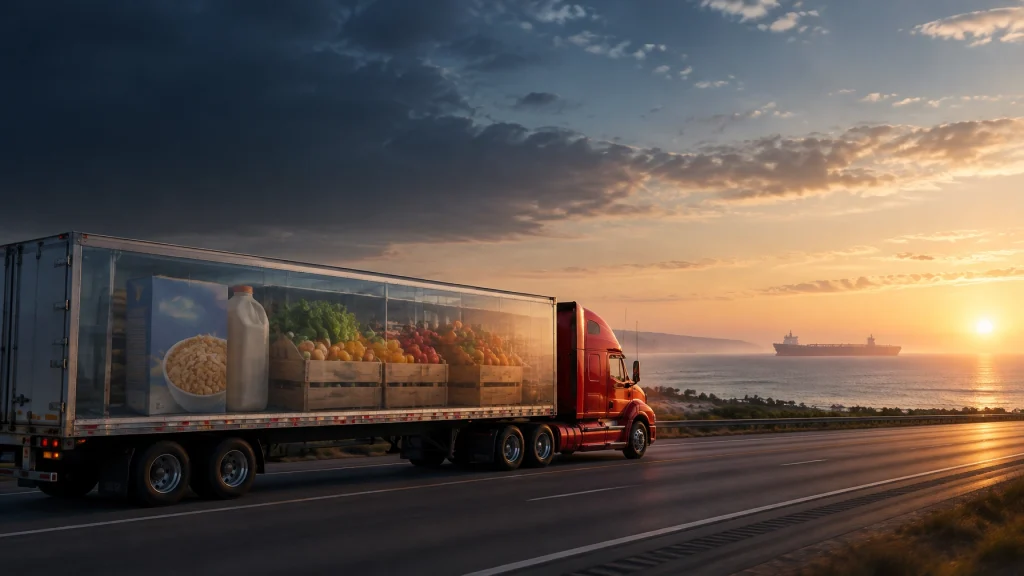
The cereal box on your kitchen table has had quite a journey. Before it landed in your shopping cart, grain was planted and harvested, processed, packed, shipped, unloaded, warehoused, and delivered to a store. At nearly every stop, somebody used fuel.
That is how a conflict thousands of miles away can work its way into breakfast. Not in one leap, and not because every box of cereal contains a barrel of oil. It happens through a chain of costs, and the chain takes time.
First stop: the tanker
The Strait of Hormuz is a narrow shipping passage connecting the Persian Gulf to the Gulf of Oman and the Arabian Sea. Before the conflict, roughly 20 million barrels a day of petroleum products and crude oil passed through it, about a fifth of global petroleum-liquids consumption, according to the U.S. Energy Information Administration.
When shipping near a chokepoint is threatened, oil markets don’t wait to see how many tankers actually turn around. They price the risk that supply could be disrupted. Buyers worry about delays, unavailable cargoes, higher insurance bills, and longer routes. That risk can push up the price of oil across the market, even when some ships keep moving.
One timeline detail is worth getting right: Brent crude was around $80 a barrel earlier in July, but it had already climbed above $100 by July 23. In September, its monthly average reached $114 a barrel, and it briefly hit $131 on September 15, as attacks disrupted oil infrastructure and exports. The EIA’s October outlook describes a market contending with disrupted flows, falling inventories, elevated tanker costs, and ongoing uncertainty.
That is the first link: a dangerous shipping lane makes oil more expensive partly because it makes dependable delivery less certain.
Next stop: the refinery, and the fuel the truck actually burns
Crude oil is not the same thing as diesel. Refineries process crude into different products, including gasoline, diesel, and jet fuel. Diesel is a distillate fuel, in the same broad product family as jet fuel, and it powers much of the equipment that moves goods around the economy.
That distinction matters. Crude shipments can recover faster than supplies of finished fuels. Refineries may need repairs, time, and the right equipment to restore production. Security guarantees alone do not fix damaged facilities or instantly put diesel onto a waiting ship.
Market reporting put Gulf diesel exports in August at roughly 390,000 barrels a day, about a quarter of pre-war levels. The U.S. Energy Information Administration reported that U.S. retail diesel averaged $6.29 a gallon in September and forecast prices would remain above $6 in October. Those are U.S. pump prices, not the price of crude oil, but they show how tight refined-fuel markets can reach a driver.

The trucker pays before the paperwork catches up
For a small trucking business, diesel is not an abstract market statistic. It is a bill that comes due every time the truck fills up.
A small owner-operator may have agreed to haul a load weeks earlier, when diesel cost less. A fuel surcharge can help reimburse a carrier for higher fuel expenses, but the terms are set by contract. Many surcharges use weekly EIA fuel-price benchmarks, while the underlying hauling rate may be locked in for 30, 60, or 90 days. The benchmark, the contract, and the fuel purchase don’t necessarily move at the same time.
That timing gap leaves the carrier paying the higher pump price first and waiting to recover some of it later, if the contract covers the route and miles involved. Deadhead miles, which are driven without a paying load, can make the squeeze worse.
Large businesses may have more bargaining power, larger cash reserves, and more ways to spread the cost. Small operators often have fewer cushions. They can’t always pass a sudden increase straight along to the shipper, especially when the shipping price was agreed weeks ago.
From the truck to the warehouse, then the shelf
The truck carries the cost to the next link. A grocery distributor receives goods at a higher freight cost. That cost can show up in the distributor’s invoice to the grocer. The grocer may then adjust shelf prices, but not necessarily tomorrow morning.
Retailers work with supplier contracts, inventory already on hand, promotions, and scheduled price changes. A store may have bought the cereal on its shelves before freight costs jumped. Or it may hold a price through a promotion, then change it when the next order arrives.
This delay is why shoppers can see a fuel shock at the pump long before they see its full effect in a supermarket aisle. It also explains why the effect is not automatic or one-for-one: shipping is one cost among many, and each business makes its own decisions about absorbing or passing costs along.

The farm is part of the story, too
Before grain can be hauled, it has to be grown. Farmers use diesel to power tractors, combines, and other equipment. They also face fertilizer costs. Nitrogen fertilizer is made using natural gas, so energy costs can matter there as well, though natural gas does not always move in lockstep with crude oil or diesel.
And farmers are price takers at both ends. They buy fuel and fertilizer at market prices, then sell crops into markets where global supply and demand help determine what a bushel is worth. A farmer cannot tack a diesel surcharge onto a bushel of corn the way a trucking contract may include a fuel surcharge.
The USDA’s farm-sector forecast projected 2026 expenses for fuel and oil rising 28.8% from 2025, while fertilizer expenses were projected to rise 15.3%. Those increases have multiple causes and should not be pinned entirely on one conflict. But they help show why higher energy costs can hit the farm well before a finished food item reaches a store.
A cereal’s costs include more than grain: processing, packaging, freight, warehousing, and retail. The price tag reflects the accumulated bill from all those stops, as well as ingredients, wages, contracts, competition, and business margins.
The honest counterweight: groceries were already getting dearer
The war premium is being layered onto an existing cost-of-living problem; it did not start grocery inflation from scratch. In the latest official data available before the September CPI release, BLS reported that food-at-home prices were up 2.2% year over year in August, while candy and chewing gum were up 8.1%.
Those numbers are for August, not September. The September CPI report was scheduled for October 14, making it an important checkpoint for signs of how energy and other costs were feeding through. But a monthly inflation report is a snapshot, not a complete accounting of a supply chain that moves on contracts, deliveries, and inventory cycles.
The lag matters. Some of the higher cost may already be in the pipeline but not yet on the shelf. That makes it sensible to watch what happens next without pretending every food-price change can be traced to one barrel or one event. A cereal price can rise for several reasons at once; the fuel chain is one piece of the explanation, not the whole box.
So trace the route: risk around Hormuz raises the price of oil and shipping; strained refineries tighten diesel supplies; expensive diesel squeezes carriers and farmers; higher transport and production costs work their way through distributors and stores. By the time they reach the breakfast table, the original shock may be hard to see, but the bill can still be there.
Be mindful, be watchful and good luck.
This article is for educational purposes only and is not investment advice. Economic conditions and prices can change; talk with a qualified professional before making financial decisions.