



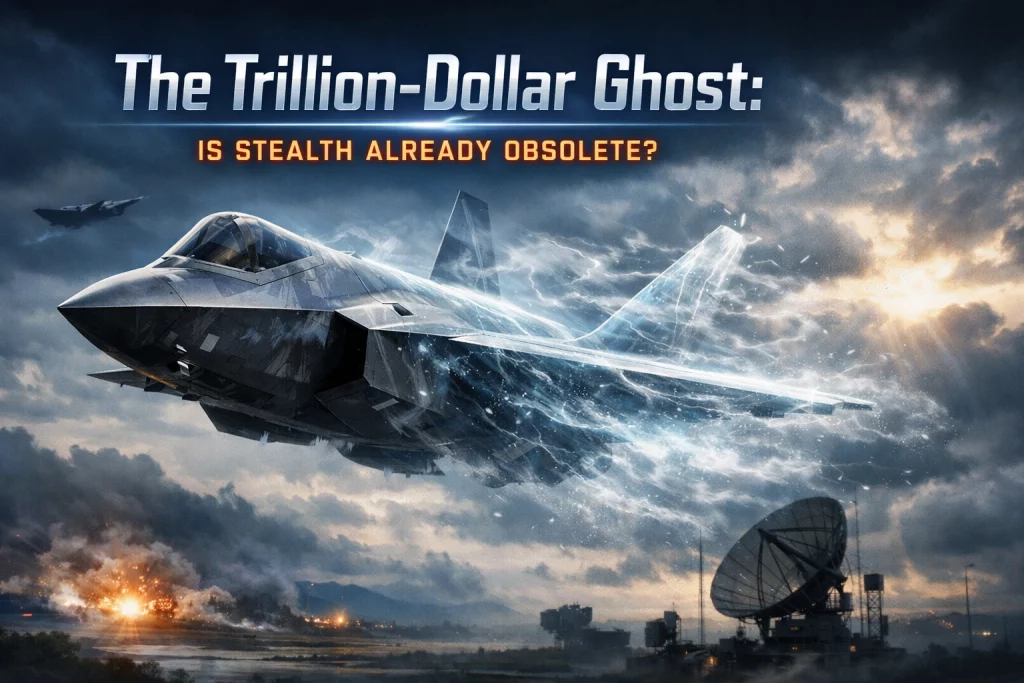
Let’s talk about the most expensive "magic trick" in human history.
Imagine you decide to build a house that is completely invisible to your neighbors. You spend your life savings: billions of dollars: on special mirrors, light-bending paint, and silent floorboards. For a few years, it’s great. You’re the ghost of the neighborhood. But then, one morning, your neighbor buys a $50 pair of thermal goggles from a thrift store, and suddenly, he’s waving at you through your "invisible" walls while you’re eating cereal in your underwear.
That’s the predicament the United States military is facing right now with the stealth bomber program. We’ve spent decades and trillions of taxpayer dollars betting the house on the idea that if the enemy can’t see us, they can’t hit us. But what happens when the "invisibility cloak" stops working? What happens when a country like Iran: or a superpower like China: cracks the code and solves the puzzle of detecting stealth?
As regular guys looking at the economics of defense, we have to ask: Are we pouring money into a trillion-dollar ghost that everyone can already see?
The Price of Being "Invisible"
First, let’s wrap our heads around the numbers, because in D.C., a billion is treated like a nickel, and a trillion is just a "rounding error."
The B-2 Spirit: the original flying wing: cost about $2.1 billion per airplane back in the 90s. Adjusted for today’s inflation? That’s enough to buy a small fleet of private islands. Now, we have the B-21 Raider. The Air Force wants at least 100 of them. While the "official" price tag per plane is cited around $750 million, we all know how government contracts work. By the time you add in maintenance, software updates, and the specialized hangars required to keep their delicate "skin" from peeling, the total program cost is projected to cruise past the $200 billion mark easily.
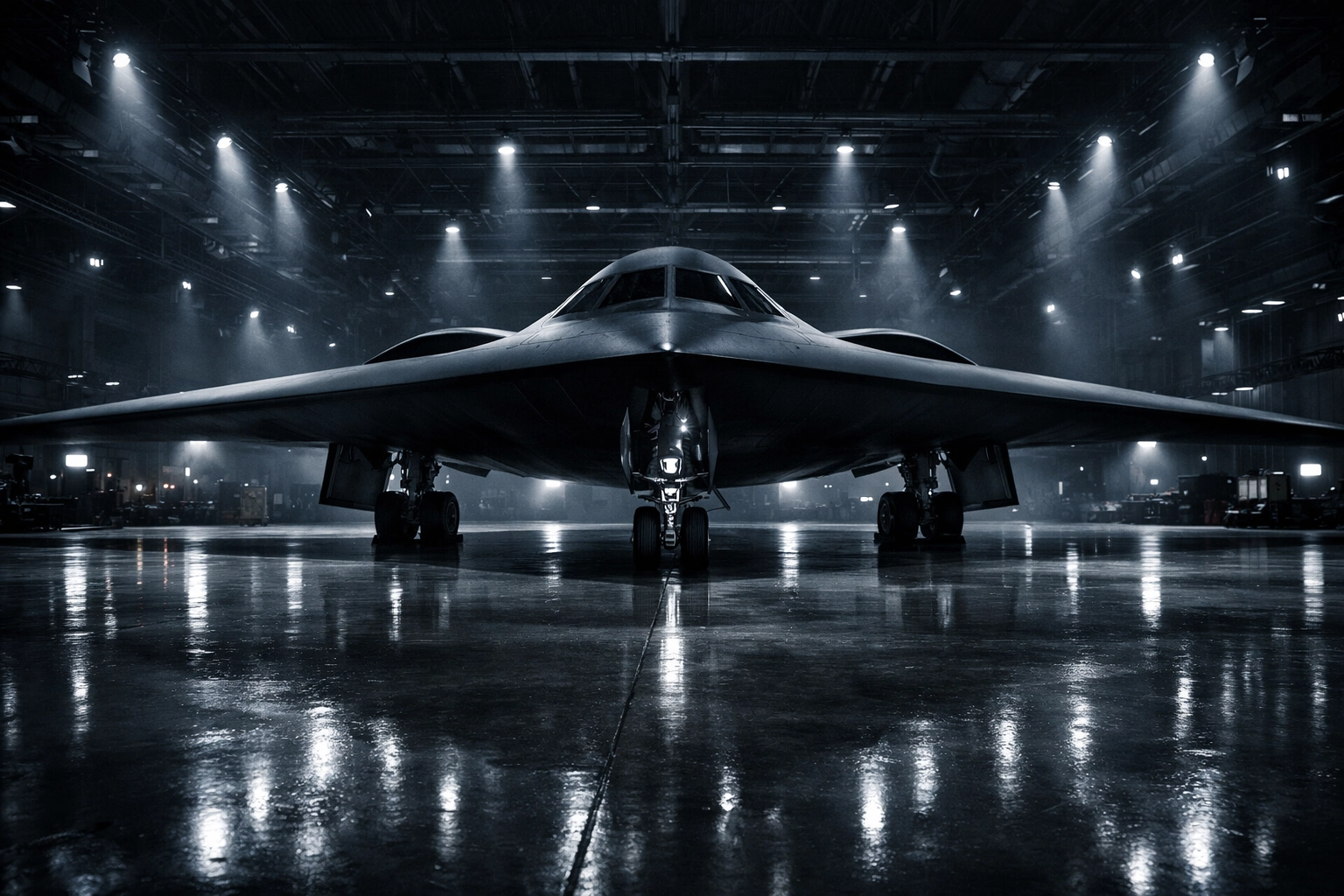
But that’s just the tip of the iceberg. When you factor in the F-22s, the F-35s (the trillion-dollar jet that has become a punchline for budget overruns), and the classified "Next Generation Air Dominance" programs, we are looking at a total investment in stealth technology that could have wiped out the national debt of several medium-sized countries.
From an economic standpoint, this is what we call a "high-stakes bet." We are betting that our technological edge will stay sharp forever. But history tells us that for every shield, someone eventually builds a better spear.
Iran and the "Puzzle" of the Passive Radar
For years, the U.S. has operated with the assumption that if you have a low "Radar Cross-Section" (RCS), you are essentially a ghost. Our planes are shaped like flat triangles to bounce radar waves away from the receiver. It’s brilliant engineering.
However, "solving the puzzle" of stealth doesn't require building a better version of our own tech. It requires looking at the problem differently. This is where countries like Iran come in.
Iran isn't going to out-spend the U.S. Air Force. They can't. But they can out-think the physics of 1980s stealth. Reports have circulated for years about "Passive Radar" and "Multi-Static" detection systems. Traditional radar is like shining a flashlight in a dark room and waiting for the light to bounce back off an object. Stealth planes are designed to make sure that light never bounces back to your eyes.
But passive radar is different. It doesn't "shine a light." Instead, it uses the "ambient light" already in the room: TV signals, radio waves, cellular data, and satellite transmissions. When a massive B-21 bomber flies through that invisible sea of electronic noise, it leaves a "hole" or a disturbance. If you have enough computing power and smart enough AI, you can track that disturbance.
If Iran: or any other adversary: perfects this "cellular" style of tracking, our multi-billion dollar ghosts are suddenly flying around with a giant "HERE I AM" sign taped to their tails.
The DARPA Warning: The Era is Closing
This isn't just "Regular Guy" skepticism. The experts are starting to sweat, too. Rob McHenry, the deputy head of DARPA (the folks who basically invented the modern world), recently warned that the "stealth era may be coming to a close."
Why? Because of something called Quantum Sensing.
While we’ve been perfecting the shape of wings, the rest of the world has been perfecting sensors. Quantum radar uses entangled photons to detect objects. You can't "hide" from quantum physics. It doesn't care about your fancy paint or your angled wings. China has already dumped over $50 billion into quantum research, with some projections saying that market will hit $100 billion by 2040.

When the "kill chain": the process of finding, tracking, and shooting down a target: becomes automated by AI and powered by quantum sensors, the massive investment in stealth becomes a "Sunk Cost." In economics, the Sunk Cost Fallacy is when you keep pouring money into a failing project just because you’ve already spent a lot on it. If a $100 million sensor can see a $2 billion plane, the math simply doesn't work in our favor anymore.
What This Means for the Working Class American
You might be thinking, "John, I’m just trying to pay my mortgage. Why do I care about quantum radar in the Middle East?"
You care because of Opportunity Cost. Every dollar spent on a stealth bomber that might be obsolete by the time it’s fully deployed is a dollar that isn't being spent on things that actually drive the economy for regular people.
Think about it. We’re staring down a national debt that looks like a phone number. We’re told there’s no money for infrastructure, no money to fix the crumbling power grid, and no money to lower the cost of healthcare. Yet, when it comes to "defense," the tap never runs dry.
If the stealth "puzzle" is truly solved, we aren't just losing a military advantage; we are witnessing a catastrophic waste of capital. Imagine if that trillion-dollar stealth budget had been invested in American energy independence or domestic manufacturing?
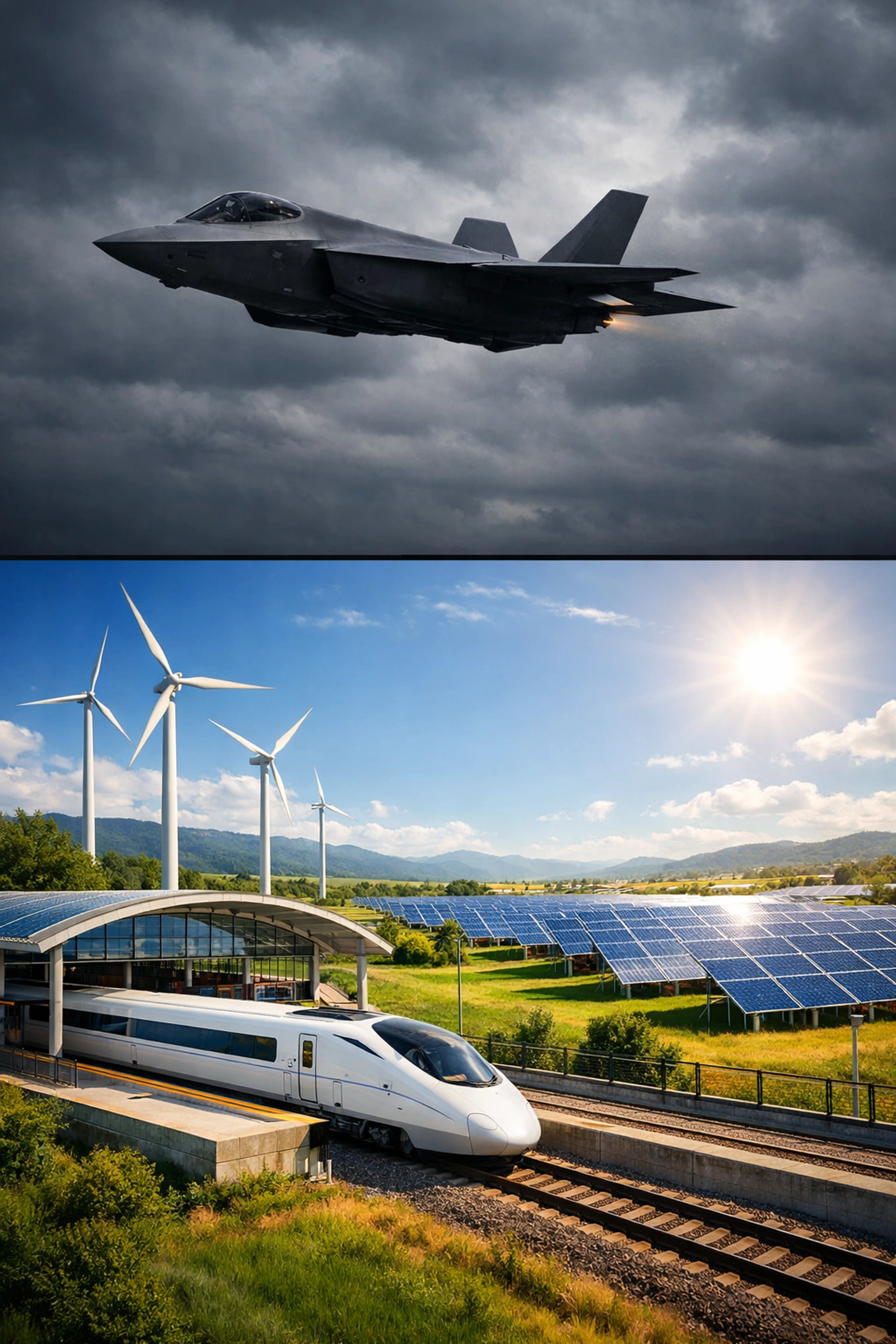
In our previous discussions about the medical industry, we talked about how costs keep going up while the "product" (our health) doesn't necessarily get better. The defense industry is suffering from the same disease. We are spending more to get "invisibility" that is becoming increasingly transparent.
The Pivot: What Comes Next?
Does this mean we should scrap every plane and go back to crop dusters? Of course not. As retired Lt. Gen. David Deptula argues, stealth still "complicates" the enemy's job. Even if they can see us, it’s still harder to hit us.
But from an economic and strategic perspective, we are at a crossroads. If stealth is no longer a "silver bullet," our entire defense strategy needs to shift from "invisibility" to "overload." Instead of one $2 billion plane, maybe the future is 2,000 $1 million drones.
The problem is that the big defense contractors: the guys with the lobbyists and the shiny PowerPoint decks: don't make as much profit on 2,000 cheap drones as they do on one massive, "stealthy" trillion-dollar program.
We are essentially paying for a 1990s solution to a 2030s problem. If Iran, China, or Russia "solves the puzzle," the B-21 Raider won't be a ghost; it will be a very expensive target sitting in a museum while we wonder where all our tax money went.
The Bottom Line
Economics is about the efficient allocation of resources. Right now, the U.S. is allocating a staggering amount of resources toward a technology that is facing an existential threat from AI and quantum physics.
We need to start asking the hard questions. If the "stealth era" is over, why are we still buying the cape? We’ve seen this story before in other industries: where the "experts" keep doing what’s always been done because it’s profitable, even when the reality on the ground has changed.
We can’t afford to be the guy in the "invisible house" who doesn't realize the neighbors are all watching him eat his cereal. It’s time to look at the defense budget with the same skepticism we look at our grocery bills. If the value isn't there, we shouldn't be buying it.
Be mindful, be watchful and good luck.