




Trade wars sound like something that happens in government buildings, surrounded by flags, microphones, and people wearing expensive suits.
This one is headed somewhere much more familiar: the car lot, the repair shop, and the liquor store.
On August 21, trade talks between the United States and Canada collapsed. At midnight, the United States moved ahead with 50% tariffs on roughly $28 billion of Canadian goods, including products such as wine, cement, clothing, dairy items, and hockey equipment. Canadian Prime Minister Mark Carney said Canada would match those tariffs “dollar for dollar,” with the retaliation scheduled to begin on September 8.
That is already a significant escalation. The auto industry could make it considerably more expensive.
President Donald Trump has pledged to raise tariffs on Canadian cars, trucks, automotive parts, and steel to 50% on January 1, 2027. The current auto tariff structure generally applies a 25% rate to the non-U.S. content of qualifying Canadian vehicles. The proposed change would double that rate on the portion of the vehicle that is not considered American content.
The language sounds technical. The bill will not be.
The tariff is not paid by Canada at the border
A tariff is a tax collected when an imported product enters the country. The importer pays it first. That importer might be an automaker, a parts supplier, a wholesaler, or a retailer.
Eventually, the cost has to go somewhere.
Sometimes the importer absorbs it through a lower profit margin. Sometimes the supplier cuts costs. Sometimes the automaker changes where it buys materials. But a meaningful portion usually travels down the chain to the final customer.
That means a tariff on Canadian automotive parts can become:
- A higher manufacturing cost for the automaker.
- A higher wholesale price for the dealership.
- A higher window sticker for the buyer.
- A larger loan payment for the household.
- A higher replacement-part bill for someone who already owns a vehicle.
Tariffs are not magic money. They do not make foreign products cheaper. They rearrange who pays more.
And with cars, the supply chain is so tangled that finding the “foreign” part is not as simple as putting a maple leaf sticker on a box.
One car part can cross the border four times
Modern North American auto manufacturing is not a straight line. It is more like a road trip with too many toll booths.
A component may be stamped in one country, treated in another, coated somewhere else, inspected across the border again, and finally installed in a vehicle that may be shipped back across the same border.
NBC News documented the path of a small but important component called a striker plate. It helps a vehicle door latch securely. The part begins with steel from Michigan, travels to a plant in Windsor, Ontario, is heat-treated in Brampton, Ontario, returns to Michigan for plating, and then goes back to Windsor for inspection and packaging before being sent to a U.S. assembly plant.
That is four border crossings before the little piece of metal does its job.
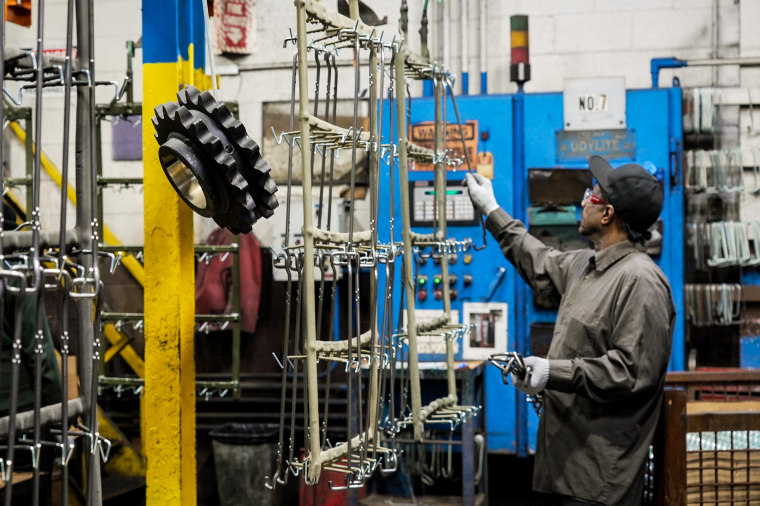
The auto industry developed this system because it was efficient. Companies located each stage where the necessary workers, equipment, suppliers, and transportation links were available. Inventory stayed lean. Trucks moved constantly. Factories specialized.
It worked beautifully when the border was mostly a customs formality.
A tariff turns every border crossing into a potential cash register.
Rules under the United States-Mexico-Canada Agreement, or USMCA, can protect qualifying products from some duties. But compliance is complicated. Companies must track where materials came from, how much labor was performed in each country, and whether a part meets the agreement’s rules of origin.
The supply chain was built for speed. It is now being asked to become a full-time accountant.
The window sticker is where the argument becomes real
Suppose a qualifying Canadian-built vehicle has a final price of $40,000 and half of its value is treated as non-U.S. content.
Under a 25% tariff on that non-U.S. content, the theoretical duty would be $5,000 before other costs and adjustments. At a 50% rate, the same calculation would produce $10,000.
That is not a prediction of the final retail increase. Automakers may redesign sourcing, shift production, absorb some costs, or negotiate with suppliers. Rules could also change before January.
But the example shows the basic problem: doubling the tariff rate does not create a small administrative nuisance. It can add thousands of dollars to the economics of a vehicle.
Even a smaller increase can hurt because most car buyers do not pay cash. A $3,000 increase financed over six years at 7% adds roughly $50 per month to the payment. The buyer also pays interest on the tariff-driven price increase.
That is the part of trade policy often left out of the press conference. A tariff does not merely affect the price of the car. It can increase the cost of borrowing money to buy the car.
And if buyers postpone purchases, dealers and manufacturers feel that pressure too.
Canadian retaliation will reach American products
Canada’s promise to retaliate “dollar for dollar” is designed to create political pressure in the United States.
The Canadian measures are expected to target selected U.S. products, including steel, dairy, appliances, agricultural equipment, pulp and paper, and electronics. The list is meant to land on industries and regions with influential workers, companies, and voters.
The first round of U.S. duties also reaches products that are easy for ordinary shoppers to understand: wine, cement, clothing, and hockey equipment.
A bottle of Canadian wine might face a higher wholesale cost. A retailer may raise the shelf price. A restaurant may adjust its menu. A contractor buying cement may face higher material expenses. A family buying hockey equipment may discover that “just one more season” has become a more expensive proposition.
The amount attached to any individual product may not be enormous. The problem is accumulation. Households do not buy only one tariffed item. They buy groceries, tools, appliances, vehicles, furniture, and building materials throughout the year.
Trade policy becomes personal one receipt at a time.
The auto industry cannot simply “move everything home”
The obvious response is to bring production back to the United States. That sounds simple until someone asks what “production” means.
A modern vehicle contains approximately 30,000 individual components. Some are large and visible: engines, batteries, transmissions, and body panels. Others are tiny metal pieces, electrical connectors, fasteners, sensors, hoses, springs, and coatings.
Moving a factory is expensive. Building a new plant can take years. Finding qualified workers takes time. Establishing new suppliers takes longer. And those suppliers themselves may depend on materials from another country.
Even an American factory may use Canadian steel, Mexican wiring, Asian semiconductors, or specialized machinery built elsewhere. “Made in America” is not an on-off switch. It is a spreadsheet with thousands of lines.
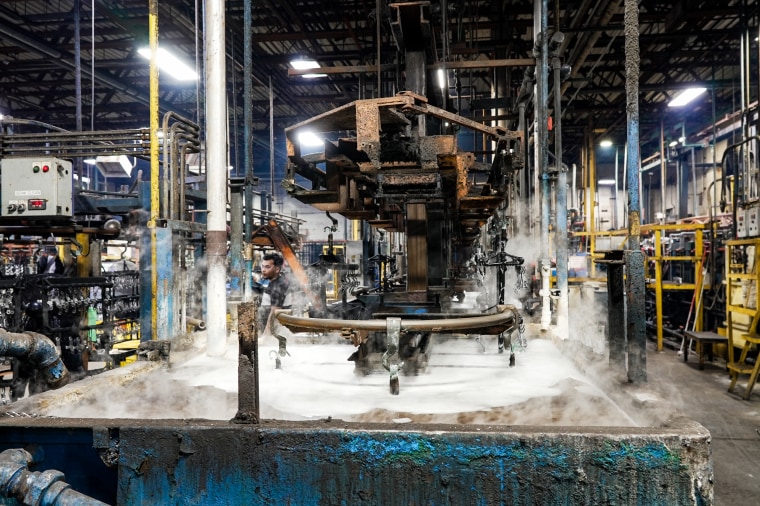
The U.S. and Canadian auto industries are also deeply connected through employment. A Canadian parts supplier may sell to an American automaker. An American steel company may sell to a Canadian parts supplier. A truck may cross the border carrying material in one direction and finished components in the other.
When tariffs hit one side, both sides can lose business.
That is why auto executives have repeatedly warned that tariffs can raise prices even when the policy goal is to increase domestic manufacturing. The industry may eventually build more capacity at home, but the transition is not free. It is paid for through investment, disruption, layoffs in some places, and higher prices in others.
The real fight is over certainty
Businesses can adapt to high costs more easily than unpredictable costs.
If an automaker knows that a part will cost 25% more for the next decade, it can redesign the vehicle, renegotiate contracts, build a plant, or find a substitute. If the rate changes every few months, planning becomes guesswork.
That uncertainty affects investment decisions. It also affects consumers. A dealer may hold less inventory because replacement costs are unclear. A manufacturer may delay a new model. A supplier may stop hiring. A buyer may rush to purchase before a deadline: or wait because the entire market feels unstable.
The failed August 21 talks made that uncertainty worse. The new 50% duties on roughly $28 billion of Canadian goods are in place. Canada’s response begins September 8. The proposed auto and steel increase is scheduled for January 1, 2027, but it remains vulnerable to another negotiation, exemption, or policy change.
That is not a stable environment for a factory, a dealership, or a household trying to buy a dependable vehicle.
The trade war with Canada has moved beyond slogans about national strength and unfairness. It is now embedded in supply contracts, customs classifications, dealer inventories, and monthly car payments.
The next time someone says tariffs are just a fight between governments, look at the window sticker.
Then check the price of the wine.
For more plain-English economic analysis, visit the Regular Guy Economics general blog section or explore the podcast.
Sources and further reading:
- Statement by Prime Minister Mark Carney on Canada–U.S. trade negotiations
- NBC News: One auto part crosses the U.S.–Canada border several times
- Canada’s Department of Finance: Tariffs on automobiles
- Reuters: Trump says tariffs on Canadian cars, trucks, parts, and steel could rise to 50%
- Congressional Research Service: U.S.–Canada trade and tariff background
Disclosure: Regular Guy Economics is not a financial advisor. This article is for educational and informational purposes only and is not investment advice, a recommendation to buy or sell securities, or a substitute for professional financial, tax, legal, or economic guidance.
Be mindful, be watchful and good luck.