



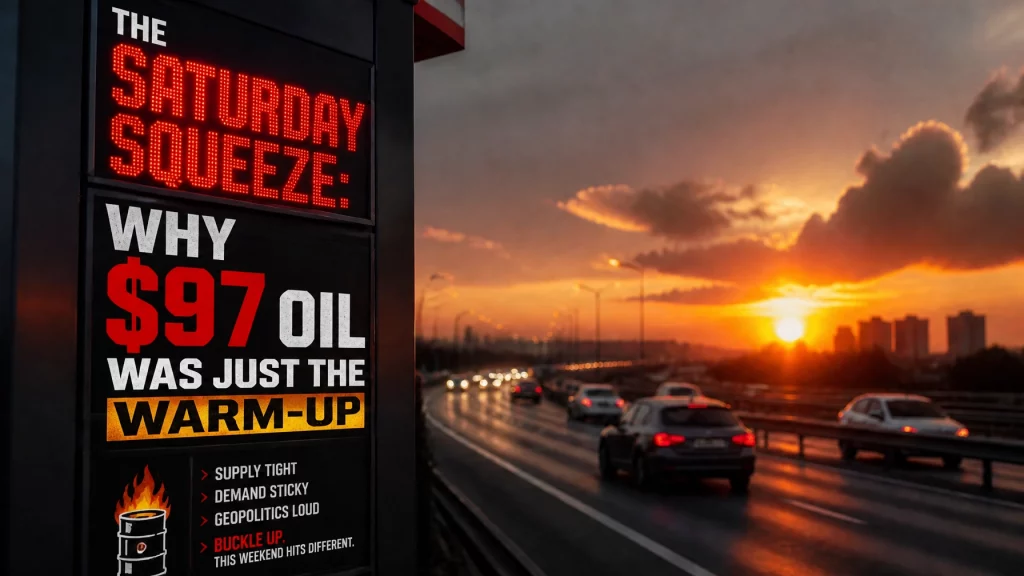
If oil had a weekend, it was the kind that ends with somebody standing on a bar stool yelling bad ideas. On Saturday, May 16, Brent crude ripped up to $97 a barrel after the Russian sanction waivers expired, and the market basically did what every over-caffeinated trader does when supply suddenly looks sketchy: it lost its mind.
That move mattered because this wasn’t just some random commodity freakout. This was the market realizing that a bunch of barrels it had quietly depended on were no longer easy to move, insure, or legally touch. In plain English: the music stopped, everybody looked around for a chair, and a lot of folks realized there weren’t enough seats.
The Saturday Squeeze
The setup was simple and nasty. The waiver system had been acting like duct tape on a busted pipe. It allowed parts of the global oil trade to keep functioning even while the official policy line was “we’re cracking down.” Not pretty, not permanent, but it kept crude flowing and prices from going full gremlin.
Then May 16 hit, the waivers expired, and oil punched to $97.

That was the original "Saturday Squeeze" we talked about: a market suddenly forced to price in tighter supply, uglier logistics, and a lot more uncertainty. It was a reminder that oil doesn’t care about speeches, vibes, or hopeful headlines. It cares about barrels actually showing up where they need to go.
The Panic Extension
Here’s where it got even better, if by “better” you mean “more ridiculous.”
On May 18, Treasury quietly extended the waiver for another 30 days. No parade. No chest-thumping press conference. Just a fast little policy U-turn that screamed: “Oops, the market is breaking.”
That tells you everything. If officials were fully comfortable with the squeeze, they would have let it ride. Instead, they blinked. Fast. Because $97 oil has a funny way of turning into angry consumers, sticky inflation, nervous airlines, cranky truckers, and politicians suddenly rediscovering the magic of temporary exceptions.
The Iran Rollercoaster
So if the waiver got extended, why didn’t oil cool off the way everybody hoped?
Because the market had already moved on to the next panic attack.
Iran tensions kept the risk premium alive, and once traders start worrying about the Strait of Hormuz, things get spicy in a hurry. About a fifth of the world’s oil consumption moves through that narrow little chokepoint. You don’t need an actual shutdown for prices to jump. You just need enough tension, enough military theater, and enough late-night headlines to make traders think, “Yeah, maybe I should pay up for barrels now.”
That’s the rollercoaster. One problem gets patched, another problem immediately hops in the front seat and yanks the safety bar loose.

So even with the extension back on the table, the market didn’t suddenly relax. The waiver brought back a little breathing room, sure, but it did not erase the larger reality that global supply is still tight, shipping routes are still politically fragile, and the Middle East remains one bad headline away from setting your gas budget on fire.
Why This Still Hits Your Wallet
The regular-guy version is pretty simple: when oil stays elevated, everything that moves gets more expensive. Gasoline, diesel, flights, shipping, groceries, all of it. The barrel is the opening act. Your household budget is the part where the crowd gets soaked in beer.
And this isn’t just about fear. The physical market still looks tight. U.S. inventories have been drawing hard, which is market-speak for “we keep taking more barrels out of storage than we’re putting back in.” That’s not what a comfy, well-supplied system looks like. That’s what a market looks like when it’s already leaning on the furniture.

So yes, Treasury hit the panic button and brought the waiver back for 30 days. But putting the folding chair back in the game doesn’t mean the room suddenly has enough seats. We’re still playing high-stakes musical chairs with global oil supply, and everybody knows it.
We’ve seen versions of this movie before. Remember when we covered the Meta stock tumble and the market suddenly realized the bill for AI wasn’t theoretical anymore? Same energy. The old cheap setup disappears, and then everyone acts shocked that reality costs more.
The Regular Guy Takeaway
If you’re talking about this with a buddy at a bar, here’s the clean version:
- May 16 was real: the Russian waiver expiry helped shove oil to $97.
- May 18 was a retreat: Treasury quietly extended things 30 more days because the market reaction was uglier than expected.
- That still didn’t fix it: Iran tensions and Strait of Hormuz drama kept the fear premium alive.
- The bigger issue remains: supply is still tight, U.S. inventory draws are still nasty, and we’re not exactly swimming in spare barrels.
So what do you do? Same boring smart stuff as always. Watch your driving, expect airlines and shippers to keep playing the “sorry, costs went up” card, and don’t assume one policy extension means the storm passed. It may have just bought everybody a few more innings.
If you want more on how this spills into your summer budget, check out $4.50 Gas and the Great Road-Trip Math Problem, The Passport Penalty: Europe’s Jet Fuel Cliff, and What One Bad Night Over Tehran Costs You. Same story, different punch to the wallet.

The Bottom Line
The waiver is back for now, but the squeeze never really left. All Treasury did was throw a temporary patch on a market that’s already twitchy, under-supplied, and one geopolitical headline away from another sprint higher.
That’s why $97 oil was probably the warm-up, not the finale.
Be mindful, be watchful and good luck.