



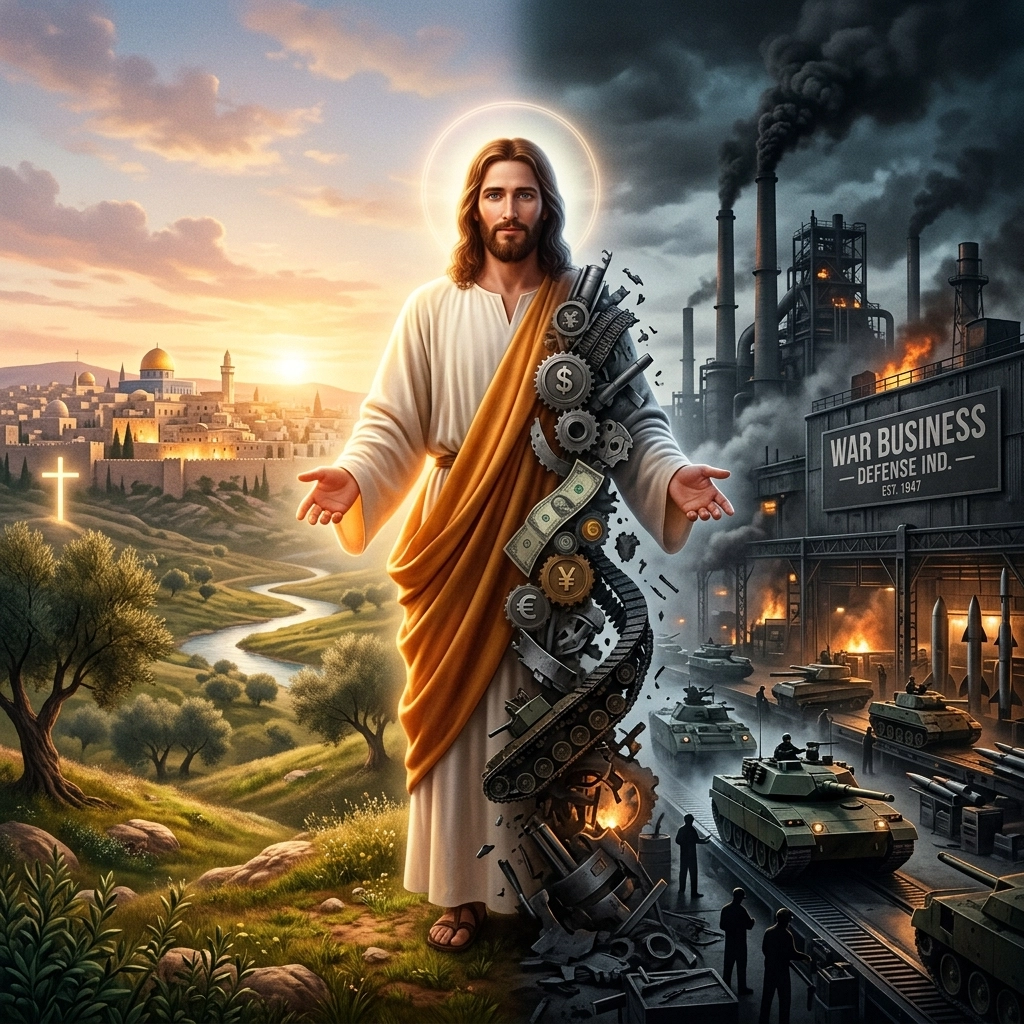
Now we’re in the week after Easter. The ham is gone, the plastic grass is still somehow stuck in the carpet, and the hopeful, reflective mood of the holiday has already run headfirst into the regular programming of the modern world.
You come out of a weekend that was supposed to be about peace, sacrifice, and rebirth, and what do you find? The same headlines. The same conflicts. The same shipping problems. The same trillion-dollar war machine grinding away like it never even noticed the holiday on the calendar.
That’s the part that ought to bother people. Easter comes and goes, families gather, churches fill up, people talk about renewal for a couple of days, and then the "business of war" picks up right where it left off. Between the ongoing, harsh conflicts in the Middle East, the Red Sea shipping lanes turning into a literal shooting gallery, and the steady profits that come from instability, it feels less like the world is learning anything and more like it’s trapped in a permanent rerun.
Why is it that even after a holiday built around hope, the global economy still defaults back to chaos on autopilot? And more importantly for those of us just trying to live our lives, why does it feel like the "Regular Guy" is always the one footing the bill for the madness?
The $19 Trillion Elephant in the Room
Let’s talk numbers for a second, because that’s where the "Prince of Peace" vibe hits the hard wall of reality. According to the latest data, the global economic impact of violence reached a staggering $19.1 trillion in 2023. To put that in perspective, that’s about 13.5% of all global economic activity.
Think about that. Nearly 14 cents of every dollar generated on this planet is essentially "spent" on the friction of human beings fighting each other.
Now, if you’re a regular person, you’re thinking, "That’s insane. If we just stopped fighting, we could solve… well, everything." And you’re right. Research shows that for every one-point improvement in the "Positive Peace Index," a country’s GDP per capita rises by two percentage points. In peaceful nations, household consumption grows twice as fast, and business activity grows six times faster.
Peace is, quite literally, the best business plan ever written. So why don’t we follow it?
The Business of the "Loop"
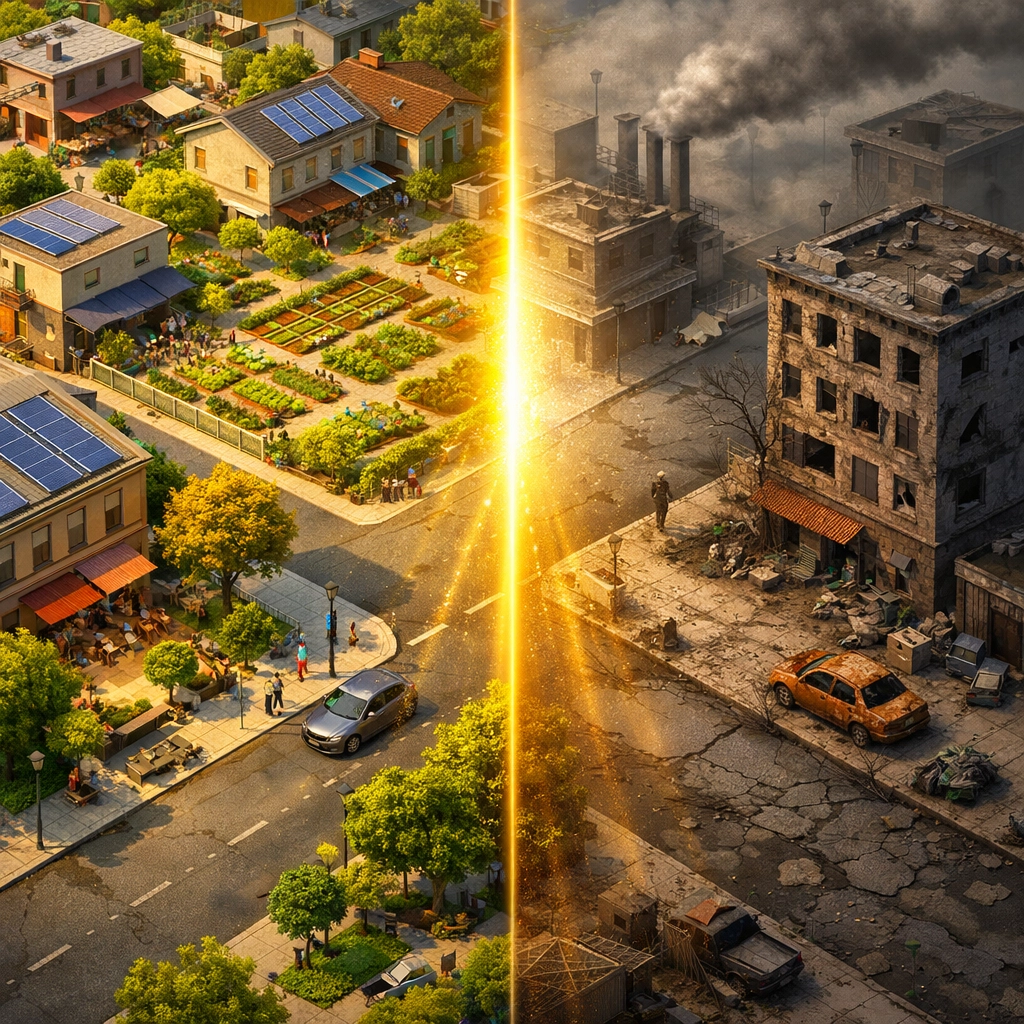
The reason we’re stuck in this loop is that while the benefits of peace are spread out among all of us (the "diffuse" benefit), the profits of war are highly concentrated.
Think of it like the medical industry. We’ve talked before about how medical costs in the U.S. have climbed from 5% of our GDP in 1960 to a projected 20% by 2025. Does that mean we’re four times healthier? Not even close. We’ve got more obesity, more diabetes, and a drug cocktail for every ailment under the sun. It’s a "runaway train" where the costs go up, but the outcomes stay flat or get worse.
The "War Industry" works the same way. It’s a $2.5 trillion hidden industry that thrives on instability.
- Commodity Traders: When things go south in the Middle East, oil prices spike. While you’re groaning at the pump, traders like Vitol and Trafigura are having their best years ever. During the start of the Ukraine conflict, Vitol posted profits up to $15 billion just by moving oil from point A to point B during the chaos.
- Defense Contractors: For them, a war isn't just a tragedy; it’s a "proof of concept." When a new missile system or drone is used in the Middle East, it becomes "combat-proven." That’s a marketing term. It means sales are about to go through the roof.
- Cybersecurity Firms: Every time a new conflict breaks out, every company on earth panics about being hacked. Firms like Palo Alto Networks see 30% growth because, in a world of war, digital protection becomes an essential "tax."
It’s a "buzz saw of madness." The system is designed to reward the friction, not the flow.
The Shipping Tax That Didn’t Leave With the Holiday
Let’s bring it down to the kitchen table. Why does this conflict in the Middle East still matter to you now that Easter is over?
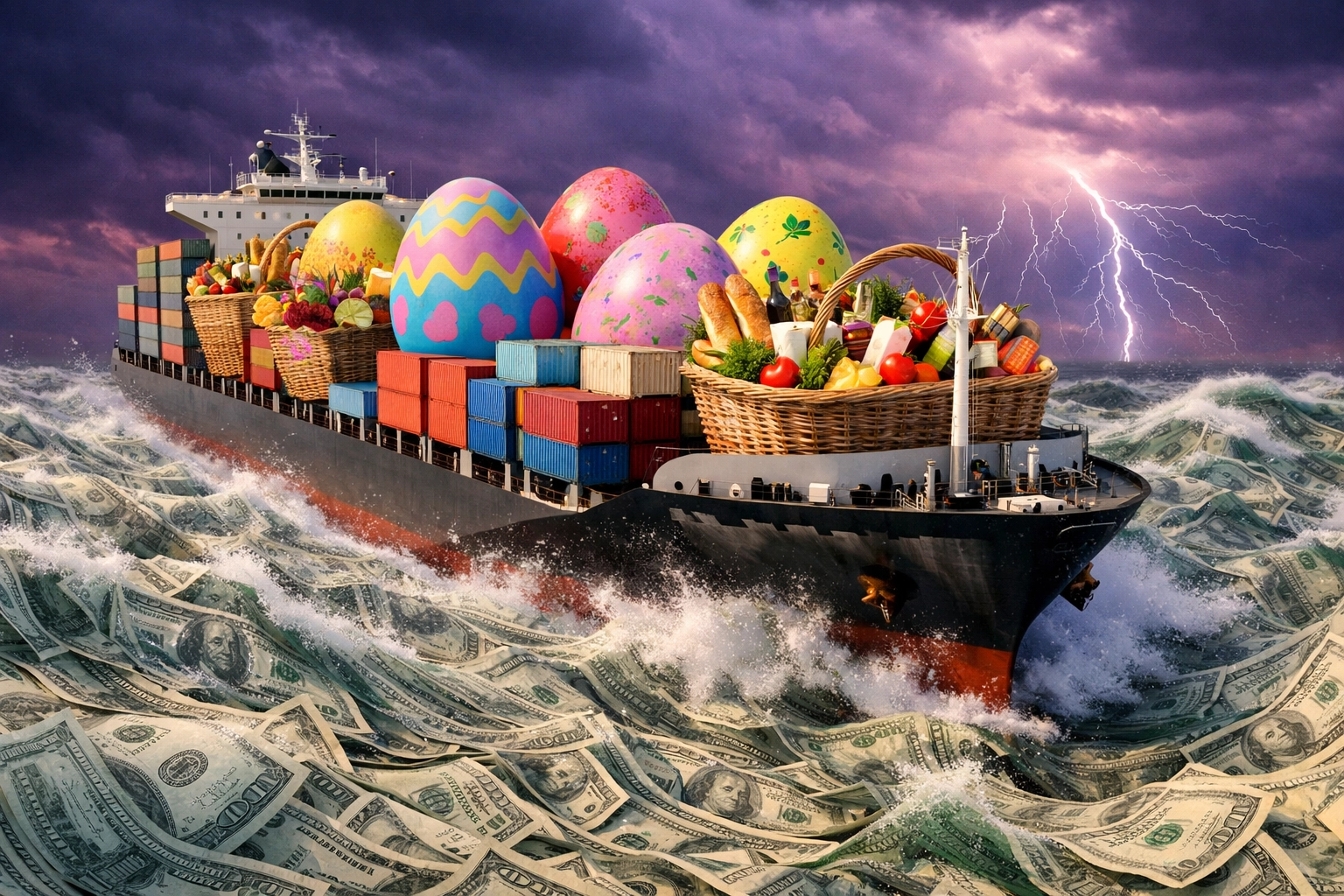
Because the Red Sea is a vital artery for the world’s "blood", aka cargo ships. When those lanes are threatened, ships have to go the long way around Africa. That adds weeks to the trip and millions of dollars in fuel costs.

When shipping costs go up, everything in that shipping container gets a "war tax." The electronics you bought, the clothes you wore to church, the groceries you picked up for Easter dinner, and the stuff you’re still buying this week all get more expensive. It’s a hidden inflation that hits the "Regular Guy" the hardest. We’re paying for the conflict every time we swipe our cards, whether we realize it or not.
That’s the real post-holiday hangover: Easter is over, but the Business of War never took a day off. The message of peace gets packed away with the decorations, while the bill for global chaos keeps showing up right on schedule.
Breaking the Loop: A Different Kind of Math
So, how do we fix it? We can look at the "Amazon/Berkshire Hathaway/JPMorgan" approach to healthcare for inspiration. They realized that the current medical system was a runaway train "free from profit-making incentives and constraints." They decided to form their own healthcare company to focus on outcomes rather than just billing.
What if we looked at global stability the same way?
Right now, our "insurance" against war is just buying more weapons. But that’s like trying to lower your car insurance by buying a more expensive car. It doesn’t work. Car insurance works because there is "finite math." We know the value of the car, we know the cost of the repair, and if it’s too far gone, we "total" it.
In the world of geopolitics, we haven't established the "totaled" value. We just keep pouring money into the repair shop.
We need to start reclassifying "defense spending" as "stability expense." Just like we argued that companies should invest $100 in a gym membership to save $10,000 in cardiac care, the global economy needs to invest in the things that create "Positive Peace", education, reliable infrastructure, and fair trade, rather than waiting for the heart attack of a regional war.
The Search for Peace in a $19 Trillion Mess
It’s easy to get cynical. It’s easy to look at the Middle East and think, "Well, it’s always been like this, and it always will be." But that’s exactly what the people profiting from the "loop" want you to think.
If we accept that war is just an inevitable part of the "Business Cycle," we’ve already lost.
Now that Easter has come and gone, maybe this is the right time to ask what exactly we are doing with the message of peace once the holiday is over. We’ve optimized every other part of our businesses: we have near-zero inventory, variable workforces, and third-party outsourcing. We’ve wrung the "waste" out of everything except the two biggest monsters: the medical industry and the war machine.
They are the last frontiers of expense reduction.
Imagine a world where that $19.1 trillion wasn’t being burned in the fires of conflict. Imagine if that 13.5% of global activity was being spent on literally anything else: curing diseases, cleaning the oceans, or just making sure the "Regular Guy" doesn't have to choose between a full tank of gas and a decent holiday meal.

The math of peace makes sense. The math of war only makes sense for the shareholders of the few.
A week after the holiday, that message still holds. Take a second to appreciate the peace you do have. It’s the most valuable thing you own, even if it doesn't show up on a balance sheet. And remember, the "Regular Guy" doesn't need a billion-dollar weapon system to find stability; he just needs a world that stops trying to profit from the chaos.
Be mindful, be watchful and good luck.