



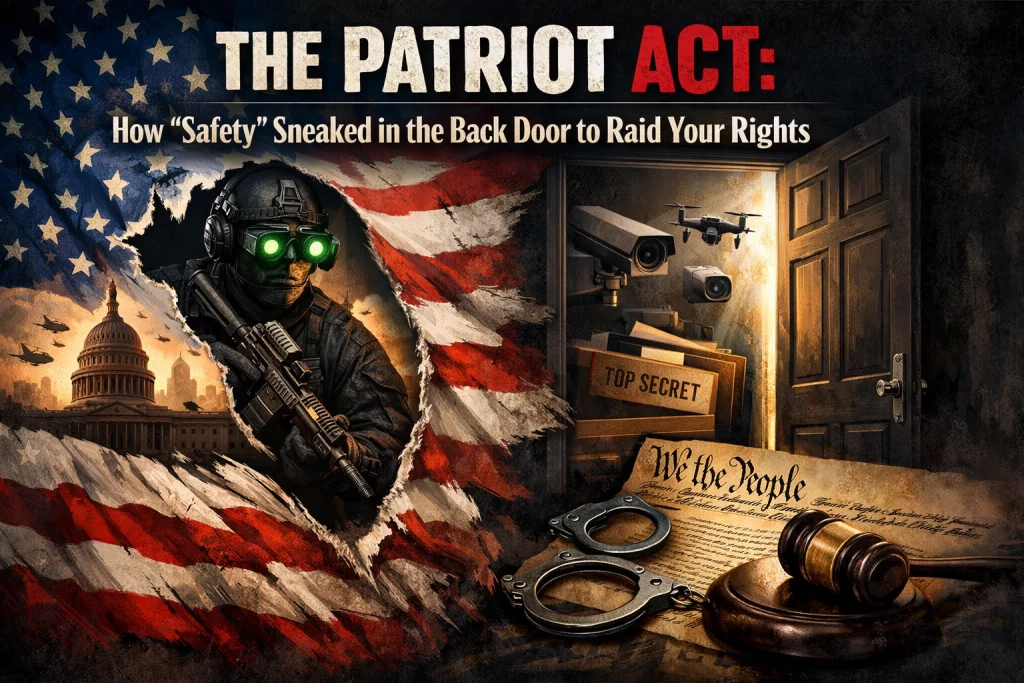
Remember when your parents told you not to make big decisions when you're angry or scared? Yeah, Congress didn't get that memo.
Forty-five days after September 11, 2001, when the rubble was still smoking and the entire country was understandably terrified, Congress passed the USA PATRIOT Act. That's right, 45 days. For context, that's less time than it takes most of us to decide which streaming service to cancel. And in that month and a half, with minimal debate and maximum fear, we traded a bunch of constitutional rights for the promise of "safety."
The kicker? Most of the people who voted for it never actually read the thing. It amended over 15 federal statutes, created new surveillance powers, and basically handed the government a backstage pass to your entire life. All wrapped up in a flag-waving acronym that stands for "Uniting and Strengthening America by Providing Appropriate Tools Required to Intercept and Obstruct Terrorism."
Catchy, right? Almost like they hired a marketing team instead of constitutional scholars.
The Fourth Amendment Just Left the Chat
Let's start with the Fourth Amendment, you know, that pesky little rule about needing a warrant before the government can search your stuff? It says you're supposed to be "secure in your persons, houses, papers, and effects" unless there's probable cause and a judge signs off on it.
The Patriot Act looked at that and said, "Nah, we're good."
Section 213 introduced what they cheerfully called "sneak and peek" warrants. Cute name, terrible reality. These allow federal agents to search your home, rifle through your belongings, install surveillance equipment, photograph everything, and then not tell you about it. For months. Sometimes indefinitely.
Let that sink in. The government can break into your house, poke around, and you won't know until they decide you should know. The whole point of requiring contemporaneous notice was so you could challenge the search if it was bogus. But now? They've eliminated that requirement entirely. It's like playing poker but your opponent can look at your cards and you can't even know they looked.
Then there's Section 215, which might be even worse. Under this provision, the FBI can obtain a secret order from the FISA court (more on that mess in a minute) to access your "business records." And when they say "business records," they mean everything: your library history, medical records, financial statements, internet browsing history, purchases, basically every digital breadcrumb you've ever left behind.
The standard for getting this order? The government just has to certify that the information is "relevant to an ongoing investigation." That's it. No probable cause. No crime you've been accused of committing. Just "relevant."
By that logic, everyone who Googled "pressure cooker" and "backpack" in the same month is "relevant." The math isn't mathing here, folks.

Miranda Rights and Due Process Walk Into a Bar…
The Fifth and Sixth Amendments were supposed to protect you from the government throwing you in a cell and forgetting about you. You have the right to remain silent, the right to an attorney, the right to a grand jury before being charged with serious crimes, and the right to know what you're accused of.
But here's where the Patriot Act gets creative. Slap the word "terrorism" on someone, and suddenly all those protections become… optional.
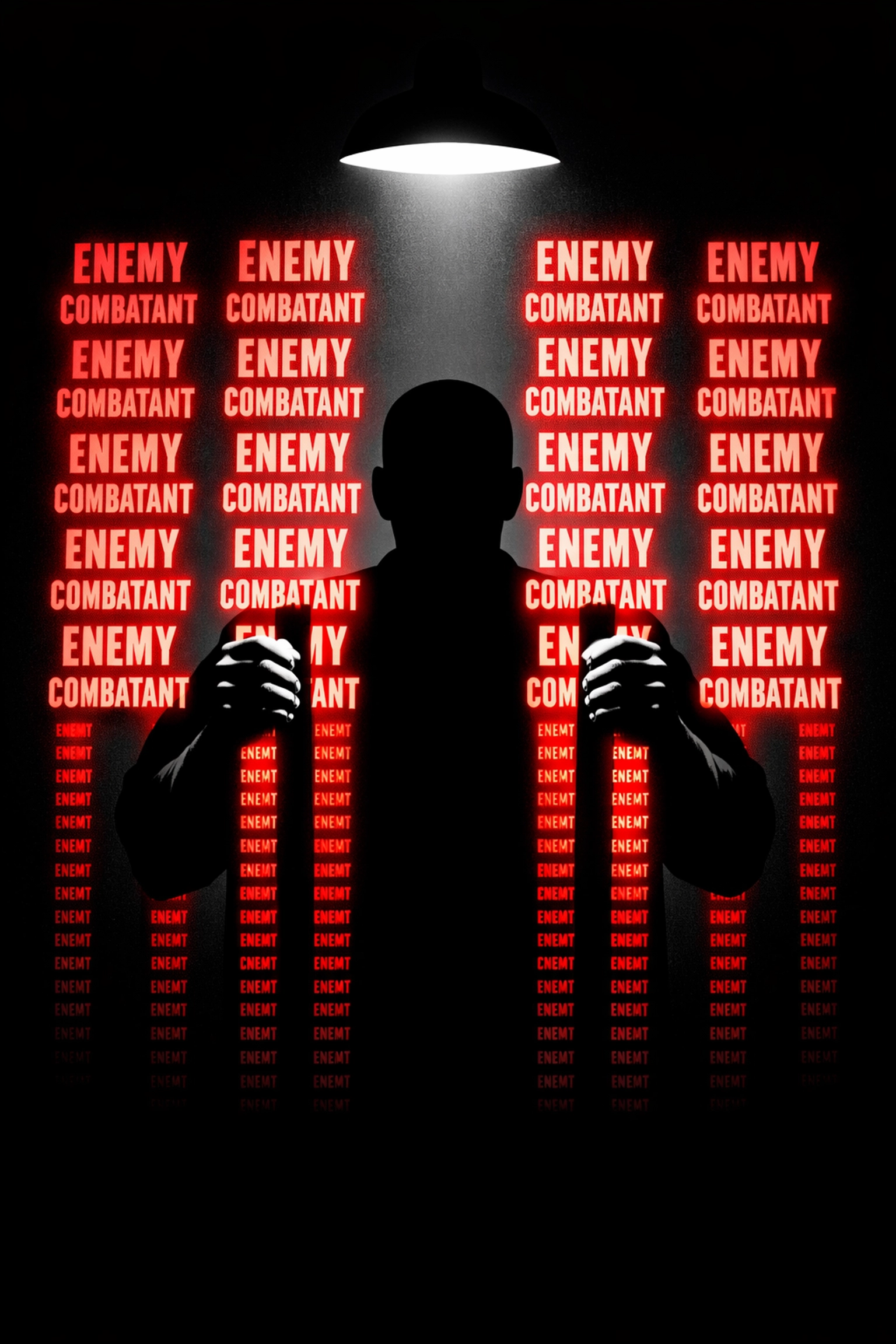
Under the Act's framework, particularly when combined with later executive actions, individuals labeled as "enemy combatants" or suspected of terrorism ties can be detained without the traditional reading of Miranda rights. They can be held without charges being filed through the grand jury process. They can sit in legal limbo for months or years while the government decides what to do with them.
The due process protections that took centuries to establish? Gone. The grand jury requirement that's literally written into the Constitution? Bypassed. All it takes is the government saying the magic word: "terrorism."
It's like "Simon Says" for constitutional rights. Except Simon is the federal government, and if they don't say "Simon Says," you still lose.
American citizens have been detained under these provisions. José Padilla was held for three and a half years as an "enemy combatant" before the government finally charged him with crimes. Anwar al-Awlaki, a U.S. citizen, was killed by a drone strike without ever facing trial. Whether or not these individuals were dangerous is almost beside the point, the process itself violates the fundamental principle that the government can't just declare you guilty and skip the whole "proving it in court" part.
The Secret Court Where the Government Always Wins
Now let's talk about the Foreign Intelligence Surveillance Act (FISA) court, because this is where things get really Orwellian.
The FISA court operates almost entirely in secret. The proceedings are classified. The government presents its case for surveillance or searches, but the person being targeted doesn't get to be there. There's no defense attorney. There's no cross-examination. It's just the government, talking to a judge, in a closed room.
And before the Patriot Act, at least there was a requirement that gathering foreign intelligence had to be the primary purpose of the surveillance. The Act changed that standard. Now it just has to be "a significant purpose", not even the main purpose. So they can conduct surveillance for criminal investigation purposes and just sprinkle in some vague "foreign intelligence" justification to use this secret court.
The approval rate for FISA warrants is over 99%. Between 1979 and 2012, the court rejected only 11 warrant applications out of nearly 34,000. Those aren't oversight numbers. That's a rubber stamp factory.
Oh, and one more thing: if the FBI shows up at your bank, your library, your ISP, or your doctor's office with a Section 215 order, there's a gag order attached. The person or institution receiving the order is legally prohibited from telling you that your records were searched. They can't tell anyone. It's essentially: "Hand over everything you have on this person, and by the way, mentioning this to anyone is a federal crime."
How do you challenge a search you don't even know happened?
They Used Fear as Currency
Here's the thing about the Patriot Act that really sticks in the throat: it was passed during a moment of absolute national trauma. The towers had just fallen. The Pentagon was still smoldering. Anthrax was showing up in the mail. Everyone was scared: and rightfully so.
But fear is a terrible basis for legislation, especially legislation that fundamentally rewrites the relationship between citizens and their government.
The Act was over 300 pages long, introduced in the House on October 23, 2001, and signed into law on October 26. Three days. There's no way every member of Congress read it, let alone had time to debate its implications thoroughly. Several representatives have since admitted they voted for it without reading it because voting against anything labeled "anti-terrorism" in October 2001 was political suicide.
Government officials have defended the Act by pointing to over 400 suspects charged and 200 convictions secured. But here's the problem with that math: we have no way of knowing how many of those cases actually required the expanded surveillance powers, and how many could have been prosecuted under traditional law enforcement methods.
What we do know is that the government has repeatedly abused these powers. The NSA metadata collection program that Edward Snowden revealed? That was operating under Section 215 authority. The FBI has issued hundreds of thousands of National Security Letters (another Patriot Act creation) to obtain records without warrants: and in many cases, violated their own internal guidelines doing so.
When you give the government sweeping powers "just for terrorism," don't be surprised when they start using those powers for everything else. Mission creep isn't a bug: it's a feature.
The Regular Guy Gets Watched
For most Americans, the Patriot Act doesn't feel like it affects them directly. You're not a terrorist, so why worry, right?
But that's not how surveillance works. When the government has the infrastructure to watch everyone, they watch everyone. Your internet searches. Your phone calls. Your financial transactions. Your travel patterns. All of it can be swept up, stored, and searched later if you ever become "relevant" to an investigation.
The Fourth Amendment wasn't written to protect criminals: it was written to protect everyone from living in a society where the government watches your every move without cause. Because once you normalize that surveillance, once you accept that privacy is something you only get if the government allows it, you've fundamentally changed what it means to be a free citizen.
Benjamin Franklin said it best: "Those who would give up essential Liberty, to purchase a little temporary Safety, deserve neither Liberty nor Safety."
Twenty-five years later, we're still living with the consequences of that trade. The Patriot Act was reauthorized multiple times, with minor tweaks and new names, but the core surveillance infrastructure remains intact. We let fear stampede us into sacrificing constitutional protections, and getting them back has proven nearly impossible.
The government used terrorism as the universal key to unlock every door the Constitution had previously kept shut. And most of us didn't even notice until long after those doors were already open.
Be mindful, be watchful and good luck.