



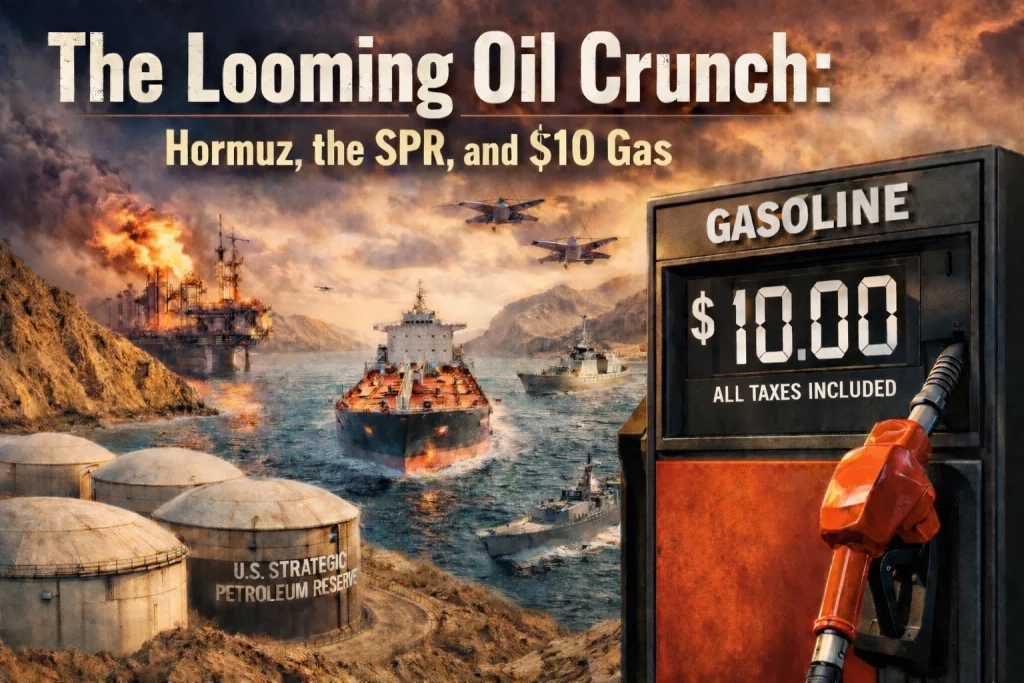
If you walked outside this morning and felt a little extra tension in the air, it’s probably not just the coffee kicking in. It’s the sound of the global economy’s engine starting to sputter.
For years, we’ve treated the flow of oil like the air we breathe, it’s just there. We don't think about it until we’re gasping for it. Well, folks, as of mid-March 2026, the world is officially reaching for the oxygen mask. Between the absolute chaos in the Strait of Hormuz and the fact that our national "rainy day fund" for oil is looking more like a dry puddle, we are staring down the barrel of a reality that could see us paying $10 for a gallon of regular.
Let’s break down why your commute is about to become the most expensive part of your day, and why the "Regular Guy" needs to be watching the Middle East closer than the Sunday night scores.
The World’s Jugular Vein: The Strait of Hormuz
To understand the mess we’re in, you have to look at a tiny strip of water between Oman and Iran. It’s called the Strait of Hormuz. In the world of global trade, this isn't just a shipping lane; it’s the world’s jugular vein.
About 20% of the entire world’s oil supply passes through this narrow stretch. Think about that. One out of every five gallons of gas, diesel, or jet fuel used on the planet has to squeeze through a gap that is only about 21 miles wide at its narrowest point.
Since the conflict broke out earlier this month, the Strait has effectively become a "no-go" zone. Iranian forces have declared it closed, and they aren't just bluffing. We’ve seen nearly 20 vessels targeted in the last two weeks. If you’re a captain of a multi-million dollar tanker, you aren't exactly itching to play Russian Roulette with a missile just to deliver some crude.
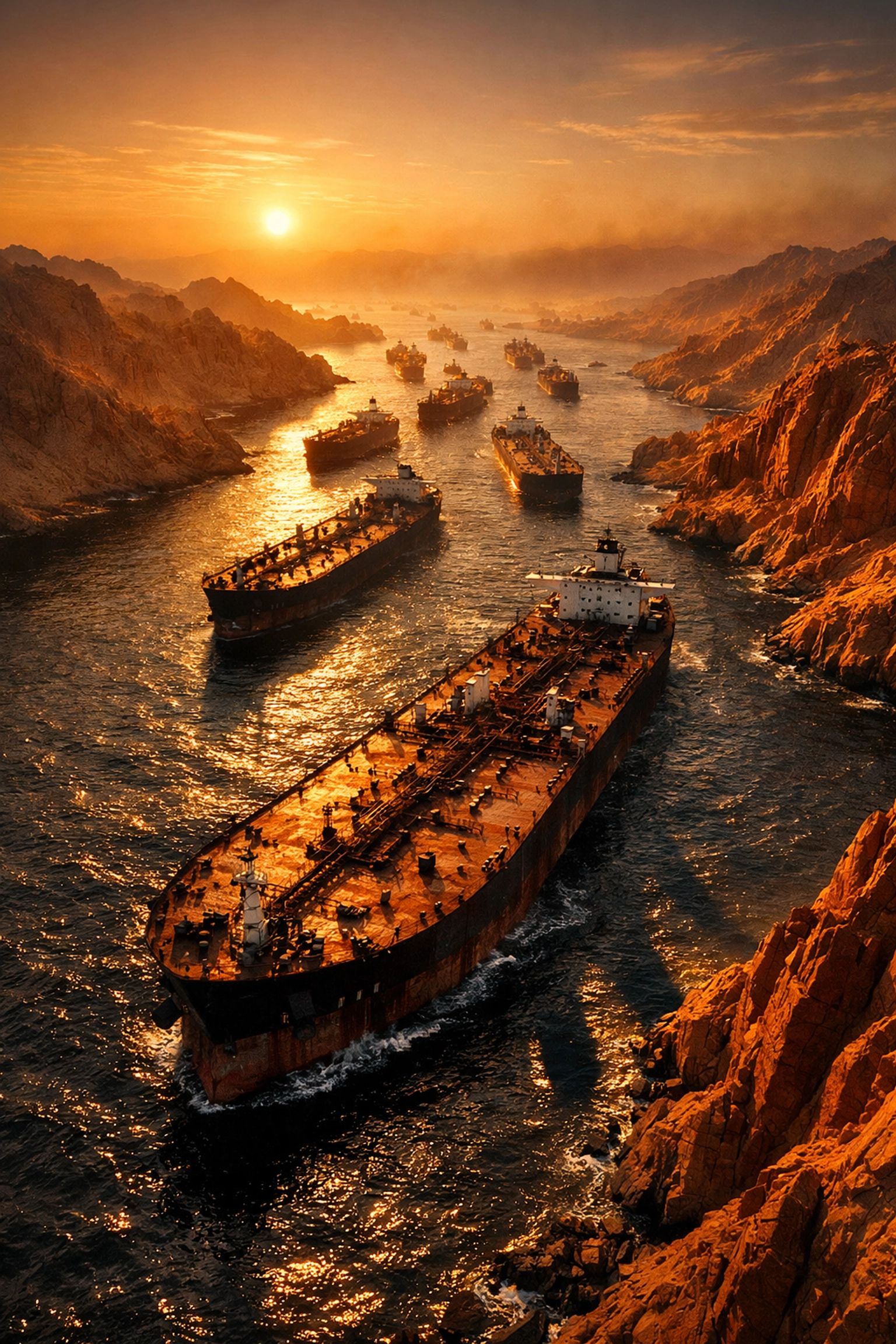
As of yesterday, only a handful of ships: mostly those heading to China or India: have made the trip. Everyone else is sitting tight or taking the long way around, which adds weeks to the journey and millions to the cost. When 20% of the supply gets choked off, the price doesn’t just go up a little; it goes vertical. West Texas Intermediate (WTI) crude has already surged 40% in a week, blowing past $100 a barrel. We haven't seen these levels since the summer of 2022, and back then, we didn't have a literal war blocking the exits.
The Cupboard is Bare: The SPR Crisis
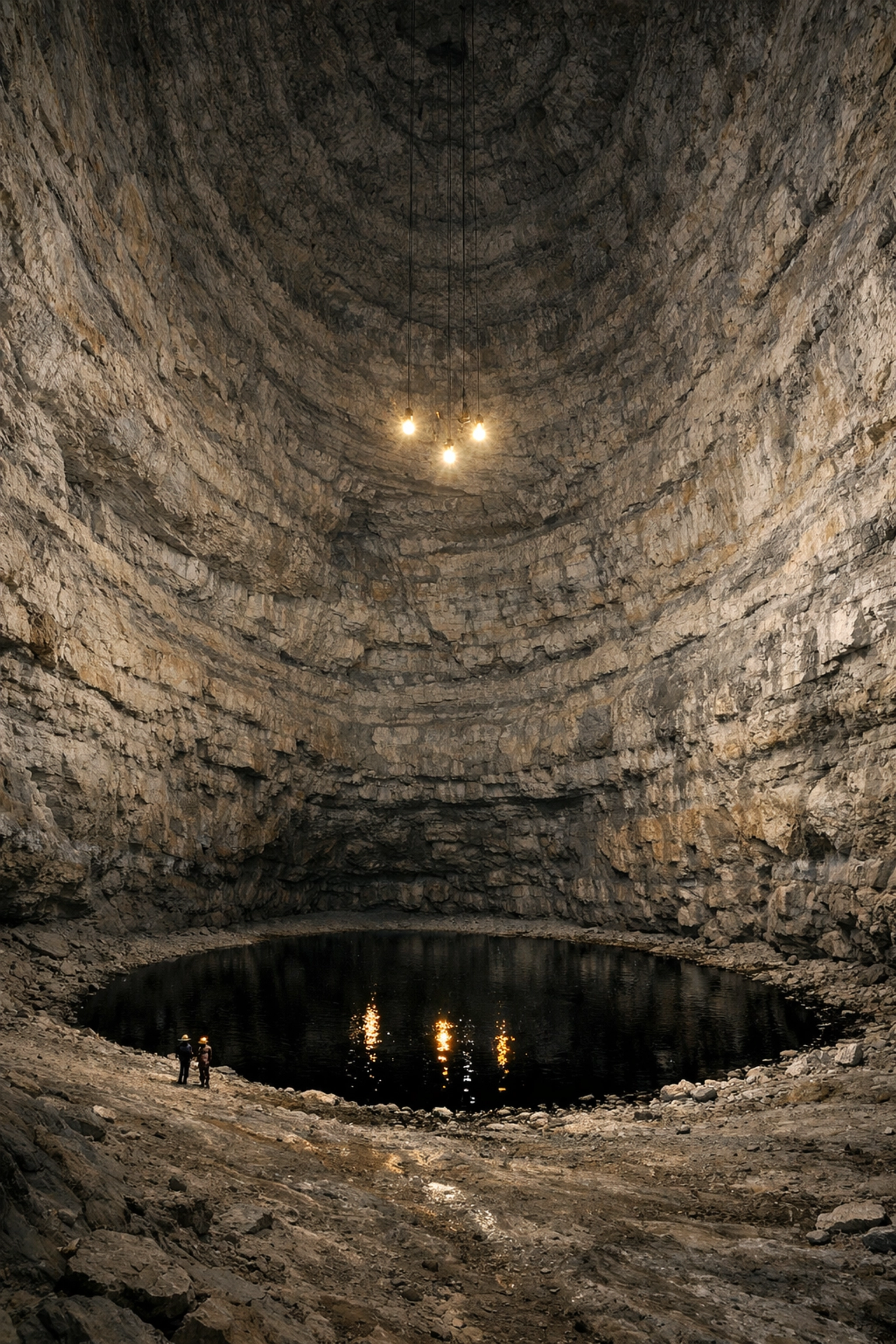
Now, usually, when things get this hairy, the U.S. government has a "Break Glass in Case of Emergency" button. It’s called the Strategic Petroleum Reserve, or the SPR. These are massive underground salt caverns filled with millions of barrels of oil, designed to keep the lights on and the cars moving if there’s a major supply disruption.
Here is the problem: we’ve been "breaking the glass" for years just to keep prices down during election cycles and minor hiccups.
By the time this current crisis hit in 2026, our SPR levels were already at historic lows. We’ve used our safety net as a price-control tool, and now that we’re facing an actual, honest-to-god geopolitical emergency, the cupboard is looking pretty bare. We don’t have the "buffer" we used to.
In the past, the U.S. could dump a million barrels a day onto the market to cool things down. Today? We’re looking at a reserve that provides only a few months of padding against a sustained disruption. If the Strait of Hormuz stays closed for more than a month or two, the SPR won’t be able to save us. We’re essentially flying a plane with the "Low Fuel" light blinking, and the nearest airport just closed its runway.
The Path to $10 Gasoline
I know what you’re thinking. "$10 gas? That’s crazy talk, John."
I wish it were. But let’s look at the "Regular Guy" math.
Currently, gasoline prices are already up 17% since the Iran conflict began. We’re seeing $4.00 and $5.00 in places that used to consider $3.00 expensive. But that’s with the market hoping for a quick resolution. Markets are driven by two things: greed and fear. Right now, fear is starting to take the wheel.
If the Strait remains closed, we aren't just looking at a "shortage." We are looking at a "disappearance." When people realize that the supply literally isn't coming, they don't just pay a little more: they panic.
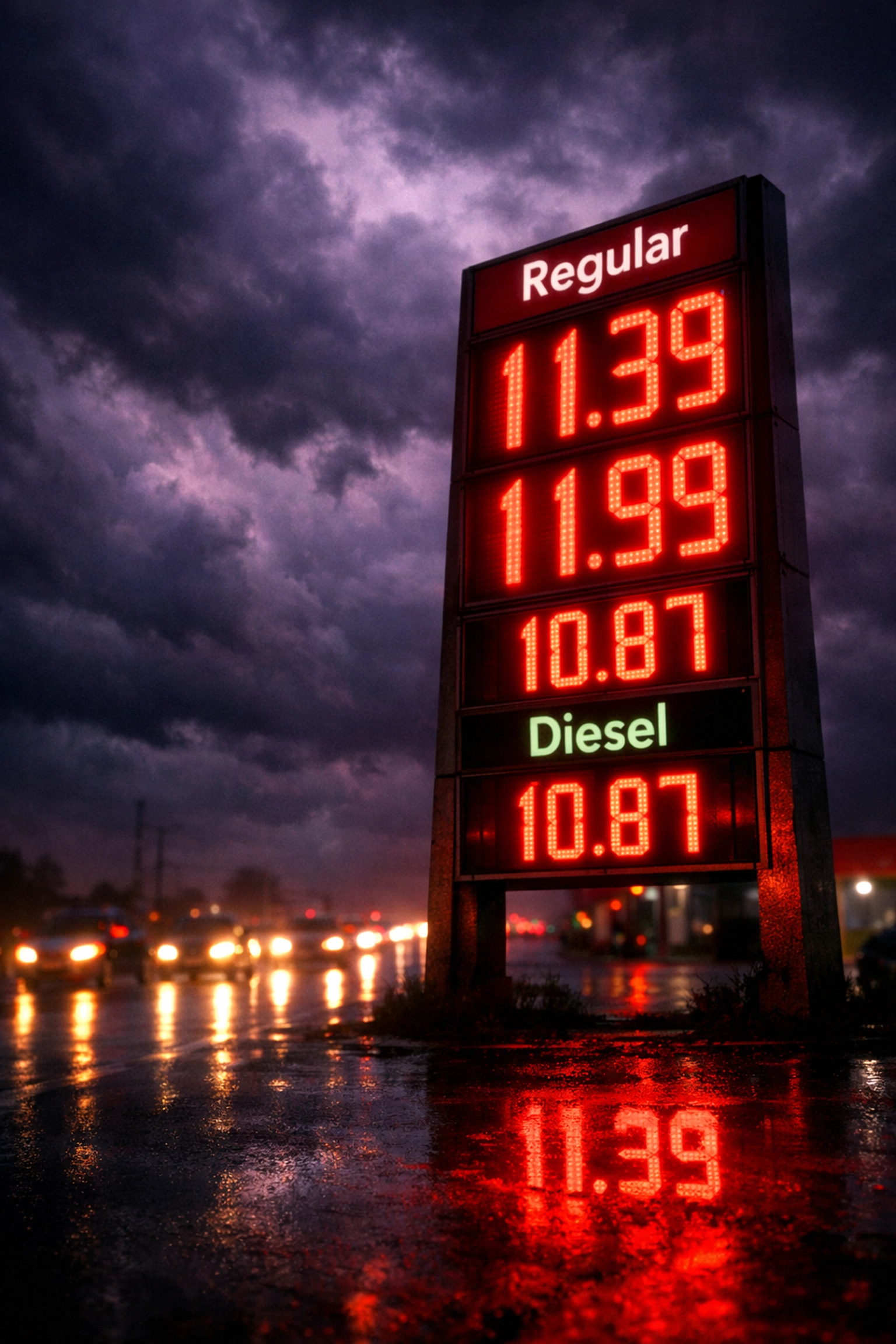
At $150 a barrel for oil: which is where analysts see this heading if the war drags on: you’re looking at $6.00 to $7.00 per gallon easily. If it hits $200 a barrel? Welcome to the $10 gallon. At that point, it’s not just about the price of the oil itself; it’s about the "panic premium." It’s the same reason people fought over toilet paper in 2020. When you think you might not be able to get any, you’ll pay anything for what’s left.
It’s Not Just Your Commute
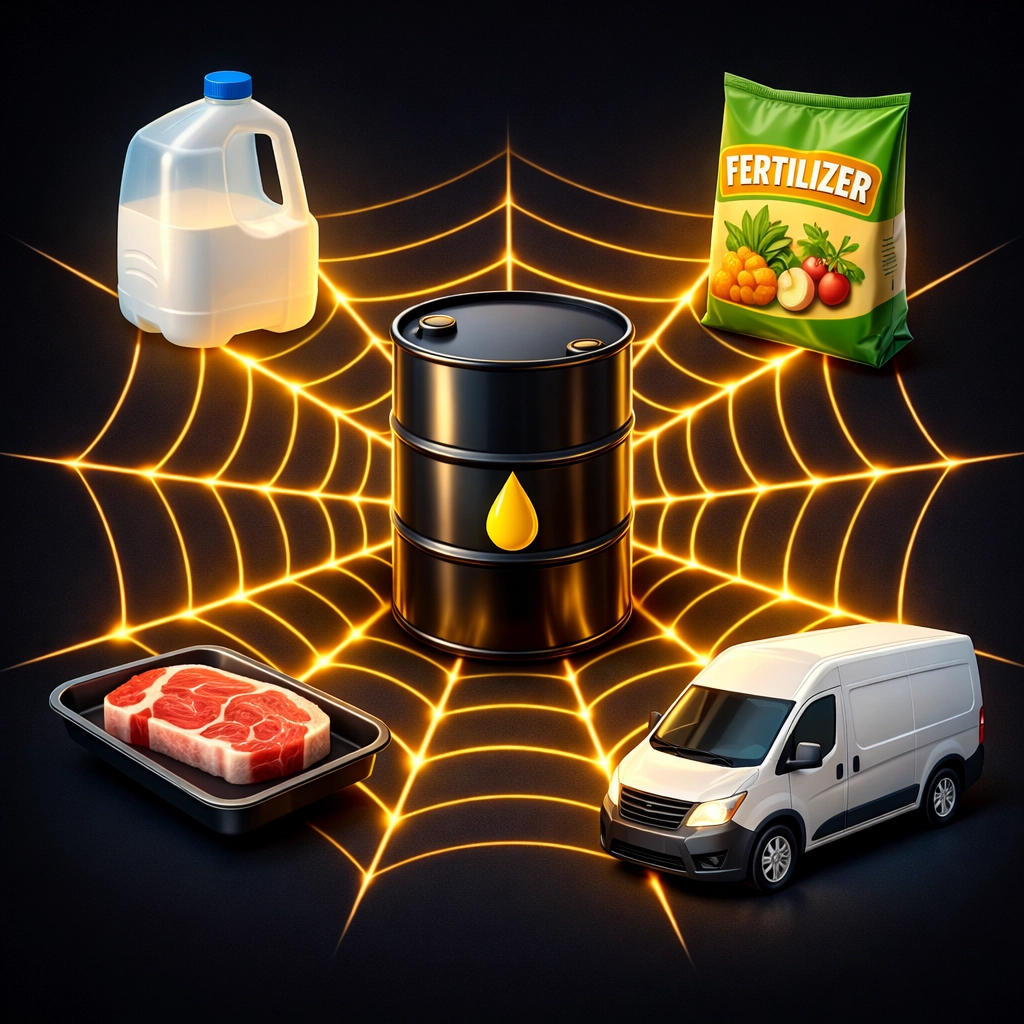
If this was just about the cost of filling up your F-150, it would be bad enough. But oil is the "everything" ingredient.
Think about the research we’ve seen. Roughly 84% of the polyethylene produced in the Middle East goes through that same Strait of Hormuz. What is polyethylene? It’s the plastic in your milk jugs, your medical supplies, your food packaging, and your electronics.
Then there’s the fertilizer. The Middle East is a massive exporter of the components needed to grow the world’s food. If the Strait is closed, fertilizer prices skyrocket. When fertilizer prices skyrocket, food prices go through the roof six months later.
We aren't just talking about expensive gas; we’re talking about expensive everything. The "Croupier" (the market) is taking a bigger rake from every single transaction you make. Whether you’re buying a steak or a toothbrush, you’re paying for the oil it took to make it and the diesel it took to ship it.
What Happens Next?
The reality is that we are in a very tight spot. The global economy is built on "Just-in-Time" delivery. We don't keep massive stockpiles of anything anymore because it’s "inefficient." But "efficient" is another word for "fragile."
When the supply chain breaks at a bottleneck like Hormuz, the fragility is exposed. We are seeing a world where the military and the economy are one and the same. If the Navy can't keep the lanes open, the economy can't keep the shelves full.
Is $10 gas a certainty? No. But for the first time in a generation, it is a mathematical possibility. If the war escalates and the Strait remains a graveyard for tankers, the "Global Disc" of our economy is going to tilt in a way that makes the 1970s look like a walk in the park.
We’ve spent years ignoring our energy security, draining our reserves for short-term political wins, and assuming the rest of the world would just keep playing nice. Now, the bill is coming due, and the price is printed on that digital sign at the corner gas station.
Watch the headlines, keep an eye on the tankers, and maybe think twice about that cross-country road trip this summer. The horizon is looking a little shaky, and it’s not just the heat coming off the asphalt.
Be mindful, be watchful and good luck!