



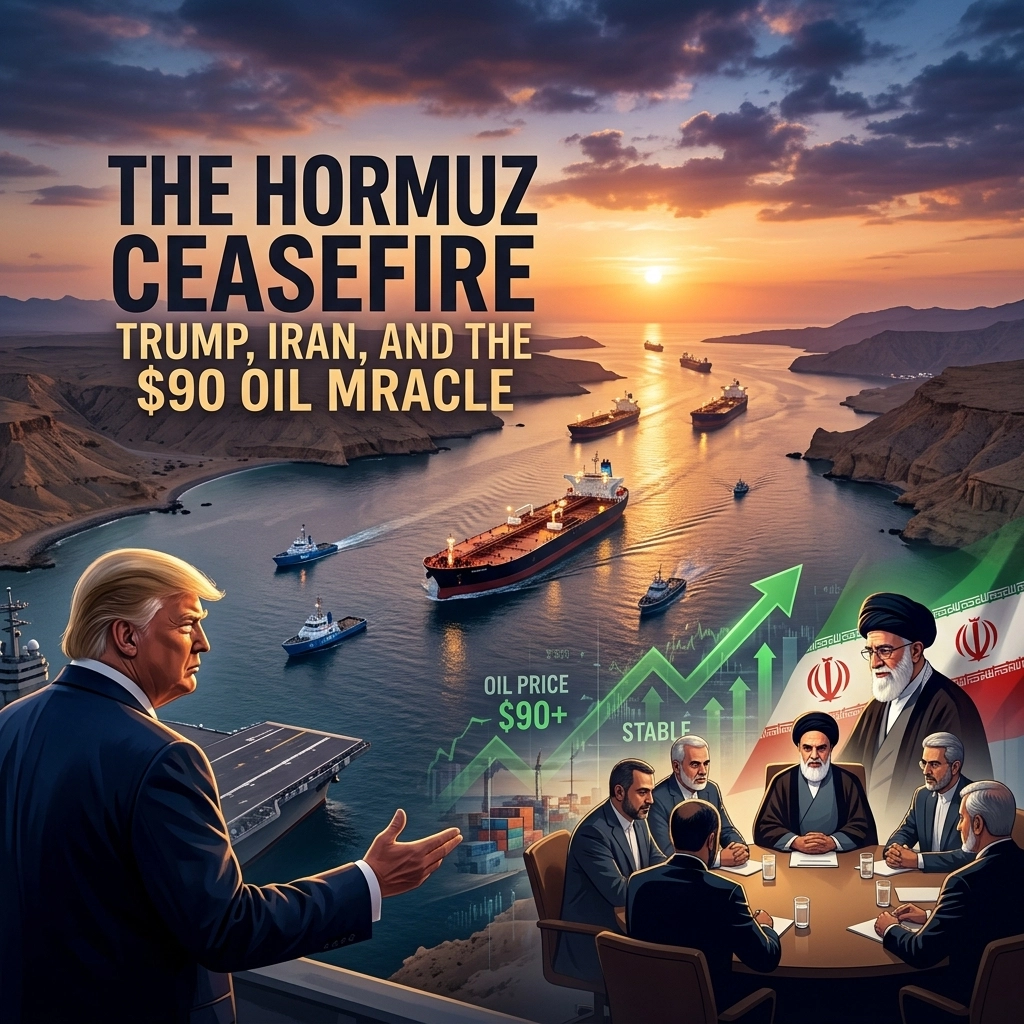
If you spent the week after Easter nursing a chocolate hangover and worrying about whether you’d have to trade your firstborn for a tank of gas, you can finally breathe a sigh of relief. While most of us were settling back into the grind after the holiday, some high-stakes poker was being played on the global stage.
On Wednesday, April 8, 2026, the world got the news it was praying for: a ceasefire. But this isn't just any "stop shooting" agreement. This is the "Hormuz Ceasefire," and it’s effectively unclogging the most important drainpipe in the global economy.
President Trump announced a two-week ceasefire with Iran, and for the first time in what feels like forever, the Strait of Hormuz is officially open for business. If you’re wondering why the stock market looks like it just won the lottery and why oil prices are falling faster than a dropped phone, you’re in the right place. Let’s break down the business of this "peace" and what it means for your wallet.
The 20% Chokepoint: Why We Care
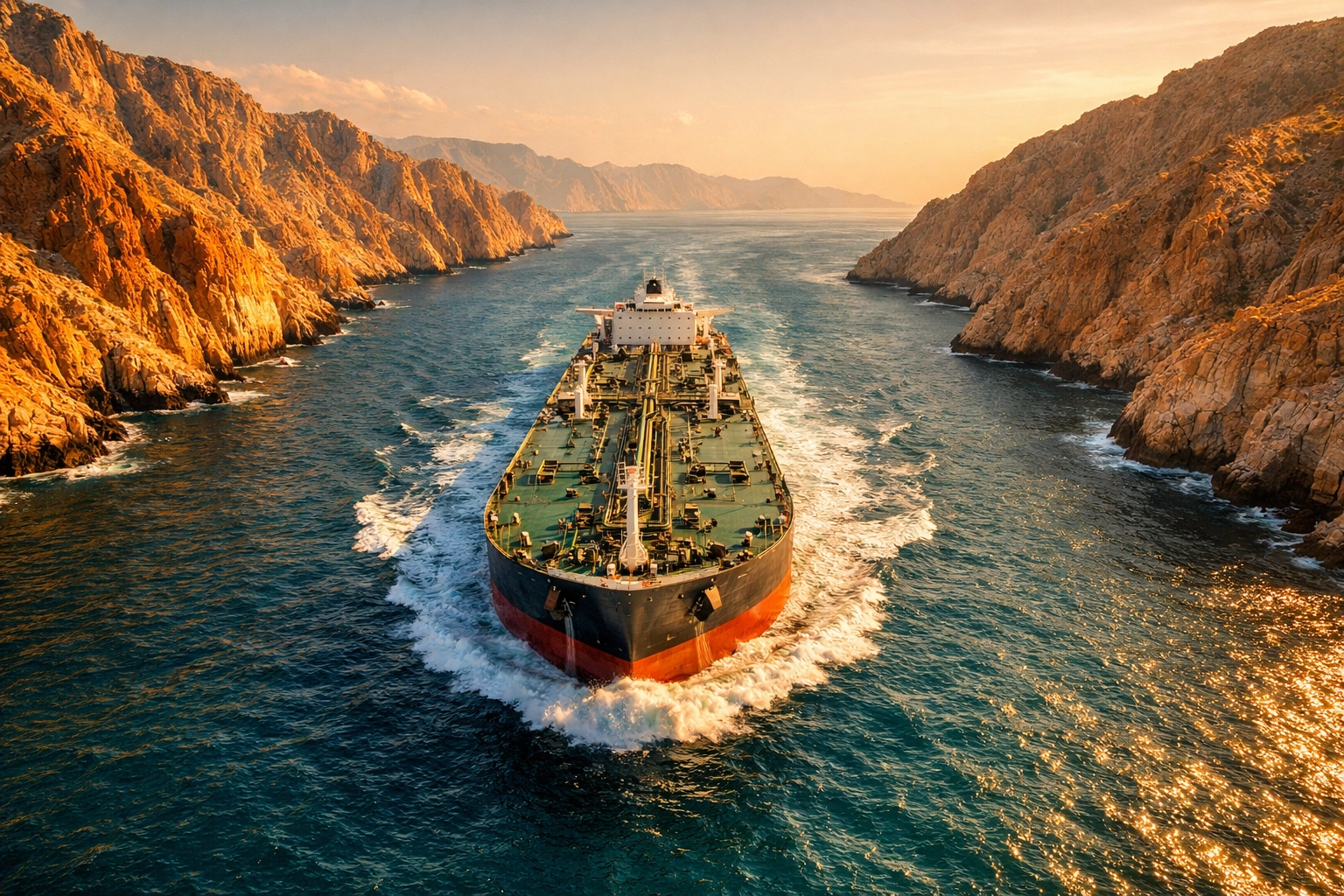
First, a quick geography lesson for the "Regular Guy." The Strait of Hormuz is a tiny strip of water between Oman and Iran. It’s the only way to get oil out of the Persian Gulf and into the rest of the world. About 20% of the world’s total petroleum passes through this one little spot.
When Iran threatens to close it, or actually starts taking potshots at tankers, the entire world economy catches a cold. Actually, it doesn’t just catch a cold; it goes into the ICU. In March alone, we saw the steepest monthly oil price rise in history. We were looking at prices north of $119 a barrel. At those levels, everything gets more expensive, from the strawberries at the grocery store to the Amazon package on your porch.
The "Art of the Deal" Meets a Military Deadline
So, why did Iran suddenly decide to play nice? It wasn't because they found the holiday spirit a week late. It was a classic "carrot and stick" situation, with a very heavy stick.
President Trump had set a hard deadline. The message was simple: Reopen the Strait, or face widespread attacks on your civilian infrastructure. We’re talking power grids, refineries, the stuff that keeps a country running. When you combine that kind of "or else" with some heavy-duty mediation from Pakistan, things start to move.
Pakistan acted as the middleman here, helping to bridge the gap between Washington and Tehran. The result? Iran’s Foreign Minister, Abbas Araqchi, confirmed that Iran would halt its attacks and coordinate safe transit for tankers through the Strait for at least the next two weeks.
In exchange, the U.S. and Israel agreed to hold their fire. It’s a temporary breather, but in the world of economics, two weeks of "not at war" is long enough to save billions of dollars.
The $90 Oil Miracle: By the Numbers
The second the news hit the wires, the oil markets didn't just react; they had a meltdown, the good kind.
- WTI (West Texas Intermediate): Dropped a staggering 15.2%, sliding down to around $95.79 per barrel.
- Brent Crude: Fell 14% to $94.76.
Think about that for a second. We went from "Oh no, we’re hitting $125" to "Hey, we’re back under $100" in the blink of an eye. For the average person, this is the difference between a $4.50 gallon of gas and something that doesn’t make you want to cry at the pump.
The markets are essentially pricing out the "war premium." Usually, when things are tense in the Middle East, investors bake in an extra $20 or $30 per barrel just for the risk. This ceasefire effectively popped that bubble, at least for now.
Wall Street’s Happy Dance
It wasn't just oil. The global stock markets took off like a rocket. Why? Because high energy prices are the ultimate "tax" on everything. When oil prices drop, transportation costs for companies like Walmart, FedEx, and Amazon plummet. That means better margins, less inflation, and more money in the pockets of consumers.
Investors are treating this ceasefire as a sign that maybe, just maybe, the worst of the regional escalation is behind us. The "fear index" (VIX) dropped, and the bulls are back in charge. It’s a classic post-Easter miracle for anyone with a 401(k).
Why the Skepticism? (The "Two-Week" Problem)
Now, before we pop the champagne and buy a gas-guzzling SUV, we have to look at the fine print. The word of the day is "two weeks."
This isn't a permanent peace treaty signed on the deck of a battleship. It’s a pause. Market analysts, like Saul Kavonic from MST Marquee, are pointing out that even though the Strait is open now, the "genie is out of the bottle." Iran has shown they can and will mess with the world's oil supply if pushed.
This means that moving forward, the market is always going to have a bit of a "twitchy eye" when it comes to the Strait of Hormuz. We might be at $95 today, but the risk of a sudden spike back to $120 is still lurking in the shadows. The "risk premium" has shrunk, but it hasn’t disappeared.
The Big Picture: Peace is Good Business
At Regular Guy Economics, we always look at the bottom line. And the bottom line here is that war is expensive, and peace: even a temporary, fragile peace: is incredibly profitable.
When the Strait of Hormuz is closed, the global economy is like a garden hose with a giant kink in it. Pressure builds up (prices rise), and everything stops flowing correctly. Trump’s move to force the opening of the Strait is like jumping on that kink with both feet. The water is flowing again, the pressure is down, and the "garden" (the economy) is finally getting a drink.
What’s interesting is the timing. Coming right after Easter, this ceasefire feels like a reset button. It gives the global economy a chance to recalibrate before the summer travel season kicks into high gear.
What Should You Do?
If you’re a regular guy or gal trying to navigate this:
- Don't panic-buy: If you were thinking about topping off your home heating oil or locking in a massive fuel contract, wait a few days. Let the market settle into this new $90–$100 range.
- Watch the headlines: The two-week window is the key. If we get to day 10 and there’s no talk of an extension, expect oil prices to start creeping back up as the "fear" returns.
- Enjoy the breather: Lower oil prices are the best "stimulus check" the economy could get right now.
The "Business of War" is always complicated, but the "Price of Peace" is currently showing up as a 15% discount on the world's most important commodity. We’ll take it.
Whether this deal holds or we’re back at each other's throats by May remains to be seen. But for now, the ships are moving, the oil is flowing, and the markets are dancing. In a world that’s felt pretty dark lately, that’s a win.
Be mindful, be watchful and good luck.