



At Regular Guy Economics, we’ve spent a lot of time analyzing the systemic inefficiencies of modern industries. Whether we’re discussing the unsustainable trajectory of the medical industry or the necessity of fixing capitalism by creating more capitalists, the theme is always the same: bad math leads to bad outcomes.
But there is one sector that remains remarkably resilient despite having a 0% success rate: the Global Villainy and World Domination market.
From a distance, the "Supervillain" business model looks like any other high-growth tech startup. There is a charismatic founder, a disruptive vision ("Resetting the world order"), and significant capital expenditure on R&D (doomsday devices). However, when you peel back the layers of the secret volcano lair, the economics fall apart faster than a poorly financed SPAC. In 2026, the barriers to entry for evil are higher than ever, and the return on investment (ROI) is, quite literally, non-existent.
The Business Plan: A Failure of Financial Logic
Every aspiring villain starts with a pitch: "I will hold the world hostage for $100 trillion." It’s a classic high-margin play. But for this to work, you need to survive long enough to collect. The fundamental flaw in most villainous strategies isn't the megalomania; it’s the lack of a sustainable P&L.
Villainy is a high-risk, low-success-rate industry that somehow continues to attract massive amounts of capital. Is this a failure of strategy or a failure of financial planning? In most cases, it’s both. Most villains operate on a "Winner-Take-All" model, but they forget that they are competing against the ultimate incumbent: the combined military and economic might of the G20. Attempting to disrupt that monopoly with a single laser-equipped satellite is like trying to disrupt Amazon with a lemonade stand. The math just doesn’t work.
The Secret Lair Problem: Real Estate Analysis
The first major hurdle is the Secret Lair. In 2026, the "Secret Lair" market is subject to the same inflationary pressures as the rest of the real estate world.

If you’re looking for a basic underground bunker, you’re starting at $150,000 for something the size of a studio apartment. For a serious villain who needs long-duration sheltering and a laboratory, you’re looking at $1 million to $20 million just for the structure.
But let’s talk location. A remote island in the Seychelles will set you back anywhere from $1 million to $3 million for a high-quality, secure parcel of land. If you want to go the budget route, you might look at Margarita Island in Venezuela, where you can pick up property for under $150,000. However, the political risk and infrastructure costs there are a nightmare. You’ll spend more on a private power grid and satellite uplinks than you did on the actual land.
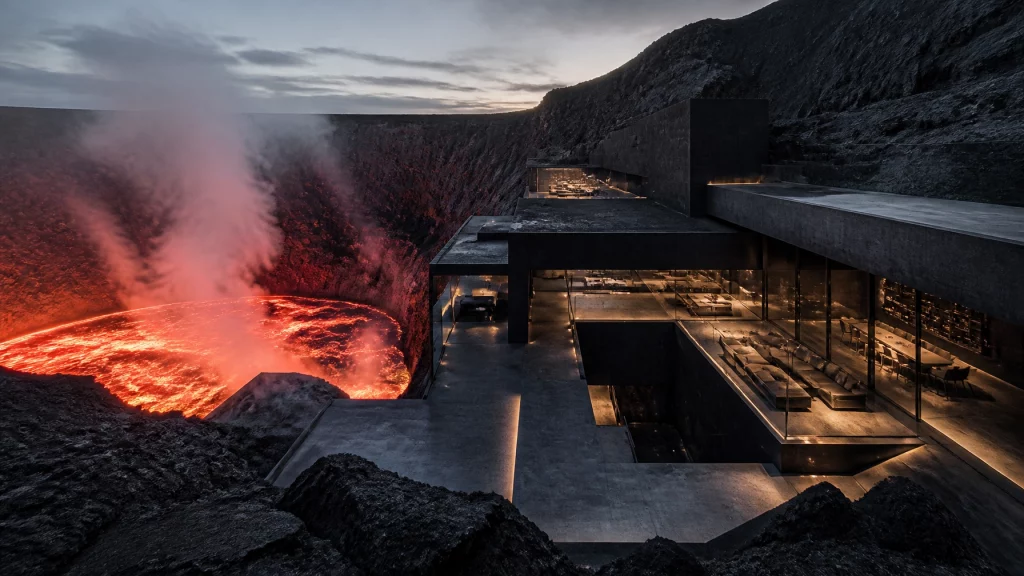
And then there’s the "Volcano Premium." Hawaii’s median home price sits around $1.32 million, and that’s for a normal house. Drilling into a live volcanic crater to build a glass-walled command center? You’re looking at $500 to $2,000 per square foot for government-grade hardening. The ROI is abysmal. You spend $300 million building a base that you will inhabit for exactly one monologue before a secret agent blows it up with a well-placed explosive. In the real world, we call that a "total loss" on the balance sheet.
Henchman Labor Costs: The Ultimate P&L Drag
The real killer of the evil dream isn’t the hero; it’s the payroll. You cannot run a global conspiracy by yourself. You need "grunts": the masked security officers who stand in corridors and fail to hit moving targets.

The federal minimum wage might still be a point of contention, but nobody is guarding a death ray for $7.25 an hour. A standard security officer in 2026 has a median annual wage of roughly $38,000. But standard security isn't enough for a villain. You need Executive Protection (EP): the guys who can handle high-tech laser grids and tactical defense. These professionals earn between $106,000 and $150,000+ per year.
For a functional secret lair, you need a minimum of 100 henchmen to provide 24/7 coverage across multiple shifts.
- 100 Henchmen x $40,000 (Average) = $4,000,000/year
- Security Management Team (EP) = $1,000,000/year
That’s a $5 million annual burn rate just for the guys who get mowed down in the first act. And that doesn't include health insurance (mandatory for compliance, even in evil organizations), liability insurance for the "lava pits," or the massive turnover costs. When your workforce is consistently being defeated by a single British man in a tuxedo, your recruitment and training costs become a runaway train.
Capital Raising in 2026: The Financing of Doom
How do these would-be world dominators raise capital in this day and age? The days of bank robbery are over; the real money is in the capital markets.

- Private Equity (PE): PE firms love recurring revenue. If you can prove a "protection" model where 10 countries pay you a monthly subscription fee not to be vaporized, you can secure a massive buyout.
- Cryptocurrency: This remains the gold standard for money laundering and untraceable weapon purchases. However, the volatility is a nightmare for budgeting. It’s hard to pay your henchmen in Bitcoin when the value drops 15% between the morning briefing and the afternoon execution.
- SPACs (Special Purpose Acquisition Companies): We’ve seen a trend of merging evil empires with shell companies to go public. "Oblivion Ventures" (Ticker: DOOM) might hit the Nasdaq, promising to "disrupt the status quo of the planet's existence." It’s a $100 trillion total addressable market (TAM), which is a metric VCs can't resist.
- Institutional Investment: Pension funds are probably already invested in villainy without knowing it. Through complex derivatives and "doomsday device-backed bonds": similar to the data center bonds we see today: institutional capital is inadvertently funding the very devices that threaten the world.
The Failure Rate: Why the Math Never Works
At the end of the day, villainy is a venture capital play with a 100% failure rate. Every single plan fails. Why? Because the villains focus on the "Big Bang" (sometimes literally) and ignore the fundamentals. They build lairs they can't afford, hire labor they can't manage, and raise capital from investors who expect a return that the villain intends to abolish by destroying the global financial system.
The regular guy lesson here is simple: even an evil genius can't beat basic economics. You can have all the lasers, sharks, and volcanic real estate in the world, but if your labor costs are too high and your business model relies on "holding the world hostage," you’re going to go bankrupt before you ever get to the "domination" phase.
As Bill Mundell often suggests, we need to fix capitalism with more capitalists. Perhaps if these villains stopped trying to destroy the market and started trying to participate in it, they’d find that the real path to world power is through a well-managed REIT or a diversified ETF, not a giant laser.
Be mindful, be watchful and good luck.