



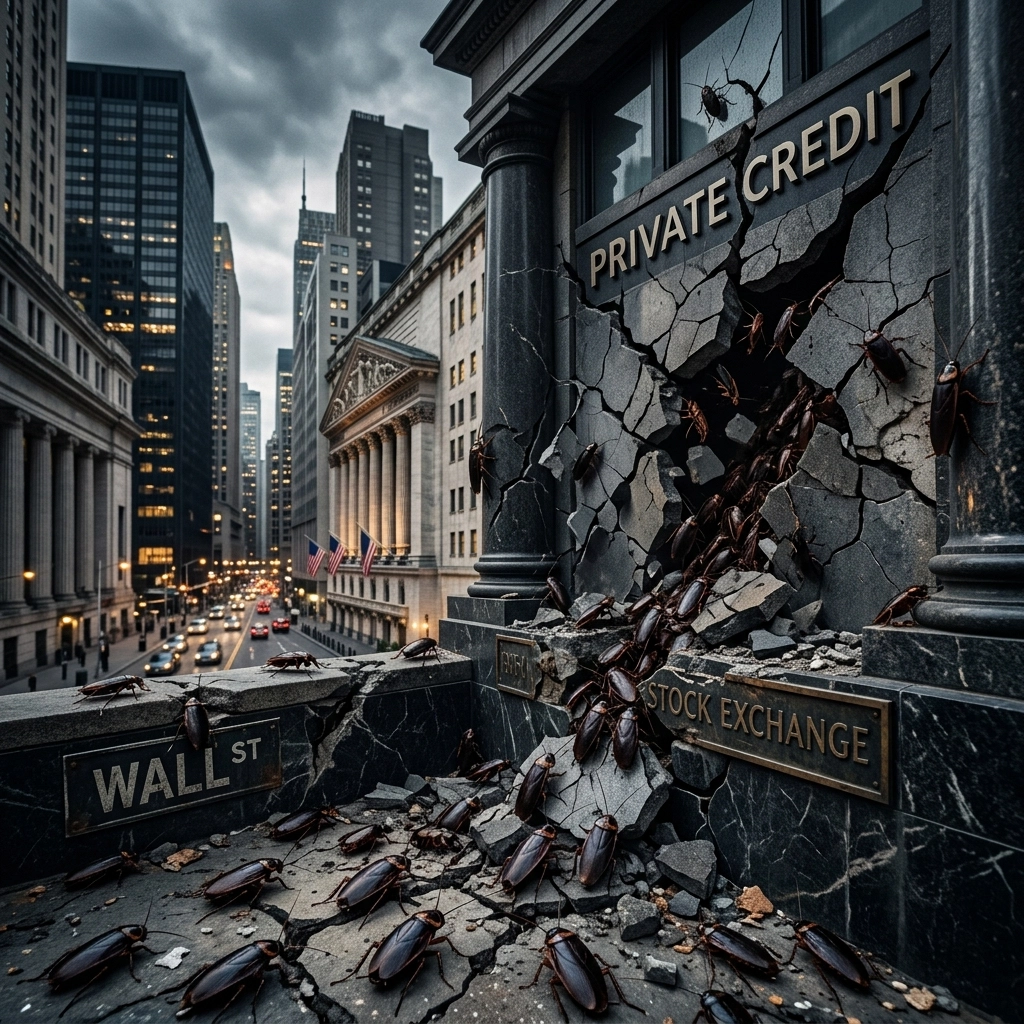
If you’ve been hanging around the water cooler lately, or just scrolling through the doom-and-gloom sections of financial news, you’ve probably heard the term "Private Credit" tossed around like it’s the next big monster under the bed.
For the average person, "private credit" sounds like something fancy and boring that happens in a mahogany-row office in Manhattan. But here at Regular Guy Economics, we like to translate Wall Street-speak into English. Private credit is basically a giant, $1.7 trillion "Secret Bank" that’s been operating in the shadows for a decade.
And right now? The lights just got flipped on, and we’re starting to see the cockroaches scatter.
What Exactly Is This "Secret Bank"?
Back in 2008, when the world almost ended because of subprime mortgages, the government put a bunch of new rules on regular banks (like Chase or Wells Fargo). They told them, "Hey, you can’t lend money to risky companies anymore. You have to be responsible."
The banks said, "Fine." But the risky companies still needed money, and rich investors still wanted to make a high return.
Enter Private Credit.
Instead of going to a bank, a company goes to a massive investment firm like Blackstone or Apollo. These firms say, "Sure, we’ll lend you $500 million. But we’re going to charge you way more interest than a bank would, and if you miss a payment, we’re taking the keys to the building."
For years, this was a win-win. Interest rates were near zero, so even a "risky" loan felt safe. But then 2024 and 2025 happened. The Fed kept rates "Higher for Longer," and suddenly, those high-interest loans became "impossible-interest" loans.
The Cockroach Effect
There’s an old saying on Wall Street: "When you see one cockroach in the kitchen, there are probably a thousand more hiding in the walls."
Jamie Dimon, the CEO of JPMorgan, has been banging this drum for a while. He’s been warning that because these private loans aren’t regulated like normal banks, nobody actually knows how bad the situation is until the walls start crumbling.
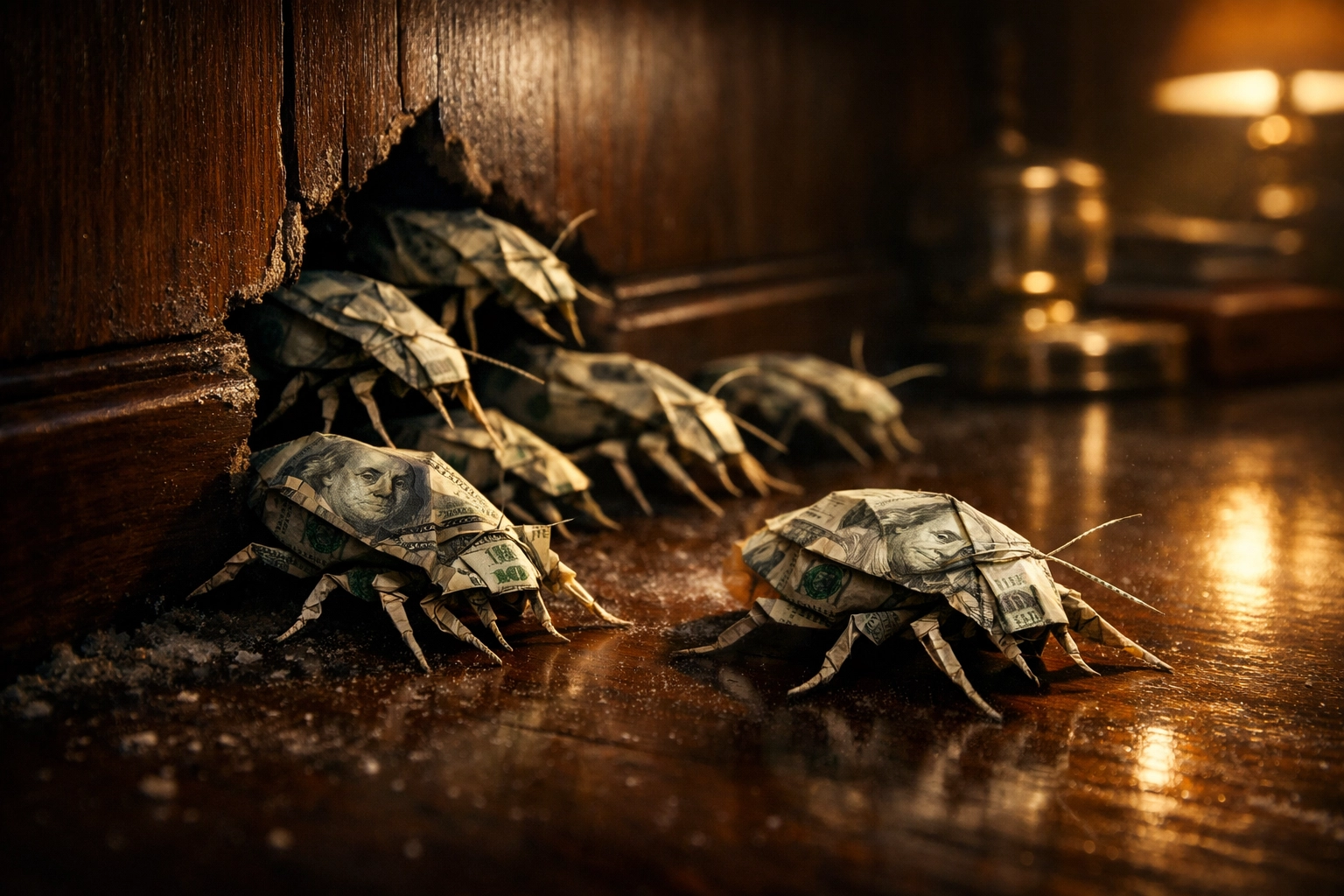
Recently, we’ve seen the first few "bugs" crawl out. Subprime auto lender Tricolor went under. Auto-parts supplier First Brands hit the skids. A big British firm called Market Financial Solutions is shaking. These aren’t just random accidents; they are the "First Dominoes" or, as the Economist famously illustrated, the first $100-bill cockroaches.
When one of these companies defaults, it’s not just their problem. It’s a problem for the massive funds that lent them the money. And that leads us to the part where the "Regular Guy" gets hit.
Why It’s Breaking Now (The Middle East and AI Factors)
You might be wondering: Why now? Why did it wait until 2026 to fall apart?
It’s a perfect storm of bad vibes. First, you have the geopolitical mess. With Trump’s policies and the escalating tensions in the Middle East, energy prices are volatile (remember that diesel domino effect we talked about?), and shipping is getting more expensive. This puts a massive squeeze on the companies that borrowed all that private money.
Second, there’s the AI factor. Credit risk specialists are starting to realize that "AI is destroying software companies." Think about it, thousands of medium-sized software firms took out massive private loans five years ago. Now, a cheap AI tool can do what those companies do for a fraction of the cost. Their revenue is drying up, but their debt, that $1.7 trillion mountain, isn't going anywhere.
The "Gate" Problem: Why You Can’t Have Your Money
This is where it gets spicy.
In a normal bank, if you want your money, you go to the ATM and get it. In a Private Credit fund, it’s supposed to be similar for the big-shot investors. But when these investors see the cockroaches, they panic. They all run for the exit at the same time.
When too many people try to pull their money out of a fund like Blackstone’s, the fund does something called "gating." They literally lock the door. They tell the investors, "Sorry, we’re only letting 2% of the money out this month. The rest of you have to wait."
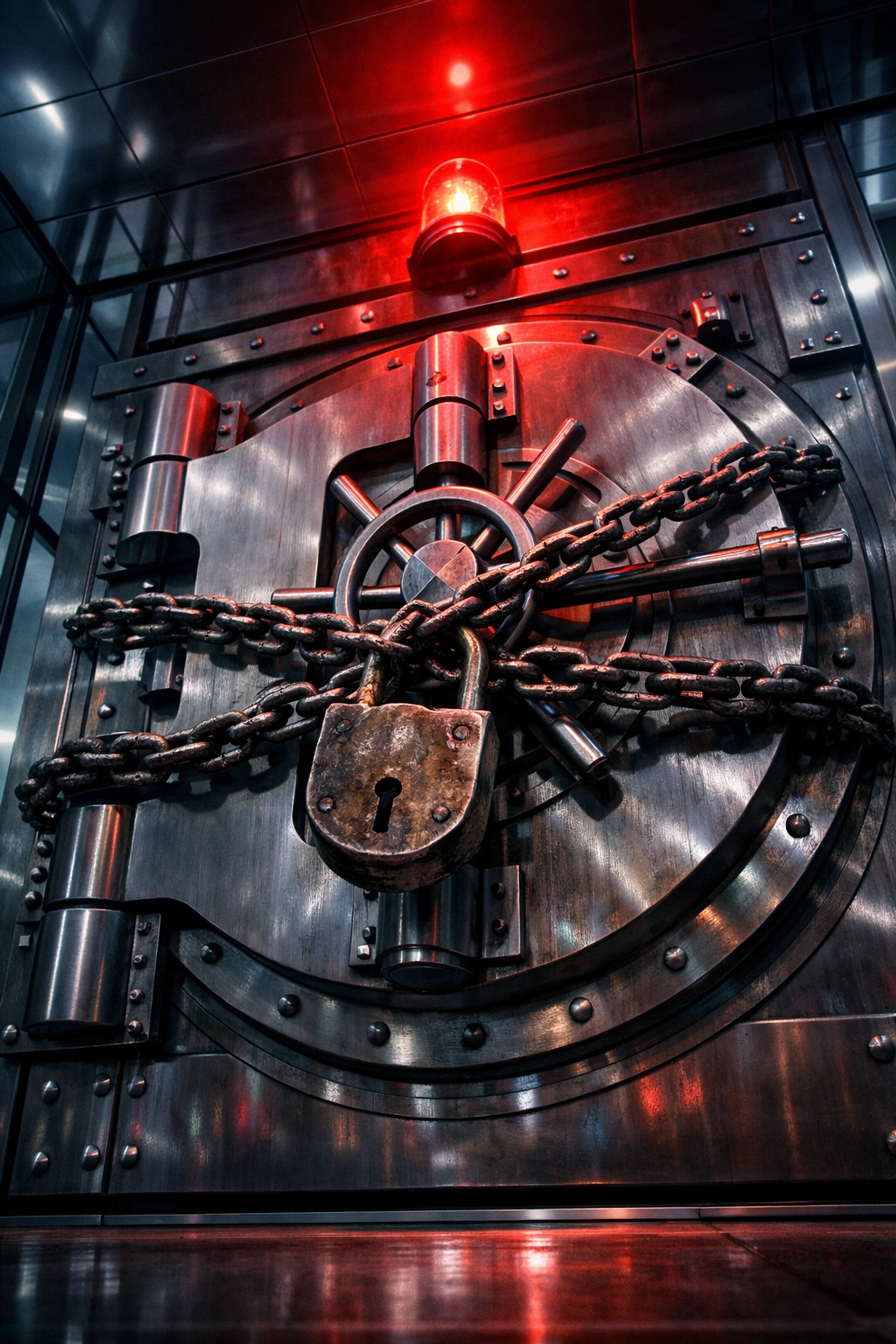
When a fund "gates" withdrawals, it’s the financial equivalent of a "Check Engine" light that starts smoking. It tells the market that there isn't enough cash to go around. Blue Owl Capital and Blackstone have already had to deal with significant redemption requests. Trust is evaporating, and in the world of finance, trust is the only thing that keeps the lights on.
Why Should a "Regular Guy" Care?
You’re probably thinking, "John, I don’t have $5 million in a Blackstone fund. Why does this matter to me?"
It matters because of the "Shadow Bank" ripple effect.
- Your Pension and 401(k): Most people don't realize that their pension funds and retirement accounts have been dumping money into private credit for the last decade to try and get better returns. If these funds collapse, your retirement takes a direct hit.
- The Credit Freeze: When the "Secret Banks" stop lending, it’s not just the big companies that suffer. It makes regular banks even more nervous. They tighten their belts, making it harder for you to get a mortgage, a car loan, or a small business loan.
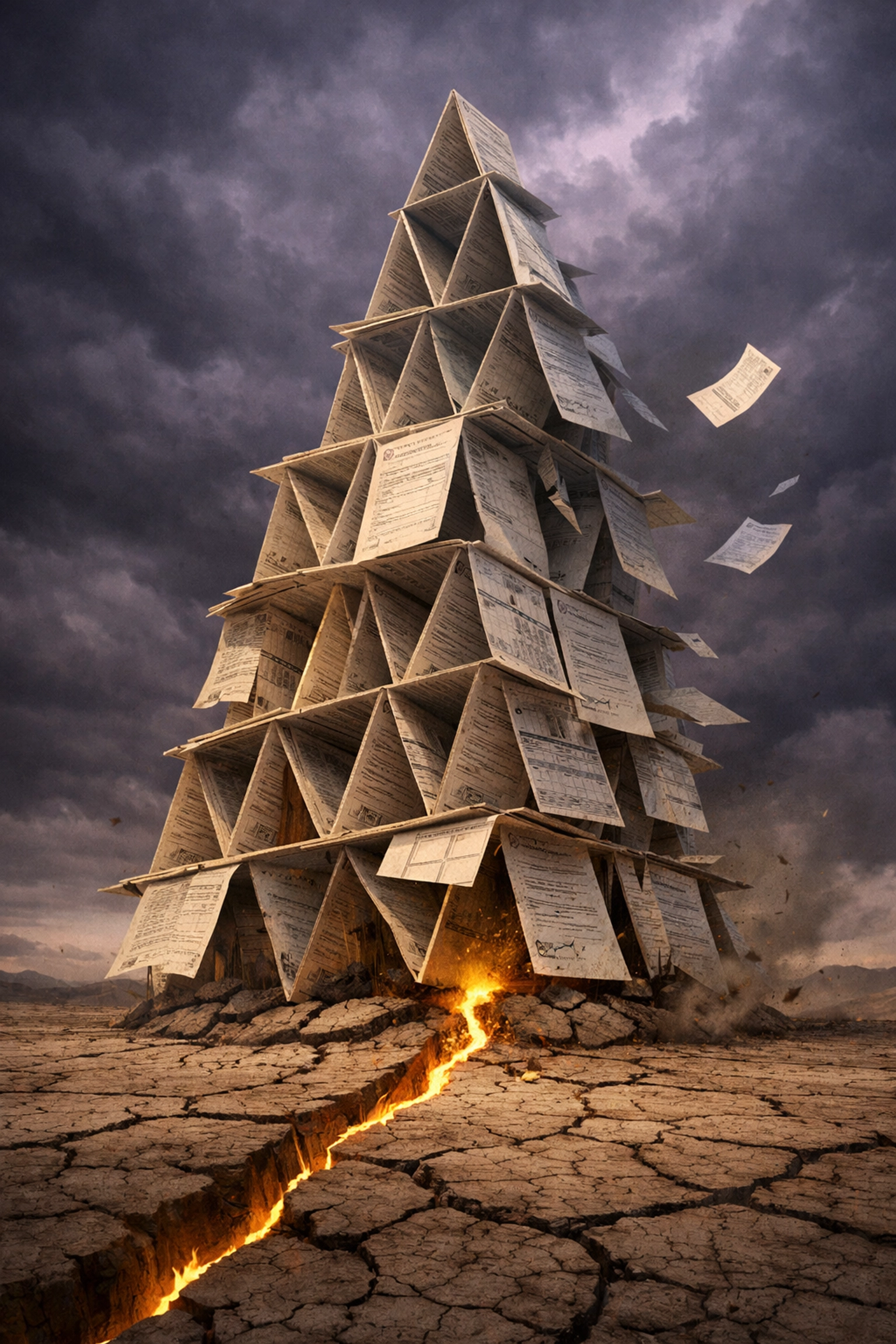
- The 2008-Lite Vibe: We aren't saying the world is ending tomorrow, but this feels like the early days of the subprime crisis. Back then, it was houses. Today, it’s "zombie companies" that have been kept alive by cheap debt that is now very, very expensive.
The Bottom Line
Private credit was a great party while the music was playing and the drinks were cheap. But the Fed turned off the music, and the "Higher for Longer" interest rates are the equivalent of the lights coming on at 3:00 AM.
The companies that borrowed too much are starting to fail. The investors who lent the money are starting to panic. And the "cockroaches" are coming out of the woodwork.
We are seeing default rates jump from nearly zero to the 5.8% – 8% range. In the world of billion-dollar loans, that is a massive, terrifying spike. If this shadow bank system freezes up, the entire economy stalls out because the "grease" that keeps business moving: credit: disappears.
We aren't in a full-blown 2008 crash yet, but the cracks are widening. The "Secret Bank" isn't so secret anymore, and the reality is looking pretty ugly.
Be mindful, be watchful and good luck.