



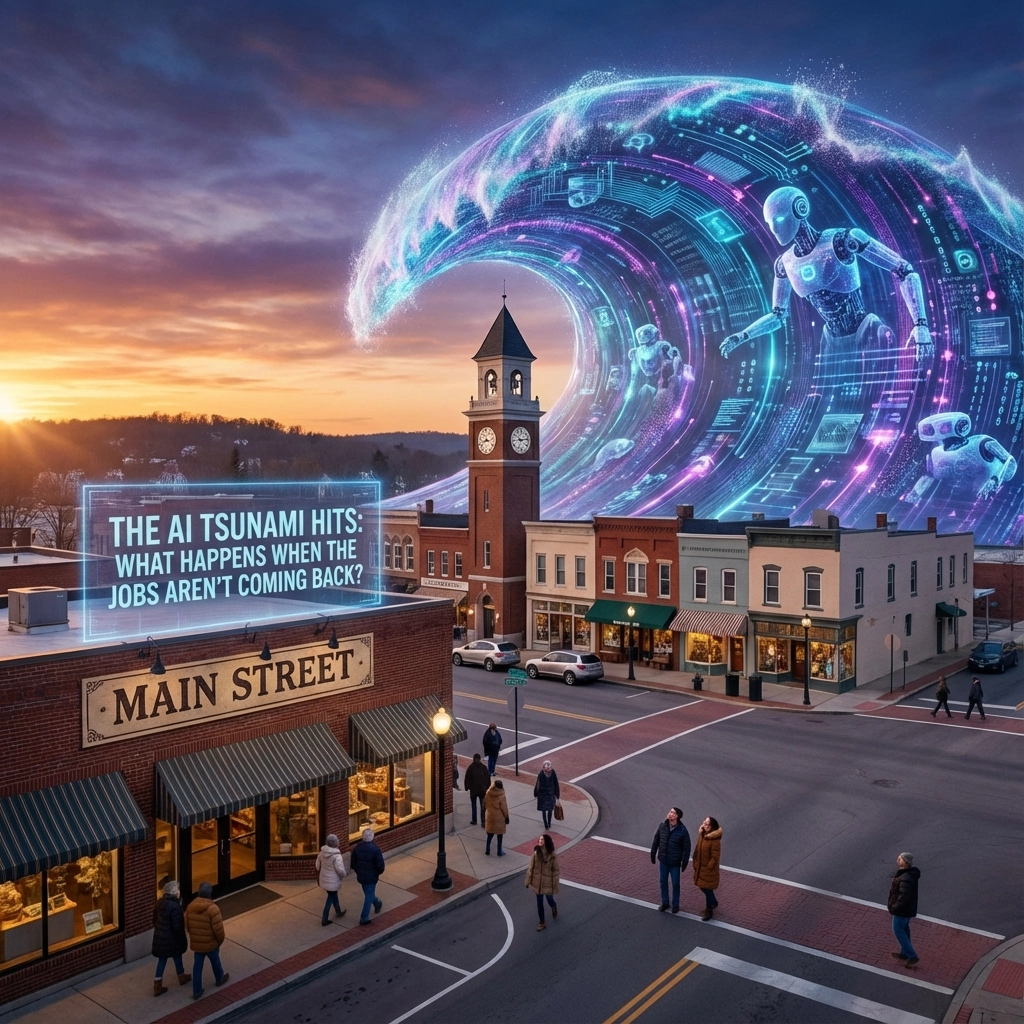
Remember when your biggest workplace worry was whether the office coffee machine would break down? Those days are feeling pretty quaint right about now. We're watching something unprecedented unfold across American workplaces, and it's not just another round of corporate "rightsizing" or economic belt-tightening. This time, it's different.
The numbers tell a story that should make every working person pay attention: nearly 55,000 AI-linked layoffs hit the U.S. just in 2025 alone. That's not a typo, and it's not business as usual. When Amazon cuts 14,000-15,000 positions and Microsoft eliminates 15,000 roles with executives openly stating that AI means they need "fewer people" for certain jobs, we're not talking about temporary cost-cutting anymore.
This Isn't Your Grandfather's Automation
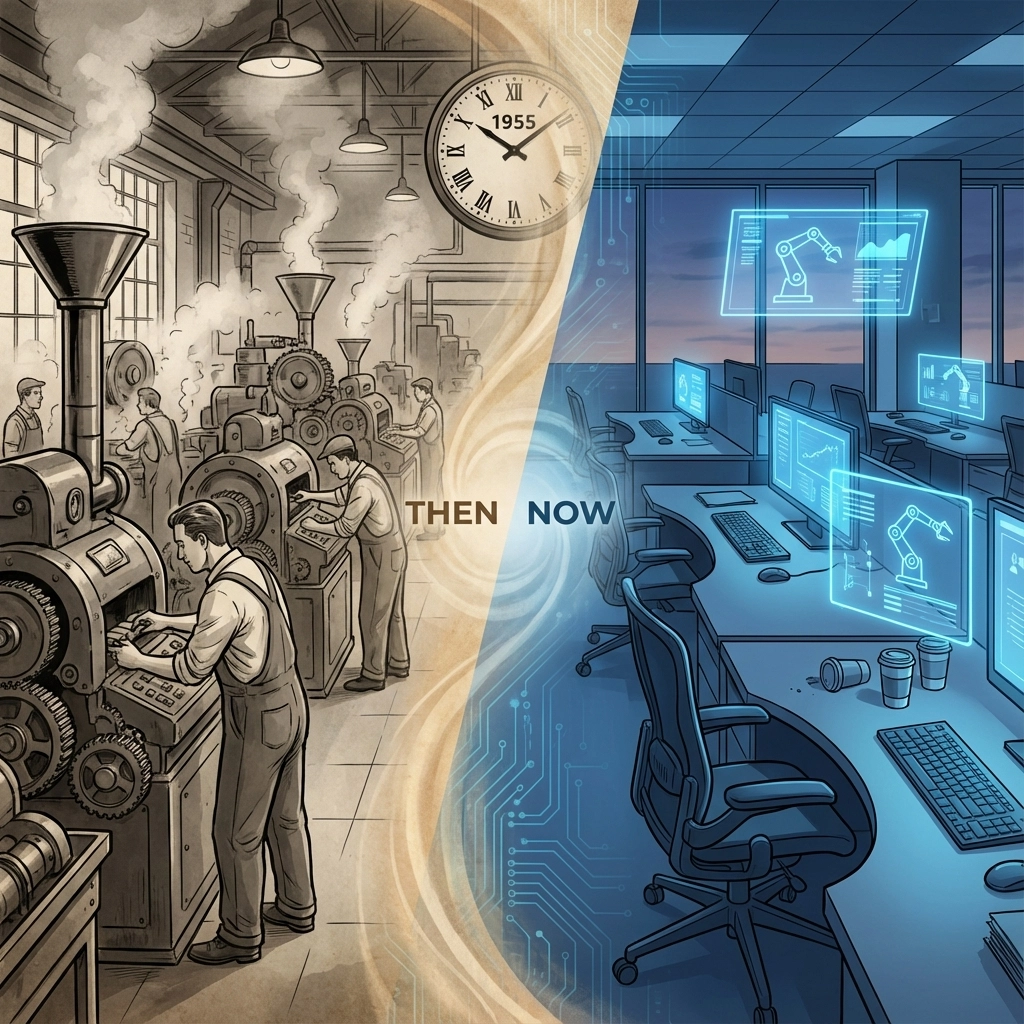
For decades, we've heard the same refrain every time technology threatened jobs: "Don't worry, new jobs will replace the old ones." And historically, that's been mostly true. The steam engine killed some jobs but created others. Computers eliminated typing pools but spawned entire industries. Even the internet, despite initial fears, generated millions of new opportunities.
But here's where AI feels different, and the data backs up that gut feeling.
When customer service representatives face an 80% automation risk by 2025, we're not talking about gradual transition. We're talking about entire job categories potentially disappearing faster than workers can retrain. The speed and breadth of current AI displacement is outpacing workers' ability to adapt, especially when you consider that retraining often requires resources most people simply don't have.
The cruel irony? While jobs are disappearing, AI actually created about 119,900 direct new positions last year. So yes, new opportunities exist: but there's a massive catch that nobody wants to talk about openly.
The Great Skills Divide
Here's the part that should make your blood pressure spike: 77% of new AI-related jobs require master's degrees. Let that sink in for a moment. The administrative assistant whose job gets automated doesn't automatically qualify to become a "prompt engineer" or "human-AI collaboration specialist." The customer service rep who loses their position can't just pivot to AI ethics consulting.
We're creating a two-tiered economy where displaced workers: often without advanced degrees: find themselves locked out of the very opportunities that AI supposedly creates. It's like telling someone whose bicycle was stolen that they can have a new Ferrari, but first they need to become a licensed mechanic.
Who's Getting Hit Hardest

The statistics reveal some uncomfortable truths about who bears the brunt of AI displacement. Early-career workers aged 22-25 in AI-exposed occupations have seen a 13% decline in employment compared to less-exposed fields. These are exactly the people who should be building their careers, gaining experience, and establishing financial stability.
Women face particular vulnerability, with 58.87 million women in the U.S. workforce occupying positions highly exposed to AI automation compared to 48.62 million men. The jobs most at risk: administrative support, data entry, customer service: have traditionally provided stable middle-class employment, particularly for women entering or re-entering the workforce.
Geography matters too. North America leads automation adoption at 70% by 2025, meaning American workers are experiencing this transition more intensely than workers in other regions. We're essentially the test market for large-scale job displacement.
The Math That Doesn't Add Up
Economic researchers love to point out that AI-related job cuts represented just 0.1% of all layoffs in 2024. On paper, that sounds reassuring. But percentages can be misleading when you're the one getting the pink slip.
Here's what the optimists say: globally, while 85 million jobs will be displaced by 2025, 97 million new roles will emerge, creating a net positive of 12 million positions. Sounds great, right?
But that global statistic hides local realities. A displaced factory worker in Ohio doesn't benefit from new AI jobs created in Silicon Valley, especially when those jobs require credentials they don't have and experience they can't get without the job they just lost.
The Speed Problem

Previous waves of automation gave workers and communities time to adapt. The shift from agriculture to manufacturing happened over decades. The move from manufacturing to services played out over generations.
AI compression that timeline dramatically. Some analysts identify 2027-2028 as when major disruption will accelerate. That's not decades to adapt: it's a few years. Goldman Sachs estimates that if AI is widely adopted, it could displace 6-7% of the entire U.S. workforce. That's roughly 10 million people who would need new careers, new skills, and new hope in a very short timeframe.
The Brookings Institution currently reports "stability, not disruption" in labor market impacts, but adds the ominous qualifier "for now." When think tanks start hedging their bets with phrases like "for now," it's time to pay attention.
What Regular People Can Do
The temptation is to either panic or stick your head in the sand. Neither strategy works. Here's what actually might:
First, understand your exposure. If your job involves routine tasks that can be described in step-by-step processes, you're in the danger zone. But if your work requires human judgment, creativity, complex problem-solving, or genuine human interaction, you're probably safer for now.
Second, start learning now, even in small doses. You don't need a master's degree, but basic familiarity with AI tools in your field could be the difference between getting laid off and becoming the person who helps your company implement AI effectively.
Third, develop skills that complement AI rather than compete with it. Machines are getting better at data analysis, but they still can't read between the lines in human conversations or navigate complex ethical decisions.
The Reality Check

The honest truth is that nobody knows exactly how this plays out. We're running a massive experiment with the American workforce, and the results aren't guaranteed to be pretty. Unlike previous technological shifts, AI doesn't just automate manual labor: it's coming for cognitive work too.
Some companies will use AI to eliminate jobs. Others will use it to make their workers more productive and competitive. The difference often comes down to leadership decisions that prioritize short-term profit margins versus long-term business sustainability.
What we do know is that denial isn't a strategy. The workers who thrive will be those who adapt quickly, learn continuously, and position themselves as partners with AI rather than victims of it. The companies that succeed will invest in retraining rather than just downsizing.
The AI tsunami is already here. The question isn't whether it will reshape the job market: it's whether we'll let it reshape us, or whether we'll do the hard work of riding the wave instead of getting crushed by it.
Be mindful, be watchful and good luck!