



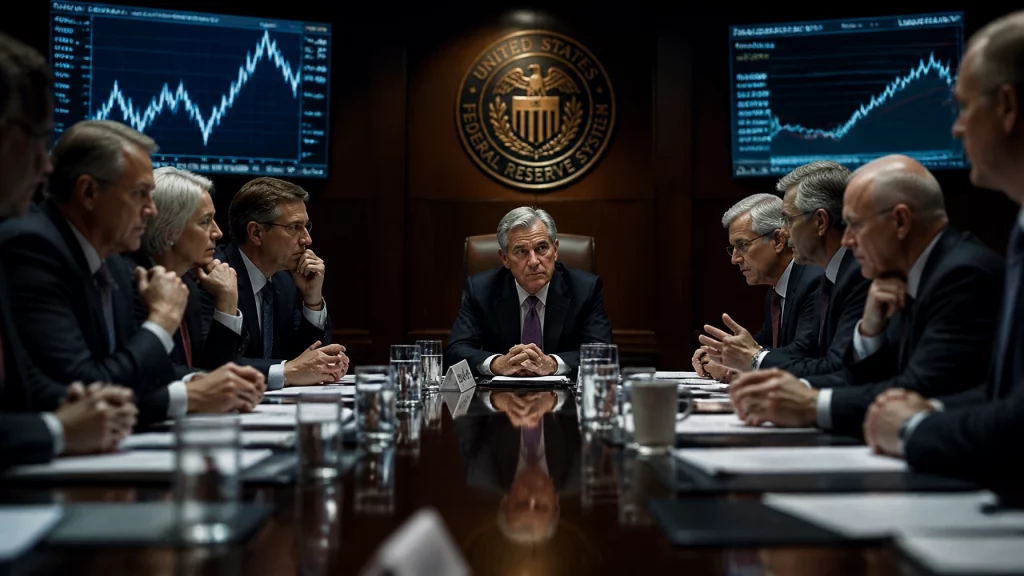
For years, watching a Federal Open Market Committee (FOMC) meeting felt like watching synchronized swimmers trained in North Korea. Every statement was meticulously pre-packaged, every dissent was a rare anomaly whispered about in financial columns, and Chairman Jerome Powell managed votes with the quiet consensus of a corporate board approving the annual holiday bonus.
Those days are officially dead and buried.
At the July 28–29, 2026 FOMC meeting: only his second as central bank chief: Chairman Kevin Warsh presided over a fractured, brawling central bank that shattered the illusion of monetary harmony. The Fed voted to keep the benchmark federal funds rate steady at 3.50% to 3.75%, marking the fifth consecutive meeting at that plateau. But the headline isn't the pause; it's the mutiny.
In a stunning 9–3 vote, three regional Fed bank presidents revolted against the chair and voted for an immediate 25-basis-point rate hike. Beth Hammack of Cleveland, Neel Kashkari of Minneapolis, and Lorie Logan of Dallas didn't just dissent: they planted their flag. When asked about the bruising split during his press conference, Warsh didn't sugarcoat it, dismissing the tension as a “good family fight.”
That family is one screaming match away from throwing plates. And for anyone trying to buy a house, pay down credit card debt, or make sense of why everyday life still feels financially suffocating, this boardroom drama has massive real-world consequences.
Inside the Boardroom: Warsh Ditchs the Script
Under previous leadership, forward guidance was treated like gospel. Markets were spoon-fed precise trajectories so Wall Street algorithms could price in every quarter-point move six months in advance. Warsh has effectively burned that playbook.

Since taking the helm, Warsh has signaled that the Fed is no longer here to coddle equity traders or provide a predictable safety net. Instead of leaning on soft inflation targets, Warsh made his stance crystal clear during the post-meeting address: “There is only a target, and it is 2 percent.” There is no wiggle room, no grade inflation, and no moving the goalposts because the economy looks a bit wobbly.
By opening the floor to rigorous, unfiltered economic debate rather than forcing a engineered consensus, Warsh has invited open warfare between the doves clinging to growth and the hawks staring down a resurgent inflationary monster.
The Hawk Rebellion and the $100 Oil Threat
Why did Hammack, Kashkari, and Logan break ranks for a hike? Because the math outside the Eccles Building doesn't support standing still.

While the majority on the committee opted to wait for more incoming data, the dissenting hawks are looking at an energy landscape that refuses to cooperate. Brent crude is holding stubbornly above $100 a barrel, fueled by lingering geopolitical conflict in the Middle East and ongoing friction in supply corridors. Every tick upward in energy prices ripples directly through transportation, manufacturing, and consumer goods, turning any talk of a permanent return to 2% inflation into wishful thinking.
Worse yet, Warsh noted a fascinating market anomaly during his briefing: longer-term market rates have already risen even without the Fed moving its benchmark rate. Bond vigilantes are doing the central bank's dirty work. As Warsh pointed out, market yields are significantly higher than they were just six weeks prior. The market is pricing in the reality that inflation is sticky, structural, and refusing to be tamed by monetary polite conversation.
What a 9-3 Split Means for Your Wallet
So, what does a dysfunctional central bank mean for regular people trying to balance a household budget?
- Mortgage Lock-In Continues: Do not expect relief on home loans anytime soon. Even with the Fed pausing at 3.50%–3.75%, mortgage rates are tethered to the 10-year Treasury yield, which is climbing because bond markets smell inflation in the wind. The 3% mortgage era is a distant memory, and 6% to 7% territory is proving sticky.
- Credit Card and Auto Loan Pain: If the Fed is dead set on keeping rates elevated: and three key regional presidents actually wanted higher rates: the era of cheap revolving debt is over. Variable-rate credit cards and auto loans will remain punishingly expensive. If you are carrying a balance, every month you wait is an expensive tax on your future earnings.
- The Death of the "Soft Landing" Fairy Tale: Wall Street loves to preach that the Fed can engineer a miraculous soft landing where inflation dies without anyone losing a job or feeling a pinch. A 9–3 split exposes how fragile that narrative is. The people steering the ship disagree fundamentally on whether the engine is overheating or stalling out.
Why Warsh Wants You to Stay Nervous
Kevin Warsh isn't trying to make people comfortable; he is trying to make them vigilant. By dismantling predictable forward guidance and allowing open dissent, he is signaling that the central bank will no longer guarantee asset prices or bail out over-leveraged markets.
The "soft landing" party is running out of punch. When central bankers are openly fighting in public, it's because the underlying economic data is genuinely unpredictable. For the regular earner, that means financial discipline isn't just a virtue: it's survival.
Keep your debt low, build your cash buffer, and stop waiting for the Fed to ride to the rescue. The adults in the room are too busy arguing.
Be mindful, be watchful and good luck.