


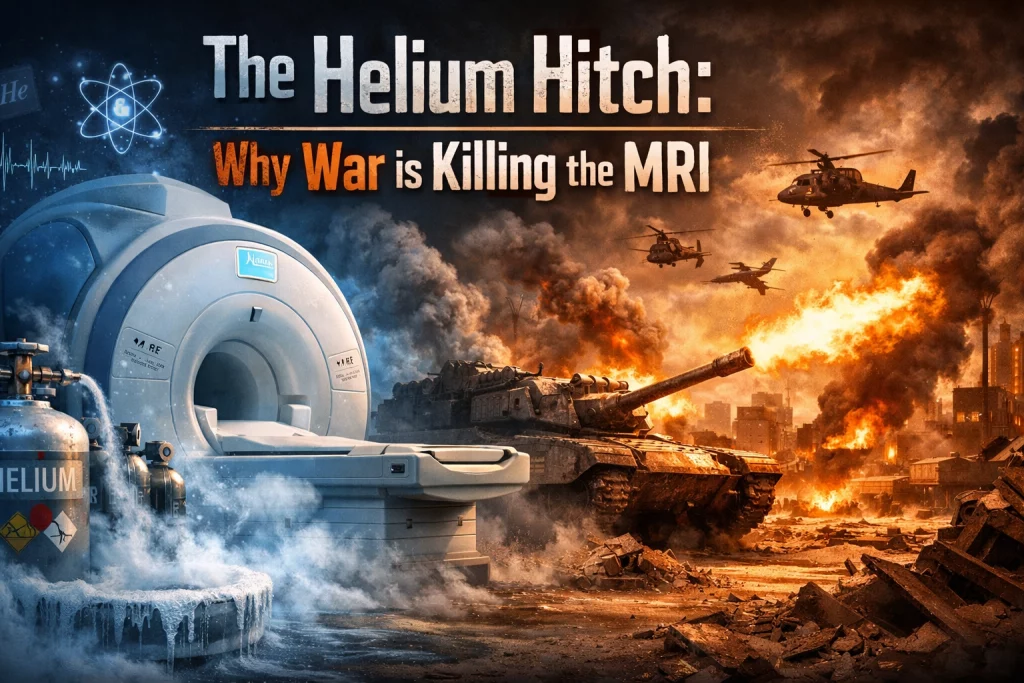
The Helium Hitch: Why War is Killing the MRI
Most of us only think about helium when we’re at a five-year-old’s birthday party or trying to make ourselves sound like Alvin and the Chipmunks after a few drinks. It’s the stuff of balloons and party favors. But here in March 2026, helium has become the latest casualty of global conflict, and the consequences are a lot scarier than a silent birthday party.
If you’ve tried to book an MRI lately and were told there’s a three-month wait, or that the machine is "down indefinitely", you’re feeling the ripple effects of a geopolitical explosion half a world away. We’re currently staring down a massive shortage of liquid helium, and it’s all thanks to the escalating US-Israel-Iran conflict that has effectively choked off one of the most important industrial hubs on the planet.
The Qatar Connection: A Single Point of Failure
Here is the "Regular Guy" breakdown: Helium isn’t something we just pull out of the air. Despite being the second most abundant element in the universe, on Earth, it’s incredibly rare. We get it as a byproduct of natural gas extraction. It’s literally "fossil gas" trapped deep underground that we happen to catch while we’re looking for fuel.
Enter Qatar. Specifically, Ras Laffan Industrial City. This single spot on the map provides about one-third of the entire world’s liquid helium supply. Because of the current military strikes and the general chaos in the region, production at Ras Laffan has ground to a halt.
But the production stop is only half the problem. Even the helium that is being produced is stuck. The Strait of Hormuz is currently under a de facto blockade. To move helium, you need specialized "cold boxes", massive, high-tech cryogenic containers that keep the helium at a bone-chilling -452°F. You can’t just throw this stuff in a standard shipping container and hope for the best. If these cold boxes can’t get through the Strait, the global supply chain doesn't just slow down; it freezes.
Why Your MRI Needs to Stay at -452°F
You might be wondering, "John, why does my doctor care about balloon gas?"
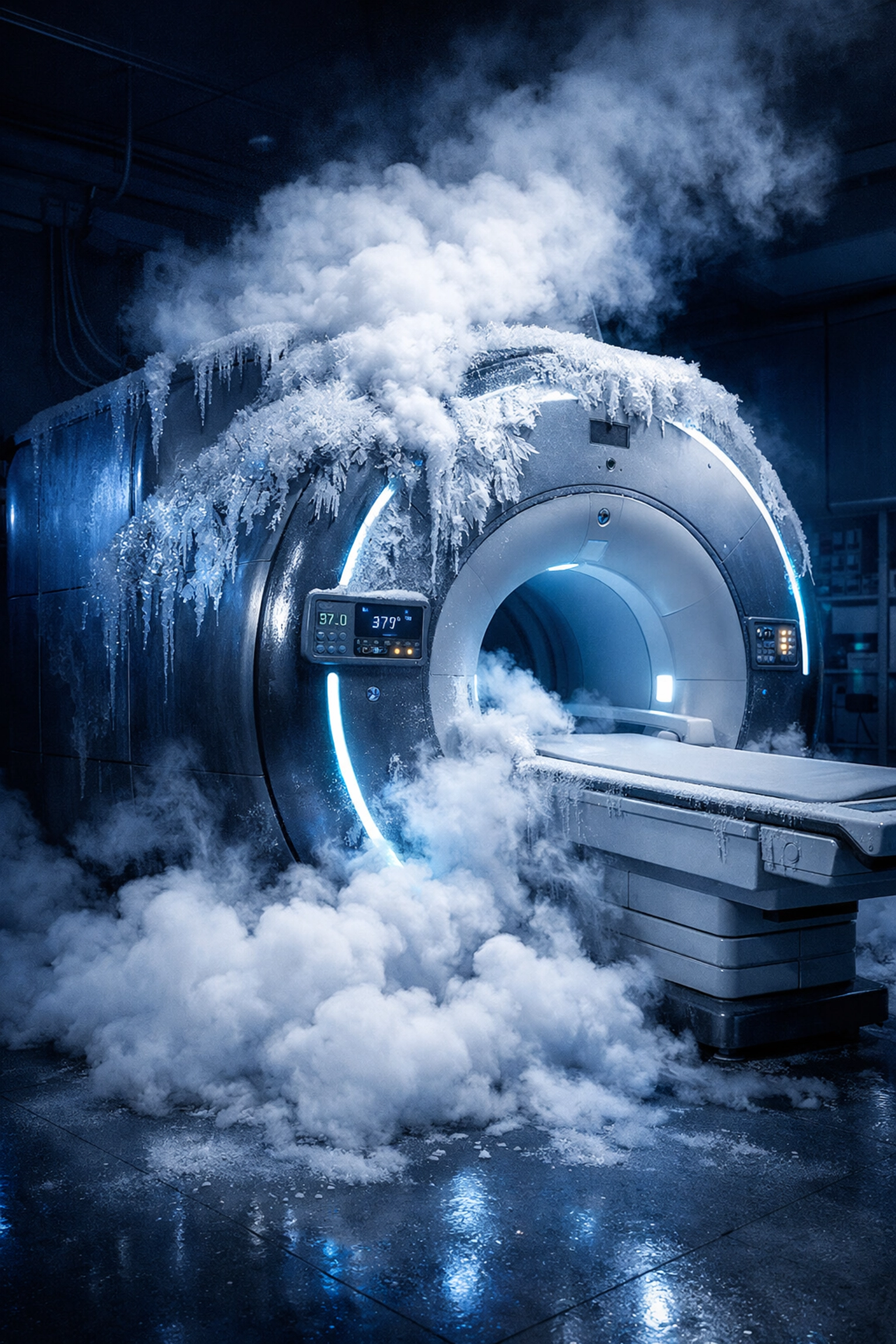
It comes down to physics. Inside every MRI scanner is a massive, powerful superconducting magnet. To get that magnet to work its magic and look inside your body without cutting you open, it has to stay incredibly cold. We’re talking -269°C, or -452°F. That is just a few degrees above absolute zero, the temperature where all molecular motion stops.
Liquid helium is the only substance on Earth that can stay liquid at that temperature and keep those magnets happy. Without a constant bath of liquid helium, the magnets lose their superconductivity.
When an MRI machine loses its cooling, something happens called a "quench." This isn't just a simple "low battery" warning. A quench is a catastrophic event where the liquid helium rapidly turns back into gas and escapes through a vent. The magnetic field collapses instantly. If a hospital lets a machine quench because they ran out of helium, it can cost hundreds of thousands of dollars to reset, not to mention the risk of permanent damage to a machine that costs millions.
The "Drill, Baby, Drill" Problem
In the world of oil and gas, when prices go up, we usually just drill more. If there's a shortage of Permian crude, we spin up more rigs in Texas. Helium doesn’t work like that.
Because helium is a byproduct, you can’t just decide to "produce more helium" tomorrow. You have to be producing massive amounts of natural gas first, and then you need the multi-billion dollar refinery infrastructure to capture the tiny fraction of helium that comes up with it. It’s a slow, agonizing process.
Currently, the US has some reserves, but we’ve been selling off our Federal Helium Reserve for years like a clearance rack at a closing department store. We are now dangerously dependent on places like Qatar and Russia. And since Russia is… well, Russia, and Qatar is currently in the middle of a crossfire, the "Regular Guy" is the one left holding the empty balloon.
The Broader Context: A Medical System on the Brink
This helium crisis hits at a time when the American medical industry is already leaning over a cliff. Back in 1960, medical costs in the United States were about five percent of our Gross Domestic Product (GDP). By 2025, that number hit twenty percent. One out of every five dollars spent in this country is going toward healthcare, and yet, for the first generation in history, our kids might not live as long as we do.
We’ve got more tech than ever, more pharmaceutical "solutions" than ever, and more specialized machines like MRIs. But we aren’t getting healthier. We’re dealing with more obesity, more diabetes, and more chronic illness while the cost of the "fix" keeps skyrocketing.
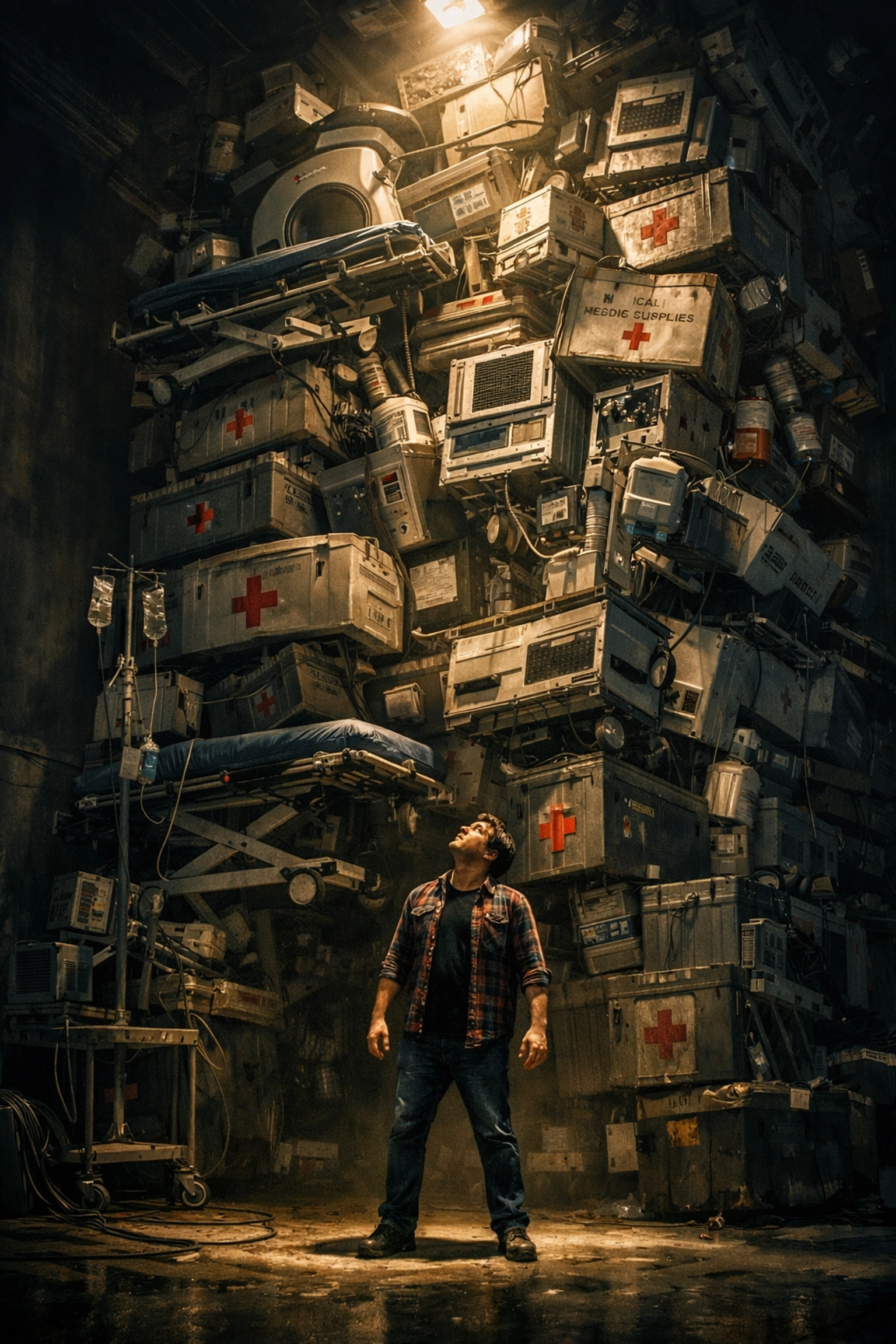
The helium shortage is a perfect example of how the "capitalism of medicine" fails the average person. We’ve optimized our supply chains for maximum profit and zero error, leaving us with zero inventory. Hospitals operate with "just-in-time" helium deliveries. When a war in the Middle East stops a ship in the Strait of Hormuz, the hospital in Peoria, Illinois, has to cancel cancer screenings.
The Last Frontier of Expense Reduction
We’ve observed a trend to optimize every business process over the last thirty years. Inventories are near zero, workforces are variable, and third-party outsourcing has wrung out every cent of "waste." But medical expenses have trended up every single year. It’s a runaway train that has escaped the noose of efficiency.
It’s time we reclassify these "medical costs" as "health expenses." As regular guys, we need to look at the math. A company spending money to keep its employees healthy: incentivizing gym memberships, stress management, and better nutrition: is a lot smarter than waiting for a $10,000 cardiac event or a $5,000 MRI that you can’t even get because of a helium shortage.
We need to invest the $100 for a gym membership that reduces cardiac care costs by $10,000. We need to spend the time on nutrition to avoid the $50,000 colon cancer treatment. If the global supply chain for high-tech medicine is this fragile, the best defense is to simply not need the high-tech medicine in the first place.
What Happens Next?
The major MRI manufacturers like GE and Siemens are trying to build "helium-free" or "low-helium" magnets, but those are years away from being the standard. For now, we are stuck.
If the conflict in the Middle East continues to escalate, expect to see "Medical Surcharges" on your bills for anything involving advanced imaging. Expect longer wait times. Expect the "Regular Guy" to pay the price for a geopolitical mess he didn't ask for.
The world is interconnected in ways we don't realize until something breaks. A missile strike in Qatar isn't just "foreign news": it's the reason your doctor can't tell you why your knee is clicking. It’s the reason the most expensive healthcare system in the history of the world is currently being brought to its knees by a shortage of the stuff we use to float Snoopy in the Thanksgiving Day Parade.
We spend one-third of our lives working to pay for these systems. It's about time we demand a system that isn't one "cold box" away from total collapse.
Be mindful, be watchful and good luck!