



November 6, 2026
Inflation has a talent for turning a small percentage into a big argument. The latest reading says prices rose 3.6% over the year. That does not mean every grocery item went up 3.6%, or that your personal bills did. It means the broad price measure the Federal Reserve watches is still running well above its 2% target, and the difference shows up in the ordinary math of a household budget.
The reading is for the Personal Consumption Expenditures (PCE) price index, the Fed’s preferred inflation measure. Headline PCE rose 3.6% year over year; core PCE, which excludes food and energy, rose 3.1%. That’s not a forecast or a promise about your next supermarket trip. It’s a way to measure the direction of prices across the economy.

PCE versus CPI, without the alphabet soup
The Consumer Price Index (CPI) tracks prices paid by urban households for a representative basket of goods and services. The PCE price index measures broader consumer spending across the economy, including some expenses paid on people’s behalf, such as certain medical care costs.
The weights differ, too. CPI’s basket changes on a scheduled basis. PCE weights shift as people change what they buy. If beef prices jump and more shoppers switch to chicken, PCE reflects that substitution faster than CPI does. The indexes can therefore give different readings. Neither is a receipt from one particular household, but PCE’s broader coverage and changing weights help explain why the Fed relies on it when judging inflation across the economy. The Fed’s 2% goal is defined using the total PCE price index, while core PCE helps policymakers look past some short-term food and energy swings.
The checkout math: the rate isn’t the whole story
At 2% inflation, prices double in about 35 years. At 3.6%, they double in roughly 20. That’s why “inflation is slowing” doesn’t mean prices are going back to where they were. Slower inflation means prices are rising more slowly, not falling.
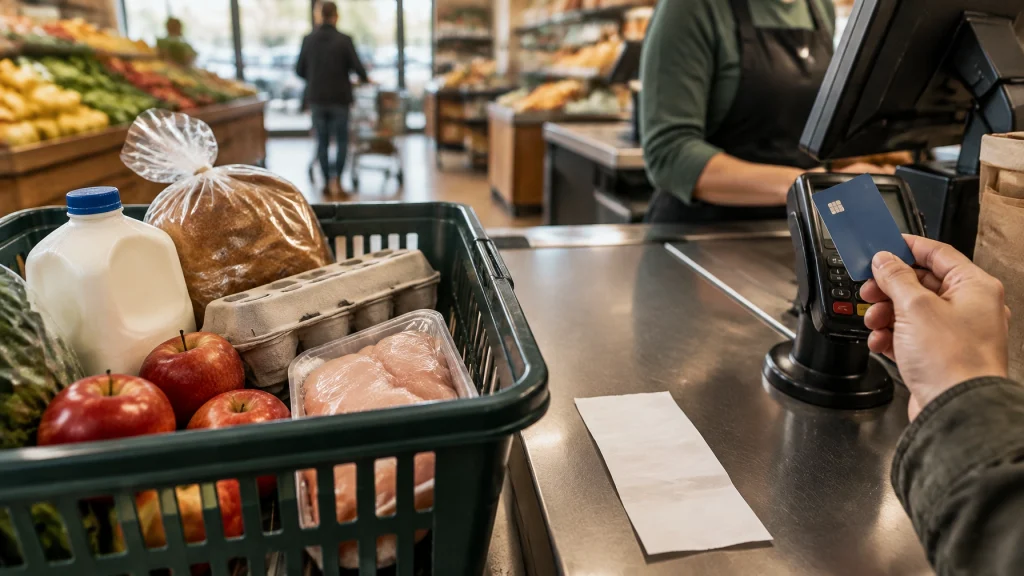
Take a $100 grocery basket and assume its price rises by 3.6% each year. It would cost about $103.60 next year, $107.33 in two years, and $115.83 in four. After a decade, it would cost roughly $142. The real basket you buy will change, but the example shows what a steady annual increase can add up to.
Paychecks matter just as much. If nominal wages, the dollars on the paycheck, are growing around 3.2% to 3.5%, that’s close to 3.6% inflation. The result is little or no increase in what those dollars can buy, and potentially a small loss in purchasing power. The squeeze isn’t just the inflation rate. It’s inflation compared with the raise.
Four forces keeping inflation warm
Consumer spending: Households kept buying through the price squeeze. Services activity registered 54.9, a reading consistent with expansion, and consumer spending contributed about 2.3 percentage points to Q2 GDP growth in the cited accounting. When demand remains firm, businesses have less reason to cut prices, and may still have room to raise them. A PMI reading is a survey-based signal of whether activity is expanding or contracting; it is not a measure that output grew by 54.9%.
AI investment: Companies are spending heavily on data centers and related equipment. Estimates of AI’s contribution to growth vary, but some put AI-related investment at a substantial share of recent GDP growth; one estimate of growth excluding AI is around 1%. That is an estimate, not an official government series. The practical point is simpler: data centers draw on construction materials, skilled labor, computer equipment and electricity. A boom can lift demand, and costs, in the markets it touches.

Energy costs: Oil above $100 a barrel and diesel above $6 a gallon make it more expensive to move goods and run equipment. Those costs can work their way into food, deliveries and household bills, often with a lag. You may also see claims that heating oil is up 128% year to date. Check what that number measures: the Energy Information Administration’s residential series showed a September average around $6.16 per gallon, roughly 73% above the year-earlier level. Wholesale benchmarks and household prices aren’t the same thing.
Tariffs: Tariffs raise the cost of some imported goods or inputs. A business may absorb part of the increase, but it may also pass some along in the price on the shelf. A tariff can create a one-time jump in the price level for affected products. It doesn’t automatically mean those prices rise by the same amount every year, but the higher price remains part of the starting point for future increases.
Why the Fed can’t finish the job by itself
The Fed held its benchmark rate at 3.75% to 4.00% in October, following a quarter-point increase in September. Markets have priced an 82.6% chance of another increase in December. That probability is a market snapshot, not a promise from the Fed; it can change as new information arrives.
The Fed’s September projections put inflation returning to 2% in 2029. That long runway is an honest signal about the limits of interest-rate policy. Higher rates can make borrowing more expensive and cool spending. They cannot produce more oil, build a power grid overnight, or remove a tariff. Three of the pressures above (AI investment, energy costs and tariffs) aren’t primarily monetary problems. Rates can influence demand across the economy, but they cannot directly fix every supply-side cost.

Your inflation rate is the stuff you buy
A national index is an average. Your household’s experience depends on what takes up space in your budget. If you drive a lot, heat with oil, or regularly buy goods affected by energy and shipping costs, your personal inflation may feel higher than 3.6%. If you rent, don’t own a car and spend more on services than fuel, your experience may sit closer to core inflation. Even that is only a rough guide: your bills, location and shopping habits matter.
The useful question at the checkout isn’t whether one headline number describes every family. It doesn’t. The useful question is whether your take-home pay is keeping pace with the prices you actually face, and which costs are doing the most damage to your budget.
The average is the average; the bill is the bill.
Be mindful, be watchful and good luck.
This article is for educational purposes only and is not investment advice. For advice about financial decisions, speak with a qualified professional.