




If you’ve walked into a grocery store or checked a mortgage rate lately, you probably feel like you’re being squeezed from two different directions. On one side, you’ve got the Federal Reserve cranking up interest rates like they’re trying to win a weightlifting competition. On the other side, you’ve got the dream, the hope, that maybe, just maybe, the price of a gallon of milk or a box of cereal will finally stop climbing and just stay flat for five minutes.
But here’s the million-dollar question for the average guy trying to balance a checkbook: Which of these two scenarios is actually better for your wallet? Is it better to deal with high interest rates if it means prices stop moving, or would we be better off with low rates even if it means things get a little more expensive every year?
It’s an economic tug-of-war, and usually, the regular guy is the rope. Let’s break down the math and see who’s actually winning.
The High-Rate Hangover: Why Your Debt Feels Heavier
First, let’s look at the monster under the bed: high interest rates. When the Fed raises rates, they aren't doing it to be mean (though it feels that way). They’re trying to cool down an overheated economy. Think of it like a bouncer at a club who turns off the music and turns on the bright lights because things got a little too rowdy.
For the regular guy, high rates mean one thing: borrowing money is expensive.
If you’re trying to buy a house, a 7% mortgage rate compared to a 3% rate isn't just a "slight increase." It’s a massive, soul-crushing difference in your monthly payment. We’re talking about hundreds, sometimes thousands of dollars more every month just to live in the same four walls. The same goes for car loans and credit card debt. If you’re carrying a balance, high rates are like a leak in your gas tank, you’re losing fuel every mile you drive, and you aren’t even getting anywhere.
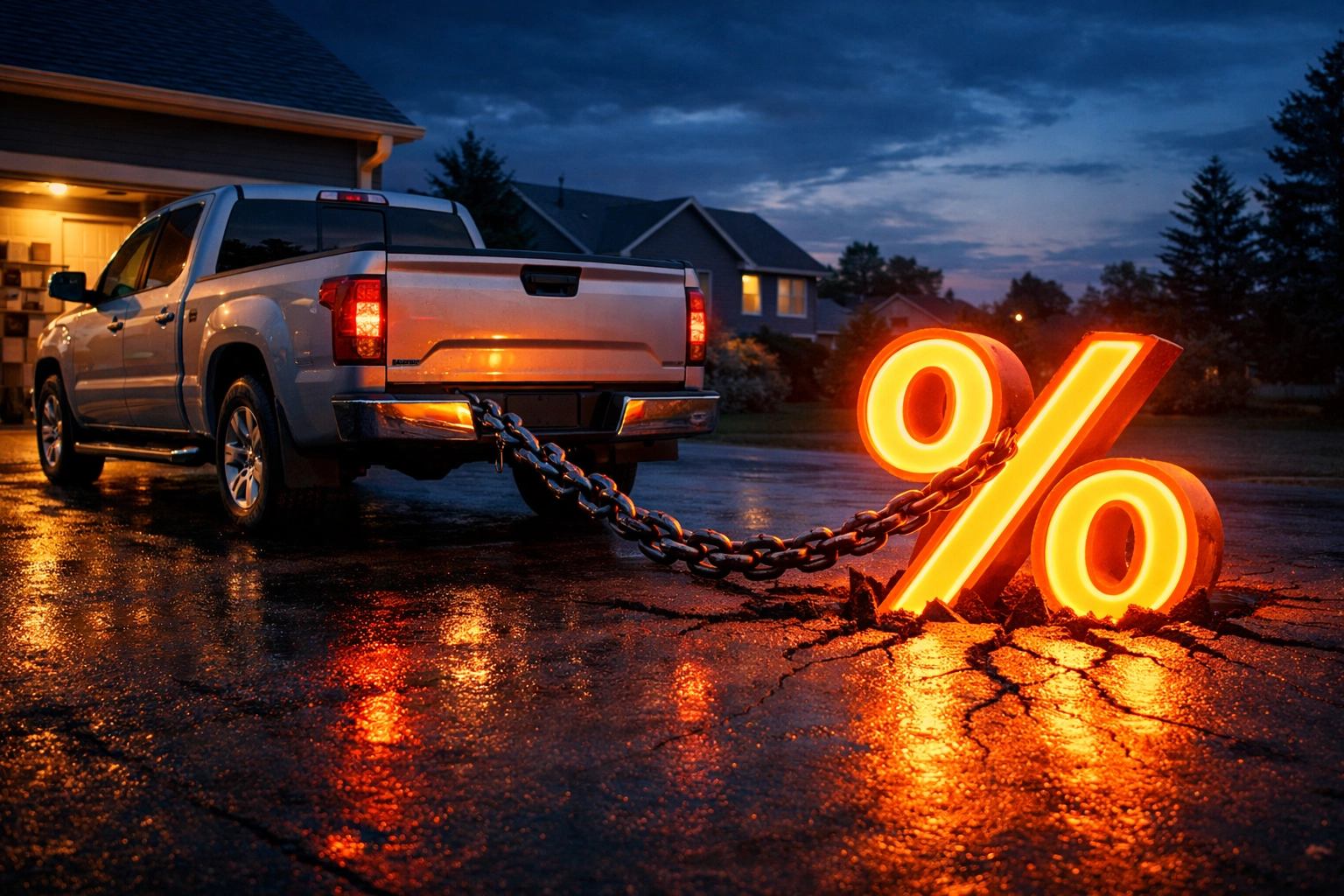
But there is a silver lining. High rates are actually great for people with savings. For the first time in a decade, your boring old savings account or a certificate of deposit (CD) might actually be paying you enough to buy a nice dinner once a month. If you’ve got cash sitting in the bank, high rates are your best friend. But let's be real: most regular guys are more focused on paying off the truck than watching their 0.5% interest grow to 4%.
Flat Prices: The Promised Land (With a Catch)
Now, let’s look at the other side of the coin: flat prices. Imagine a world where the price of eggs, gas, and rent stays exactly the same for three years. Sounds like heaven, right?
In economic terms, this is often called price stability. When prices are flat, your "purchasing power" stays the same. If you make $50,000 this year and $50,000 next year, you can buy exactly the same amount of stuff. It takes the guesswork out of budgeting. You don’t have to wonder if you’ll be able to afford a vacation in six months because the price isn't going to jump 20%.
However, there’s a catch. Usually, prices only stay completely flat when the economy is "meh." If people are spending money and businesses are growing, prices tend to creep up a little bit (that’s the 2% inflation target the Fed loves so much). When prices go totally flat, or worse, start falling (deflation), it’s usually because nobody is buying anything. And if nobody is buying anything, companies start laying people off.
So, would you rather have a world where the price of a burger stays at $8, but your boss is looking at you like you’re an "unnecessary expense"? That’s the trade-off.
The Runaway Train: Why the Medical Industry Doesn't Care
While we’re debating rates and prices, there’s one industry that seems to play by its own set of physics: Healthcare.
Whether interest rates are high or prices elsewhere are flat, medical costs in the United States have been on an epic, unrelenting climb. Back in 1960, medical costs were about five percent of our Gross Domestic Product (GDP). By 2025, that number is expected to hit a staggering twenty percent. Think about that. One-fifth of every dollar spent in the entire country is going toward healthcare.

And here is the kicker: we aren't necessarily getting healthier for all that extra cash. We’ve got more obesity, more Type 1 and Type 2 diabetes, and more cancer per capita than ever before. We’re taking a cocktail of prescription drugs with side effects that sometimes sound worse than the original problem. For the first generation in history, it looks like our kids might not live as long as we do.
The problem is that medicine has become a cog in the wheel of capitalism. Now, look, I like a profit as much as the next guy, but the spirit of medicine is supposed to be about care, not just quarterly earnings for shareholders.
Take car insurance as a comparison. If you wreck your truck, the insurance company knows exactly what the truck is worth. They know the price of a bumper and the hourly rate of a mechanic. The math is finite. But in medicine? The math is a "buzz saw of madness." You go in for a procedure and get a bill three months later that looks like a random number generator went haywire.
This is why we’re seeing massive shifts. Just a few years ago, the New York Times reported that Amazon, Berkshire Hathaway, and JPMorgan Chase were forming their own healthcare company to serve their employees. Their goal? An effort "free from profit-making incentives and constraints." They realized that medical expenses are the "runaway train" that has escaped every other cost-cutting measure in the business world.
Why Healthcare Costs Hit Your Wallet Harder Than Interest Rates
If your mortgage goes up $200 because of high rates, it hurts. But if your health insurance premium jumps 15% every year while your deductible gets higher, that’s a permanent drain on your wealth.
Smart companies are starting to realize that the only way to win this game is to "destroy" the current medical industry model. They’re looking at investing $100 in a gym membership for an employee to save $10,000 in cardiac care down the road. They’re looking at nutrition and stress management not because they’re "woke," but because it’s a better math equation.

For the regular guy, this is the real wallet-killer. High rates might come down next year. Flat prices might eventually turn into a raise. But the 20% of GDP being swallowed by the medical industry is money that isn't going into your retirement, your kid's college fund, or your "fun money" jar.
The Verdict: Which Is Better?
So, back to the main event. High rates vs. flat prices: which one should you root for?
If you are a young person looking to buy your first home or someone who relies on credit to keep the lights on, you want low rates, even if it means prices tick up a little bit. The ability to borrow cheaply allows you to build equity and grow your net worth.
However, if you are a "regular guy" who has already worked hard, paid off the house, and has a little nest egg saved up, you want flat prices and high rates. You want your saved cash to earn interest while the cost of your groceries stays steady.
But for the average working man right now? The "sweet spot" is actually a moderate interest rate (not too high, not too low) and "stable" prices. We don't necessarily want "flat" prices because that usually means the economy is dead in the water. We want a world where your wages grow faster than the prices of the things you buy.

If your paycheck goes up 5% and the price of milk goes up 2%, you’re winning. That’s the real goal.
The Bottom Line
Economics is often treated like a complicated science, but for the regular guy, it’s just about survival and progress. High rates are a tool to stop the bleeding of inflation. Flat prices are a sign that the bleeding has stopped, but it might also mean the heart of the economy is beating a little too slow.
The real threat to your wallet isn't just the Fed or the grocery store: it's the structural costs like healthcare that continue to skyrocket regardless of what the "official" inflation numbers say.
The best thing you can do? Stay out of high-interest debt when rates are up, keep an eye on your health to avoid that "runaway train" of medical costs, and keep your skills sharp so your wages can outpace whatever the market throws at you.
Be mindful, be watchful and good luck.