



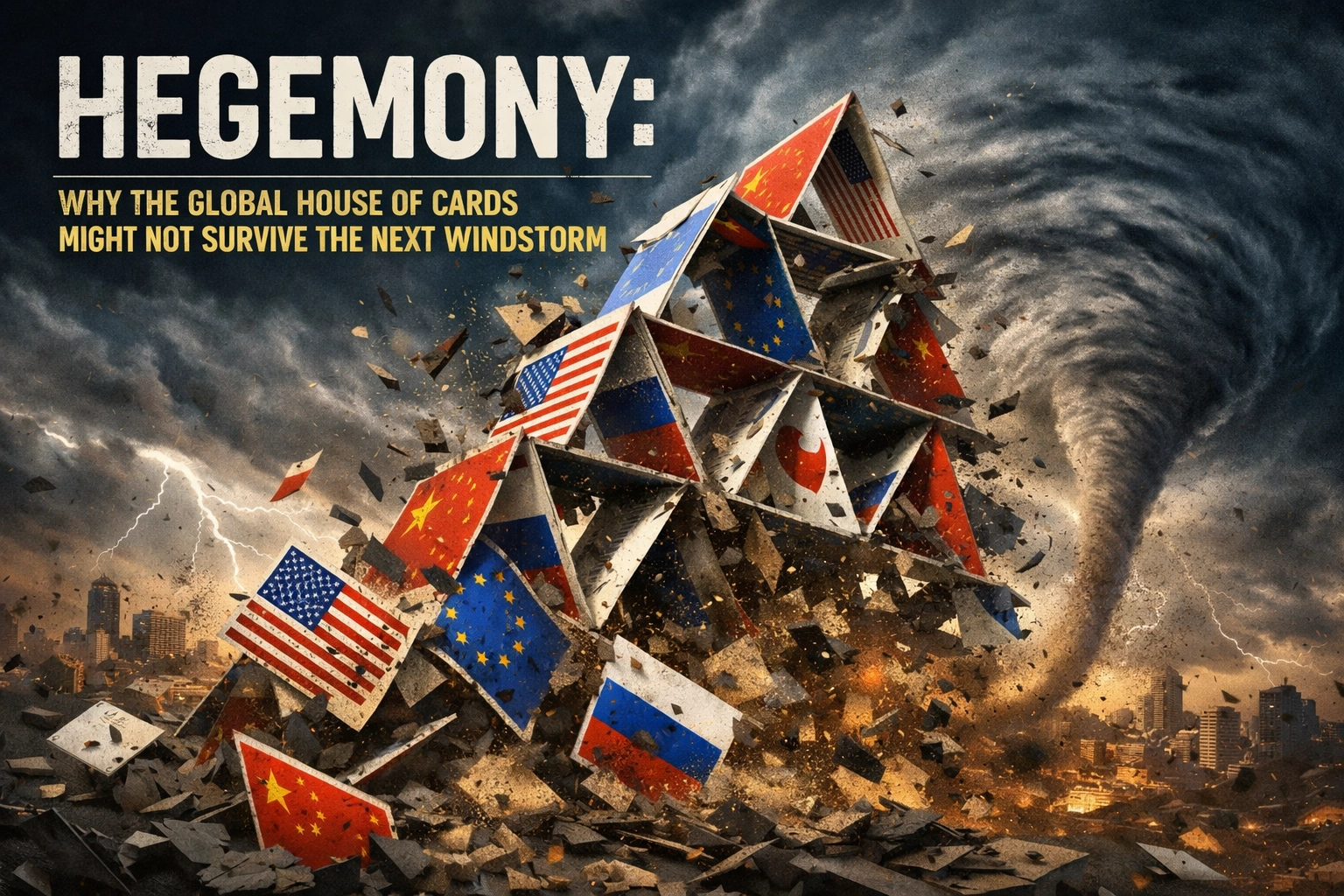
Let’s talk about the "Almighty Dollar." We use it to buy coffee, pay the mortgage, and complain about taxes. But on a global scale, the U.S. dollar isn't just a piece of green paper: it’s the glue holding the entire world economy together. Or, if you’re looking at the current state of geopolitics, it’s the primary support beam in a very tall, very shaky house of cards.
For the last 80 years, the U.S. has enjoyed what the French once called an "exorbitant privilege." We get to print the money the rest of the world is forced to use. But lately, that privilege is looking a bit frayed at the edges. To understand why your grocery bill is skyrocketing and why countries like China and Brazil are suddenly acting like they don’t need us anymore, we have to look at how this game was rigged from the start.
The 1944 Hotel Party: Bretton Woods
In the summer of 1944, while the rest of the world was busy finishing up World War II, 730 delegates from 44 nations gathered at a fancy hotel in Bretton Woods, New Hampshire. The goal? Figure out how the world would trade once the smoke cleared.
At the time, the U.S. held about two-thirds of the world’s gold. We were the only ones with a functioning economy and a big enough vault. So, a deal was struck: the world’s currencies would be pegged to the U.S. dollar, and the U.S. dollar would be "as good as gold" at $35 an ounce.
It was a great deal: for us. We became the world’s bank. If you were a country trading spices or cars, you didn't settle in your own currency; you settled in dollars because you knew you could always swap them for shiny yellow bars at the New York Fed.
The 1971 Breakup: The Nixon Shock
By the late 1960s, the "as good as gold" promise started looking like a "maybe" at best. The U.S. was spending a fortune on the Vietnam War and the "Great Society" programs. We were printing more dollars than we had gold to back them up.
Countries like France saw the writing on the wall. They started sending boatloads of dollars back to the U.S. and demanding their gold. President Richard Nixon realized that if he kept paying out, the U.S. would be broke by Tuesday.
So, on August 15, 1971, Nixon went on TV and effectively told the world, "The gold window is closed."
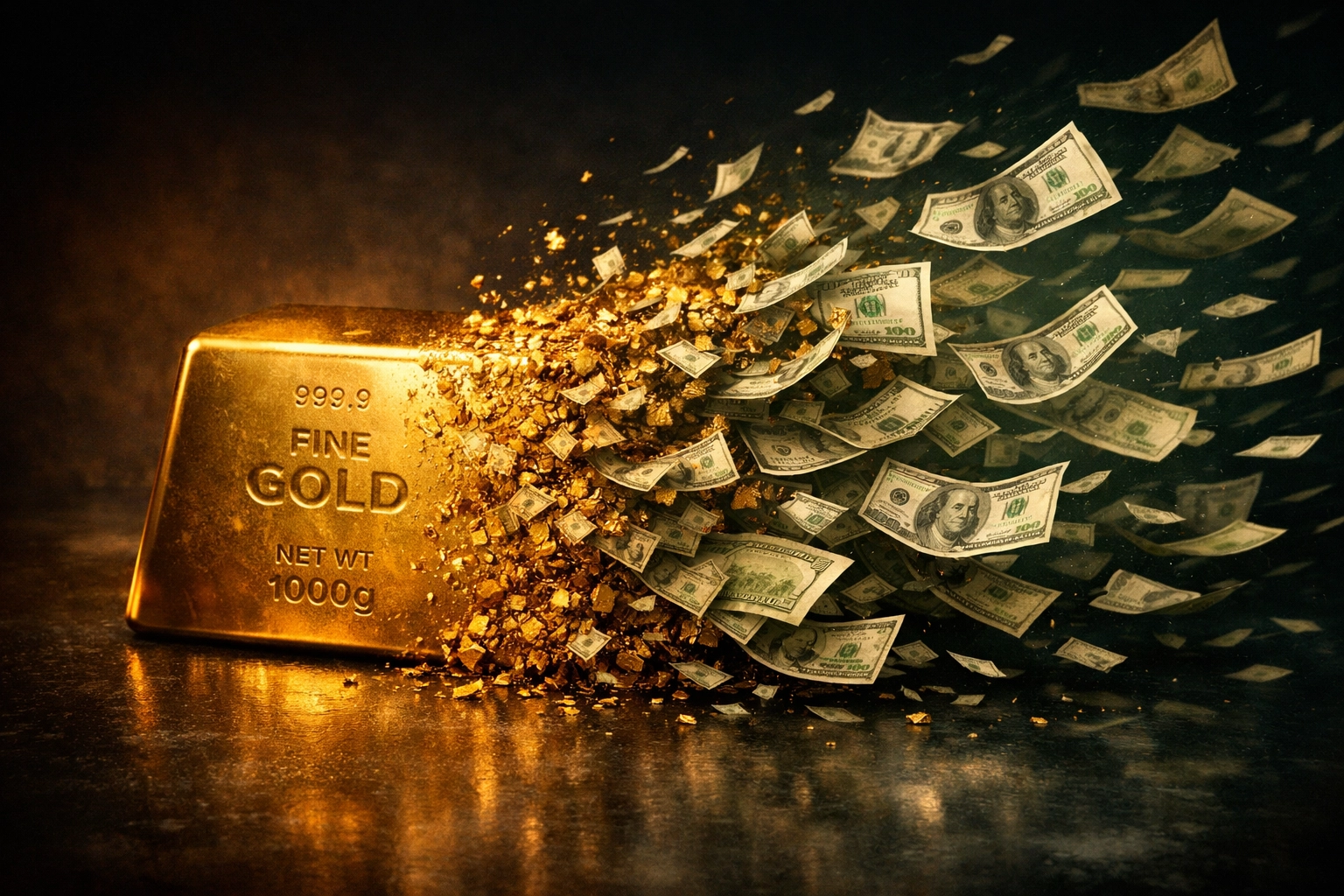
Suddenly, the dollar wasn't backed by gold; it was backed by "the full faith and credit" of the U.S. government. In regular guy terms, it was backed by pinky promises and the biggest military on the planet.
The Petrodollar Pivot (1974)
Without gold, the dollar should have collapsed. But the U.S. pulled off one of the greatest "pivot" moves in history. In 1974, Henry Kissinger headed to Saudi Arabia. The deal was simple: The U.S. would protect the House of Saud and provide military hardware. In exchange, the Saudis would price all their oil in U.S. dollars and reinvest their "petrodollars" back into U.S. Treasuries.
Since everyone needs oil, everyone now had to have dollars. This created a permanent, global demand for our currency, allowing us to keep printing and spending while the rest of the world picked up the tab.
The Triffin Dilemma: The Trap of Being King
Being the world’s reserve currency sounds like winning the lottery, but it comes with a hidden trap called the Triffin Dilemma.
To keep the global economy moving, the U.S. must provide the world with a constant supply of dollars. The only way to get those dollars out there is by running massive trade deficits. We buy their cheap stuff; they get our dollars.
The catch? Eventually, those deficits become so large that the rest of the world starts to worry if the U.S. can actually pay its debts. We are forced to choose between domestic stability (keeping our own economy healthy) and global responsibility (keeping the dollar stable for everyone else). We can’t do both forever.
The Weaponization of the Dollar
The real "uh-oh" moment happened in early 2022. When Russia invaded Ukraine, the U.S. and its allies did something unprecedented: they froze roughly $300 billion of Russia's foreign exchange reserves.
Imagine you’ve been saving money in a specific bank for decades, and one day the bank manager decides they don't like your behavior and locks your account. You’d probably find a new bank, right?
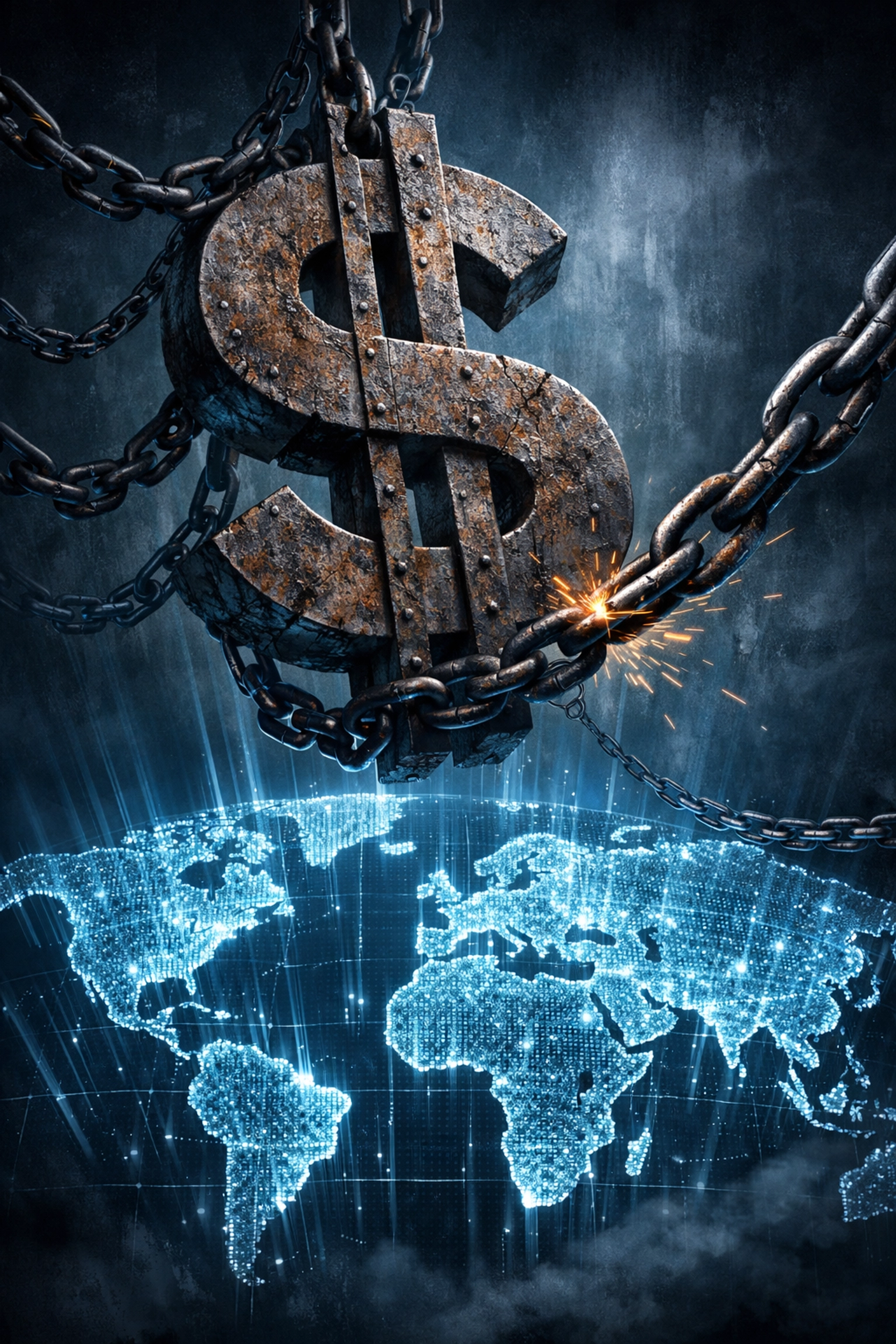
That’s exactly what the rest of the world thought. By using the dollar as a weapon of war, the U.S. signaled to every other nation: China, India, Brazil, the Middle East: that their savings are only "safe" as long as they stay on Washington's good side. This accelerated the push for "de-dollarization."
Enter the Challengers: BRICS+ and mBridge
For years, people talked about the dollar's demise, and it never happened because there was no alternative. But now, alternatives are popping up like mushrooms after rain.
The BRICS+ nations (Brazil, Russia, India, China, South Africa, and now Egypt, Ethiopia, Iran, and the UAE) are actively working on ways to trade without the dollar. They are looking at commodity-backed currencies and local currency swaps.
Then there’s mBridge. This is a digital platform involving the central banks of China, Thailand, the UAE, and Hong Kong. It allows them to settle trades instantly using digital currencies without going through the U.S. banking system (SWIFT). It’s a bypass around the American financial toll booth. If the toll booth is bypassed, the "exorbitant privilege" starts to vanish.
The Looming Shadow: The Debt Tower
While the world is looking for the exit, our own house is getting messy. The U.S. national debt is currently screaming past $34 trillion. To put that in perspective, we are adding about $1 trillion in debt every 100 days.
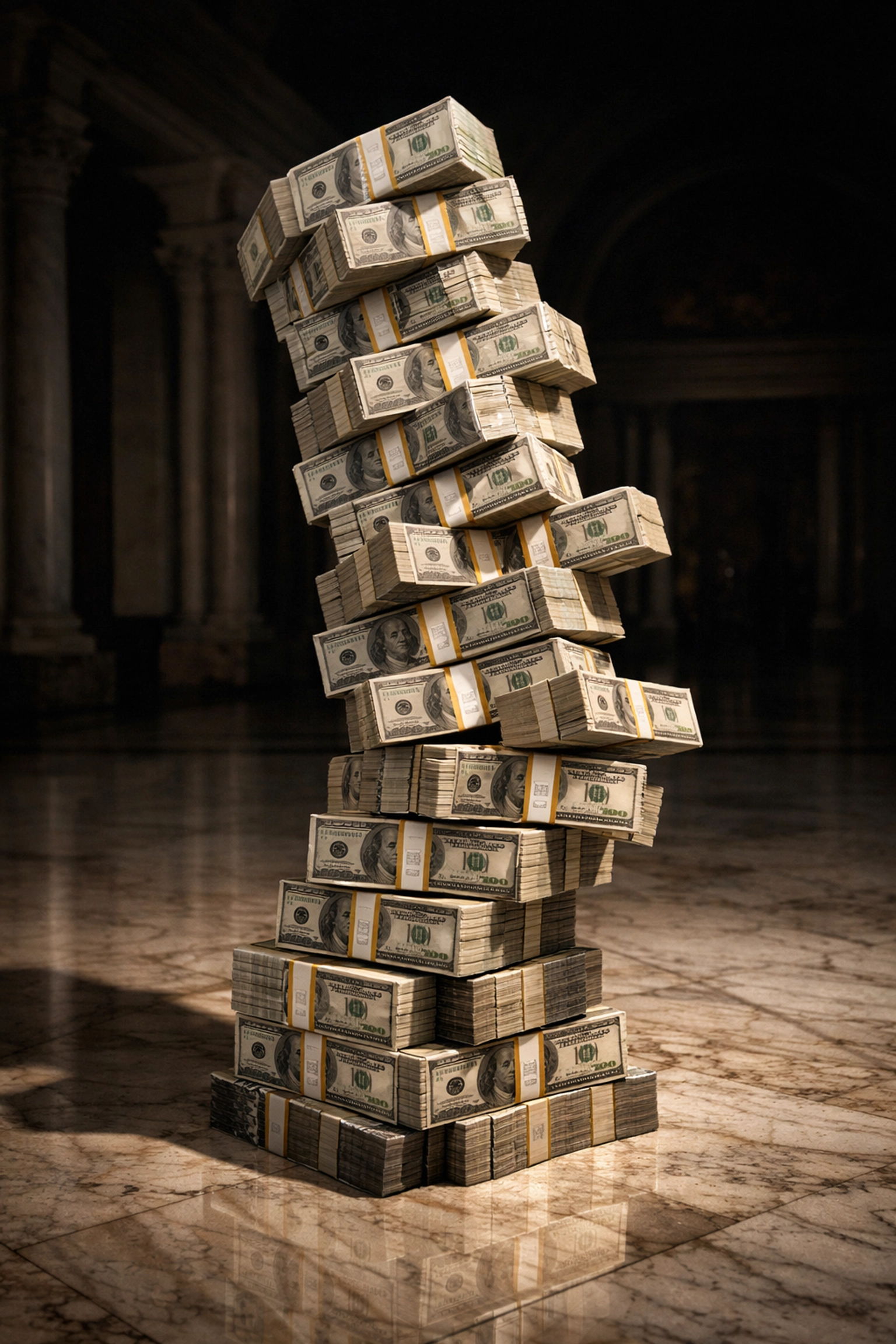
For a long time, this didn't matter because interest rates were near zero. But now, interest payments on our debt are costing us over $1 trillion a year. That’s more than we spend on our entire military.
We are in a cycle where we have to borrow more money just to pay the interest on the money we already borrowed. In any other country, this would be called a "debt spiral." Because we are the U.S., we call it "Tuesday." But eventually, the math catches up. If the rest of the world stops buying our debt because they’re afraid of the "weaponized dollar" or the "debt tower," the Fed has to print the difference. That, my friends, is the recipe for the kind of inflation that ruins empires.
The Chess Game of the Century
We aren't seeing a sudden "collapse" of the dollar tomorrow. It’s more like a slow erosion. The U.S. is still the biggest kid on the block, and the dollar is still the most liquid currency. But for the first time since 1944, the rest of the world is seriously looking for a Plan B.
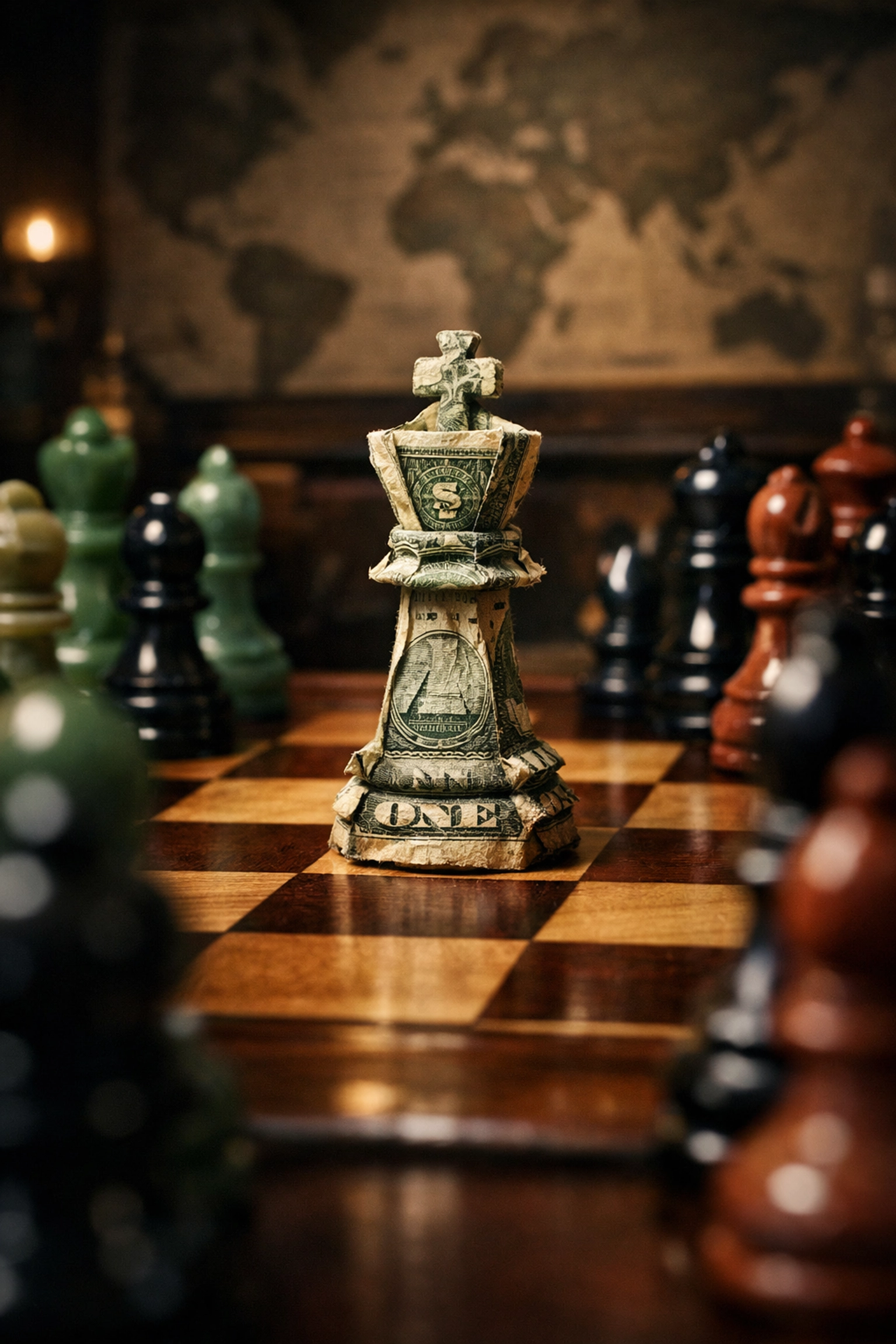
As a "regular guy," what does this mean for you? It means the era of cheap imports and "free" government spending is likely coming to an end. It means your purchasing power is the real battlefield. When the global house of cards starts to wobble, those who understand the game are the only ones who don't get crushed by the falling debris.
We’ve had an incredible run as the global hegemon. But history shows that no currency stays on top forever. Whether it’s gold, oil, or digital tokens, the world always finds a way to balance the scales when one side gets too heavy.
Be mindful, be watchful and good luck.