



You probably didn't vote for Jerome Powell. You probably can't name three other people on the Federal Reserve Board. Yet eight times a year, a handful of economists in a Washington, D.C. conference room make decisions that determine whether you can afford to buy a house, whether your employer can afford to hire you, and whether your grocery bill keeps climbing.
Welcome to the weird world of Fed policy, where unelected officials pull invisible levers that move your wallet.
What the Heck Is the Fed, Anyway?
The Federal Reserve, "the Fed" to its friends, is America's central bank. It was created in 1913 (sound familiar from our previous conversations?) with a dual mandate from Congress: keep employment as high as possible and keep prices stable. That second part means targeting inflation at around 2% per year. Not zero. Not 5%. Two percent.
Why 2%? Because economists decided a tiny bit of inflation is better than deflation (falling prices), which can wreck an economy. But that's a conversation for another day.
The Fed doesn't run your local bank. It doesn't hold your checking account. Instead, it's the "bank for banks", and it sets the rules and rates that ripple through the entire financial system and land directly in your life.
The Big Red Button: The Federal Funds Rate
The Fed's main weapon is something called the federal funds rate. This is the interest rate that banks charge each other when they lend money overnight to meet reserve requirements.
You're probably thinking, "Why do I care what banks charge each other?"
Because that rate is the foundation for almost every other interest rate in the economy. When the Fed raises or lowers this target rate, it's like throwing a stone into a pond. The ripples spread everywhere:
- Your mortgage rate goes up or down
- Your car loan gets more or less expensive
- Your credit card APR shifts
- Your employer's ability to borrow for expansion (and hire you) changes
- Your savings account yield moves
The federal funds rate is the price of money itself. And a room full of economists sets it.
Easing vs. Tightening: The Economic Gas and Brake Pedals
The Fed essentially has two modes: easing and tightening.
Easing is when the Fed lowers interest rates. This is the gas pedal. It makes borrowing cheap, encourages spending and investment, and generally tries to heat up a sluggish economy. When rates are low, businesses borrow to expand, people buy homes, and money moves around. The idea is to boost employment and keep the economy humming.
Tightening is when the Fed raises interest rates. This is the brake pedal. It makes borrowing more expensive, which slows down spending and investment. Why would they do this? To fight inflation. When the economy is running too hot, prices are climbing fast, wages are spiking, everyone's buying everything, the Fed steps in to cool things down before inflation spirals out of control.
Think of it like this: If the economy is a bonfire, easing is throwing gasoline on it. Tightening is hosing it down. The Fed is constantly trying to keep the fire at the perfect size, not too small (recession), not too big (runaway inflation).

Quantitative Easing and Tightening: The Nuclear Option
Sometimes the federal funds rate isn't enough. When interest rates are already near zero and the economy is still in the tank, like during the 2008 financial crisis or the COVID pandemic, the Fed pulls out the big guns: quantitative easing, or QE.
In plain English, QE means the Fed creates money out of thin air and uses it to buy government bonds, mortgage-backed securities, and other financial assets. This floods the banking system with cash, pushes down long-term interest rates, and (theoretically) encourages lending and spending.
It's like the Fed saying, "Okay, the regular tools aren't working. Time to print a few trillion dollars and see what happens."
The opposite is quantitative tightening, or QT. This is when the Fed stops buying new assets and lets old ones expire, shrinking its balance sheet. It sucks money back out of the system, making credit tighter and cooling the economy.
Here's the problem: QE and QT are controversial. Critics argue that pumping trillions into the financial system inflates asset bubbles (hello, skyrocketing home prices and stock market valuations) and mainly benefits people who already own stuff: the wealthy. Meanwhile, regular folks see their rent go up and their wages struggle to keep pace.
Sound like Croupier Economics yet?
Why a Room in D.C. Decides If You Can Afford a House
Let's bring this home, literally.
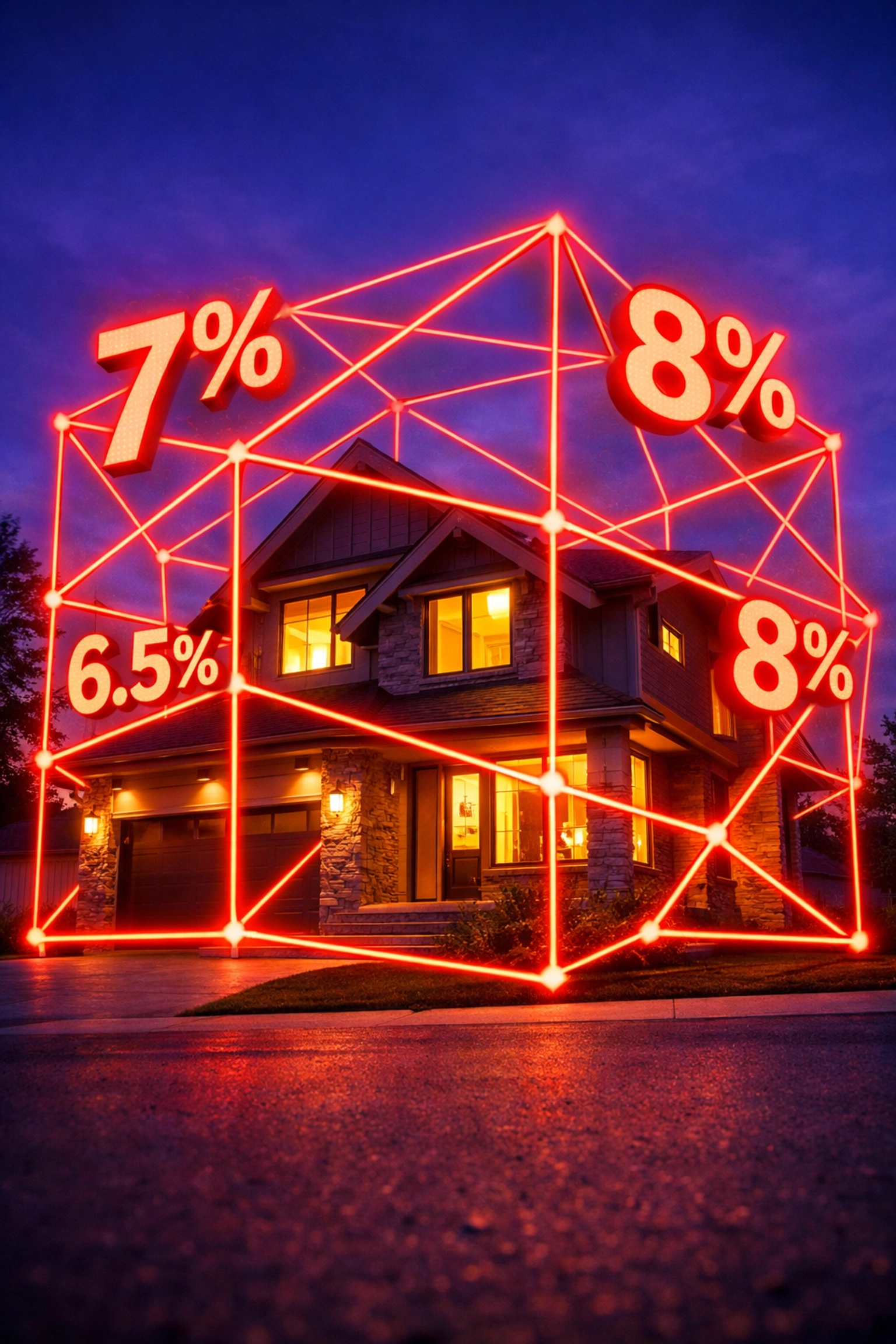
Say you want to buy a house in 2026. You've saved for a down payment, your credit is decent, and you're ready to go. But mortgage rates are sitting at 7% because the Fed has been tightening to fight inflation.
At 7%, your monthly payment on a $400,000 mortgage is roughly $2,660. If the Fed had kept rates lower: say, 3%: that same mortgage would cost you about $1,690 per month. That's a difference of nearly $1,000 a month, or $12,000 a year.
The Fed just priced you out of homeownership: or at least out of the neighborhood you wanted.
Now multiply that across millions of Americans. Fed policy doesn't just nudge the economy. It determines whether entire generations can afford to buy homes, start businesses, or save for retirement.
And here's the kicker: the people making these decisions are unelected technocrats. They're smart, sure. But they're not accountable to voters. They're accountable to Congress, theoretically: but in practice, they operate with near-total independence.
The Croupier Connection
Remember our Croupier Economics theme? Money flows from the many to the few, and someone's always skimming off the top.
The Fed's policies are a textbook example. When the Fed slashes rates and launches QE, who benefits most? Banks, corporations, and investors who can borrow cheaply and buy assets. Stock portfolios soar. Real estate values spike. The wealthy get wealthier.
Meanwhile, savers get crushed. Your savings account yields basically nothing. Inflation eats away at your purchasing power. And if you're trying to enter the housing market, you're competing against cash buyers and institutional investors who scooped up properties when rates were low.
When the Fed tightens, regular people feel it first. Layoffs happen. Credit card debt gets more expensive. Small businesses struggle to expand. But the big players? They've already locked in their low rates and fortified their balance sheets.
The Fed isn't technically "the house" in the casino analogy: but its policies sure do tilt the table toward the house's friends.
Forward Guidance: The Fed's Crystal Ball (That's Usually Foggy)
One more tool in the Fed's kit: forward guidance. This is when Fed officials signal what they plan to do in the future: like "We expect to keep rates low for the foreseeable future" or "We anticipate multiple rate hikes this year."
The idea is to manage expectations. If businesses and consumers know rates are staying low, they'll borrow and invest. If they know rates are going up, they'll adjust their plans accordingly.
The problem? The Fed is often wrong. They've missed inflation surges, misjudged employment recoveries, and flip-flopped on policy. Remember when inflation was "transitory"? Yeah.
So you're supposed to plan your financial life around predictions made by people who are frequently surprised by reality. Fun, right?
The Bottom Line for Regular Folks
Here's what you need to know:
-
The Fed controls the price of borrowing money. When they raise rates, borrowing gets expensive. When they cut rates, it gets cheap.
-
Fed policy affects your biggest financial decisions. Buying a home, financing a car, carrying credit card debt, saving for retirement: all of it is influenced by what happens in that D.C. conference room.
-
The Fed's tools aren't neutral. Easing and QE tend to help asset owners and the wealthy. Tightening tends to hurt workers and borrowers. Either way, the Croupiers skim their cut.
-
You can't control Fed policy: but you can react to it. Lock in low rates when they're available. Avoid variable-rate debt when rates are rising. Build an emergency fund so you're not at the mercy of credit markets.
-
The Fed is playing a game with trillions of dollars: and you're a chip on the table. They're not malicious. But they're also not looking out for your wallet specifically. They're managing macro trends, and individual people are just data points.
The Federal Reserve wields enormous power over your financial life. Understanding how their decisions trickle down to your mortgage, your paycheck, and your retirement account is the first step toward not getting blindsided when policy shifts.
Because in the end, the Fed is just another player in the economic casino: and the house always has an edge.
Be mindful, be watchful and good luck.