



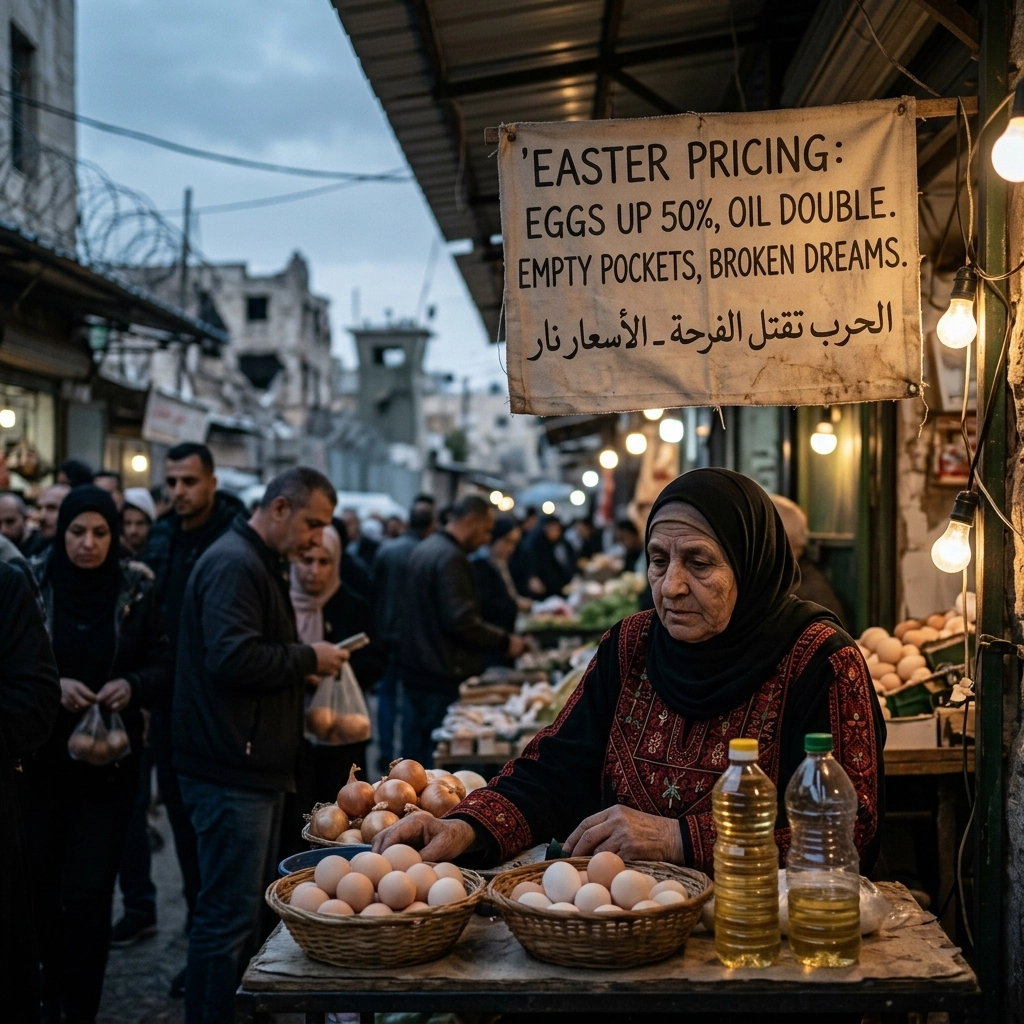
It’s Friday, April 3rd, 2026. If you’re like most people, you’re probably gearing up for Easter Sunday. You’ve got the plastic grass ready, the kids are arguing over who gets the giant chocolate bunny, and you’re looking forward to a nice ham dinner with the family. But as we sit here on Good Friday, a day meant for reflection and peace, the world outside our front door feels anything but peaceful.
Usually, the biggest stress at Easter is wondering if the weather will hold up for the egg hunt. This year? The uninvited guest at the table is global instability. Between the conflict in the Middle East and the straight-up weirdness of our current economy, that Easter basket is looking a lot lighter, and a lot more expensive.
Let’s break down why your wallet is feeling the squeeze this holiday season.
The $5 Dozen: Why Eggs Are the New Gold
Remember when eggs were the cheapest protein on the shelf? Those days feel like a fever dream. As we head into Easter, the Super Bowl of egg consumption, the prices are hitting levels that make you want to check if they’re laid by a goose that’s actually made of 24-karat gold.
It’s not just "corporate greed," though that’s the easy thing to yell about on Twitter. It’s a perfect storm. We’ve got the lingering effects of supply chain hiccups, but the real kicker is the "energy tax." To get those eggs from a farm to your fridge, you need trucks. Those trucks need diesel. And diesel? Well, that brings us to the bigger problem.

The Strait of Hormuz and Your Gas Tank
If you haven’t been glued to the news, here’s the quick and dirty: the war that kicked off in late February has officially gone from "concerning" to "economically catastrophic." On March 4th, the Strait of Hormuz: the most important oil artery on the planet: was closed.
To put that in "Regular Guy" terms: imagine if the only road to the grocery store was suddenly blocked by a giant pile of burning tires. That’s what’s happening to the world’s oil supply.
Because of this, oil prices have been flirting with $120 a barrel. Some analysts are looking at the data and saying we could see $150 before the kids even finish their Easter candy. When oil spikes like that, everything else follows. It’s not just the $5.00+ you’re seeing at the gas pump when you drive to Grandma’s house; it’s the cost of the plastic in the Easter eggs, the fertilizer for the spring crops, and the electricity to keep the grocery store lights on.
The $8 Billion Weekly Tab
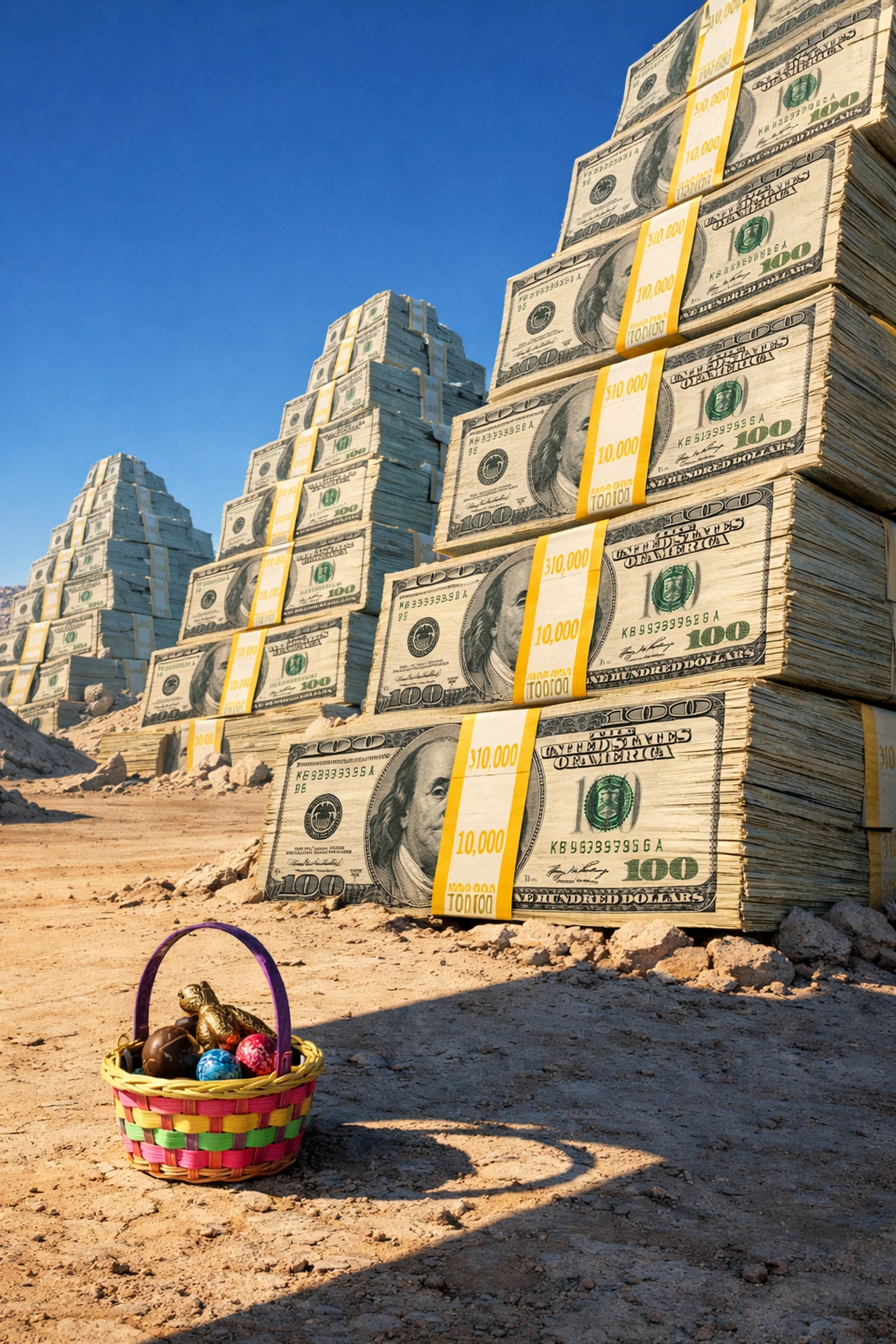
Here at Regular Guy Economics, we like to look at the math, and right now, the math is staggering. According to the latest reports, the direct military costs of the conflict in the Middle East exceeded $16.5 billion in just the first two weeks. By mid-March, that number jumped to nearly $30 billion.
We are currently burning through about $8 billion a week.
Think about that for a second. $8 billion a week to keep the engines of war running. If this pace continues for the next six months, we’re looking at a $200 billion bill. That’s $200 billion that isn't going toward fixing our roads, lowering our taxes, or: God forbid: making healthcare more affordable (but more on that in a minute).
When the government spends money at that rate, it has two choices: print more of it or borrow more of it. Both of those options lead back to the same place for you and me: more inflation. Your "empty pockets" this Easter aren't an accident; they’re the result of a global bill that’s being charged to our collective credit card.

Shipping Delays: The Red Sea "Tax"
It’s not just oil. The conflict has turned the Red Sea into a no-go zone for a lot of international shipping. This means ships are taking the long way around Africa. That adds weeks to travel times and thousands of dollars to fuel costs.
This is the "Shipping Tax." Everything from the electronics you might have bought for an Easter gift to the specialty ingredients for your dinner is stuck on a boat somewhere, getting more expensive by the hour. We live in a world where a drone strike thousands of miles away can literally change the price of the coffee you’re drinking while you read this. It’s a wild, interconnected web, and right now, that web is being pulled tight.
The Prince of Peace vs. The Business of War
There’s a heavy irony in celebrating a holiday focused on peace and resurrection while the global economy is being fueled by conflict. It’s a somber Good Friday when you realize how much of our global "growth" is actually tied to the business of destruction.
We’ve talked before about how the "system" is designed to keep spending. We see it in the medical industry, too. In 1960, medical costs were about 5% of our GDP. By 2025, they were expected to hit 20%. It’s a runaway train. We spend more and more on "healthcare," yet we’re more stressed, more addicted to prescriptions, and, frankly: not much healthier.
It’s the same pattern as the war spending. We pour money into the "defense" of a system that often leaves the average person feeling less defended and more broke. We spend $100 on a gym membership to save $10,000 on heart surgery, but as a society, we’d rather wait for the surgery. We’d rather spend $8 billion a week on a war than figure out how to stabilize the prices of the basic goods that keep families afloat.
What Can We Do?
Look, I’m not here to ruin your holiday. Easter is about hope. But at Regular Guy Economics, we believe hope is a lot easier to find when you’re not blindsided by your bank statement.
- Budget for the "War Surcharge": Expect gas and food prices to remain volatile for the foreseeable future. If you can, top off the tank when you see a dip, and maybe buy those non-perishables in bulk now.
- Focus on the Local: If global shipping is a mess, look to your local farmers and businesses. It might be a little more expensive upfront, but you’re cutting out the Middle East "oil tax" that’s baked into the price of stuff shipped from across the ocean.
- Be Mindful of the Noise: The headlines are meant to keep you in a state of panic. Panic leads to bad financial decisions. Take a breath, enjoy your family, and remember that while we can’t control the Strait of Hormuz, we can control how we react to the chaos.
Final Thoughts
This Easter, the basket might have a few less chocolate eggs, and the drive to see family might cost a bit more in the tank. The world is in a rough spot, and the "Secret Banks" and shadow lenders we’ve talked about before are starting to feel the cracks from these high interest rates and war-driven costs.
But even with the oil spikes and the empty pockets, there’s still plenty to be thankful for. We’re still here, we’re still working, and we’re still looking out for each other. That’s the real "Regular Guy" way.
Enjoy your Easter Sunday, keep an eye on the pump, and don’t let the global "uninvited guests" steal your peace of mind.
Be mindful, be watchful and good luck.