



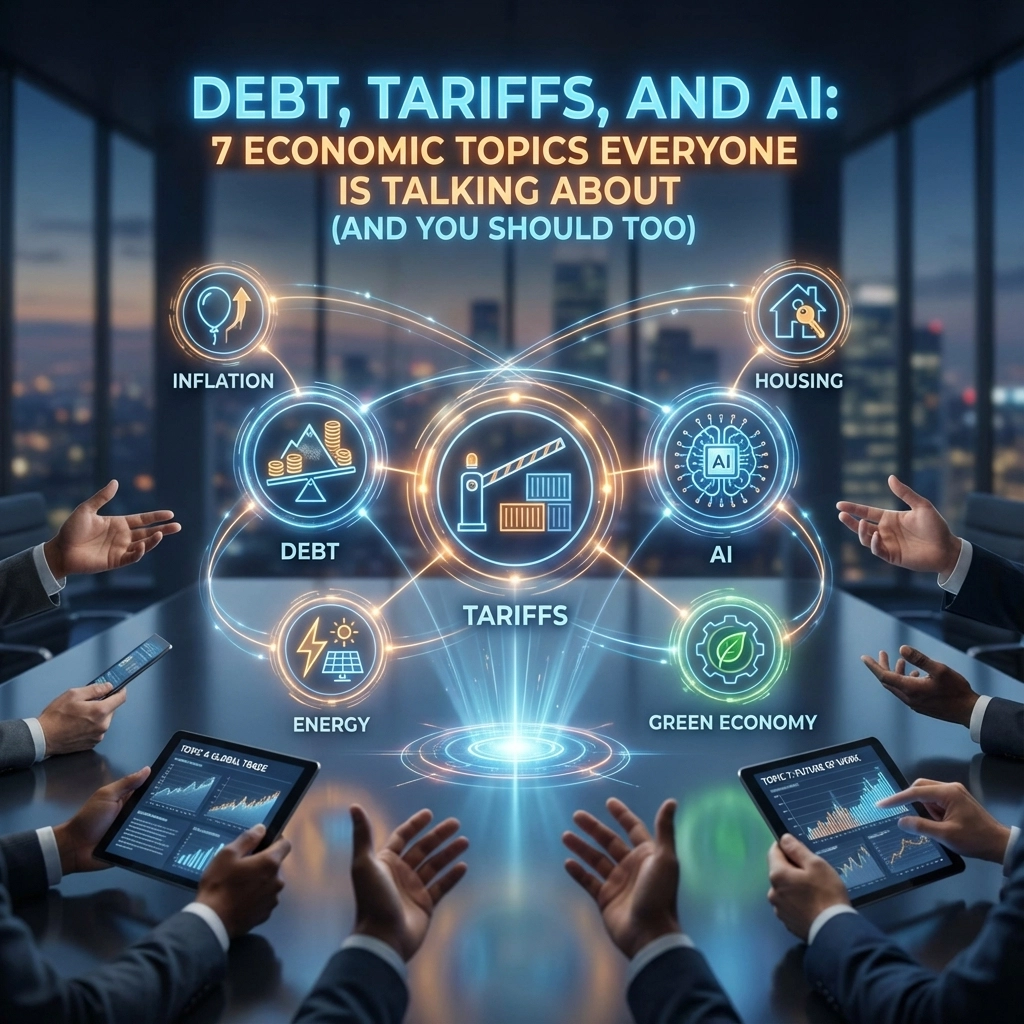
Look, I get it. Turn on the news or scroll through your feed, and you're hit with economic jargon that sounds like it was written by robots for robots. Debt ceiling this, tariff war that, AI revolution everywhere. It's enough to make your head spin faster than a washing machine on the fritz.
But here's the thing – these aren't just fancy terms economists throw around at cocktail parties. These topics are reshaping how we work, spend, and live our daily lives. And if you're not paying attention, you're missing out on understanding the forces that directly impact your wallet, your job, and your future.
So let's cut through the noise and break down the seven economic topics that everyone's talking about – and why you should care about them too.
1. The Tariff Tango: When Trade Gets Complicated
Let's start with tariffs, because they're probably the most misunderstood economic tool in the toolbox. Think of a tariff as a tax on stuff we import from other countries. When the US slaps a tariff on European cars or Chinese electronics, it makes those products more expensive for American consumers.
The idea sounds simple enough: protect American jobs by making foreign goods pricier. But here's where it gets messy. Those higher costs don't just disappear – they get passed down to you and me at the checkout counter.

Right now, US tariffs are causing headaches across the globe. European exports are getting hammered, especially in the auto and steel industries. Indian exporters are feeling the pinch too. And here's a wild card: there's talk of a Supreme Court ruling that could force the government to refund tariff revenues to importers. Imagine that budget bombshell.
The bottom line? Those "America First" tariffs often mean "Americans pay more" at the store. It's basic economics dressed up in political theater.
2. AI: The Game Changer That's Still Loading
Artificial Intelligence isn't science fiction anymore – it's sitting in your pocket, managing your calendar, and probably recommending what you should binge-watch next. But economically speaking, we're still in the early innings of this transformation.
Countries are throwing serious money at AI development. China is pivoting government investments toward AI, aerospace, and quantum technology. Japan's new prime minister is betting big on 17 key industries, with AI and semiconductors leading the charge.
But here's the reality check: most of AI's productivity benefits are still stuck in the tech sector. Your local restaurant, construction company, or accounting firm isn't seeing revolutionary changes yet. The biggest AI productivity boom is still years away, which means we're living through the awkward teenage phase of the AI revolution.
For regular folks, this means AI will gradually change how you work, but it's not coming for your job tomorrow. It's more like a slow-motion earthquake than a sudden explosion.
3. The Debt Mountain: When Numbers Get Scary
National debt used to be one of those things politicians argued about during election season, then forgot about until the next cycle. Not anymore. High debt burdens are now actively constraining what governments can do to help their economies.
France is facing serious fiscal pressure among larger economies. Several countries are trying to implement tax reforms while managing deficits that have spiraled out of control. It's like trying to diet while someone keeps adding donuts to your plate.
The problem with massive debt isn't just abstract – it means less money for the things that actually help people. Infrastructure, education, healthcare, emergency responses – they all take a backseat when governments are spending huge chunks of their budgets just paying interest on old debts.
Think of it like maxing out your credit cards. Eventually, you're not buying groceries – you're just paying minimum payments on debt you accumulated years ago.
4. The Global Growth Slowdown: When the Economy Hits the Brakes
The world economy is projected to grow about 2.8% in 2026, which sounds okay until you realize that's basically running in place. Real economic growth that improves living standards typically needs to be higher than that.
This slowdown isn't happening everywhere equally. Asia-Pacific is expected to feel it the most, while China's export strength – which has been propping up a lot of global trade – is losing steam.
Why should you care? Because global growth affects everything from your job opportunities to the price of gas. When the world economy slows down, it's like a game of economic musical chairs – and regular people often end up without a seat.
5. Inflation: The Silent Wallet Thief
Even though inflation has cooled down from its 2022 fever pitch, it's still lurking in the shadows. Food prices remain stubbornly high in many places, and there's always the risk that trade disruptions or commodity price spikes could reignite the whole mess.

The tricky thing about inflation is that it hits different people differently. If you're wealthy with lots of assets, a little inflation might actually help you. But if you're living paycheck to paycheck, even small price increases on essentials can wreck your budget.
Central banks are walking a tightrope here – cut interest rates too much and inflation roars back, keep them too high and the economy stalls out. It's like trying to thread a needle while riding a bicycle.
6. The Job Market Reality Check
Here's a sobering fact: job growth across all major developed countries has fallen well below where it was before the pandemic. Unemployment is rising in several regions to levels we haven't seen in nearly a decade.
This isn't just about numbers on a spreadsheet – it's about real people struggling to find decent work. The disconnect between modest economic growth and employment strength means that even when the economy looks okay on paper, regular folks aren't feeling it in their daily lives.
Immigration and labor force growth have also slowed dramatically, which creates weird economic dynamics where some sectors can't find workers while others are laying people off.
7. Central Bank Musical Chairs: The Interest Rate Game
Finally, let's talk about interest rates, because they affect everything from your mortgage to your savings account. Central banks around the world are expected to cut rates in 2026, with the Federal Reserve projected to reduce rates by about half a percentage point.
This sounds like good news if you're carrying debt, but it's complicated. Lower rates can stimulate spending and investment, but they also mean lower returns on savings. It's a balancing act that affects every financial decision you make.

The big question is whether central banks can thread the needle – stimulating growth without reigniting inflation. Get it wrong, and we could be back to the economic whiplash of the past few years.
Making Sense of the Madness
Here's the thing about all these economic forces – they don't operate in isolation. Tariffs affect inflation, AI impacts jobs, debt limits government responses, and interest rates influence everything else. It's like a giant, interconnected machine where pulling one lever affects ten other things.
The key for regular folks is to understand that these aren't abstract economic concepts – they're the forces shaping your financial future. The job market affects your career prospects. Inflation impacts your cost of living. Interest rates influence your borrowing costs. And all of these trends together determine the economic environment you'll be navigating for years to come.
So what can you do with this information? First, don't panic. Economic cycles are normal, and understanding them helps you make better decisions. Second, stay informed but don't get overwhelmed by daily economic noise. Focus on the big trends that actually matter for your situation.
Most importantly, remember that while you can't control global economic forces, you can control how you respond to them. Build your skills, manage your money wisely, and stay adaptable. The economy might be complicated, but your approach to it doesn't have to be.
Be mindful, be watchful, and good luck!