



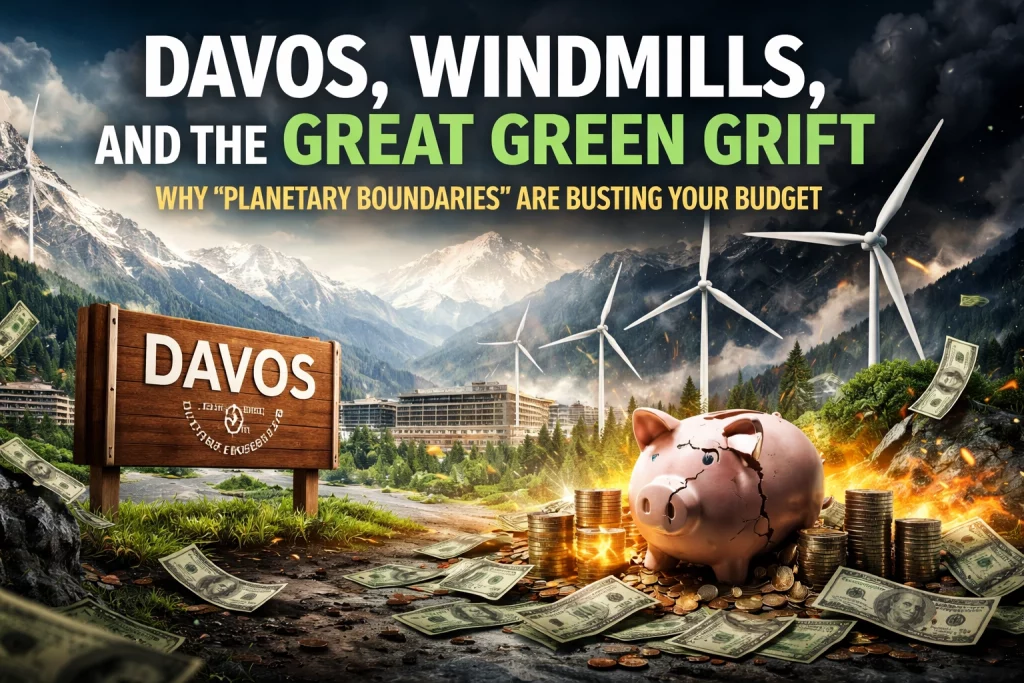
Every January, a few thousand of the world's most powerful people pack their bags and head to Davos, Switzerland. They talk about saving the planet, building "prosperity within planetary boundaries," and making the world a better place. Then they hop back on their private jets and head home.
Meanwhile, the rest of us are staring at our electricity bills wondering what hit us.
The World Economic Forum kicked off this week with all the usual fanfare. Sustainability is front and center. They've even built a 65,000-square-foot temporary wooden chalet that gets assembled and disassembled every single year. You know, for the environment.
Let's talk about what "planetary boundaries" actually mean for regular folks like us. Because from where I'm sitting at my kitchen table, it looks a lot like higher prices and shorter paychecks.
The Planetary Boundary That Matters Most: Your Wallet
The term "planetary boundaries" sounds very scientific and important. And to be fair, it comes from legitimate earth science research about environmental limits. But when politicians and billionaires at Davos use it, what they really mean is this: we need to change how energy works, and you're going to pay for it.
Over the past decade, governments around the world have poured trillions of dollars into wind and solar power. The promise was simple. Clean energy. Lower costs eventually. A greener future for everyone.
How's that working out for your electric bill?
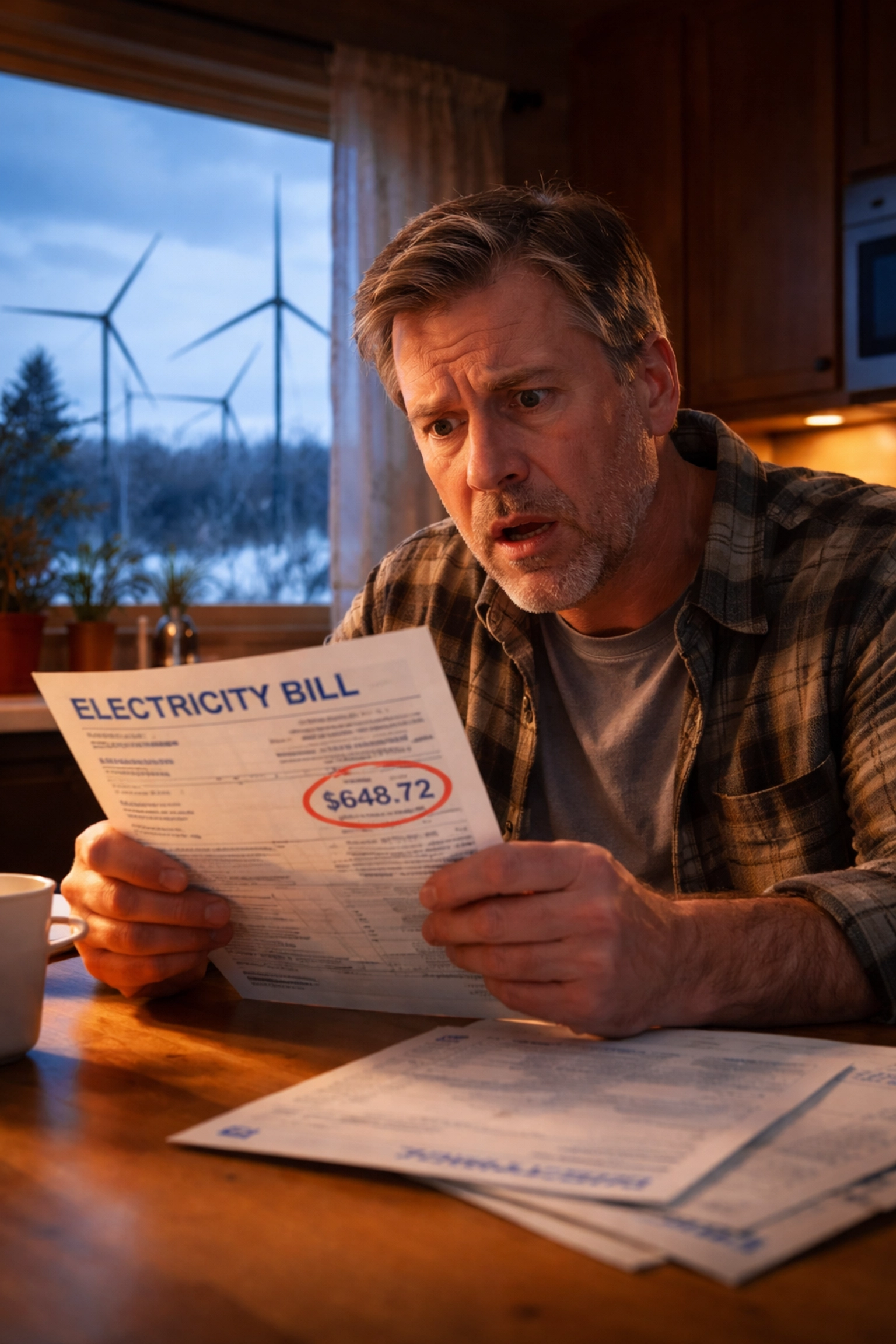
In Europe, where they've gone furthest down the renewable road, energy prices have skyrocketed. Germany, the poster child for green energy policy, has some of the highest electricity costs on the continent. Here in the States, we're following the same playbook. And surprise, surprise, our bills are climbing too.
The Davos crowd calls this "the transition." Regular guys call it "getting squeezed."
The Dirty Secret Behind Clean Energy
Here's what they don't mention in those fancy Swiss conference rooms. Wind and solar power aren't as clean as advertised. Not even close.
Let's start with the obvious problem: the sun doesn't always shine and the wind doesn't always blow. This is called intermittency, and it's a massive headache for anyone trying to run a reliable power grid. When the wind stops, you still need electricity. So what happens? You fire up natural gas plants to fill the gap. Or you import power from somewhere else. Either way, the carbon savings aren't what the brochure promised.
But intermittency is just the appetizer. The main course is what it takes to build all this green infrastructure in the first place.
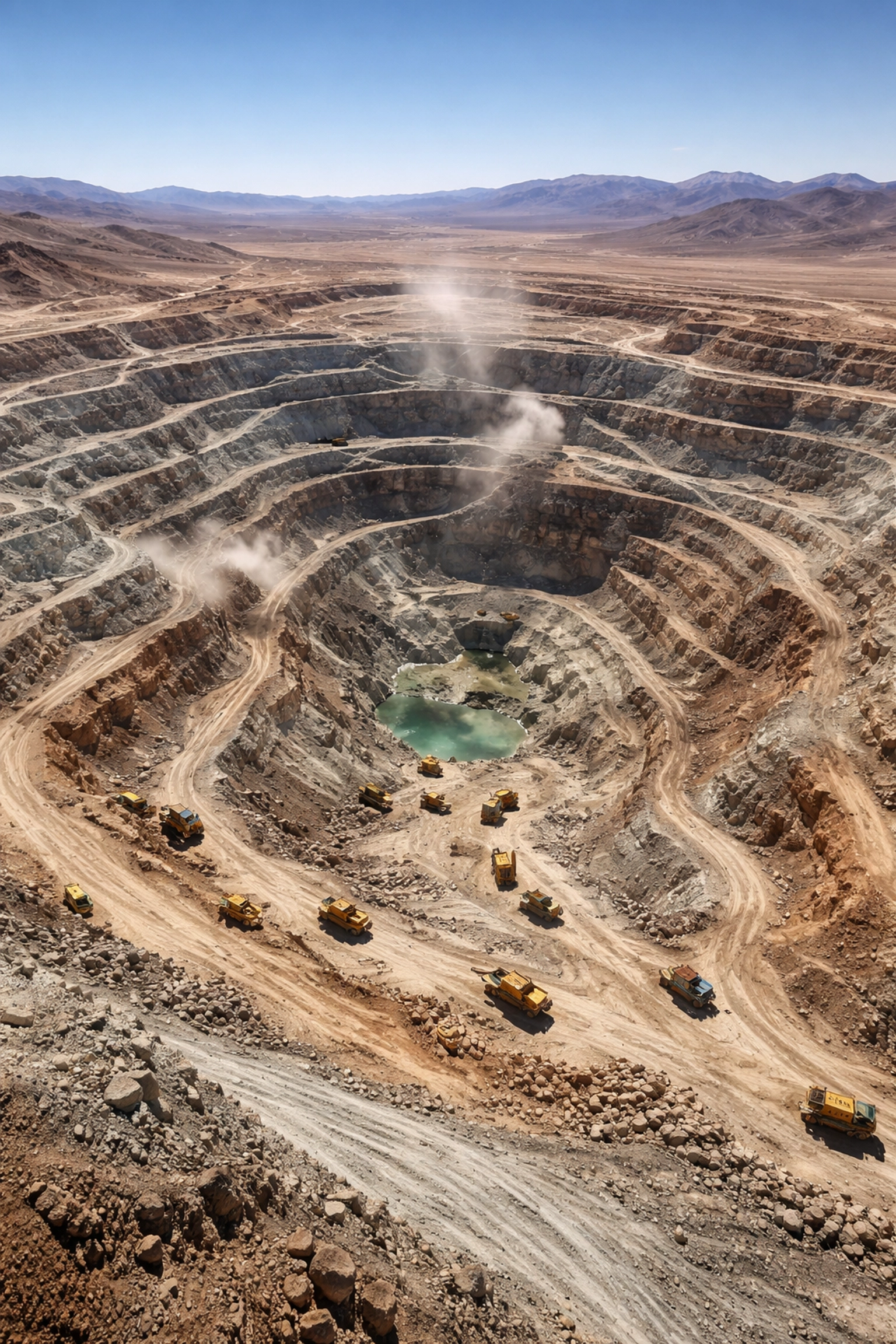
Solar panels require massive amounts of polysilicon, silver, and other materials. Where do those come from? Mining operations, often in countries with environmental standards that would make your head spin. The rare earth minerals needed for wind turbines? Same story. Cobalt, lithium, neodymium. These don't grow on trees. They get dug out of the ground in places like the Congo and China, with all the environmental destruction that entails.
And let's talk about land use. To generate the same power as a traditional plant, solar and wind farms need enormous amounts of space. We're talking thousands of acres for a single wind installation. That's farmland, forests, and wildlife habitat that gets converted into industrial energy production. Very green indeed.
The Lifecycle Nobody Wants to Discuss
When the Davos elite talk about "net zero" and carbon footprints, they conveniently ignore the full lifecycle of renewable energy equipment.
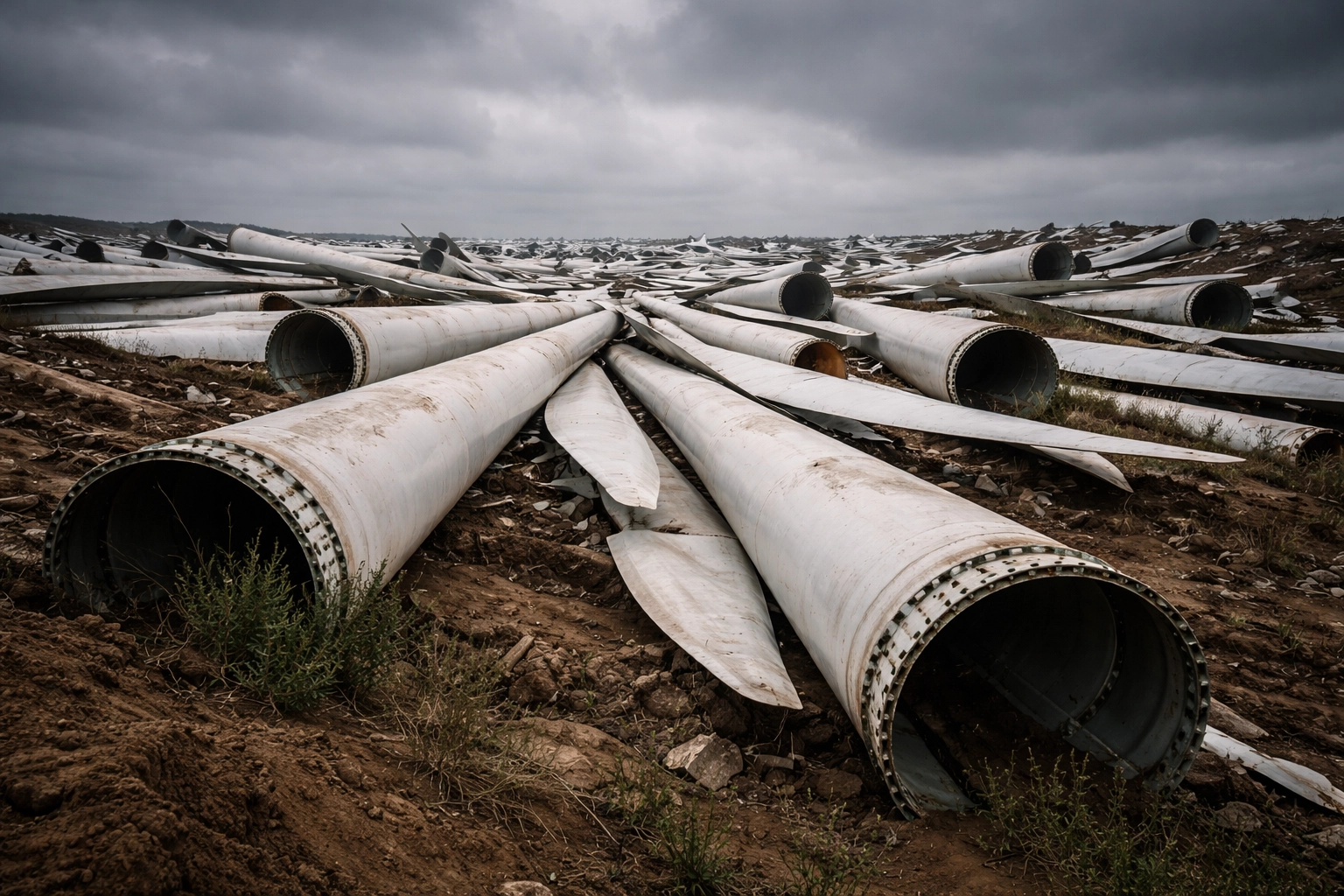
Manufacturing a wind turbine produces tons of carbon emissions. Shipping it across the ocean produces more. Installing it requires heavy machinery burning diesel fuel. And here's the kicker: wind turbine blades last about 20 to 25 years. Then they get replaced. Where do the old ones go?
Landfills. Mountains of fiberglass blades that can't be recycled sitting in the dirt. Very sustainable.
Solar panels have a similar problem. They degrade over time, and when they're done, they become hazardous waste containing lead, cadmium, and other toxic materials. The recycling infrastructure barely exists. Most of them end up buried or shipped overseas to become someone else's problem.
When you add up the mining, manufacturing, transportation, installation, maintenance, and disposal, the "clean" energy picture gets awfully muddy.
Rules for Thee, Chalets for Me
This brings us back to Davos and that temporary wooden chalet. Every year, they build a massive structure, use it for a week, then tear it down. The organizers say it has "sustainable aspects." I'm sure it does. It probably uses recycled napkins or something.
But here's what gets me. These are the same people telling regular families to drive smaller cars, turn down their thermostats, and accept higher energy prices for the good of the planet. They lecture us about carbon footprints while living lifestyles that produce more emissions in a month than most of us create in a decade.
The average person doesn't have the luxury of "building prosperity within planetary boundaries." They're too busy trying to build prosperity within their monthly budget boundaries. They're choosing between heating the house and filling the grocery cart.
When electricity prices double because we shut down reliable power plants and replaced them with intermittent sources that need backup systems anyway, regular families feel it. When gas prices spike because we've restricted domestic production in the name of climate goals, regular families feel it.
The Davos crowd? They feel nothing. Their wealth insulates them from every policy they promote.
The Bottom Line
Look, I'm not saying we should ignore the environment. Nobody wants dirty air or poisoned water. But there's a massive gap between what the elite say and what actually happens when their policies hit Main Street.
Wind and solar have a place in the energy mix. But pretending they're perfect, pretending they're truly "clean," pretending the transition won't hurt regular people? That's dishonest. And the folks meeting in Switzerland this week know it.
They just don't care. Because they won't be the ones paying the price.
Next time you hear someone from Davos talking about "planetary boundaries," remember this: the only boundary they're really worried about is the one around their bank account.
Be mindful, be watchful and good luck.