



Remember those old Western movies where the railroad baron owned the whole town? Well, dust off your history books because we're living in a sequel. Except instead of steel rails and coal smoke, we've got delivery trucks and data centers. And instead of some mustachioed villain in a top hat, we've got Jeff Bezos in a polo shirt.
Corporate towns are making a comeback, and Amazon is leading the charge. But here's the twist that would make those old movie villains jealous: they don't even need to buy the town anymore. The towns are practically giving themselves away.
The New Company Store
Back in the day, company towns were pretty straightforward. The coal company owned everything – your house, the store where you bought groceries, even the doctor who patched you up when the mine caved in. You got paid in company scrip that was only good at the company store, creating a neat little economic prison where escape was nearly impossible.
Today's version is more sophisticated. Amazon doesn't need to own your house when they can just make your town completely dependent on their operation. They're not paying you in funny money – they're offering something even more tempting to cash-strapped municipalities: tax revenue and jobs.
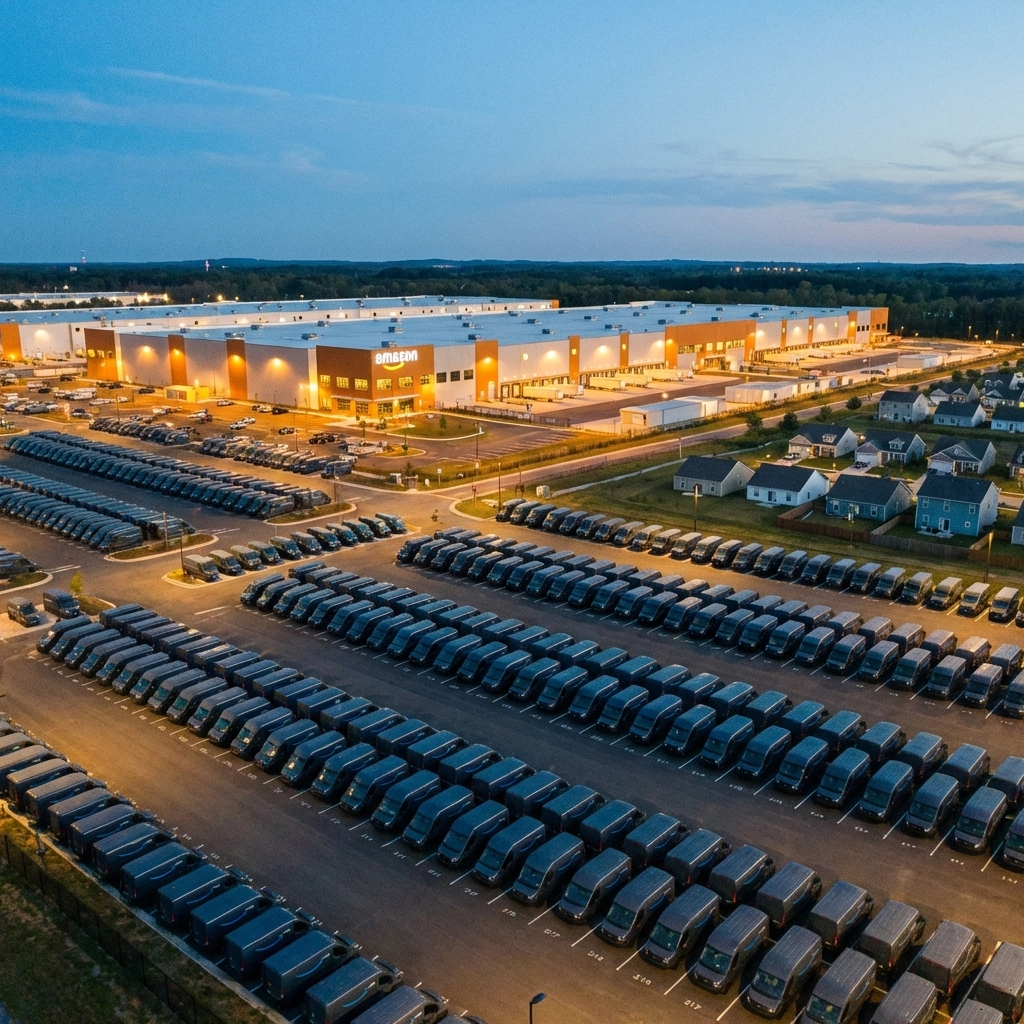
It's like watching a really slow-motion magic trick. First, cities zone their land for industrial use years ahead of time, laying out the welcome mat. Then Amazon shows up with plans that make local officials see dollar signs. By the time residents figure out what's happening, city council members are shrugging and saying, "Sorry, our hands are tied. We already said yes to this years ago."
When "No" Isn't Really No
Take Eugene, Oregon, where Amazon wanted to build a massive 318,000-square-foot distribution center. The community showed up in droves to oppose it. They talked about environmental damage, wetland destruction, and traffic nightmares. The kind of concerns that in a functioning democracy might actually, you know, matter.
But here's where the magic trick reveals itself. City officials looked at all those concerned citizens and basically said, "We hear you, we feel your pain, but there's absolutely nothing we can do about it." Why? Because back in 2017-2018, they'd already zoned the land for exactly this type of development.
It's like signing a contract while drunk and then acting surprised when someone shows up to collect. The city had already rolled out the red carpet; they just forgot to mention it to the people who actually live there.
The Enthusiasm Gap
The contrast gets even weirder when you look at places where local officials are absolutely thrilled about their new corporate overlords. In Hobart, Indiana, residents spent 90 minutes testifying against an Amazon data center, citing health and environmental concerns. Ninety minutes! That's longer than most Marvel movies.
The city council's response? A unanimous vote to approve it anyway.
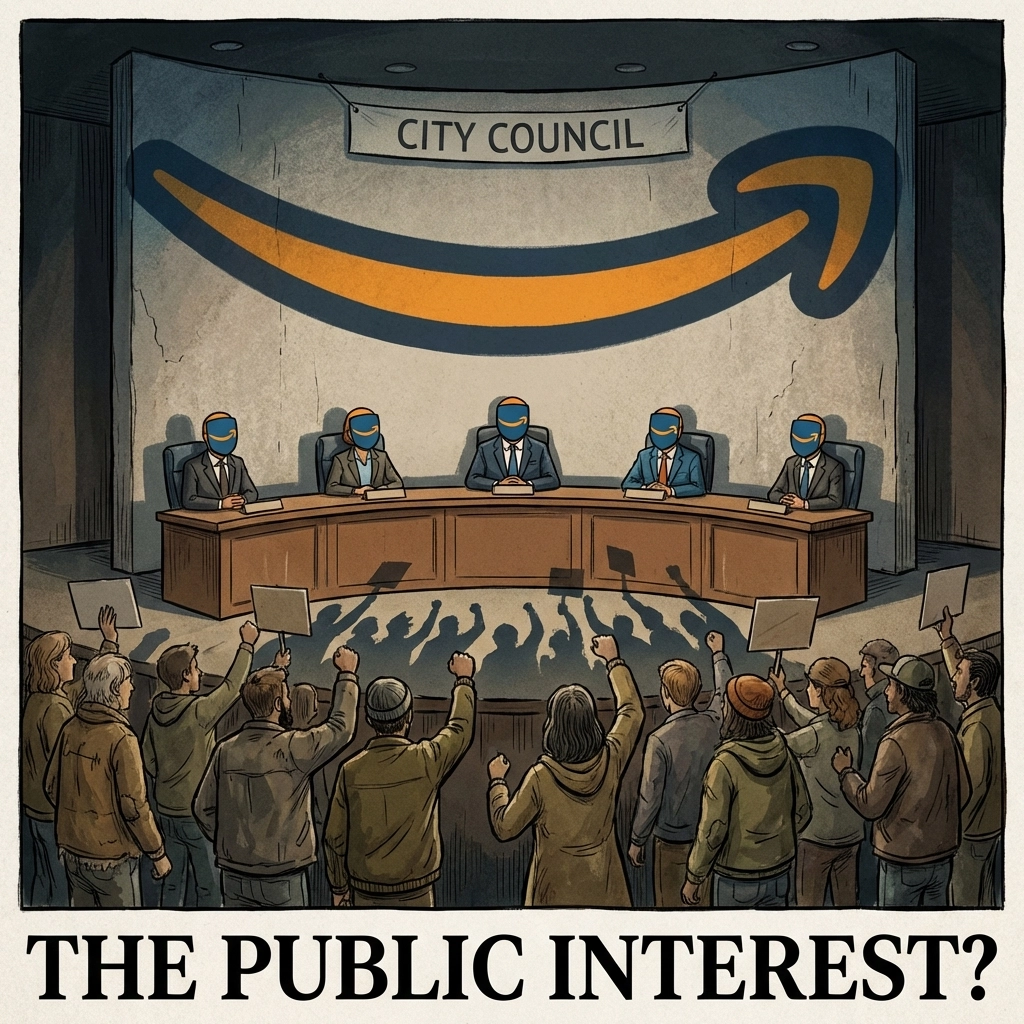
The mayor explained it was all about economics – over 400 permanent jobs and no need to raise income taxes. It's the modern version of "the company will take care of us." Except this time, the company doesn't even pretend to care about the community. They just want the land and the tax breaks.
In Orland Park, Illinois, the mayor was practically doing cartwheels over Amazon's proposed retail development. He called it "a strong signal about the vitality of our community," which is corporate speak for "please validate our existence, Amazon overlords."
The Zoning Trap
Here's the really insidious part: none of this happens by accident. Cities don't just accidentally zone land for massive industrial developments. They make these decisions years in advance, often with vague promises of economic development dancing in their heads.
It's like laying mouse traps all over your house and then acting shocked when you catch mice. Except in this case, the mice are 300,000-square-foot warehouses, and your house is the community where actual humans live.
The pattern is depressingly consistent. City planners, hungry for growth and revenue, zone land for industrial use. They imagine gleaming factories with happy workers, not realizing they're creating a "build it and they will come" scenario for whatever corporate giant wants to move in.
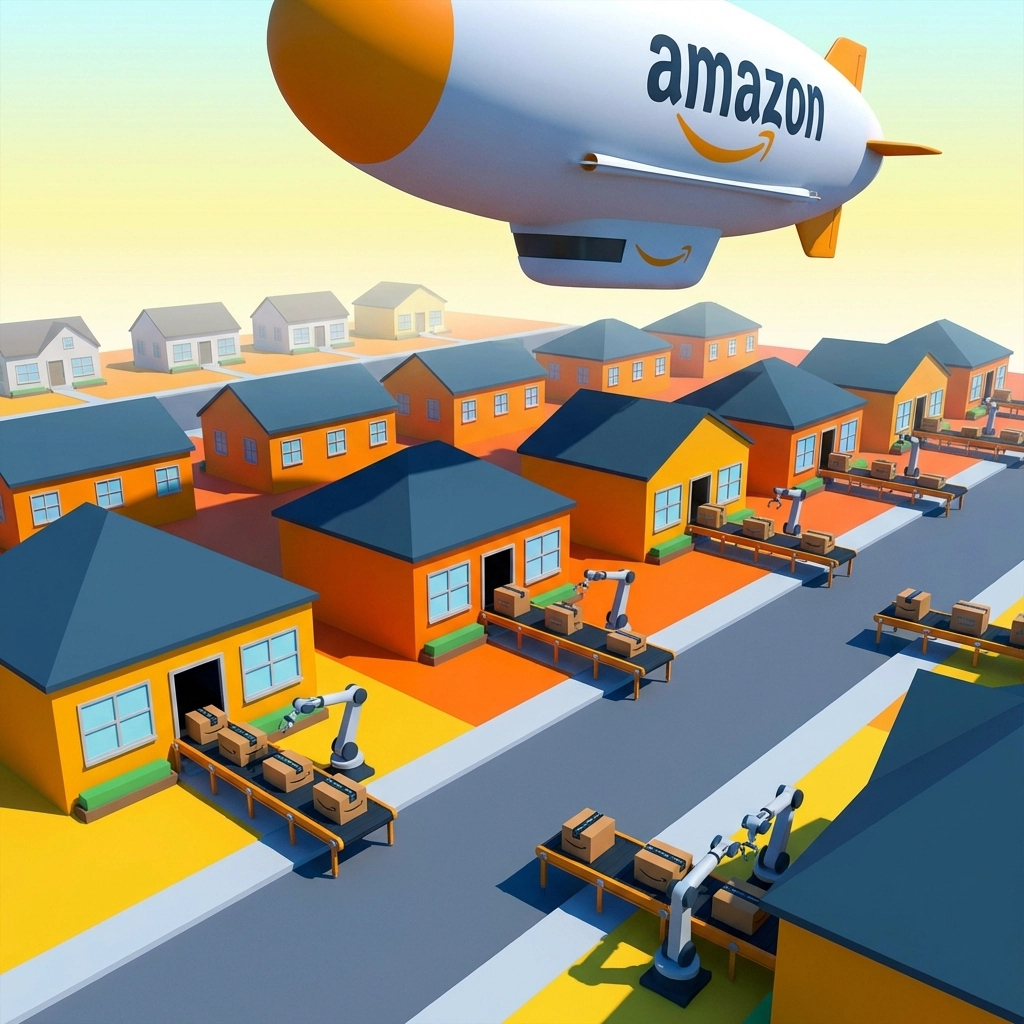
Then Amazon shows up with their lawyers and their site plans, pointing out that everything they want to do is perfectly legal under the existing zoning. By the time residents realize what's happening, the legal framework is already in place. The corporation doesn't need to become the mayor – they've already got the city's permission slip.
History Doesn't Repeat, But It Rhymes
This isn't exactly like the old company towns, but it rhymes pretty well. Instead of owning everything outright, modern corporate giants achieve the same result through regulatory capture and economic dependency.
The old railroad barons had to invest their own money to build towns. Today's corporate titans get communities to compete for the privilege of hosting them. It's like the difference between owning a slave and having someone volunteer for unpaid labor – the end result is similar, but the modern version comes with better PR.
Amazon doesn't need to provide company housing when they can just make housing costs skyrocket around their facilities. They don't need company stores when their presence alone transforms local economies. And they definitely don't need to hire company security when they can get local police to prioritize protecting their operations.
The Real Cost of "Economic Development"
The sales pitch is always the same: jobs, tax revenue, economic growth. It sounds great in city council meetings and looks fantastic in press releases. What gets lost in the excitement is the hidden cost of surrendering local control.
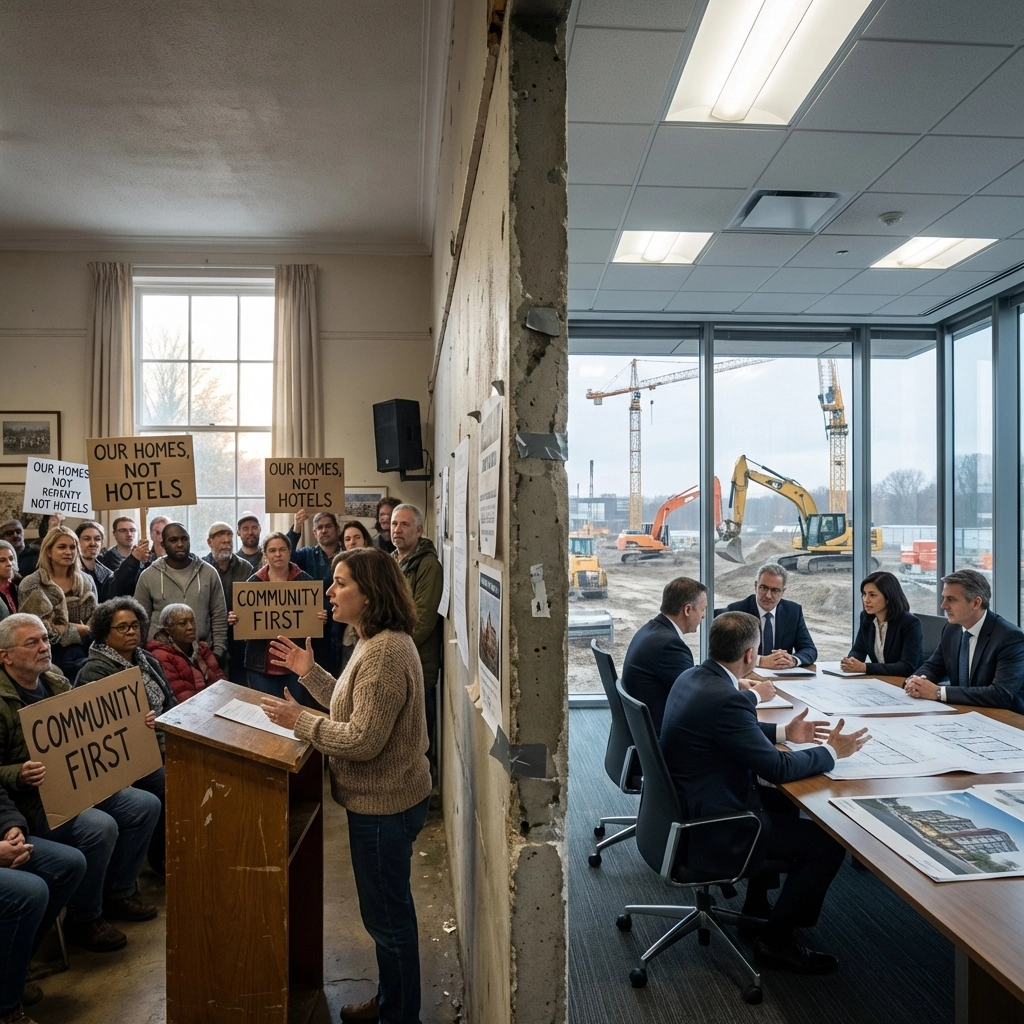
When a town becomes dependent on a single major employer, that employer doesn't just influence the economy – they influence everything. Infrastructure gets built around their needs. Local politics start catering to their interests. Community development follows their timeline, not the residents' priorities.
It's not necessarily malicious. Amazon isn't twirling their mustache and plotting world domination (probably). But the effect is the same. When one entity becomes large enough to make or break a local economy, they don't need official political power. Economic power works just fine.
The Democratic Deficit
Perhaps the most troubling part of this trend is how it bypasses democratic input. Residents can show up, testify, vote, and organize all they want. But if the zoning decisions were made years earlier by different officials, their voices become largely irrelevant.
It's democracy with a time delay – by the time you realize you don't like the decision, it's already locked in by legal frameworks you probably didn't even know existed. Your city council members look genuinely sympathetic as they explain why their hands are tied, but somehow those hands never seem tied when the initial zoning decisions get made.
Good, Bad, or Just Weird?
So is this trend good, bad, or just weird? The answer is probably "yes."
On the good side, these facilities do create jobs and generate tax revenue. In struggling communities, that can make a real difference. Amazon isn't a coal mining company – their workers generally aren't risking black lung disease, and the pay is usually decent by local standards.
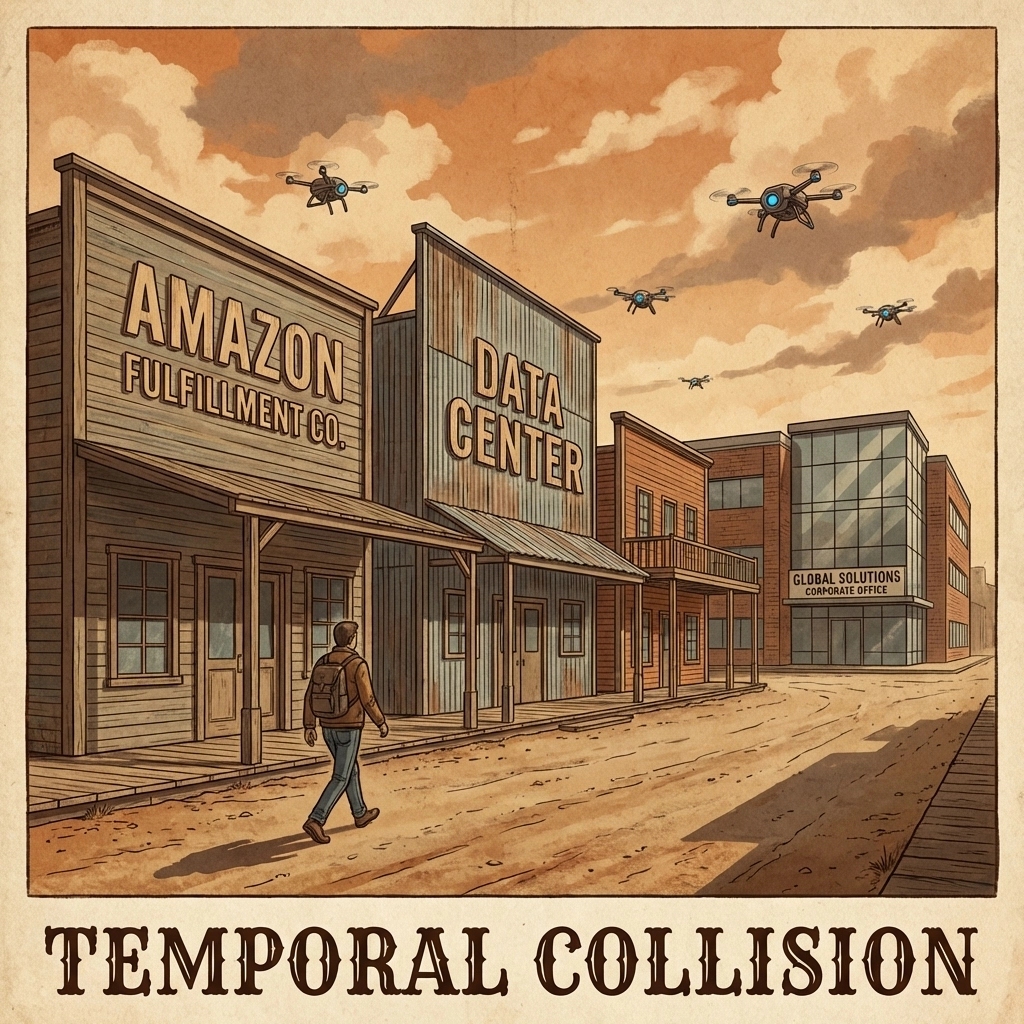
On the bad side, this level of corporate influence over community development feels fundamentally wrong in a democracy. When residents' voices become irrelevant to decisions that shape their daily lives, something important gets lost.
But maybe "weird" is the most accurate description. We're living through a time when global corporations wield quasi-governmental power, but we still pretend our local democratic institutions are in charge. It's like watching a puppet show where everyone pretends not to see the strings.
The New Normal
The reality is that corporate towns aren't really "back" – they never left. They just evolved. Instead of owning everything directly, modern corporations have learned to make communities dependent on them while maintaining the fiction of local control.
Amazon isn't becoming your mayor. They don't need to. They've figured out how to get everything they want from mayors who are already there, grateful for the economic lifeline and convinced they have no choice but to say yes.
This is the new normal: communities that compete desperately for corporate attention, zoning laws written years in advance to accommodate whatever development might come along, and residents who discover they have no real voice in shaping their own neighborhoods.
It's not the company town of yesteryear, but it's not exactly democracy either. It's something new and strange, a hybrid system where economic power trumps political power so completely that the distinction barely matters anymore.
The railroad barons of the Old West would be impressed. Why buy the whole town when you can get them to give it to you for free?
Be mindful, be watchful and good luck!