




Look, I get it. You've been watching your 401(k) climb like it's training for Everest, and at some point you start wondering if this is just the new normal. The market goes up. Then it goes up some more. Your neighbor who knows nothing about investing is suddenly a genius, and your uncle who's been calling for a crash since 2015 is starting to look like the boy who cried wolf.
So here's the million-dollar question that every regular guy eventually asks: Can the stock market just go up forever?
The short answer? No. The longer answer? Well, pull up a chair.
The Current Streak: What Are We Looking At?
As of early 2026, we've been riding one of the most impressive bull runs in recent memory. Since the brief pandemic crash of 2020, the market has essentially done one thing, climb. Sure, there have been some hiccups, some volatility, some days where CNBC anchors looked genuinely concerned. But a full-blown correction? The kind where markets drop 10% or more and stay down for a while? Those have been remarkably scarce.
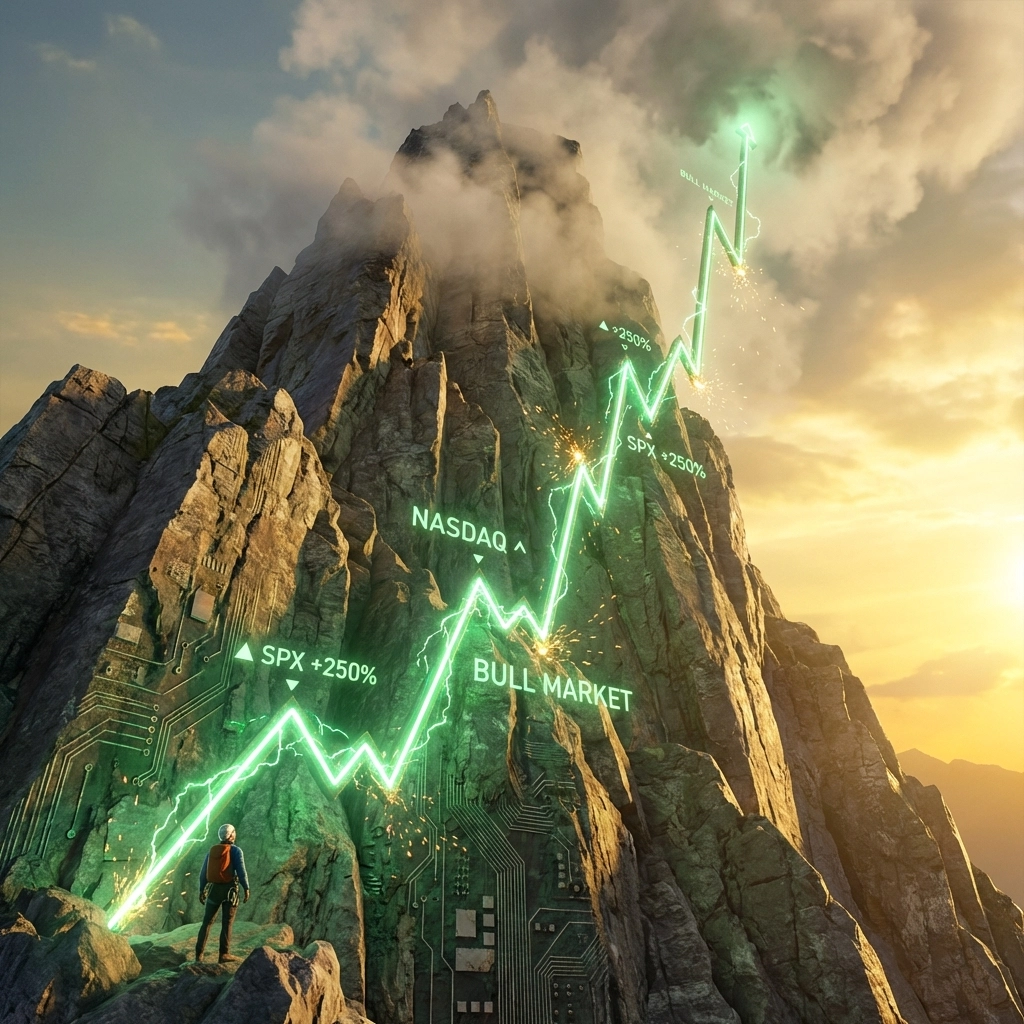
For context, a "correction" in Wall Street speak means a decline of at least 10% from a recent peak. A "bear market" is when things drop 20% or more. Historically, corrections happen about once every 1-2 years on average. We've been defying those averages like a poker player on an impossible hot streak.
And that's what makes people nervous. Or it should.
A Quick Trip Through Market History
Let's hop in the time machine and look at how previous long rallies eventually met their makers.
The Roaring Twenties (1920s)
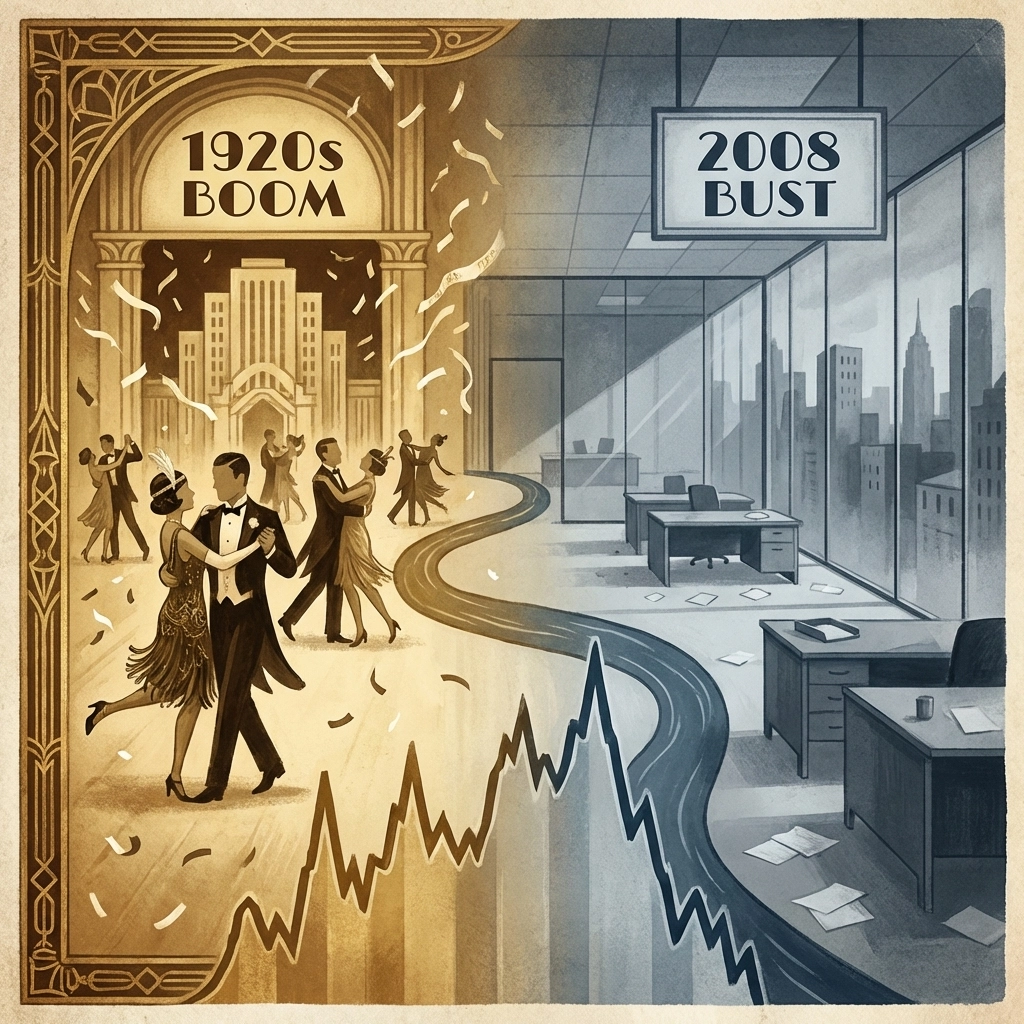
The original "stocks only go up" era. The market quadrupled during the 1920s as everyone from bankers to shoe-shine boys piled into stocks. It was a party that seemed like it would never end. Then October 1929 arrived, and the market lost nearly 90% of its value over the next few years. The Great Depression followed. Not exactly a soft landing.
The Post-War Boom (1949-1966)
This was a legitimate long-term bull market that lasted about 17 years. The S&P 500 rose roughly 500% during this period. But even this golden era had corrections along the way, it just didn't have a catastrophic ending. Instead, it gave way to a brutal 16-year period of sideways movement and inflation that crushed returns.
The Dotcom Bubble (1995-2000)
Ah, the internet age. Pets.com was worth billions. Companies with no revenue and no plan were minting millionaires. The NASDAQ climbed over 400% in five years. Then reality knocked on the door in March 2000, and the NASDAQ dropped nearly 80%. It took 15 years to recover to those highs.
The Pre-2008 Rally (2003-2007)
After recovering from the dotcom crash, markets climbed steadily for about five years. Housing prices were soaring, everyone was getting mortgages, and banks were doing things that would later require congressional hearings to explain. Then Lehman Brothers collapsed, and the S&P 500 dropped over 50% in about 18 months.
The 2009-2020 Bull Run
This was the longest bull market in American history: nearly 11 years of almost uninterrupted gains. It survived the European debt crisis, multiple government shutdowns, trade wars, and countless predictions of doom. It only ended because a global pandemic literally shut down the world economy. And even then, the recovery was so fast that it almost doesn't count as a real ending.
So Is There Precedent for What We're Seeing?
Here's the honest truth: long bull markets do happen. The post-2009 rally proved that markets can climb for a decade or more without a major crash. But: and this is a big but: every single one of these rallies eventually ended.
The current market environment has some unique characteristics that make the regular guy scratch his head. Valuations are elevated. According to analysts, higher index prices create a challenging starting point, meaning stocks are priced for perfection. If earnings growth doesn't deliver the goods, future returns could fall short.

We've also got some concentration issues. A handful of mega-cap tech companies have been doing most of the heavy lifting. When you hear that "the market is up," what you're often really hearing is that Apple, Microsoft, Nvidia, and a few of their friends had a good day. This "winner-takes-all" dynamic creates vulnerability: if those few stocks stumble, the whole index feels it.
The Factors That Could Change Everything
Every market rally has its kryptonite. Here are the usual suspects that history suggests we should watch:
Earnings Disappointment: Stocks are ultimately valued based on the profits companies generate. If those profits don't grow as expected, prices have to adjust. It's basic math, not pessimism.
Economic Slowdowns: Growth projections for 2026 are moderate: around 2.25% by some estimates. That's fine, but it's not the kind of rocket fuel that supports sky-high valuations indefinitely.
External Shocks: Pandemics, geopolitical crises, financial system stress: these things are impossible to predict but guaranteed to happen eventually.
The Simple Passage of Time: Markets are cyclical. Always have been. Probably always will be. The longer we go without a meaningful pullback, the more the spring gets compressed.
What's a Regular Guy to Do?
I'm not here to tell you to sell everything and hide your money in the mattress. That's not how wealth gets built over the long term. The stock market, despite all its drama, has been the greatest wealth-creating machine in human history for patient investors.
But here's what I would say:
Don't get complacent. When everything has been going up for a long time, it's easy to forget that it can go down. Having some cash on hand isn't pessimistic: it's prudent.
Check your exposure. If your portfolio is 100% in stocks and you'd panic at a 30% drop, you might want to reconsider your allocation.
Remember your timeline. If you're 30 and investing for retirement, a market crash is actually a buying opportunity. If you're 65 and need the money soon, that's a different conversation.
Ignore the noise. There will always be someone screaming that the end is near, and there will always be someone saying this time is different. Both are usually wrong in the extreme.
The Bottom Line
Can the stock market go up forever? In the very long run, adjusted for inflation and assuming human civilization keeps progressing, the general trend has been upward. But in the medium term? In any given decade or even two decades? History is absolutely littered with painful corrections, brutal bear markets, and humbling lessons for anyone who thought gravity no longer applied to stock prices.
The market is currently priced for a lot of good news to keep coming. Maybe it will. Maybe we'll look back at this moment and laugh about how worried everyone was. Or maybe we'll look back and wish we'd been a little more careful.
Either way, the regular guy's job isn't to predict the future: it's to be prepared for it.
Be mindful, be watchful and good luck.