



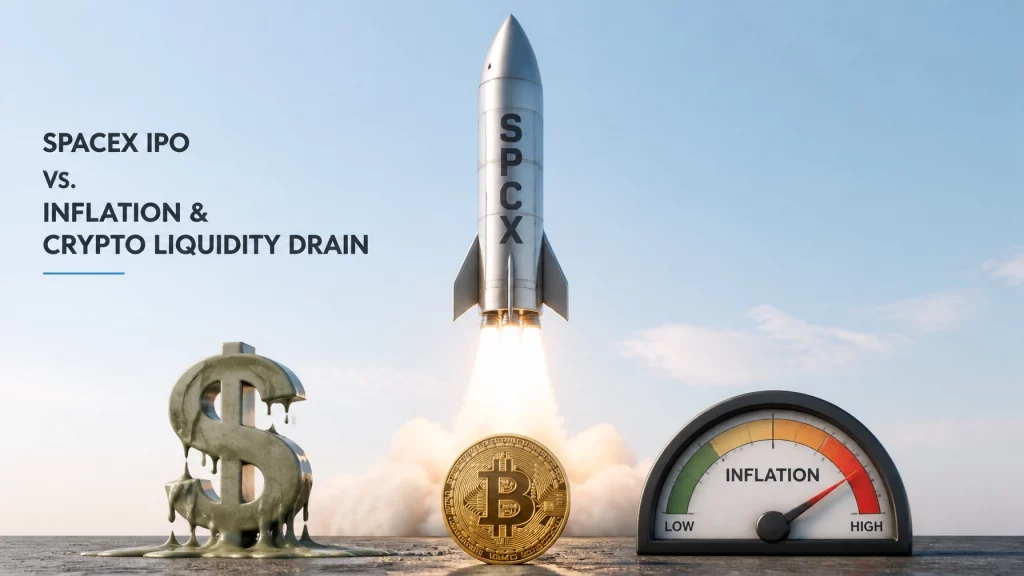
Inflation in 2026 isn't just a headline on a news crawl; it’s a tax on existence. As of this morning, Friday, June 12, 2026, the mood in markets has turned into a weird mix of excitement and anxiety. The biggest story is the massive SpaceX IPO, trading under SPCX, with a valuation around $1.8 trillion after pricing at $135 per share and raising roughly $75 billion. That is not just a big IPO. That is a financial black hole with excellent branding.
At the same time, May PPI came in hot at 6.5% year over year, which is the kind of number that keeps the Federal Reserve in a hawkish mood even if traders want to party. Oil dropped about 4% on hopes for some kind of Iran peace deal or at least a cooling of the war premium, which helped stocks breathe for a minute. Bitcoin, meanwhile, has been hanging around $63,000 while money keeps leaking out of crypto and drifting toward giant AI and space-tech debuts.
The math of survival has changed. For decades, the standard advice was simple: put money in a "safe" savings account, maybe buy some bonds, and let compound interest do the heavy lifting. But in a world where inflation is still sticky and producer prices are hot, "safe" has become a slow-motion disaster. A high-yield savings account paying 4.5% or 5% is barely treading water once taxes and real-life expenses show up.
This creates a psychological pressure cooker. When people feel like they are falling behind despite doing everything "right," they start looking for an exit ramp. They start looking for the "moonshot." In 2026, that moonshot now has a ticker symbol. But before jumping into the deep end of the high-risk pool, it is vital to understand the difference between investing for growth and gambling for survival.
The Inflation Trap: Why "Safe" is No Longer Certain

The biggest problem with 2026 inflation is not just the headline. It is the mix underneath. A 4% drop in oil is nice, but one good day in crude does not erase a hot pipeline of costs moving through the economy. A 6.5% year-over-year PPI says businesses are still getting hit upstream, and that usually shows up later in prices paid by regular people.
This is the Inflation Trap. It forces the average person to become a speculator just to maintain a standard of living. When the grocery bill, insurance bill, and utility bill all act like they are on performance-enhancing drugs, the lure of a moonshot starts to feel rational.
That is why giant debuts like SPCX matter beyond Wall Street gossip. They hit the same emotional nerve as crypto did a few years ago. They sell the idea that maybe one perfect trade can outrun the madness. Sometimes that works. A lot of times it is just expensive hope.
The Seduction of the AI Moonshot
In the current market, the siren song of artificial intelligence and space tech is louder than ever. SpaceX is now the center of the circus. At roughly a $1.8 trillion valuation, SPCX is being sold as the ultimate future machine: rockets, satellites, defense contracts, data pipes, AI infrastructure, and a founder cult all wrapped into one shiny package.
That story is powerful for a reason. If AI and space really are the next industrial revolution, owning part of the plumbing sounds like the perfect hedge against inflation. That is the bull case. The bear case is simpler: paying moon-level prices for a dream can turn a hedge into a trap.
There is also a plain old liquidity issue. Money is not infinite. When one monster IPO shows up, cash has to come from somewhere. Right now, some of it appears to be coming out of crypto. Bitcoin holding near $63,000 while ETF flows soften and capital rotates into giant AI and space names is a reminder that risky assets compete with each other. They do not all go up together forever.
Investing in these high-risk assets isn't like buying a blue-chip stock in the 1990s. These are capital-intensive beasts. They require huge spending, expensive talent, and a market willing to keep paying giant multiples. Chasing SPCX or the next AI debut because the vibe feels unstoppable is a recipe for a portfolio faceplant.
A Reality Check on the Cost of Capital

Here is the truth that the hype-men won't tell you: risky assets are hyper-sensitive to the Federal Reserve. Even as the market gets excited about rockets, chips, and any company with a futuristic logo, the ultimate arbiter of value is still the interest rate.
Today’s market mood is split. On one side, possible Iran peace talks and a roughly 4% drop in oil gave traders a reason to relax. On the other side, a 6.5% PPI print is the kind of inflation data that keeps central bankers stiff-backed and suspicious. That means the Fed still has every reason to stay hawkish.
When the Fed keeps rates elevated, the "easy money" that fueled old tech manias is gone. If a retail investor buys into a high-risk tech play right now, that bet is not just on rockets or AI. It is also a bet that liquidity stays loose enough to support huge valuations. If that does not happen, those valuations can get shaved down fast. A $1.8 trillion moonshot can still fall back to Earth.
The Tortoise and the Treadmill

It is helpful to visualize the current situation as a tortoise on a treadmill. The tortoise is the savings account, moving forward at a steady 5%. The treadmill is the real-world inflation rate, currently set to a speed of 6% or 7% when you factor in the "Regular Guy" expenses like fuel and insurance. No matter how hard that tortoise walks, it is moving backward relative to the room.
Does this mean the answer is to jump off the treadmill and try to sprint across a floor covered in landmines? No.
The impulse to gamble with the "survival fund": the money meant for emergencies, groceries, and housing: is the most dangerous side effect of an inflationary environment. When an investment is described as "high risk," it means there is a very real possibility that the value goes to zero. In a low-inflation world, a zero is a setback. In a 2026 high-inflation world, a zero is a catastrophe.
The Real Hedge: Skill-Stacking and Liquidity

So, how does one actually beat inflation without betting the farm on a moonshot? The answer isn't found in a ticker symbol; it's found in the mirror.
The best investment to make in 2026 is "skill-stacking." In an economy being reshaped by AI and automation, the most valuable asset is a human being who knows how to use these tools to produce tangible results. Whether it’s learning to manage automated logistics, mastering new financial software, or gaining deep expertise in a niche trade, your ability to earn will always outpace inflation better than a speculative stock will. Your labor is an inflation-protected asset because as prices go up, the value of the work required to produce goods and services goes up too.
Secondary to that is the importance of staying liquid. It sounds counterintuitive to keep cash when that cash is losing value, but liquidity provides something that a locked-up "moonshot" investment doesn't: optionality. When the market inevitably corrects: because the "easy money" dried up: the person with cash on hand is the only one who can buy real assets at a discount.
The goal for the regular guy in 2026 should be to stay in the game, not to win it all in one hand. Avoid the temptation to chase 100x returns with money that cannot be lost. The "madness" of the current economic climate is designed to make people act out of fear and greed.
SPCX may become a legendary winner. Bitcoin may recover. Some risky investments will absolutely make people rich. But buying risk because inflation feels unfair is not a strategy. That is gambling with better marketing.
Focus on value, focus on productivity, and understand the difference between a real hedge and a desperation trade. In 2026, risky investments can be useful in small doses and dangerous in large ones. That is not sexy, but it is honest.
Be mindful, be watchful and good luck.