



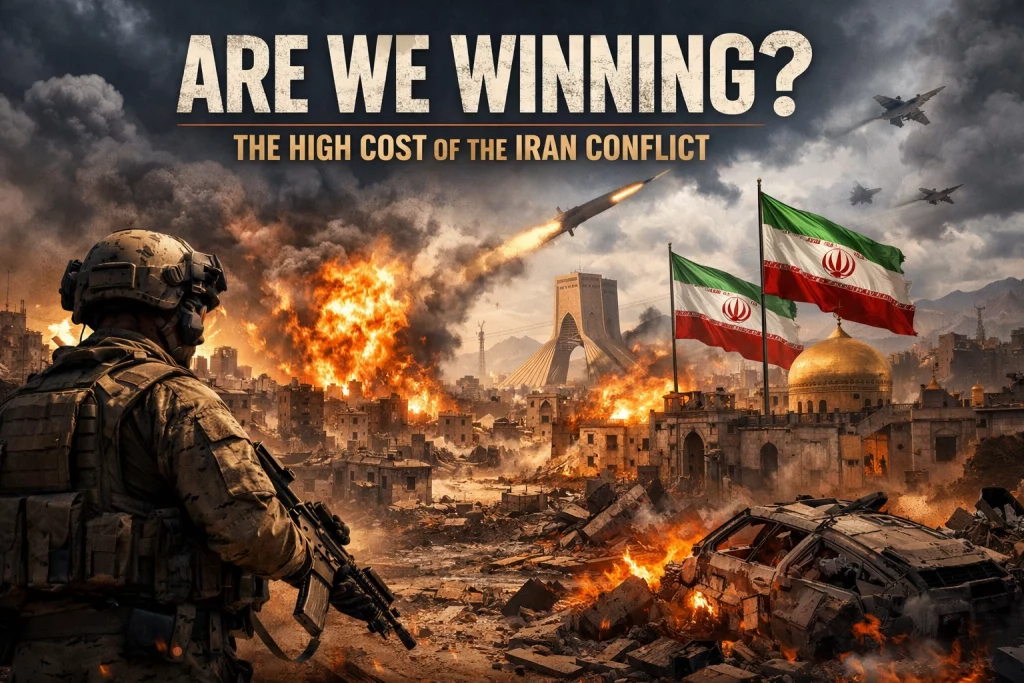
Look, I know what you’re thinking when you pull up to the pump and see those digits spinning faster than a slot machine in Vegas. You’re seeing $7, $8, maybe even $10 a gallon depending on where you live, and you’re asking the same question everyone else is: Are we actually winning this thing?
Since Operation Epic Fury kicked off back in February, the headlines have been a non-stop barrage of "tactical successes" and "precision strikes." But if you’re like me, a regular guy trying to balance a checkbook, the "win" doesn't feel very winning when the cost of eggs and a gallon of 87-octane is eating your mortgage payment.
Today, let’s pull back the curtain on this conflict. We’re going to talk about the scoreboard, the friends who didn't show up to the party (looking at you, NATO), the scary rumors about Chinese tech on the battlefield, and what this prolonged mess actually means for your wallet.
The Scoreboard: Tactical Genius vs. Strategic Quagmire
On paper, the U.S. and Israel are putting up Hall of Fame numbers. In the first 12 hours of the campaign alone, there were nearly 900 strikes. We’re talking about taking out the big stuff, missile silos, command centers, and air defenses. We even got the word that Supreme Leader Ali Khamenei was taken out in the initial waves.
By the numbers, Iran has lost over 190 ballistic missile launchers and 120 naval vessels. That’s a lot of hardware sitting at the bottom of the Persian Gulf or turned into scrap metal in the desert.
But here’s the "Regular Guy" reality check: taking out the leader doesn't always kill the snake. The Islamic Revolutionary Guard Corps (IRGC) is a beast with many heads. While we’re celebrating tactical wins, the regime hasn't folded. They’ve gone underground, and they’re still punching back. We’ve seen strikes in almost every province of Iran, yet the hardliners are still calling the shots.
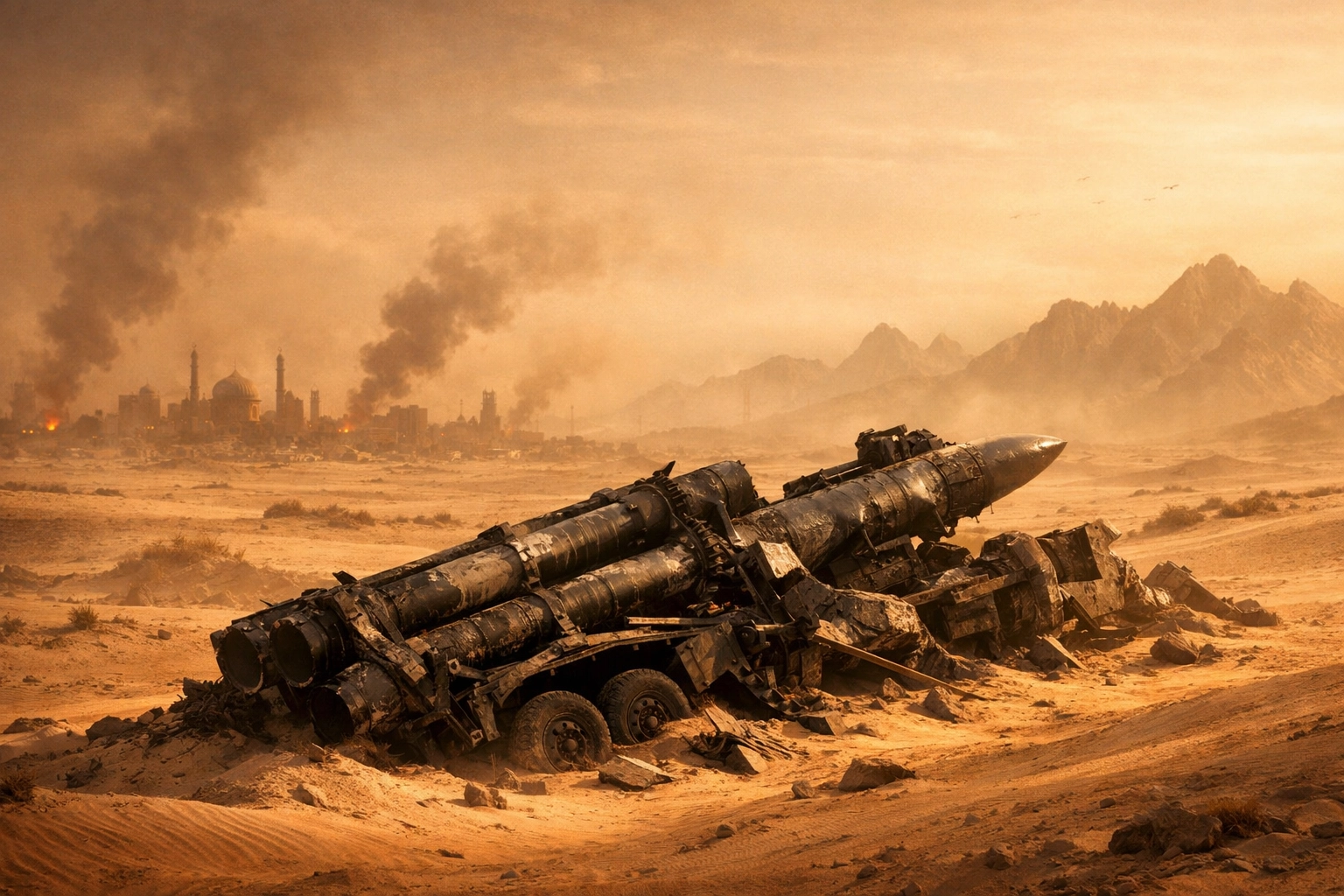
So, are we winning? If "winning" means breaking things, then yes. If "winning" means a stable region and a quick exit, we’re still looking for the map.
Why Is NATO Watching from the Sidelines?
You’d think a conflict this big would have the whole gang involved. But if you look at the flight lines and the carrier decks, it’s mostly a U.S. and Israeli show. Why hasn't NATO elected to join us in the trenches?
It’s not because they don't like us; it's because they’re terrified of the "E" word: Escalation.
Europe is in a tight spot. They are much closer to the blast radius than we are. For many NATO members, jumping into a full-scale war with Iran is a recipe for a massive refugee crisis and a total energy blackout. They’re already dealing with the fallout of the last few years of global instability. To them, joining the fight isn't just a military decision; it’s a "will my citizens freeze this winter?" decision.
There’s also the legalistic hoop-jumping. NATO is a defensive alliance. Unless a member state is directly attacked on its own soil, the "all for one" clause doesn't just kick in automatically. While the U.S. sees this as a proactive strike to prevent a nuclear Iran, a lot of our European friends see it as a hornets' nest they’d rather not poke. They’re happy to provide "diplomatic support" and "logistical coordination," which is basically the international version of saying, "I’ll Venmo you for the pizza, but I’m not helping you move the couch."
The Chinese Connection: Rumors and Realities
Now, let’s address the elephant in the room: or rather, the dragon in the room. There have been persistent rumors that Iran is actually scoring some unexpected victories. How? By using high-tech weaponry stamped "Made in China."
Now, Beijing hasn't officially declared war, but they aren't exactly neutral observers. Iran has been a massive source of oil for China for years. If Iran falls or the oil stops flowing, China’s economy takes a hit.

Reports from the front lines suggest that Iranian "suicide drones" and anti-ship missiles are showing a level of sophistication we didn't expect. We’re seeing advanced guidance systems and electronic warfare kits that look suspiciously like the stuff coming out of Chinese state-owned labs.
If China is using Iran as a live-fire testing ground for their latest tech, that changes the math for us. It means our billion-dollar jets and ships are going up against equipment designed specifically to take them down. It’s one thing to fight a regional power; it’s another thing to fight a regional power backed by the world’s second-largest economy. This is why the conflict feels so "sticky": every time we think we’ve cleared a path, a new piece of tech shows up to complicate things.
The Economic Hit: Why Your Wallet Is Bleeding
This is where Regular Guy Economics really hits home. Wars aren't just fought with bullets; they’re fought with bank accounts. And right now, yours is the one taking the shrapnel.
1. The Oil Shock
Since the war started, oil prices have spiked over 40 percent. Why? Because the Persian Gulf is essentially the world’s gas station. Even if we aren't blowing up the oil wells themselves: and we’ve been careful to spare most of that infrastructure: the risk alone drives prices through the roof. Insurance for tankers has skyrocketed. Shipping lanes are dangerous. When the supply chain for energy gets a heart attack, the whole world feels the chest pain.
2. The "Everything" Inflation
It’s not just the gas pump. Think about how your groceries get to the store. They’re moved on trucks that run on diesel. Think about how your plastic goods are made. They’re made with petroleum products. When energy costs go up 40%, the cost of a box of cereal or a new pair of sneakers follows right behind it. We’re looking at a sustained period of "war inflation" that could eat away at the average family’s savings faster than any recession.

3. The National Debt
Precision missiles aren't cheap. A single Tomahawk cruise missile costs about $2 million. We’re firing hundreds of them. Where does that money come from? It’s added to the national tab. Eventually, that debt leads to higher interest rates, making it harder for you to buy a house, get a car loan, or start a business. We’re trading our future economic mobility for present-day military objectives.
The Long-Term Outlook
A prolonged conflict in Iran isn't just a "news story" you watch while eating dinner. It’s a fundamental shift in the global economy. If this drags on for another six months or a year, we aren't just talking about high gas prices; we’re talking about a potential global realignment.
If Iran continues to hold its ground using Chinese tech, and if NATO continues to stay on the sidelines, the U.S. might find itself in a very expensive, very lonely position. We’re seeing the limits of what air power can do. You can blow up a building, but you can’t blow up an ideology, and you certainly can’t blow up the economic reality of a $10 gallon of gas.
The average person is caught in the middle. We want security, sure. We want to make sure the "bad guys" don't have nukes. But we also want to be able to afford to drive to work. Right now, those two goals are in a head-on collision.

The "High Cost" in the title of this post isn't just a metaphor. It’s a literal calculation of lost wages, higher bills, and a devalued dollar. We need to be asking our leaders not just "how many missiles did we land?" but "what is the exit strategy that doesn't involve bankrupting the American middle class?"
Military victories are great for the history books, but economic stability is what keeps the lights on at home. As this conflict drags into its next phase, the real battlefield might just be the grocery store aisle.
Be mindful, be watchful and good luck.