



Remember when all the economic experts said everything was fine in 2007? Yeah, that worked out great. Or how about when they confidently predicted inflation would stay low forever, right before it shot through the roof? Good times.
Look, I'm not here to trash talk economists as people. Most of them are probably decent folks who genuinely want to help. But there's a problem with how economic expertise works in the real world, and it's costing regular people like you and me.
The Expert Problem Nobody Talks About
Here's what drives me nuts: economists love to present their opinions as cold, hard science. They throw around fancy models and mathematical formulas like they're reporting the weather. But here's the dirty secret – a lot of what they call "objective analysis" is actually just their personal beliefs dressed up in academic language.

Think about it this way. When an economist says "workers are paid exactly what they're worth based on their productivity," that sounds like a fact, right? Wrong. That's actually an assumption built into their economic models. It's like saying "all cars are red" and then building your entire traffic theory around that assumption.
The problem is when these assumptions get presented as scientific truth, regular people stop questioning them. And that's exactly what the experts don't want you to know – that a lot of their "facts" are really just opinions in disguise.
Why Economic Forecasts Are About as Accurate as Weather Reports
Here's a fun fact that should terrify anyone making financial decisions based on expert predictions: economic forecasters are right about 23% of the time, even though they're 53% confident in their predictions.
Let that sink in. These are the people advising governments on trillion-dollar policies and companies on billion-dollar investments. And they're wrong more than three-quarters of the time.
It's like having a GPS that gets you lost 77% of the time but still speaks with complete confidence about every turn. "In 500 feet, turn right to arrive at your destination" – except you end up in a ditch.

The reason for this dismal track record isn't hard to understand. Most economic models assume the economy works like a giant machine with predictable parts. But the economy is actually more like a massive crowd of people, each making millions of individual decisions based on emotions, incomplete information, and pure gut instinct.
Trying to predict what millions of people will do next month based on what they did last month is like trying to predict which way a cat will run by studying its previous movements. Good luck with that.
The Models Are Broken (And They Know It)
Economic models make assumptions that would make your high school physics teacher laugh. They assume people are perfectly rational, have complete information, and that markets always reach perfect equilibrium.
In the real world, people buy lottery tickets while carrying credit card debt, make financial decisions based on what their neighbor said at a barbecue, and panic-sell investments at exactly the wrong time. Markets swing wildly based on rumors, emotions, and what some guy tweeted at 3 AM.
It's like trying to design a car based on the assumption that all roads are perfectly flat, straight, and empty. Sure, your calculations will be clean and elegant. But good luck actually driving the thing.
The economists building these models know they're unrealistic. But they keep using them anyway because they're the only tools they have. It's like a carpenter who only owns a hammer – eventually, every problem starts looking like a nail.

The Democracy Problem
Here's where things get really sketchy. When politicians want to push through unpopular policies, they love to hide behind "expert consensus." Suddenly, cutting social programs isn't a political choice – it's just what the economic science demands.
But remember, that "science" is actually built on a bunch of assumptions that benefit certain groups over others. When experts collaborate with politicians to shut down debate by claiming their recommendations are purely technical, they're basically removing these choices from democratic discussion.
It's like having a doctor tell you that you need surgery, but refusing to explain what's actually wrong with you or discuss alternative treatments. The expertise becomes a shield against legitimate questions.
What They Don't Want You to Know
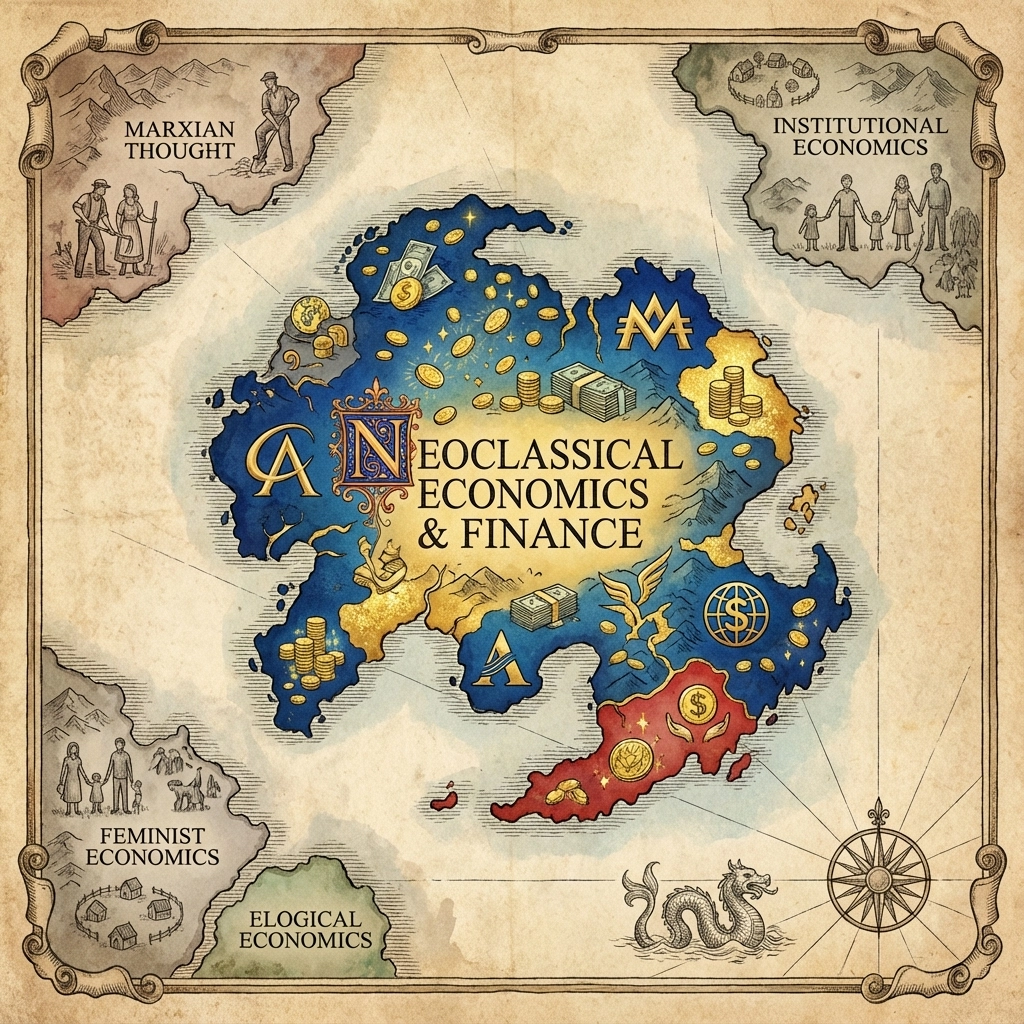
The biggest secret in economics is that there's no one right way to analyze the economy. There are dozens of different schools of thought, each with their own methods and assumptions. But the mainstream approach dominates universities, government agencies, and media coverage.
This isn't because mainstream economics has proven itself more accurate – remember that 23% success rate? It's because it aligns with certain political and business interests. Models that assume markets are always efficient and government intervention is usually bad tend to get more funding and attention than models that suggest the opposite.

Think about it: if you're a wealthy investor or a large corporation, which type of economic advice would you prefer to see in the news? Analysis that suggests markets need more regulation and worker protections, or analysis that suggests everything is working fine as long as we don't mess with it?
The experts aren't necessarily trying to deceive anyone. But when your career depends on getting grants, tenure, and consulting contracts, you naturally gravitate toward the approaches that make your funders happy.
How to Protect Yourself
So what's a regular person supposed to do? You can't become an expert in macroeconomic theory just to make sense of the news. But you can develop some healthy skepticism.
First, remember that economic predictions are usually wrong. When experts confidently forecast what will happen to interest rates, unemployment, or stock prices, treat it like entertainment, not investment advice.
Second, look for the assumptions. When someone claims their economic analysis is objective, ask yourself: what are they assuming about how people behave? What are they assuming about how markets work? Those assumptions often reveal a lot about their true beliefs.
Third, seek out different perspectives. Just like you wouldn't make a major medical decision based on one doctor's opinion, don't make financial decisions based on one economic viewpoint. There are economists out there who disagree with the mainstream consensus – you just have to look for them.
Finally, trust your own experience. If experts are telling you the economy is great while your grocery bill keeps climbing and your paycheck isn't keeping up, your experience is data too. Don't let someone with a PhD convince you to ignore what you're seeing with your own eyes.
The Bottom Line
Economic experts aren't bad people, but the way economic expertise works in our society has some serious problems. Too much gets presented as scientific fact when it's really just educated guessing based on questionable assumptions.
The good news is that once you understand how the game works, you're less likely to get played by it. Economic expertise can be useful, but it should inform your decisions, not replace your own thinking.
At Regular Guy Economics, we believe the economy should make sense to regular people, not just people with fancy degrees. Because at the end of the day, we're the ones living with the consequences of all those expert predictions.
Be mindful, be watchful, and good luck!
John Flynn, Partner at Regular Guy Economics