



November 21, 2026
Thanksgiving is a holiday about gathering. It is also a small annual exercise in checking what it costs to get everyone around the same table.
This year’s report card is mixed. The meal can still be a bargain. The plane ticket may not be. And a rise in holiday spending doesn’t necessarily mean families are buying much more. It may mean they’re paying more for roughly the same pile of things.
That difference between spending more and buying more is the kitchen-table economics hiding behind the seasonal sales headlines.
Air travel: D
Thanksgiving flights are the most expensive they’ve been for the holiday in at least a decade. Hopper puts the average round-trip domestic fare at about $402, up 31% from last year. At the same time, about 2.2% more flights are scheduled than during the comparable period last year, according to ABC News.
Those numbers can coexist. A flight schedule measures how many flights are planned; it doesn’t tell us that seats are cheap, or that every flight is full. Airlines are adding capacity for a holiday rush while fares remain high.
Why don’t travelers simply skip the trip? Because Thanksgiving travel is unusually hard to substitute. For many people, the choice isn’t “fly to Grandma’s” or “take a different vacation.” It’s a short, specific window to see family, and a lot of people want to travel on the same days. Economists call demand like that relatively inelastic: when the price rises, people may grumble, adjust, or stay home, but demand doesn’t fall as much as it would for an optional purchase.
Fuel is part of the bill. Jet fuel reached about $195 a barrel this fall, and fuel can make up roughly 30% of an airline’s operating costs. Carriers have responded with higher fares and fees, while trimming flights that are least profitable. In other words, they’re trying to pass along much of the fuel shock without flying every marginal route at a loss.
The Hopper holiday travel report puts the trade-off plainly: high costs, high demand, and a crowded calendar. There has also already been a nationwide flight ground stop this month, while aging air-traffic-control technology remains a concern. The fare buys transportation, not a guarantee that the trip will be smooth.

Thanksgiving dinner: B−
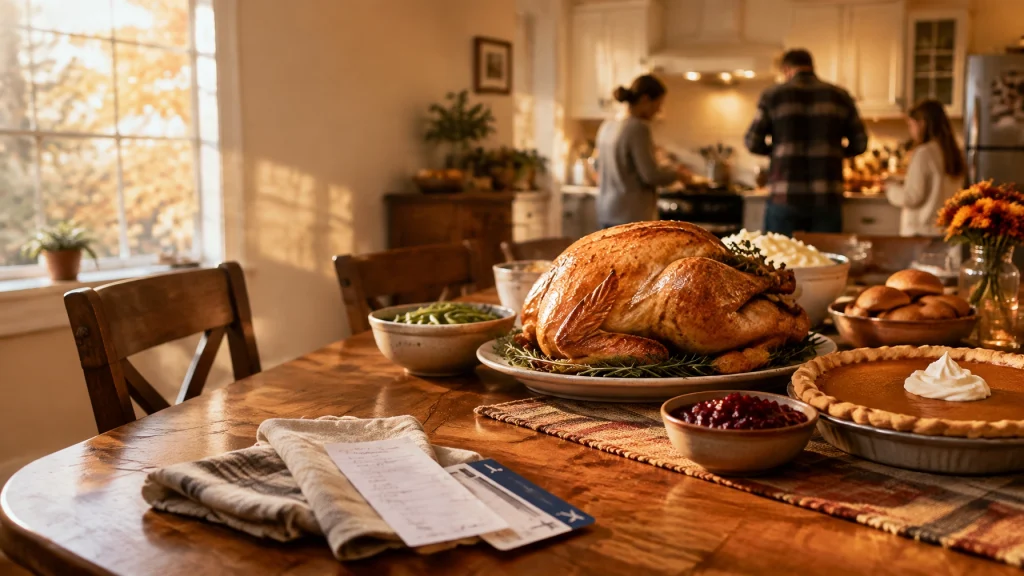
A dinner for 10 is estimated at roughly $80 to $100, or about $8 to $10 per person. That’s genuinely modest for a holiday meal. A restaurant would charge multiples of that, before anyone ordered pie.
The turkey often looks like the star of the grocery receipt, but it can be the store’s loss leader: the retailer discounts the bird to get shoppers through the door, then makes margin on the rest of the cart. Think potatoes, butter, milk, eggs, bread for stuffing, cranberries and dessert. The bird may be the bargain; the sides are where the grocery math gets more complicated.
Dairy, eggs and butter have all had volatile stretches this year. Some prices have cooled from earlier spikes, but October still brought a 0.4% increase in food-at-home prices. The Bureau of Labor Statistics reported that baby food and formula jumped 5.1% in the month, the category’s largest monthly increase on record, while beef rose 0.9%. Chocolate has its own pressure point: cocoa costs have been high, and the chocolate in a pie doesn’t get a special holiday exemption.
Then there’s the journey from farm to shelf. Diesel has been above $6 a gallon this month, adding pressure to the cost of shipping food and farm supplies. The exact amount that ends up in any one item’s price is hard to isolate. But groceries don’t teleport to the store, even if the receipt sometimes makes it feel that way.

Holiday spending: C+
Mastercard forecasts U.S. holiday retail sales will rise 5.5%, the strongest growth in four years. That sounds like shoppers are ready to splurge. But Mastercard estimates that roughly half the increase comes from higher prices, not more goods being purchased.
In simple terms, picture the forecast as about 2.8 percentage points from prices and 2.7 points from real sales volume. That’s a useful reminder: the dollar total in a cash register is not a headcount of how many toys, sweaters or dinners people took home.
In a normal year, 2.7% more real shopping would be a healthy increase. But when inflation across the broader economy is estimated at roughly 4%, households may not feel as though they’re getting ahead. Their personal basket may cost more even as they keep the number of purchases about the same.
Calling that “resilient” is a little like praising someone for standing still on a moving walkway going backward. They haven’t fallen over, but they’re not making much forward progress either.
Grocery inflation: D
There’s another wrinkle in the inflation picture. October’s Consumer Price Index rose 0.4% from September, but the government could not calculate a clean year-over-year rate because the previous year’s shutdown prevented data collection. Economists estimate annual inflation at about 4%, but that is an estimate, not the usual official comparison.
That makes it harder to answer the question shoppers care about most: “How much more expensive is my regular basket than it was a year ago?” The BLS October CPI release gives the monthly change and category details, but the missing annual comparison leaves a gap in the usual scorecard.
Wages: D
When prices rise faster than pay, a paycheck buys less. October wage growth was weak in inflation-adjusted terms, with real wages falling against an estimated inflation rate near 4%.
That’s why people can hear “the economy is growing” and still feel squeezed at the checkout. A family’s budget doesn’t care whether the pressure came from groceries, airfare or heating fuel. It just has to cover the total.
Why the holiday can feel expensive when dinner is cheap
The meal is not the whole holiday. It’s the travel, the gifts, the time off work, and the accumulated price level of everyday life compared with 2019. A turkey dinner for 10 can be a very good deal and still sit inside a holiday that strains the budget.
For many families, Thanksgiving dinner was always the cheapest part. It’s the flights, and the Friday after the credit-card bill posts, that hurt.

The practical notes
If you’re flying, take the early flight when you can. Hopper says early departures are generally less likely to be delayed than flights later in the day. Watch the return date too: the Sunday after Thanksgiving is expected to be especially busy and expensive.
For dinner, cook the bird you can afford. Then compare unit prices on the sides, where the store’s margin is more likely to live. Check the price per pound or per ounce, not just the size of the package. If your grocer has a sharply discounted turkey, remember that it may be the one moment of the year when the shopper has a little leverage: the store is willing to take a small loss on the bird to earn your full grocery trip.
The report card is not all bad. Dinner for 10 at $80 to $100 is still a reasonable holiday bargain. But a low turkey price can’t cancel out a decade-high airfare, and rising spending totals don’t prove that families are buying much more.
That is the difference worth keeping in mind: a bigger bill is not always a bigger holiday.
Be mindful, be watchful and good luck.
Educational disclaimer: This post is for general educational purposes only and is not investment advice. It is not a substitute for personalized financial guidance. Talk with a qualified financial professional about decisions affecting your money.