




October 22, 2026
A 2.6% drop is big enough to make your stomach notice. It is not, by itself, a reason to hit the sell button.
On Thursday, October 22, the Nasdaq fell 2.6%, its worst day since June. The S&P 500 dropped 1.21%, its worst session since July. Those are real declines. If your retirement account is heavily invested in technology stocks, the number on the screen may look especially unpleasant.
But one rough day is not the same thing as a broken retirement plan. Before making a decision you may regret, it helps to separate the market’s daily noise from the long-term job your 401(k) is supposed to do.
Put a 2.6% drop in perspective
Stocks do not rise in a tidy line. The long-term record is an upward trend interrupted by plenty of uncomfortable days, weeks and months.
A decline of this size in a tech-heavy index is not a once-in-a-generation event. Days around this magnitude happen multiple times over a decade. The S&P 500 also experiences peak-to-trough declines of at least 5% about twice a year on average. Those dips may recover quickly, or they may take longer to work through.
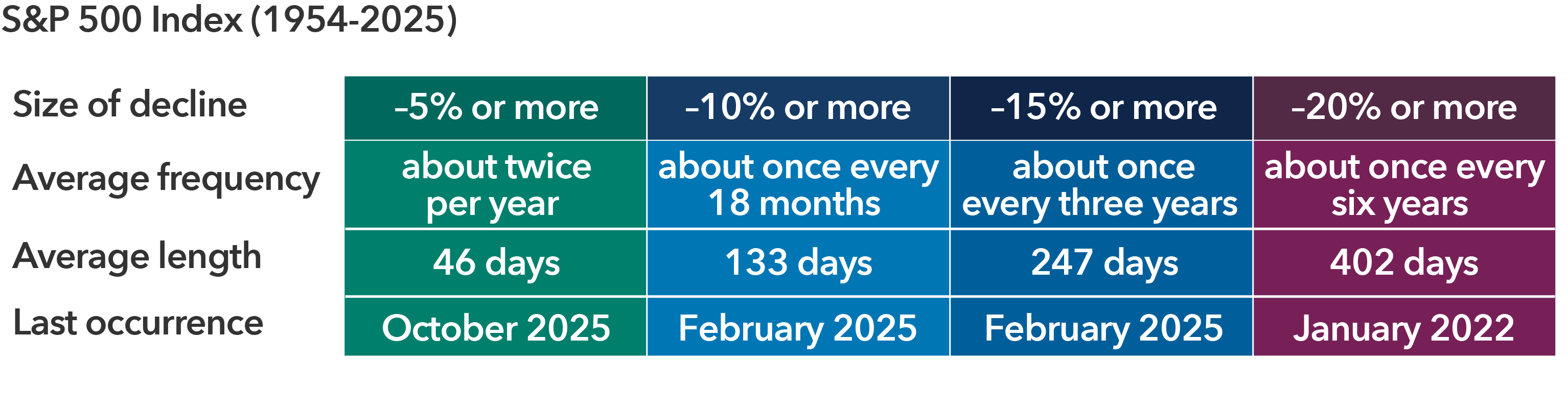
A daily drop and a market drawdown are different measurements. Thursday’s 1.21% S&P decline describes one session. A drawdown measures how far the market has fallen from a recent high. A rough day can be part of a larger decline, but it doesn’t tell us on its own whether one is coming.
There are no guarantees about what happens next. But history makes one thing clear: volatility is part of investing, not proof that investing has stopped working. Charles Schwab’s review of S&P 500 volatility from 1975 through 2025 found an average maximum calendar-year drawdown of about 15%. That is not a prediction that the market will drop 15% this year. It is a reminder that even years that end higher can include some substantial valleys along the way.
What did a 2.6% day cost your 401(k)?
Take a $100,000 account and, just for illustration, assume it fell by the full 2.6%. The balance would be down about $2,600, to roughly $97,400.
That is real money. It is also an estimate: a diversified 401(k) holding bonds, international stocks and other investments may move differently from the Nasdaq. Your result depends on what you own.
If you haven’t sold, the drop is an unrealized loss: your investments are worth less at that moment, but you still own them. If you sell, you turn those investments into cash at the lower market price. That makes the loss realized and leaves you needing to decide when, and at what price, to get back in.
“Paper loss” doesn’t mean “imaginary loss.” Your account value really has fallen. It means the value can still change while you remain invested. If an investment later recovers, the account can regain value. If you sell and the market rises afterward, you no longer participate in that recovery unless you buy back in.
After a 2.6% drop, a $97,400 balance would need to rise about 2.67% to return to $100,000. Percentages work both ways, but not symmetrically: a 2.6% decline takes slightly more than a 2.6% gain to undo.
Panic-selling has a second price tag
The hard part about selling during a steep decline is that no one gets a calendar invitation for the rebound.
Some of the market’s strongest days have occurred close to some of its worst days. That makes timing the exit and re-entry especially difficult: you have to be right twice. Get out before more losses, then get back in before the recovery.
The difference can be dramatic. Schwab reports that the S&P 500 returned 11% annually from 2006 through 2025. Excluding just the ten best days over that period would have reduced the annualized return to 6.6%; missing the 30 best days would have cut it to 1.6%. Those figures describe a particular historical period, not a promise about future returns. The lesson is that a handful of sessions can have an outsized effect, and they’re hard to identify in advance.
Those powerful rebound days don’t always arrive after the headlines turn cheerful. Sometimes they show up while investors are still trying to work out what went wrong. Waiting for the all-clear can mean waiting until prices have already moved. Capital Group’s historical analysis likewise illustrates how missing a small number of the market’s best trading days can substantially reduce an investment’s results.
Why did stocks fall?
Several concerns converged. Rising oil prices revived worries about inflation and the cost of running businesses. Investors also questioned whether enormous spending on artificial-intelligence infrastructure will deliver profits quickly enough to justify the investment. And interest rates remain high: Freddie Mac reported a 7.4% average rate for a 30-year fixed mortgage on October 15.
These pressures can weigh on stock valuations. When borrowing costs are high, future earnings may look less valuable today, and expensive growth stocks can be particularly sensitive to that change.
Still, the mortgage rate is context, not a direct cause of Thursday’s selloff. And a daily market reaction to oil prices or AI spending expectations is not a verdict on your retirement plan’s prospects over the next few decades. It is new information for investors to assess, not proof that a 401(k) has stopped being useful.
If you’re still contributing, a dip can work in your favor
Most people with a 401(k) and a paycheck contribute regularly. That routine is a form of dollar-cost averaging: the same contribution buys more shares when prices are lower and fewer shares when prices are higher.
For example, a $500 contribution buys five shares at $100 each. If the price falls to $80, that same $500 buys 6.25 shares. This does not guarantee a profit, and prices can keep falling. But for a worker saving over many years, lower prices can mean more shares accumulating along the way.
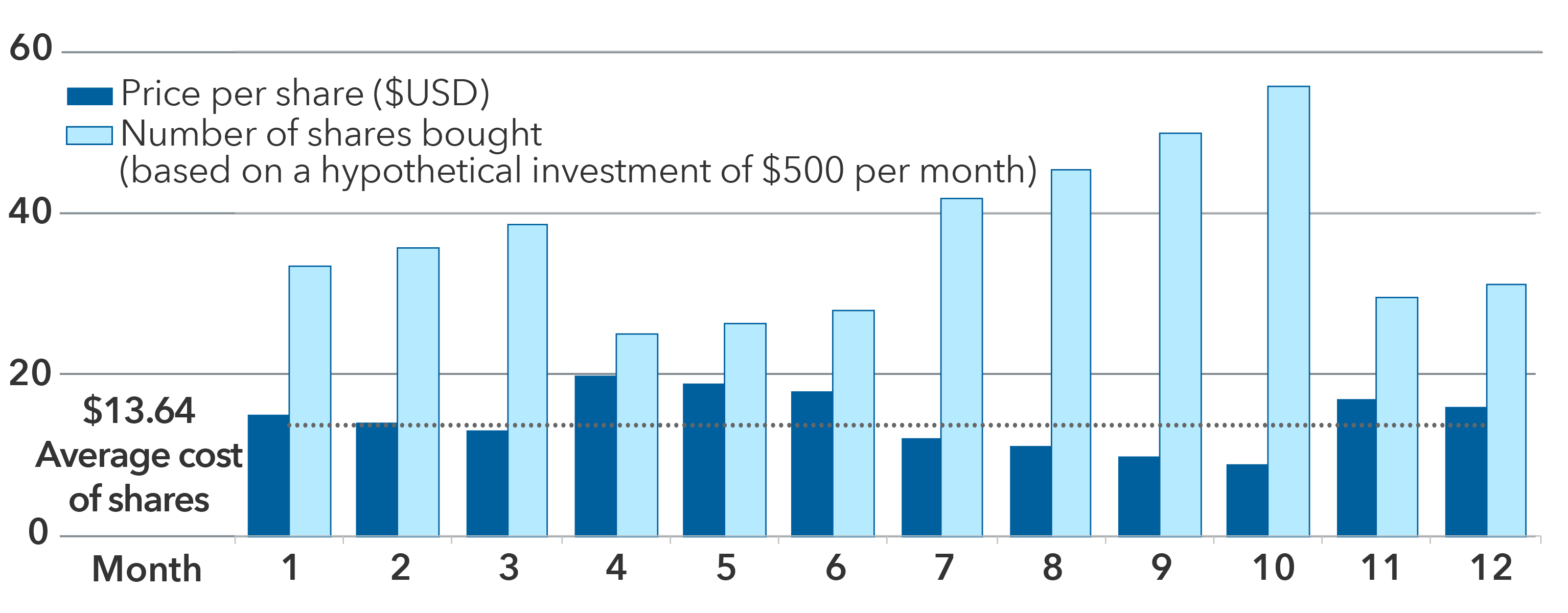
That is the useful, unglamorous side of a market dip: if your plan and time horizon haven’t changed, your scheduled contribution keeps doing its job. The benefit is most relevant to long-horizon savers, not necessarily to someone who needs to spend the money soon.
The honest caveat: timelines matter
A person retiring next year has a different risk profile from someone retiring in 30 years. Someone who needs money soon may not have time to wait through a prolonged downturn. That’s why a retirement plan should reflect your timeline, risk tolerance and the mix of investments you hold, not just today’s headline.
A steadier approach is to review your plan when you’re calm: check whether your investments still match your goals, confirm your contribution schedule, and make sure you understand how much risk you’re taking. If the answer is uncomfortable or unclear, talk it through with a qualified financial professional. That is a better moment for a serious portfolio conversation than the loudest hour of a market panic.
Thursday was a rough day in the market. It was not a deadline to make a permanent decision.
Be mindful, be watchful and good luck.
Educational disclaimer: This article is for general informational purposes only and is not investment advice or a personalized recommendation. Investing involves risk, including the possible loss of principal. Past performance does not guarantee future results. Individual circumstances differ; consult a qualified financial professional before making investment decisions.