



October 20, 2026
A committee announced by the White House is investigating allegations involving Federal Reserve Governor Lisa Cook. That news puts a basic question in the spotlight: Who is the boss of the Fed?
The short answer is that the Fed is a public institution designed to operate with some distance from day-to-day political pressure. That distance is not unlimited, and it does not put the central bank above the law. To understand the current dispute, and why bond investors care, it helps to know how the machinery is built.
The Fed is a system, not a single official
The Federal Reserve has three main parts: the Board of Governors in Washington, 12 regional Federal Reserve Banks, and the Federal Open Market Committee, or FOMC, which sets monetary policy.
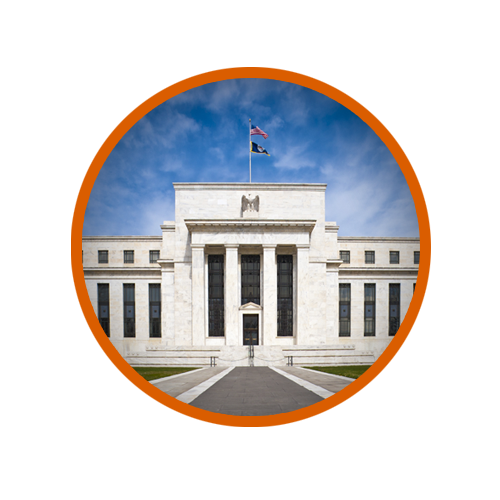
The Eccles Building houses the Board of Governors. Source: Federal Reserve.
The Board has seven governors. The president nominates them, and the Senate confirms them, for 14-year terms that are staggered. The design means a president does not appoint an entire board at once; the terms are intended to stretch beyond a single election cycle. The chair and vice chairs are also selected by the president and confirmed by the Senate, but serve four-year leadership terms from within the Board.
Congress sets the Fed’s broad goals, including maximum employment and stable prices. The Fed makes decisions about how to pursue them, including whether to raise or lower its key interest rate. That split matters: elected lawmakers establish the assignment; central bankers have room to make difficult calls about how to carry it out.
The 12 regional Reserve Banks add a local layer. Their presidents are selected by their own boards, subject to approval by the Board of Governors. Those boards include directors representing banks as well as public and community interests; some seats are specifically reserved for non-bank directors. The regional banks are not ordinary private businesses, though their structure is different from that of the federal Board.
The FOMC brings the pieces together. Its 12 voting members include all seven governors, the president of the New York Fed, and four other regional bank presidents who rotate into voting seats. The remaining regional presidents attend and participate in discussions. In plain English: Washington has a central role, but the policy table also includes perspectives from across the country.
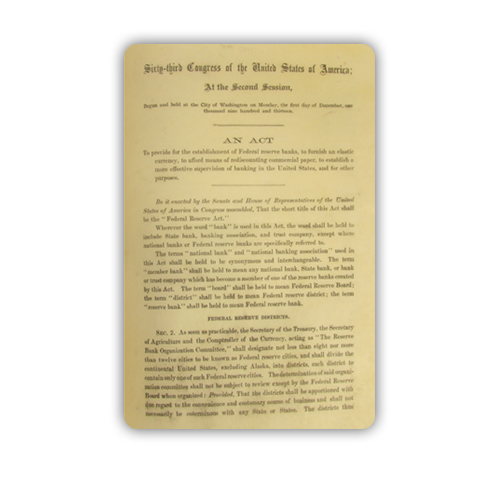
The Fed publishes an explainer on its structure and responsibilities. Source: Federal Reserve.
What does “for cause” mean?
Federal law says a governor serves a 14-year term “unless sooner removed for cause by the President.” The statute does not give the president an open-ended option to remove a governor simply because they disagree about interest rates. The protection is generally understood as a meaningful limit, although the precise legal boundary has been tested in court.
The Supreme Court’s recent decision in Trump v. Cook addressed the process and the protection, while leaving the contested facts at the heart of Cook’s case unresolved. The decision required notice and an opportunity to respond before removal could take effect; it did not decide whether the allegations establish legal cause. The Congressional Research Service’s case summary explains the ruling and the ongoing legal questions.
The White House announced a committee of inquiry to investigate allegations that Cook made false statements in connection with mortgage instruments. The committee is scheduled to hold a closed, transcribed hearing on November 5. The White House says it will provide Cook with the evidence under consideration and give her an opportunity to respond, present materials, and appear with counsel. Cook disputes the basis for the allegations. The facts are contested, and the process is ongoing; this article does not reach a conclusion about the case.
There is no established pattern of governors being fired simply for a policy disagreement. Attempts to remove a governor have instead raised questions about the facts, the meaning of “cause,” and the legal process. The Cook matter is testing those questions in real time.
Why should a household care about Fed independence?
The Fed’s hardest decisions can be politically uncomfortable. Raising interest rates can help slow inflation, but it also makes borrowing more expensive. Credit-card balances, business loans, car financing, and mortgages can all feel the squeeze. When voters and elected officials are focused on today’s bills and jobs, there can be pressure to keep rates low.
Bond investors think beyond the next meeting. They ask whether the central bank will be able to make a tough decision even when it is unpopular. If investors believe rates may be set to suit a political calendar rather than economic conditions, they may demand extra compensation for holding long-term bonds. That extra compensation is called a term premium: the additional yield investors want for lending over a longer period instead of repeatedly lending for shorter periods.
The San Francisco Fed’s October 8 estimate put the 10-year Treasury yield at 5.24%, with a modeled term premium of 1.46 percentage points. That yield is roughly 5.3% for everyday purposes, though it moves from day to day. A higher term premium is only one possible influence on yields. Expected future interest rates, inflation, federal borrowing, and global bond markets matter too. It is not possible to look at one yield and declare that political risk caused it.
Still, the household connection is direct. Long-term Treasury yields help shape mortgage rates, although mortgage rates also include other costs and risks. If investors require a higher yield because they doubt the Fed can keep inflation in check, that pressure can feed into the cost of home loans.
There is also a large federal-budget calculation. With federal debt around $40 trillion, a 0.1 percentage-point increase applied to that entire amount would equal about $40 billion a year; 0.3 points would equal about $120 billion. That is a simplified illustration, not a forecast: government debt does not all reprice at once, and borrowing costs change gradually as securities mature and new debt is issued. But it shows why even small changes in rates can become big numbers at the national level.
Two historical examples, with important limits
The 1970s offer one U.S. example of political pressure meeting monetary policy. During Arthur Burns’s time as Fed chair, the Nixon administration pushed for policies that would support growth ahead of the 1972 election. Inflation later accelerated, amid several forces that included monetary policy, wage and price dynamics, and major food and energy shocks. Historians and economists continue to assess the relative roles of those factors. The Federal Reserve’s account of Nixon’s 1971 wage and price controls provides background on the period.
Turkey offers a more recent, but not directly comparable, example. President Recep Tayyip Erdoğan publicly favored lower interest rates, and the Turkish central bank cut rates in 2021 as inflation pressures rose. Annual inflation reached 85.5% in October 2022. The central bank began a major reversal with rate increases in 2023. Turkey’s economy and institutions differ from those of the United States, so its experience is not a prediction of what would happen here. It does illustrate how interest-rate decisions and confidence in a central bank can become entangled. Reuters reported on the rate-cutting cycle and inflation spike.
Independent does not mean unaccountable
The Fed is not free to do whatever it wants. Congress created it, set its goals, and can change the law. The Board’s financial statements receive annual independent audits. Fed officials testify before Congress, publish policy decisions and meeting records, and explain their reasoning in public.
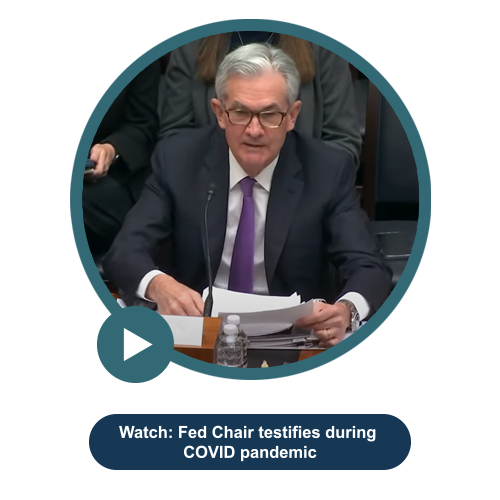
Congressional testimony is one part of the Fed’s public accountability. Source: Federal Reserve.
The Federal Reserve’s annual audited financial statements and Federal Reserve Act describe parts of that accountability structure.
There are limits on some government reviews of the economic merits of individual monetary-policy decisions. The distinction is between oversight (checking how the institution operates and whether it follows the rules) and direct control over each interest-rate choice. Reasonable people can disagree about where that line should sit.
That is the live tension in the Cook case and in the broader debate over Fed independence. The point of the structure is not to settle every argument before it starts. It is to make clear who appoints the officials, what protections they have, how policy gets made, and what oversight remains. Understanding those rules makes it easier to follow the news without mistaking independence for immunity, or accountability for political control.
Be mindful, be watchful and good luck.
This article is for educational purposes only and is not investment advice. It does not recommend any financial decision. Talk with a qualified financial professional about your individual circumstances.