



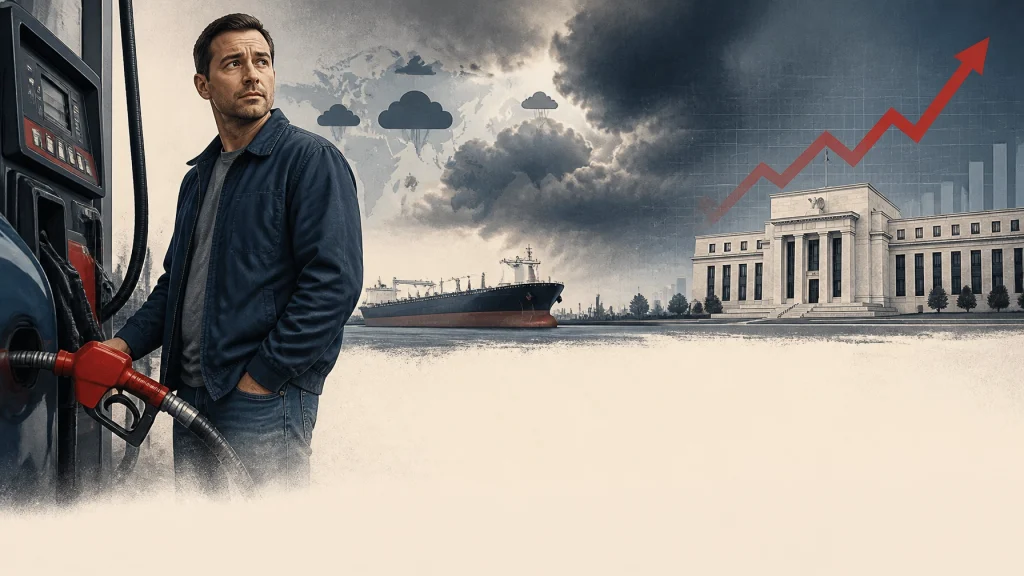
There are economic problems that arrive in a spreadsheet, and then there are problems that arrive at the gas station.
This one arrives every time the pump clicks off.
The national average for regular gasoline is hovering around $4.08 per gallon, roughly 90 cents higher than a year ago. Diesel is around $5.60 per gallon, which matters even if the family sedan runs on regular. Diesel powers much of the trucking, farming, construction, shipping, and delivery economy. When diesel gets expensive, the bill eventually finds its way into groceries, appliances, building materials, and nearly everything else that moves.
Meanwhile, oil pushed above $95 per barrel on Tuesday, stocks fell, and the war involving Iran continues to put pressure on global energy markets. Consumers are already nervous: the Conference Board’s consumer confidence index fell to 89.4 in August, its lowest level in seven months. The expectations index dropped to 68.2, a reading that says people are less worried about today than they are about the next six months.
And now the Federal Reserve is talking about the possibility of raising interest rates.
That is the squeeze: energy prices are pushing inflation higher while the Fed considers making borrowing more expensive.
Welcome to the part of economics where there is no comfortable chair.
The gas station is the first inflation report most families see
The government publishes monthly inflation statistics. Families do not need a government report to tell them that gasoline is expensive. They see it on the glowing sign outside the station.
AAA’s national average was $4.1203 per gallon on September 2, 2026, compared with $3.1869 a year earlier. The Energy Information Administration’s weekly data showed regular gasoline at $4.071 per gallon for the week ending August 31. Different surveys and dates produce slightly different numbers, but the direction is unmistakable: gas is about a dollar more expensive than it was last year.
For a driver filling a 15-gallon tank, the difference between $3.18 and $4.08 is about $13.50 per fill-up. Filling that tank once a week adds roughly $700 a year.
That is not an abstract inflation rate. That is a car payment, a utility bill, or several trips to the grocery store.
Gasoline is especially painful because it is difficult to avoid. A household can postpone buying a new television. It cannot always postpone driving to work, taking children to school, visiting a doctor, or getting to the job that pays the bills.
The effect is also uneven. A suburban commuter driving a long distance feels it immediately. A lower-income worker may feel it even more because transportation consumes a larger share of the household budget. This is why energy inflation can feel much worse than the headline consumer-price number suggests.
The war is not just about oil. It is about risk.
Oil prices respond to supply, demand, inventories, refinery capacity, shipping routes, and taxes. They also respond to fear.
The conflict involving Iran has increased the risk of disruptions around key Middle Eastern energy routes, including the Strait of Hormuz. Even before an actual shortage appears, traders can price in the possibility of one. Oil markets are global, and a supply concern in one part of the world can show up in an American gas station within days or weeks.
That is the annoying feature of modern energy markets: the barrel does not have to disappear for the price to rise. The possibility that fewer barrels might be available can be enough.
The Energy Information Administration’s gasoline and diesel data provide a useful reminder that the pump price is made up of several parts. Crude oil is the largest component, but refining, transportation, distribution, marketing, and taxes all have a seat at the table.
When crude oil rises above $95, the entire chain starts recalculating. Refiners pay more for input. Truckers pay more to move products. Airlines, manufacturers, farmers, and retailers face higher operating costs. Some companies absorb the increase by accepting smaller profit margins. Others pass it along to customers.
Eventually, the consumer gets the receipt.

Diesel is the quiet inflation machine
Gasoline gets the attention because millions of people buy it directly. Diesel often does more damage in the background.
At approximately $5.60 per gallon, diesel is expensive enough to affect the basic machinery of the economy. Long-haul trucks use diesel. So do many farm machines, construction vehicles, delivery fleets, and industrial generators.
Consider a truck hauling food from a farm or distribution center to a supermarket. The fuel cost is part of the trip. When diesel rises, the trucking company faces three choices:
- Accept lower profits.
- Raise its shipping surcharge.
- Pass the higher cost to the customer.
The third option tends to win over time.
That is why an energy shock can spread beyond the gas station. The price of a refrigerator, a bag of cement, a box of cereal, or a home-delivery order may contain a little bit of diesel. One item does not make a crisis. Millions of items moving through an economy do.
The EIA’s fuel-price history is worth bookmarking because it shows the regional differences clearly. California, the West Coast, and parts of New England are paying substantially more than the Gulf Coast. There is no single “American” pump experience. Geography, taxes, refinery access, and transportation infrastructure matter.
Still, the national average is high enough to hurt nearly everybody.
Why would the Fed hike into an energy shock?
This is where the kitchen-table explanation matters.
The Federal Reserve does not control the price of crude oil. It cannot negotiate with Iran, reopen a refinery, or produce another tanker of gasoline. What it can influence is the cost of borrowing and, indirectly, the amount of demand in the economy.
If energy prices push inflation higher, the Fed worries that the increase could spread. Workers may seek larger raises. Businesses may raise prices to cover fuel and wage costs. Consumers may begin expecting higher prices and adjust their behavior accordingly.
The Fed’s job is to prevent a temporary shock from turning into a permanent inflation habit.
The minutes from the Federal Open Market Committee’s July 28–29 meeting show the tension clearly. The committee held the federal funds target range at 3.50% to 3.75%, but three members preferred a 25-basis-point increase. The minutes also said many participants believed additional tightening would likely be necessary if inflation did not decline.
The Fed’s preferred inflation gauge, the PCE price index, was estimated at 3.7% year over year in June, well above the central bank’s 2% target. Core PCE, which removes food and energy prices, was estimated at 3.3%.
That last number is important. If only gasoline were rising, the Fed could more easily look through it. But if prices excluding food and energy remain sticky, policymakers have less room to ignore the problem.
The next scheduled FOMC meeting is September 15–16. Every inflation report, jobs report, oil-market move, and consumer survey between now and then will be examined like a suspicious receipt.

What a rate hike means for the regular guy
A quarter-point rate hike does not automatically add one-quarter of a percentage point to every loan. The Fed sets a short-term policy rate, not the interest rate on every mortgage, credit card, or auto loan.
But the connection is real.
- Credit cards: Most credit-card rates are variable. If the Fed hikes, borrowing costs can move higher, often quickly.
- Home-equity lines: HELOCs are commonly tied to floating benchmarks, so monthly payments can rise.
- Auto loans: New car loans may become more expensive as lenders adjust their rates.
- Mortgages: Fixed mortgage rates are driven mainly by longer-term Treasury yields and mortgage-market conditions, but expectations of tighter Fed policy can push those rates higher.
- Small businesses: A shop financing inventory, equipment, or payroll may face higher borrowing costs just as customers are cutting back.
Suppose a household carries a $10,000 balance on a variable-rate loan. A quarter-point increase would equal roughly $25 more in annual interest if the full increase passed through immediately. That number alone is manageable for some families. Stack it on top of $700 more in annual gasoline costs, higher insurance, rising food prices, and a larger car payment, and the squeeze becomes less theoretical.
The problem is not one price increase. The problem is the pileup.
Consumer confidence is flashing a warning
The August confidence data add another layer. The Conference Board’s overall index fell to 89.4, while the expectations index fell to 68.2. The University of Michigan’s sentiment index also dropped, reaching 51.7, about 11% below its level a year earlier.
Confidence surveys are not perfect economic forecasts. People can be gloomy and still spend money. The stock market can rise while households without meaningful investments feel poorer. Higher-income households may continue traveling and dining out while working families quietly reduce purchases.
But confidence matters because it shows how people are processing the future.
Consumers are seeing fuel prices above $4. They are hearing about war, oil, tariffs, and possible rate hikes. They are wondering whether their paycheck will keep up. A household that expects more pain may delay buying a car, remodeling a kitchen, or taking a vacation.
That caution can weaken demand just as businesses are dealing with higher fuel and financing costs. It is the classic risk of a stagflation-style squeeze: prices rise while growth loses momentum.

What can households do?
Nobody can budget their way out of a global oil shock completely. But a few practical moves can reduce the damage.
First, treat fuel as a recurring bill rather than a surprise. Estimate the monthly cost using the current price, not last year’s price.
Second, combine trips where possible. That is not a grand economic strategy, but it is the sort of small adjustment that actually works at the household level.
Third, be careful with variable-rate debt. Paying down a high-interest credit card or reducing a HELOC balance can provide a guaranteed savings rate equal to the interest avoided.
Fourth, do not assume a future rate cut will rescue every budget. Borrowing costs may remain elevated even if the Fed pauses. A household budget built around perfect interest-rate timing is not a budget; it is a weather forecast written in crayon.
Finally, keep watching the basics: fuel prices, inflation, hiring, wages, and consumer spending. Those indicators tell the story more clearly than a parade of market jargon.
The regular guy is caught between the pump and the Fed because both are responding to the same underlying problem: an economy facing higher costs and too much uncertainty.
The Fed may raise rates to keep inflation expectations under control. That may be defensible policy. But it will not make gasoline cheaper, end the war, or put money back into a commuter’s tank.
It simply means the household paying more to drive to work may also pay more to borrow money.
That is the squeeze nobody asked for.
Disclosure: Regular Guy Economics is not a financial advisor. This article is for educational and informational purposes only and is not investment advice. Consider your own circumstances and consult a qualified professional before making financial decisions.
Be mindful, be watchful and good luck.