



We live in a world engineered for obsolescence. For the past three decades, global retail has operated on a singular, hypnotic mantra: make it cheaper, make it faster, and make sure they have to buy it again next season.
We have been conditioned to view our wardrobes and daily gear like paper towels: use them up, toss them in the bin, and grab a fresh roll. A $15 polyester shirt here, a pair of synthetic boots that fall apart in six months there. It feels thrifty at checkout, but over a lifetime, it is one of the most expensive financial traps ever devised by modern commerce.
While economists obsess over CPI reports and Federal Reserve interest rate levers, the real inflation hitting household budgets is the "disposable tax." When every product you own has an expiration date baked into its manufacturing, you aren't saving money: you're trapped on a perpetual treadmill of replacement.
The Lifetime Math of Junk
Let’s look at the hard, unvarnished math that corporate marketers hope you never calculate.
Suppose you buy a cheap, mass-produced pair of boots every year for $60. They look okay for about four months, start leaking by month six, and by month twelve, the soles are separating and the synthetic leather is peeling like sunburned skin. Over ten years, you have spent $600 on foot coverings, generated a mountain of landfill waste, and spent countless hours trudging back to the mall or waiting for packages of cheap plastic goods to arrive on your doorstep.

Now, compare that to investing in a pair of Goodyear-welted boots or a genuinely handcrafted leather item built by a local maker who actually signs their work. Up front, the sticker shock might make your coffee go down the wrong pipe. But those boots can be resoled, conditioned, and worn for a decade: sometimes a lifetime.
When you calculate cost-per-wear, quality isn't a luxury reserved for the ultra-wealthy; it is the ultimate economic defense mechanism for the working person. The wealthy buy quality because they enjoy luxury. The smart person buys quality because they cannot afford to keep buying cheap junk.
The Millinery Renaissance: Lessons from the Workshop
To understand what true value looks like, you only have to look at the pockets of resistance cropping up against the fast-fashion monolith. Take, for instance, the craftsmanship happening at places like the ’Til Death Hat Co. down in Ybor City, Florida.
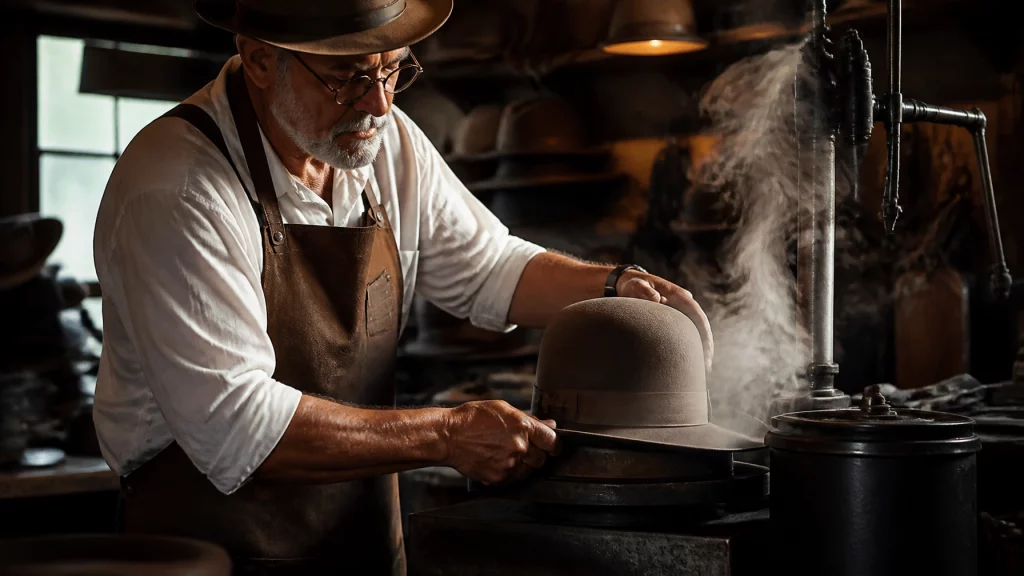
Run by artisan milliner Ash Dudney: who trained under legendary hat maker Tom Hirt (the master behind the iconic felt hats in Western classics like Tombstone and The Quick and the Dead): shops like this represent a complete rejection of factory-line uniformity. Step inside, and you aren't browsing racks of cookie-cutter headwear shipped in from an automated overseas warehouse. You smell hot steam, heavy beaver felt, and cedar. You get measured. You choose your materials. You watch a custom piece get shaped, creased, and burned by hand, incorporating heirloom-grade elements like heavy beaver fur felt and locally sourced trims.

A hat built from heavy beaver felt isn't just an accessory; it is a fortress against the elements. It holds its shape through rain, heat, and years of hard living. It can be refurbished, cleaned, and handed down.
When a maker spends hours pouring skill, muscle memory, and decades of tradition into a single piece of headwear, they are creating something that outlives trends, seasons, and political cycles. That is the essence of real craftsmanship: objects with a pulse, built with human intention rather than algorithmic optimization.
Craftsmanship as the Ultimate Anti-Inflationary Hedge
Inflation is sneaky. It erodes your purchasing power dollar by dollar, while shrinkflation quietly reduces the quality of the packaged goods and clothing you buy. When the dollar buys less, buying things that last becomes the smartest hedge available.
Think of it this way: if inflation runs hot at 4% or 5% a year, buying disposable items that double in price or halve in durability every few years is a losing battle. But a jacket, a pair of boots, or a bespoke hat that performs flawlessly for fifteen years? That is locked-in value. You have effectively immunized yourself against next year’s price hikes because you simply aren't in the market to buy a replacement.
Furthermore, buying durable goods shifts your financial psychology away from consumerist anxiety. When your wardrobe consists of fewer, better things, the urge to chase every fleeting micro-trend evaporates. You stop renting your style from fast-fashion algorithms and start curating a personal inventory that stands the test of time.
Fixing Capitalism with More Capitalists
There is a broader philosophical point here that goes far beyond your closet. Modern corporate capitalism has metastasized into a monster of consolidated monopolies where faceless conglomerates churn out identical plastic garbage designed to break right after the warranty expires.
True craftsmanship is a rebellion against that corporate monoculture. It represents a return to the ethos of Fixing Capitalism with more Capitalists: where local makers, independent artisans, and small-business owners own their tools, control their craft, and take personal pride in what they produce.

When you buy from an independent craftsperson, your money doesn’t disappear into a share buyback program for a multinational retail giant headquartered in a tax haven. It stays in the community. It pays for someone's mortgage down the street, funds an apprenticeship for the next generation of makers, and keeps local manufacturing skills alive in an age of robotic apathy.
We spend a massive chunk of our lives working hard for our money. Handing it over to multi-billion-dollar fast-fashion empires for shirts that dissolve in the wash is an insult to that labor.
Next time you need to upgrade your gear, skip the mall clearance rack. Find a local maker. Invest in heavy-duty materials, proper construction, and items built with human hands. Support the people who still know how to build things to last.
Be mindful, be watchful and good luck.