



It’s Monday, June 22, 2026, and if you’ve spent the morning scrolling through real estate listings, you’ve probably felt a familiar tightening in your chest. It’s not the caffeine; it’s the math. For the last few years, we’ve been told to "wait for the pivot," "wait for the crash," or "wait for the inventory." Well, we’ve waited, and here we are. The dust has settled on the post-pandemic era, and the view is, frankly, a bit bleak for the average person trying to put a key in a front door for the first time.
In the 1960s, a single income could buy a three-bedroom ranch and a station wagon without breaking a sweat. Today, that same ranch costs more than a fleet of luxury SUVs, and the station wagon has been replaced by a monthly subscription to a ride-share app because you can’t afford the garage. Is home ownership dead? Not exactly. But the version of it your parents bought into, the "starter home" that leads to the "forever home", has officially been moved to the palliative care ward.
The Brutal Math of 2026
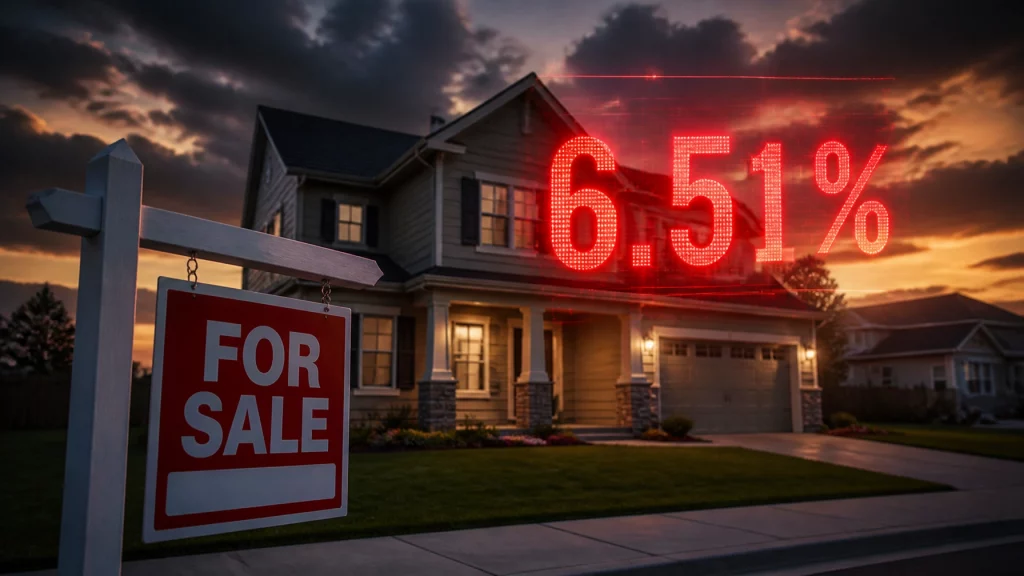
Let’s look at the numbers, because numbers don’t have feelings, and in this market, that’s a mercy. As of this morning, the 30-year fixed mortgage rate is hovering around 6.51%. That sounds better than the 8% scares of a few years ago, but it’s a far cry from the 3% "free money" era that ruined our collective expectations.
Currently, the median home price in the United States is swinging between $398,000 and $417,000. To comfortably afford that median home without spending more than 30% of your income on housing, you need to be pulling in roughly $112,900 a year.

The problem? The national median household income is sitting around $83,730. Do the math: that is a $29,200 gap. We aren’t talking about a few bucks for a kitchen remodel; we’re talking about a massive, structural chasm between what the "Regular Guy" earns and what the "Regular House" costs. This isn't just a "save more for a down payment" problem. This is a "the ladder has been pulled up" problem.
The Death of the Starter Home
There was a time when a "starter home" was a modest 1,100-square-foot cottage in a decent neighborhood. You lived there, built equity for five years, and moved up. In 2026, that concept is essentially extinct. Why? Because the cost of labor, materials, and land has made it nearly impossible for developers to build a house for $250,000 and still make a profit.
Instead, we see "luxury" townhomes and sprawling suburban McMansions. The middle has been hollowed out. Morgan Stanley recently noted that affordability has "permanently reset," with mortgage payments nearly double what they were just five years ago. If you didn’t get in when the getting was good, you’re now competing for a dwindling supply of existing homes against people who are much wealthier than you, or worse, institutional investors with bottomless pockets.
The Golden Handcuffs: Why Nobody is Moving
If you’re wondering why there are so few houses for sale despite the "flat" price growth J.P. Morgan is predicting for the rest of 2026, look no further than the "Golden Handcuffs."

Millions of Americans are currently sitting on mortgage rates sub-4% or even sub-3%. For these folks, moving isn't just a hassle; it’s a financial suicide mission. To trade their current $1,800-a-month mortgage for a similar house at today’s 6.51% rate, their payment would jump to $3,200. Why would they move? They won't. They’re staying put, renovating their basements, and effectively removing millions of homes from the "for sale" pool.
This inventory stagnation is what keeps prices from crashing. We have a "Mexican Standoff" in the housing market: buyers can’t afford to buy, and sellers can’t afford to sell.
The Affordability Belt: Hope in the Heartland
It’s not all doom and gloom if you’re willing to look at a map. While the coasts and the Sun Belt have become playgrounds for the elite, there is a "Thaw" happening in the Midwest.

Markets in Ohio, Indiana, Michigan, Missouri, and West Virginia are still offering something that looks like sanity. In these states, the gap between income and home price hasn't yet become a total canyon. If you have a remote job or the ability to relocate, these are the last bastions of the American Dream. You might not get a view of the Pacific, but you’ll get a backyard, a garage, and a mortgage payment that doesn't require you to sell a kidney every month.
Should You Buy Right Now?
The Mortgage Bankers Association (MBA) has warned of a decade of weaker demand due to demographics. The "Big Buy" of the Millennial generation is slowing down, and Gen Z is looking at these numbers and deciding that a long-term lease on a high-end apartment with a gym and a dog wash station isn't such a bad deal after all.
So, should you buy? The answer depends on three things:
- Time Horizon: If you plan on staying for 10+ years, the "when" matters less than the "can I." Real estate is a long game.
- The Math: If your payment is going to be 50% of your take-home pay, the answer is "no." You are one car repair or medical bill away from disaster.
- Local Reality: If you're in Tampa or Austin, you're fighting a different battle than if you're in Des Moines.
Home ownership isn't dead, but the "automatic" nature of it is. It’s no longer a rite of passage; it’s a calculated, high-stakes financial maneuver. We’ve entered an era where being a "Regular Guy" means being smarter than the market, because the market isn't looking out for you anymore.
If you want to stay ahead of these trends and understand the madness of 2026, make sure to check out our latest podcasts where we dive deeper into the "Reset" and what it means for your wallet.
Be mindful, be watchful and good luck.