



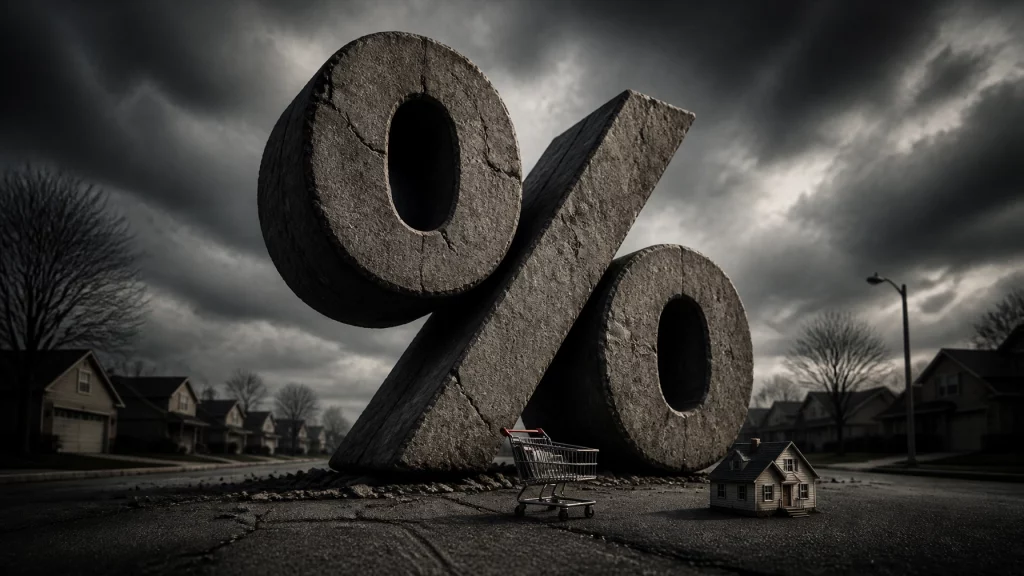
Yesterday’s inflation news landed like a brick through the kitchen window: 4.2%. That was the May 2026 reading, and it matters a lot more than the usual talking heads want to admit. For the Federal Reserve, it is another ugly number sitting well above the 2% target. For everybody else, it is confirmation that the pressure on household budgets is not going away anytime soon.
More important, 4.2% is not just another monthly headline. It is a major signal for the rest of 2026. It tells markets, lenders, businesses, and regular households that inflation is not finished causing trouble. A number like that changes expectations, and once expectations shift, borrowing costs stay high, pricing stays aggressive, and the whole economy starts acting like expensive is the new normal.
This 4.2% figure also marks a three-year high. That may not sound dramatic in a world addicted to giant numbers, but economically it is a flashing warning light. It is the difference between an economy that is gradually settling down and one that is still stuck in the mud, burning through paycheck gains just to keep up.
The Great Disconnect: Good Jobs, Bad Vibes
On paper, the economy looks fine. Unemployment is low, the stock market is doing its usual dance, and the "experts" are telling you things are stable. So why does it feel like everything is broken?
The "heavy" feeling comes from the reality that 4.2% inflation isn't just a number on a screen; it’s a tax on existence. It represents the persistent, grinding erosion of purchasing power. When inflation hits a three-year high, it signals to the market: and to your bank: that the cost of money isn't coming down anytime soon.
Despite a decent job market, the average American's paycheck is being put through a metaphorical vice. You might have gotten a 3% raise this year, but if the cost of the things you actually need: like eggs, insurance, and electricity: has gone up by 5% or 6%, you didn't get a raise. You got a pay cut.

The Interest Rate Trap: Why Your Mortgage Isn't Moving
The most immediate and painful side effect of a 4.2% inflation rate is what it says about interest rates for the rest of the year. The Federal Reserve has one main tool to fight inflation: keep money expensive. When inflation is still sitting at 4.2%, more than double target, the market hears one message loud and clear: rate cuts are not arriving on a white horse anytime soon.
For the regular guy, that means the dream of cheap borrowing is still sitting in the basement next to the holiday decorations. In mid-2026, mortgage rates are still hovering around the mid-6% range, and that changes everything. On a $400,000 home loan, the payment difference between 3% and roughly 6.5% is still close to a thousand bucks a month. That is real money getting vacuumed away before groceries, savings, or anything fun even gets a vote.
This creates the same ugly lock-in effect that has been freezing housing for months. Homeowners with old 3% mortgages are not eager to swap them for today’s rates, and buyers stepping in now are staring at monthly payments that look more like a second rent check. So when yesterday’s 4.2% inflation number hit the tape, it was not just bad news for economists. It was a giant sign saying housing stays stuck longer.

Credit Cards and the Debt Spiral
If the mortgage situation is a "heavy" weight, credit card debt is a ticking time bomb. With inflation at 4.2%, the interest rates on variable-rate debt: like credit cards and personal loans: stay sky-high.
We’ve seen a trend where households are increasingly relying on credit just to cover the gap created by rising prices. When your grocery bill is $150 higher than it was a couple of years ago, and your paycheck hasn't moved, that extra $150 often ends up on the Visa card. At 20% or 25% interest, that grocery bill effectively starts growing every month you don't pay it off.
This is how the 4.2% inflation rate turns a temporary squeeze into a permanent crisis. It’s not just that things cost more; it’s that the cost of borrowing to pay for those things is also at a premium.
The Invisible Tax: Shrinking Paychecks
The madness of 4.2% inflation is that it hits the essentials hardest. We often hear about "core inflation," which strips out food and energy because they are "volatile." But you can't strip food and energy out of your life.
When you look at the receipt after a trip to the store in 2026, you aren't just seeing higher prices; you're seeing the result of years of compounded inflation. A 4.2% increase on top of the 15-20% increase we saw over the previous few years means that the dollar in your pocket today is a shadow of what it was in 2020.
This is the real reason the economy feels heavy. It is the cumulative exhaustion of trying to outrun a monster that never stops moving. You can read more about how this debt-based system works in our podcast episode, All Dollars are Debt, where we dive into the core mechanics of why our currency seems designed to lose value.

Why 2026 is Different
In the past, inflation flare-ups sometimes cooled fast enough to let everyone pretend the problem had passed. Yesterday’s 4.2% reading says that is not the story in 2026. This is sticky inflation, and sticky inflation is dangerous because it changes behavior. Businesses keep raising prices because they expect higher costs. Workers push harder for raises because they know the grocery store is not offering mercy. Lenders keep rates elevated because inflation still looks alive.
That is why 4.2% is such a major signal for the back half of the year. It points to fewer rate cuts, more pressure on financing, more strain on household budgets, and a better chance that markets will need to reprice the happy talk. If inflation can sit at a three-year high with all this pressure already in the system, then the second half of 2026 is probably not going to feel cheap, easy, or relaxed.
Government debt is also sitting at historic levels, and the interest bill attached to that debt keeps eating a larger piece of the federal budget. That leaves less room for everything else and adds even more long-run pressure to a system already struggling to get prices under control. It’s a vicious cycle that Regular Guy Economics was built to help you navigate.
What Can the Regular Guy Do?
When the macro-economy is working against you, the only move is to get aggressive with your micro-economy.
- Kill the Variable Debt: If you have credit card balances, they are your biggest enemy in a 4.2% inflation world. Every dollar of interest you pay is a dollar that inflation has already stolen twice.
- Re-evaluate "Fixed" Costs: Things like insurance, subscriptions, and utilities often creep up alongside inflation. It’s time to shop around and trim the fat.
- Invest in Real Assets: Inflation eats cash. It doesn't eat land, gold, or skills. If you have extra capital, sitting on a pile of cash while inflation is at 4.2% is like watching a block of ice melt in the sun.
- Stay Informed: Understanding the "madness" is the first step to beating it. Check out our About Page to learn more about our mission to bring simple economic truths to the average citizen.
The 4.2% inflation rate matters because yesterday’s report was not just a statistic. It was a signal flare for the rest of 2026. It told the market that easy money is still dead, borrowing costs are staying annoying, and the squeeze on the regular household is not some temporary glitch.
That is why this number matters so much. It is not only explaining why the economy feels heavy right now. It is warning that the weight probably sticks around for a while.
Be mindful, be watchful and good luck.