



Well, friends, it looks like the party, if you can call a stagnant, weirdly quiet economy a "party", might be coming to a close. For months, we’ve been living in this bizarre economic purgatory that the smart guys in suits like to call the "low-hire, low-fire" era. It sounds like a bad speed-dating strategy, but in the labor market, it meant companies weren't really hiring, but they weren't exactly kicking people to the curb either. Everyone was just… sitting still. Holding their breath.
That breath was officially let out yesterday, June 4, 2026.
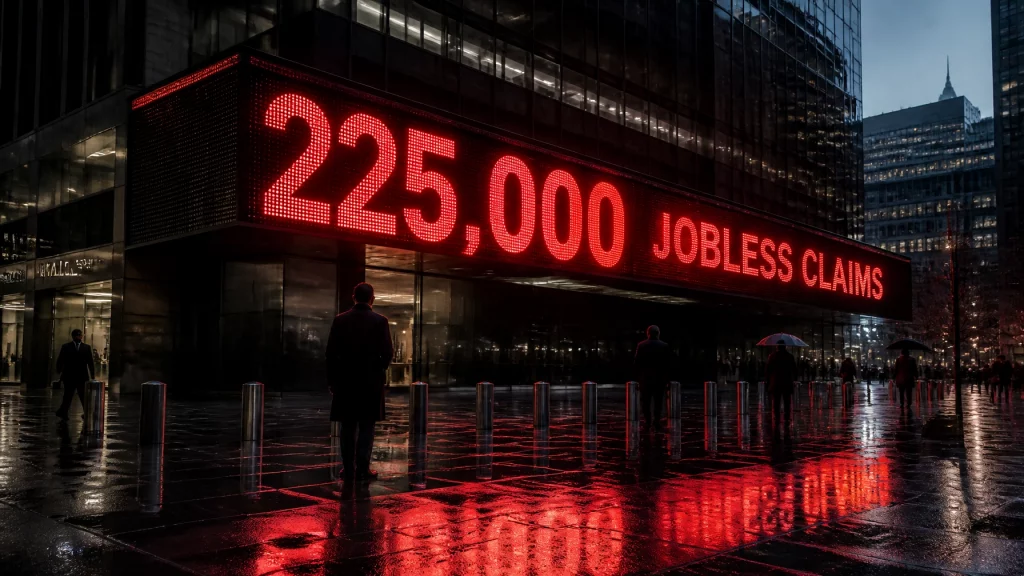
The Department of Labor dropped a bomb in the form of a number: 225,000. That’s the number of Americans who filed for initial jobless claims last week. It’s an increase of 13,000 from the week before, and more importantly, it’s a four-month high. If you listen to the talking heads on the news, they’ll tell you it’s "consistent with a cooling market." If you’re a regular guy trying to pay a mortgage, it feels more like the first cold breeze of a very long winter.
At Regular Guy Economics, we try to cut through the jargon. So, let’s talk about why 225,000 is the number everyone is whispering about today and whether the "low-fire" shield has finally shattered.
The Ghost of "Low-Hire, Low-Fire"
For the better part of the last year, the labor market has been acting like a shy kid at a middle school dance. Nobody wanted to move. Employers were terrified of losing the talent they fought so hard to find during the post-pandemic scramble, so they stopped firing people. At the same time, the cost of everything, from printer ink to electricity, went through the roof, so they stopped hiring, too.

This "low-hire, low-fire" environment was a strange safety net. It kept the unemployment rate looking pretty, but it made finding a better job almost impossible. You were safe in your seat, but you were stuck in it. According to reports from iHeart Radio’s 1340 WRAW and Sharecast, this jump to 225,000 suggests that the "fire" part of that equation is starting to heat up.
When jobless claims hit a four-month high, it’s a signal that the corporate "hoarding" of employees is ending. The costs are simply becoming too high to justify keeping everyone on the payroll "just in case."
Why 225,000 is a Warning Shot
To the average person, 225,000 might not sound like a huge number in a country of 330 million. But in the world of actuarial math and economic trends, it’s about the velocity of the change. We were humming along in the low 200s, and suddenly, we jumped. This wasn't a slow crawl; it was a leap that surpassed almost every major forecast.

Why is this happening now? Well, look around. We’ve been talking on our podcast about the "Everything Tax." Between Middle East tensions driving up energy costs and the slow-motion train wreck of interest rates that refuse to budge, companies are finally feeling the squeeze. When a CEO looks at a balance sheet and sees that profits are flat but the cost of debt is up, the first thing they look at is the "Headcount" column.
It’s the last frontier of expense reduction. We’ve optimized our inventories to zero. We’ve outsourced everything that wasn't nailed down. Now, the only thing left to cut is the person sitting in the cubicle.
The Math of the Madness
Let’s be real: Medicine, insurance, and now employment have all become part of a capitalist math problem that doesn't always account for the human spirit. Just like I wrote about the absurdity of medical costs, the labor market is becoming a "totaled" car.
If an employee's "repair price": their salary, benefits, and the 20% expected increase in health insurance premiums: exceeds their "market value" in a cooling economy, the corporate insurers of our lives "total" the position. They file the claim, and you’re looking for a new ride.
This is the "buzz saw of madness" I talk about. We are at a precipice of change where the old rules don't apply. Amazon and JPMorgan might be trying to rethink healthcare for their workers to save money, but the rest of the corporate world is just looking at the exit door.

The "Regular Guy" Perspective
So, what does this mean for you? If you’re sitting at your kitchen table with a coffee, looking at these numbers, you’re probably wondering if you’re next.
The reality is that a "less dynamic" market means you have less leverage. When there are 225,000 people filing for claims in a single week, the "Help Wanted" signs stay dusty. Companies realize they don't have to compete for you anymore. They can wait for you to come to them, hat in hand, willing to take a little less than you did last year.

It’s high time we reclassify how we look at our careers. Just like we need to invest in a $100 gym membership to save $10,000 in cardiac care, we need to invest in ourselves to be "recession-proof." That means understanding the madness, staying watchful of the trends, and realizing that the company you spend a third of your life working for is looking at you through the lens of a spreadsheet.
The Road Ahead
Is the "low-fire" era over? Maybe not entirely. We aren't in a freefall… yet. But the shield is definitely cracked. The June 4 report is a reminder that the economy is a living, breathing beast, and right now, it’s looking a little hungry.
We need to be mindful of these shifts. Don't be caught off guard when the "225,000 Club" starts recruiting new members. Use this time to sharpen your skills, pay down that high-interest debt we talked about in our last blog, and keep your eyes on the horizon.
The math doesn't lie, even when the politicians do. If the trend continues to climb, that "cooling" market is going to feel a lot more like a deep freeze. But as long as we’re talking about it and understanding the madness together, we’ve got a fighting chance.
Be mindful, be watchful and good luck.