



If you pulled into a gas station this morning, you probably had that familiar sinking feeling in your gut before you even reached for the nozzle. You looked at the digital sign, saw a number that looked more like a premium steak price than a gallon of 87-octane, and muttered something your mother wouldn’t approve of.
Welcome to June 2026. While we were all worried about AI taking our jobs or whether the Fed would finally give us a break on interest rates, a narrow strip of water halfway across the planet decided to remind us who’s really in charge of our monthly budget.
The Strait of Hormuz is currently the most expensive piece of real estate in the world, and unfortunately, you’re the one paying the rent. Because of the escalating tensions: let’s call it what it is, the looming shadow of an Iran war: the average guy is looking at an extra $20 to $30 every time he fills up his truck.
It’s economic madness, and it’s time we break down the math of why a few boats in a desert can wreck your summer vacation plans.
The Chokepoint That Holds Your Wallet Hostage

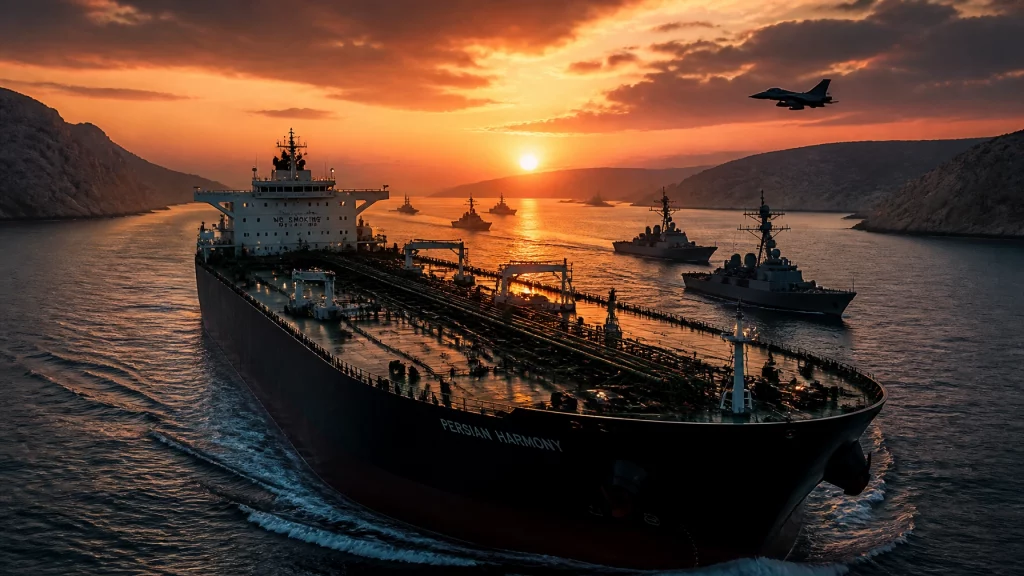
To understand why your gas bill just pulled a vertical climb, you have to look at a map. The Strait of Hormuz is a tiny neck of water between Oman and Iran. It’s the only way out for the oil coming from Saudi Arabia, the UAE, Kuwait, and Iraq.
Think of it like the only exit door in a crowded stadium. If someone stands in front of that door or even looks like they might lock it, everyone inside starts to panic. In the world of global economics, that panic translates directly into dollars.
Historically, about 129 ships per day cross that strait. It’s a rhythmic, boring, beautiful flow of energy that keeps the world’s lights on. But over the last week of June 2026, that flow didn't just slow down; it hit a brick wall. On one recent Sunday, reports showed only 8 vessels made the crossing.
When you go from 129 ships to 8, the "math of madness" takes over. Goldman Sachs and other analysts are estimating that global oil production has been effectively cut by about 14.5 million barrels per day. That’s not a dip; that’s a canyon. You can read more about how we track these market shifts in our news columns.
The $100 Barrel is Back (And It Brought Friends)

Last month, we were coasting along with oil in the comfortable $70 to $80 range. It wasn't "cheap," but it was manageable. Then June 1st hit. Crude prices surged by $5 in a single afternoon. By June 3rd, the international benchmark, Brent crude, shot up to $109.42 per barrel.
That’s an 11% jump in a single week.
Now, if you’re a shareholder in a big energy company, you might be popping champagne. But for the rest of us: the guys trying to get to work, drop the kids at soccer practice, and maybe have enough left over for a burger: this is a direct tax on our existence.
Every $10 increase in the price of a barrel of oil usually adds about 25 to 30 cents to the price of a gallon of gas. When oil jumps from $80 to $110, you’re looking at nearly a dollar increase at the pump. If you’ve got a 20-gallon tank, there’s your $20 bill, evaporated into the atmosphere because of a geopolitical chess match 7,000 miles away.
As I’ve mentioned on the Regular Guy Economics podcast, the "market" isn't some magical cloud; it's a reflection of fear and supply. Right now, fear is the primary shareholder.
Why This Hits Different in 2026

You might be thinking, "John, we’ve seen oil spikes before. Why is this week so much worse?"
It’s worse because of the cumulative effect. In 1960, we weren't this leveraged. Today, every single thing you touch: from the blueberries in your fridge to the Amazon box on your porch: is delivered by something that runs on diesel or jet fuel.
When the Strait of Hormuz gets squeezed, it’s not just "gas prices" that go up. It’s the "Everything Tax."
- Shipping Costs: Insurance for those tankers has gone through the roof. If a ship owner thinks their $200 million vessel might get hit by a drone, they pass that risk cost onto the buyer.
- Food Inflation: Most of our modern agriculture is just oil turned into food via tractors and transport. When fuel goes up, your grocery bill follows about two weeks later.
- Interest Rates: This is the real kicker. The Fed has been teasing us with rate cuts all year. But if energy costs drive inflation back up to 4% or 5%, the Fed is going to stay "higher for longer." That means your credit card debt and your mortgage remain expensive.
It's a buzz saw of madness that sits at a precipice of change. We are watching the last frontier of expense reduction: energy: being held hostage by old-world conflicts.
The "Reopening" Tease
On June 4th, we saw a glimmer of hope. Reports started circulating that Iran might reopen key waterways, and Brent prices actually dipped back into the $85–$91 range. The stock market cheered, and everyone took a breath.
But don't be fooled. A "dip" on a headline isn't a trend. The risk premium is still baked into the price. Even if the ships start moving again today, the inventory has been depleted and the trust has been broken. It takes weeks for a price drop at the barrel to reach the station on your corner, but only minutes for a price hike to take effect.
We’ve observed a trend to optimize every business process over the last thirty years, yet we remain completely vulnerable to a single chokepoint in the Middle East. It’s the runaway train that has escaped the noose in miraculous fashion.
How to Protect Your Budget
So, what does the Regular Guy do while the world burns?
- Be Mindful of the "Lag": Gas prices rise like a rocket and fall like a feather. If you see oil prices dropping on the news today, don't expect the pump to change until next Tuesday.
- Consolidate the Trips: It sounds like advice from 1974, but when you're paying an extra $20 per fill-up, that "quick run to the store" costs you more than the milk you went to buy.
- Watch the Fed: Keep an eye on our blog updates. If energy prices stay high, those rate cuts we’re all dreaming of aren't coming.
It is high time we reclassify these energy spikes as a "national security expense" for the average household. We spend one-third of our lives working just to pay for the privilege of driving to work. It’s an unsustainable situation, and it’s about time someone cast the first stone of change here.
The math of the marketplace is cold, but your resolve doesn't have to be. Stay informed, don't panic-buy, and realize that while we can't control the Strait of Hormuz, we can control how we react to the madness.
Be mindful, be watchful and good luck.