



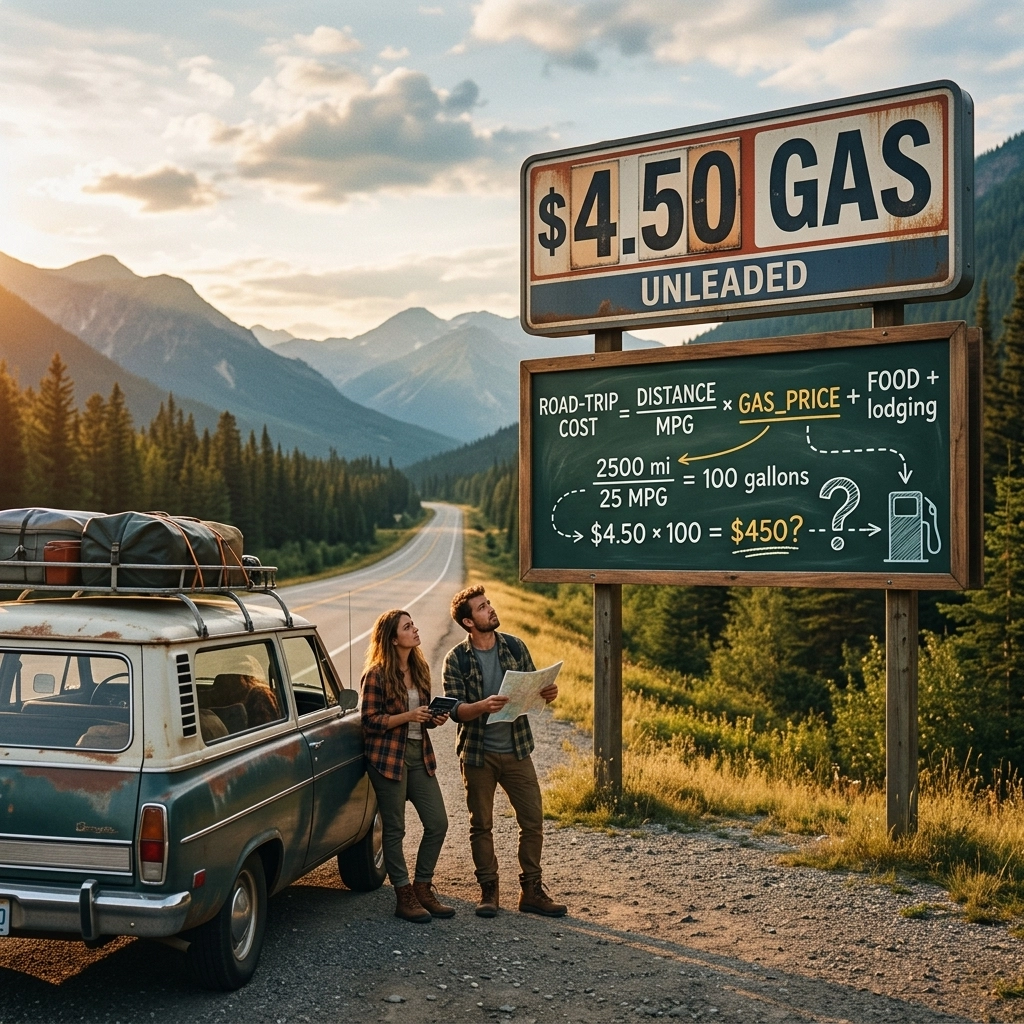
Well, it finally happened. I pulled into the Shell station this morning and saw a number on the sign that made me want to go back home and crawl under the covers. $4.54 a gallon.
If you’ve been following the news, you know why. We’ve been living through the fallout of the conflict over Tehran for weeks now. Even though things have quieted down on the military front, the economic "feathers" are still drifting down from the sky, and they’re landing right on our wallets. As of today, Thursday, May 14, 2026, the national gas average has officially surged past the $4.50 mark. That is the highest we’ve seen since the crazy summer of 2022.
For the Regular Guy, this isn't just a headline. This is a "do I cancel the Memorial Day trip?" kind of problem. We are two weeks out from the unofficial start of summer, and the math of the American road trip has just been fundamentally broken.
Last year at this time, we were looking at a national average of $3.17. Driving was a no-brainer. This year? It’s a math problem that would make a Harvard professor sweat.
The Memorial Day Stampede
Despite the prices, AAA is telling us that a record 45 million people are expected to travel for Memorial Day. And get this: nearly 40 million of them are planning to drive.
That tells me one of two things. Either we are all collectively addicted to the open road, or we’re all looking at the price of airline tickets and deciding that $4.50 gas is the "lesser of two evils." But is it really?
If you live in California, you’re already laughing (or crying) at that $4.54 national average. Out west, drivers are already seeing signs north of $6.00 per gallon. When you start hitting those numbers, the "cheap" road trip starts looking like a luxury cruise.

Running the Numbers: The 800-Mile Stress Test
Let’s get tactical. For years, the rule of thumb was simple: if you have more than two people, it’s always cheaper to drive. But with the Iran-driven fuel spike, that gap is closing faster than a closing-down sale at the mall.
Let’s look at a standard "Regular Guy" scenario. A family of four (two adults, two kids) planning an 800-mile round trip. That’s a decent drive: maybe NYC to Myrtle Beach or Chicago to the Smoky Mountains.
The Driving Math:
- Distance: 800 miles.
- The Rig: A standard family SUV or crossover getting about 22 MPG (real-world driving, loaded with luggage and kids).
- Fuel Needed: ~36 gallons.
- Fuel Cost (at $4.54): $163.44.
- The "Hidden" Costs: This is where people mess up the math. You aren't just paying for gas. The IRS mileage rate (which covers wear, tear, and depreciation) is currently around 67 cents per mile. Even if we just look at "real" wear and tear: tires, oil, and the inevitable "I’m hungry" stop at a gas station where a bag of jerky now costs $14: you’re looking at another $150 minimum.
- Total Driving Cost: Let’s call it $320.
The Flying Math:
- The Tickets: Domestic fares are up about 15% due to the same jet fuel crisis hitting the pumps. Let’s say you find a "deal" at $350 per round-trip ticket.
- Total Tickets: $1,400.
- The Baggage Fees: As I’ve mentioned before, airlines are hiking bag fees to "offset fuel costs." Four bags at $40 each (round trip) is $320.
- The Airport Shuffle: Parking for four days or an Uber to the terminal? Add another $100.
- Total Flying Cost: $1,820.
On paper, the road trip still "wins" by a cool $1,500. But here is the catch: that $1,500 "saving" is being eaten alive by the fact that your daily commute and your grocery bills are also up 20% because of the same fuel spike. The disposable income we used to use for these trips is gone.

The Breakeven Point is Moving
In the "old days" (meaning 2024), the breakeven point for driving versus flying was usually "one person." If you were solo, you flew. If you were two people, it was a toss-up. If you were a family, you drove.
But look at what’s happening now. The cost of driving has increased by over 50% in twelve months ($3.17 to $4.50+). Meanwhile, flying has become a nightmare of cancellations and service cuts. Air Canada just pulled out of JFK because they can’t make the fuel math work.
When gas hits $6.00: like it has in California: that 800-mile drive starts costing $220 just in fuel. Add in a hotel stay because you can’t drive 12 hours straight with a toddler screaming about a lost iPad, and suddenly the "cheap alternative" starts costing $600-$700.
The "Regular Guy" isn't choosing between a cheap trip and an expensive one anymore. He’s choosing between a "less expensive" trip and staying in the backyard with a kiddie pool and a grill.
Why the "Cheap" Road Trip is a Myth
We have to talk about the "Ratchet Effect." This is a term we use at Regular Guy Economics to describe how prices go up on an elevator and come down on a parachute.
When the conflict in the Middle East spiked oil prices, gas stations were overnight with the price hikes. But even if a peace treaty was signed tomorrow and oil dropped to $40 a barrel, do you think your local station is dropping the price back to $3.17 by Friday? Not a chance.
The road trip is being hit by a triple whammy:
- Direct Fuel Costs: Obviously.
- The Service Tax: Every restaurant and hotel along your route is paying more for their deliveries because of diesel prices. They pass that on to you in the form of a $18 burger at a roadside diner.
- The Maintenance Gap: Parts and labor for cars have skyrocketed. If you blow a tire or need an emergency repair 400 miles from home, you’re looking at a bill that could wipe out your entire vacation budget.

The Psychological Toll
There’s one more number we haven't crunched: Time.
When gas was $3.00, the 12-hour drive felt like a fun adventure. At $4.50, every minute spent idling in traffic feels like watching dollar bills fly out the window. You start driving like a maniac to try and optimize your MPG. You turn off the A/C in 90-degree heat just to save a nickel.
Is that really a vacation?
We’re seeing a shift in the American psyche. We are moving away from the "go everywhere" mentality and into the "go one place and stay there" mode. If you’re driving 400 miles to a destination, you’re staying longer to justify the fuel cost. The era of the "quick weekend getaway" that requires a full tank of gas might be dying a slow death right in front of our eyes.
How to Play the Game
If you are one of the 40 million people hitting the road this Memorial Day, you need to be tactical.
- The Tuesday Rule: If you can leave on a Tuesday instead of a Friday, do it. Not only is traffic better (saving you idling fuel), but gas stations often adjust prices mid-week.
- The Apps are Mandatory: If you aren't using a fuel-tracking app to find the $4.10 station three miles off the highway versus the $4.80 station right on the exit, you’re throwing money away.
- Speed is a Tax: Every mile per hour over 65 is basically a surcharge you’re paying to the oil companies.
The "Great Road-Trip Math Problem" doesn't have a happy answer this year. It’s about damage control. We are paying the price for global instability at the pump, and while 45 million of us are still going to travel, we’re going to be a lot more cranky when we get there.
The road trip used to be the ultimate expression of American freedom. Now, it’s starting to feel like a math test we didn't study for.
Be mindful, be watchful and good luck.