



If you’ve been following the news lately, you know the headlines are all about missiles, blockades, and the price of a gallon of gas in Los Angeles hitting six bucks. But there’s a quieter, much more desperate story unfolding 7,000 miles away that’s about to hit your wallet harder than any headline you’ve read this week.
It’s not about who has the most drones or who’s winning the diplomatic war of words. It’s about plumbing. Specifically, it’s about what happens when you keep the faucet running but the drain is plugged tight.
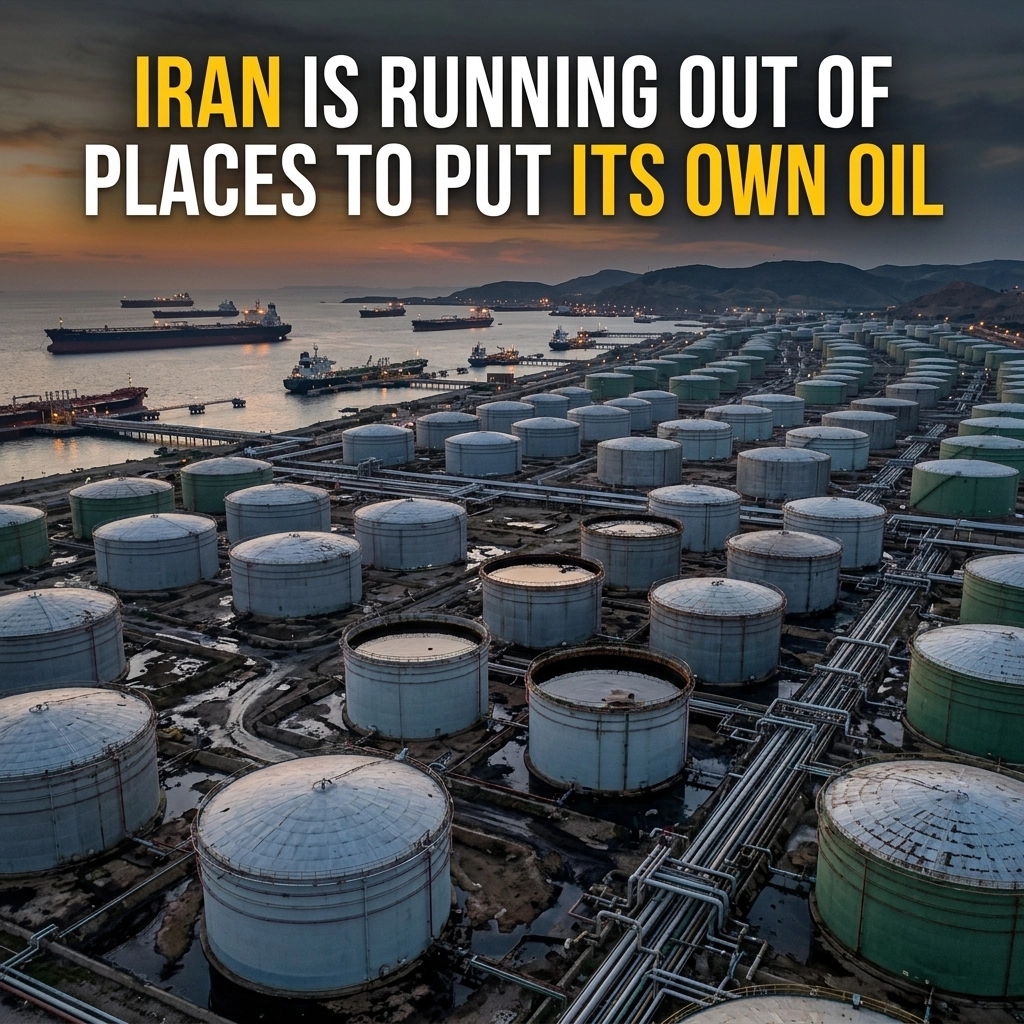
Last week, Treasury Secretary Scott Bessent dropped a bombshell that the mainstream media mostly ignored. He said Iran is on the verge of shutting down its oil production entirely. Not because they want to, and not because they’ve run out of customers willing to buy "black market" barrels. They’re shutting down because they’ve literally run out of buckets to put the oil in.
Iran is running out of storage. And in the world of global economics, when a major producer runs out of room to store their product, things get weird, fast.
The Math of a Clogged Drain
Think of Iran’s oil industry like a giant bathtub. On a normal day, they’re pumping about 3 to 3.5 million barrels of crude into that tub every single day. Under normal circumstances, they’ve got a massive drain, their export terminals, mainly at Kharg Island, that ships that oil out to the rest of the world.
But thanks to the U.S. naval blockade and the escalating conflict, that drain is basically plugged.

The numbers are brutal. Iran has a total onshore storage capacity of somewhere between 50 and 55 million barrels. That sounds like a lot until you realize they produce 3.5 million barrels every day. If they aren’t exporting, they fill up that entire capacity in less than three weeks.
According to recent reports, they entered this crisis with their tanks already about 60% full. That left them with maybe 13 to 15 million barrels of "wiggle room." When you’re adding a million barrels of "net inflow" (the stuff you can’t get rid of) every single day, you don’t need a PhD in math to see the problem. You have about two weeks before the oil starts spilling over the sides of the tank.
The "Nasha" Band-Aid
Iran is desperate. They’ve even dusted off the M/T Nasha, a 30-year-old Very Large Crude Carrier (VLCC), to act as a floating storage unit. This is the maritime equivalent of using an old, rusty bucket you found in the garage because your kitchen sink is overflowing.
But even a giant ship like the Nasha only buys them a couple of days. Once the ships are full and the tanks on Kharg Island are topped off, the physics of the oil industry takes over. You can’t just "pause" an oil well like you’re pausing a Netflix show.
If you "shut in" a well, meaning you cap it off because you have nowhere for the oil to go, you risk damaging the well permanently. The pressure changes, the equipment gets gunked up, and sometimes, that well never produces at the same level again. For a country like Iran, shutting in their wells isn’t just a temporary inconvenience; it’s like taking a sledgehammer to their only ATM card.
The 105% Inflation Nightmare
Why does this matter to a "regular guy" in Louisville or Indianapolis? Because Iran is backed into a corner, and cornered players do unpredictable things.
Right now, Iran’s inflation rate is sitting at a staggering 105%. Let that sink in. If a loaf of bread costs $4 today, it’ll cost over $8 next year. People can’t live like that. The only thing keeping the Iranian regime even remotely afloat is the "hard currency" (actual cash like Dollars, Euros, or Yuan) they get from selling oil.

If the oil stops flowing, not because of sanctions, but because the physical infrastructure has failed, the regime’s last source of money dies. When a government can’t pay its soldiers or subsidize food for its people, the "clocks" start ticking toward a regime collapse or a massive, desperate escalation to break the blockade.
Secretary Bessent’s timeline is 30 to 60 days. That’s the window. Either Tehran capitulates and agrees to whatever terms are on the table to get that oil moving again, or "something breaks." In the oil markets, "something breaking" usually means a massive price spike as the world realizes 3.5 million barrels of production might be gone for good.
The "Net Exporter" Myth
I know what some of you are thinking: "John, we’re the United States. We produce more oil than anyone. Why do we care if Iran’s tanks are full?"
This is the biggest myth in energy today. Yes, we produce a ton of oil. But oil is a globally priced commodity. It’s like a giant pool of water. If someone dumps a bucket out on the other side of the pool, the water level goes down everywhere.
When Iran’s 3.5 million barrels a day are threatened, the "global price" goes up. And because Exxon and Chevron sell their Texas oil at the global price, you pay more at the pump in Ohio. Being a net exporter doesn’t insulate you from the price; it just means the oil companies in the U.S. make more profit while you dig deeper into your pockets.
The End of the Line
We are currently in a game of high-stakes chicken. The U.S. is betting that the physical reality of full storage tanks will force Iran to the negotiating table within the next two months. Iran is betting they can find a way to smuggle enough out, or use enough floating storage, to outlast the political will of the blockade.
But you can't negotiate with physics.
If those tanks hit 100% capacity in the next 10 days, Iran has to stop pumping. When the pumps stop, the money stops. When the money stops, the 105% inflation rate turns into a total economic meltdown.

For the regular guy, this means the "war premium" we’re seeing at the gas station isn't going away anytime soon. In fact, Goldman Sachs just raised their year-end forecast to $90 a barrel. They see the writing on the wall. The "floor" for oil prices has moved up because the world's spare capacity is being swallowed by this crisis.
We’re watching a country run out of room to hold its only valuable asset. It’s a slow-motion car crash that ends in a very binary way: either a deal is struck, or the global energy market gets a shock that will make $4 gas look like the "good old days."
Watch the storage numbers. Watch the tanker traffic. The headlines will talk about "diplomacy," but the real story is in the plumbing.
Be mindful, be watchful and good luck.