



If you’ve driven past a gas station lately, and let’s be honest, we all do it with a slight wince, you’ve probably noticed the numbers on the sign doing things that make your wallet want to hide under the passenger seat. Everyone is talking about the cost of fuel. It’s the "water cooler" topic of 2026. But while we’re all busy staring at the pump, there’s a much bigger, much quieter, and arguably much scarier crisis tightening around our necks.
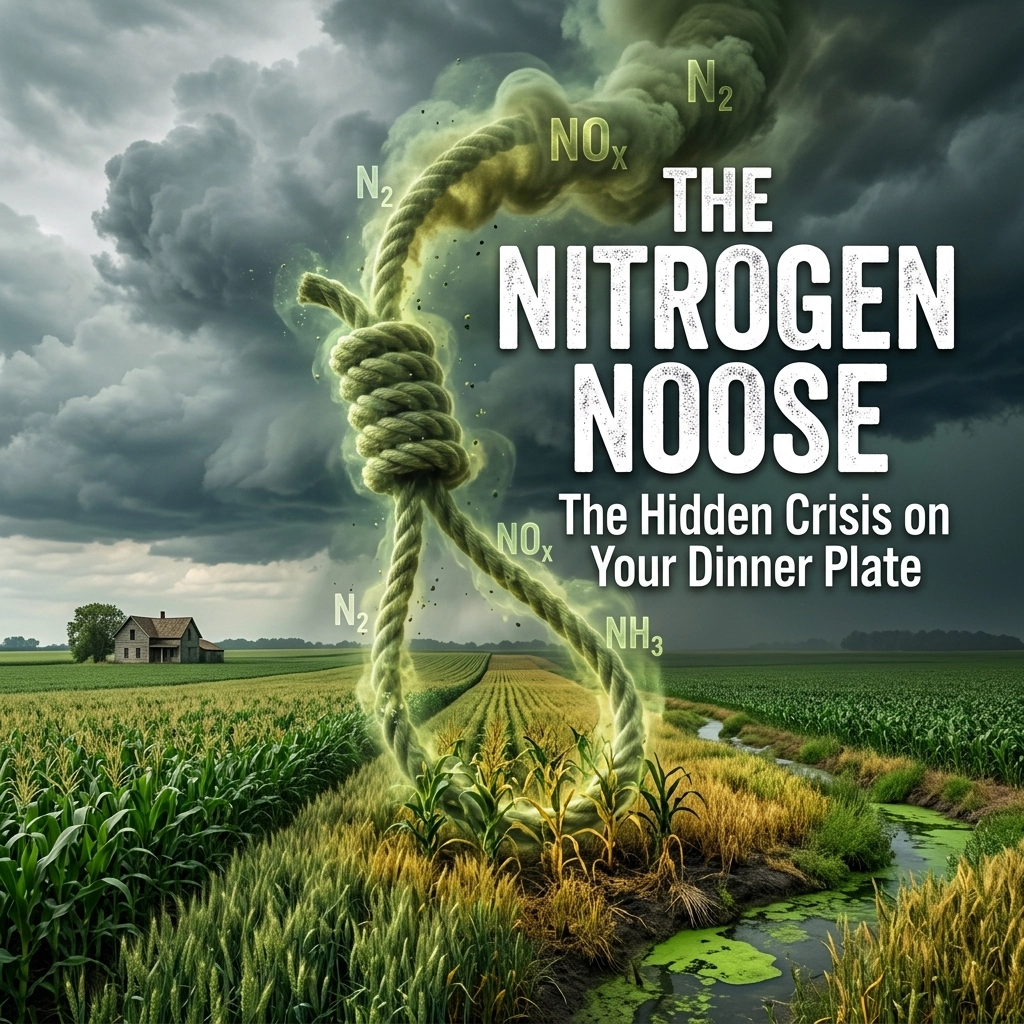
I call it the Nitrogen Noose.
Today is Wednesday, April 15, 2026, and while most of you are probably thinking about tax day (another delightful way the world takes our money), I want to talk about why your grocery bill is about to undergo a transformation that’ll make your last utility bill look like pocket change.
We’ve got a "slow-moving crisis" on our hands, and it’s buried in the dirt.
The Invisible Ingredient
When you look at a stalk of corn or a loaf of bread, you don’t see nitrogen. But nitrogen, specifically in the form of urea and ammonia, is the literal fuel for the world’s food supply. Without it, we aren’t just looking at lower yields; we’re looking at a global math problem that doesn't add up to enough calories for everyone.
Right now, the ongoing blockade has effectively choked off 30% of the world’s global urea and ammonia supply. Think about that for a second. Imagine if one out of every three gas stations just disappeared overnight. People would be rioting in the streets. But because fertilizer is "boring" and happens on industrial farms far away from our suburban sprawl, the regular guy isn't sounding the alarm yet.

The 46% Jump You Didn't See Coming
In the last month alone, fertilizer prices have jumped a staggering 46%.
Let’s put that in "Regular Guy" terms. If your mortgage went up 46% in thirty days, you’d be living in a tent. If your car payment spiked by nearly half, you’d be riding a bike. For a farmer, fertilizer isn't an "optional upgrade." It’s the single biggest input cost they have next to land and diesel.
When the price of the "food for the food" spikes that hard, the farmer has two choices:
- Use less and grow less food.
- Pay the price and pass that cost down the line.
Spoiler alert: Both options end with you paying more at the checkout counter.
The Six-Month Lag: The "Dinner Table Tax"
The reason nobody is panicking at the grocery store today is because of the lag. The steak you bought for the grill this weekend was raised on grain grown months ago. The bread in your pantry was harvested last year.
Agriculture is a slow business. But the high-priced nitrogen being spread on fields right now, on this very Wednesday in April, won’t hit your dinner plate for another six months. We are looking at a "Dinner Table Tax" that is baked into the system. Come October 2026, you’re going to walk into the grocery store and wonder if you accidentally walked into a high-end jewelry boutique based on the price of a bag of flour.

Why the Regular Guy Gets Hit Hardest
At Regular Guy Economics, we talk a lot about how the system is rigged for efficiency, but that efficiency has a breaking point.
Back in the 1960s, we spent a much smaller chunk of our income on "basics" because the supply chain was more localized and less dependent on these massive, globalized chemical inputs. But today? We’ve optimized everything to the bone. We have "just-in-time" delivery for everything from heart medication to hamburgers.
When you have a zero-error environment and you suddenly remove 30% of a key ingredient like nitrogen, the whole house of cards starts to wobble.
It’s a lot like the medical industry. We spend more and more every year, but are we actually getting healthier? Not really. We have more high-tech gadgets and "optimized" processes, but the costs keep trending up while the actual "bedside care" of our economy, the stuff that actually matters to the regular guy, gets worse. We’re paying more for the privilege of being part of a fragile system.
Capitalism, Chemicals, and the Cost of Living
Medicine has become part of capitalism in a way that often violates the spirit of care. We see insurance companies and pharmaceutical giants chasing profit incentives that don't always align with making people better.
The food industry is starting to look the same way. We’ve traded soil health and local resilience for high-yield, chemically-dependent "optimized" farming because it makes the quarterly reports look better for the big agra-corps. But when the blockade hits and the ammonia stops flowing, the regular guy is the one left holding the bag.
The big guys? They’ll hedge. They’ll use financial instruments to protect their margins. But you? You’re just trying to buy eggs and milk without taking out a second mortgage.

The Math of the Meal
Let’s look at the math of a simple burger.
- The Bun: Wheat needs heavy nitrogen to get that protein content right.
- The Veggies: Tomatoes and lettuce are basically water and nitrogen held together by a little bit of fiber.
- The Beef: It takes a massive amount of grain to raise a cow. That grain needs, you guessed it, nitrogen.
When the input cost jumps 46%, it ripples through every single one of those components. It’s a compound interest of pain. We need to start looking at our grocery bills the same way we look at health expenses. It’s time to reclassify these "costs" as "survival metrics."
Just like smart companies are starting to realize that investing $100 in a gym membership for an employee saves them $10,000 in cardiac care down the road, we as individuals need to start looking at the "preventative maintenance" of our own lives.
What Can the Regular Guy Do?
I’m not telling you to go out and buy a 50-pound bag of urea and keep it in your garage (please don't, it’s a fire hazard and your neighbors will think you’re making a bomb). But I am saying it’s time to be mindful of the cycle.
- Stock the Pantry Now: If you know a massive "tax" is coming in six months, buy the non-perishables today while they’re still priced on last year's nitrogen.
- Support Local: Smaller, diversified farms often rely less on massive industrial fertilizer inputs than the giant monoculture "factory" farms. They might be a bit more expensive now, but they’ll be more stable when the "Nitrogen Noose" really tightens.
- Watch the Blockade, Not the Pump: If you want to know when your life is going to get more expensive, stop looking at the price of gas and start looking at the shipping lanes and the ammonia production reports.

The Final Word
We live in an age of "optimization," but we’ve optimized ourselves into a corner. We’ve traded resilience for a lower price point, and now that the price point is evaporating, we’re left with the fragility.
The medical industry is a runaway train, and the food industry is currently on the same tracks. We spend a third of our lives working to afford the basics, and it’s high time we started asking why the basics are becoming luxuries.
This nitrogen crisis isn't going to be solved by a clever tweet or a political promise. It’s a hard math problem involving soil, chemistry, and international blockades. The regular guy is the one who ultimately pays for the "math of madness" that defines our global supply chain.
We need to invest in systems that don't leave us at the mercy of a 30% supply drop. Whether that's plant-based nutrition that requires fewer inputs or simply more robust, local agricultural networks, the "hidden costs" are becoming way too visible to ignore.
Keep your eyes on the horizon. The harvest is coming, and it’s going to be the most expensive one in history.
Be mindful, be watchful and good luck.