



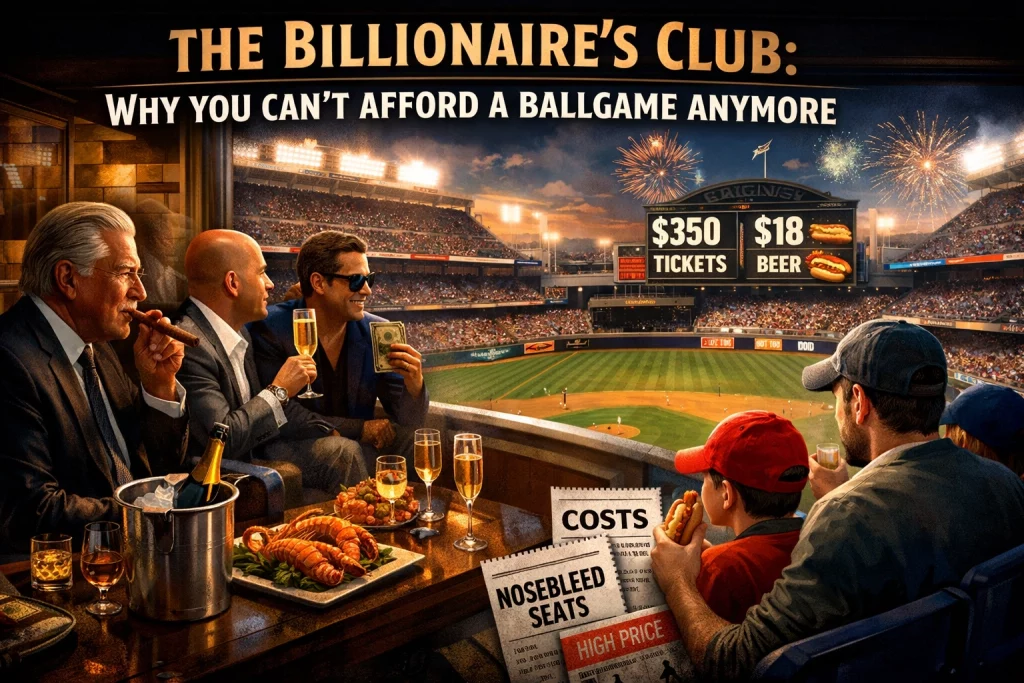
Remember when taking the family to a ballgame was just something you did on a Saturday? You’d grab a few tickets at the window, snag a couple of hot dogs, and maybe a foam finger for the kid, all without needing to take out a second mortgage. It was the "Regular Guy" pastime. It was part of the social fabric.
Well, fast forward to 2026, and the "social fabric" has been replaced by a velvet rope and a QR code that costs more than your first car.
If you’ve looked at ticket prices lately and felt like your bank account was being personally insulted, you aren’t alone. We’re witnessing the final stages of a hostile takeover. Professional sports have officially transitioned from being a community staple to being a billionaire’s investment vehicle. And as any regular guy knows, when the billionaires start "investing," the rest of us start paying.
The Great Sports Squeeze
Let’s look at the cold, hard math. Over the last 25 years, the average cost of a ticket to a professional sporting event has more than doubled. That’s not just "inflation." That is a calculated, aggressive move to price out the middle class in favor of what the front offices call "premium experiences."
In the 90s, the "cheap seats" were actually cheap. Today, a "cheap seat" is just a seat where you need oxygen and a pair of binoculars to see the player’s numbers, and it’ll still set you back $80 before you even think about parking.
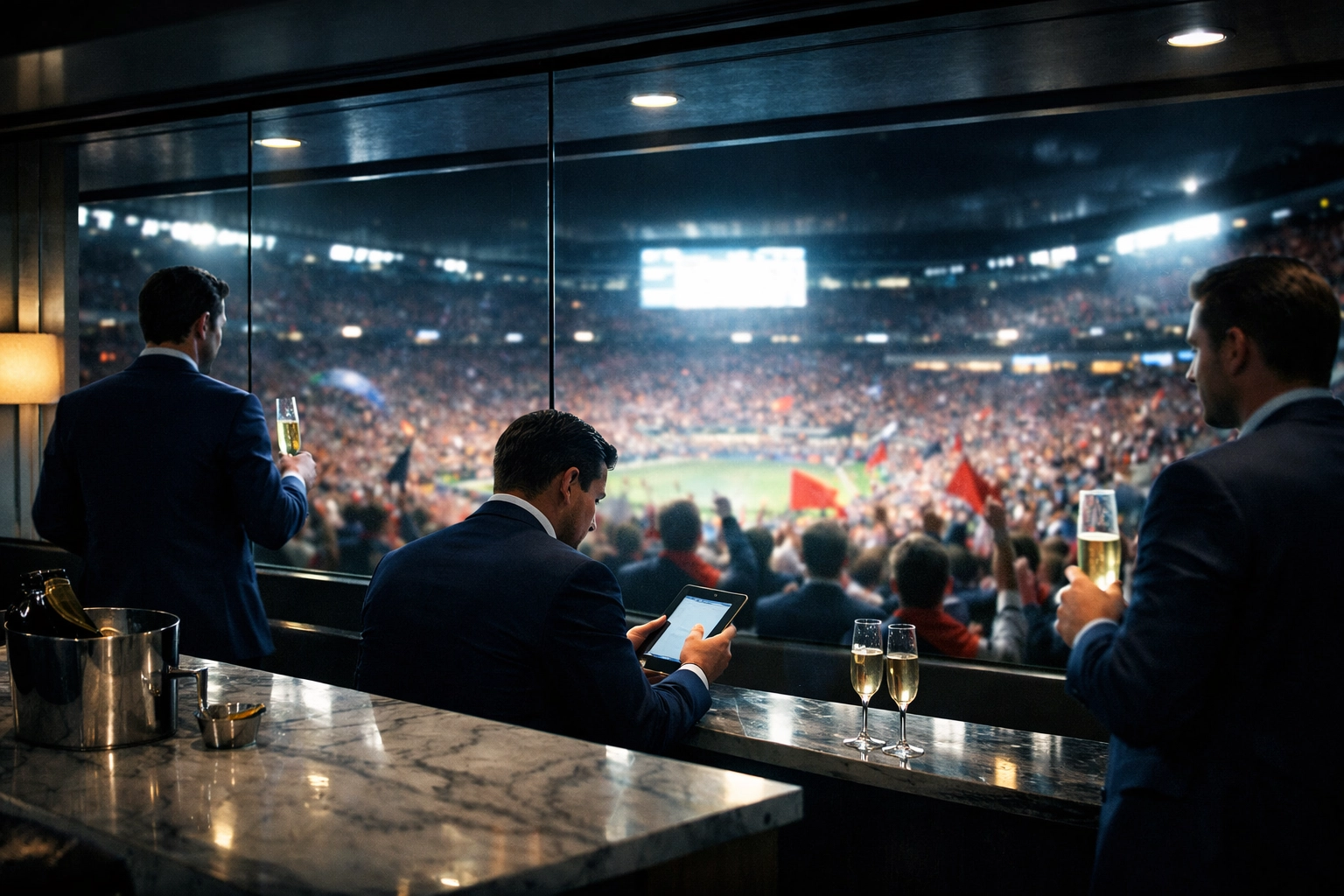
Why is this happening? Because the guys owning the teams aren't "sports fans" in the way you and I are. They are hedge fund managers, tech moguls, and private equity titans. To them, a basketball team isn't a group of athletes representing a city; it’s an "illiquid asset class with significant upside in the hospitality and media rights sectors."
Translation: They don’t care if you can afford to be there. They only care if the guy in the suit in the third-row glass-walled suite can afford to be there.
The Lakers and the 2026 Price Hike
Take a look at the Los Angeles Lakers. As we head toward the 2026-27 season, the rumors, and the early price sheets, are already circulating. We’re looking at another massive hike in ticket prices. Why? Is it because the cost of basketballs went up? No. It’s because the Lakers are a "luxury brand."
When a team decides to hike prices in a year where the average person is already struggling with the cost of eggs and rent, they are sending a very clear message: We don't need the Regular Guy.
They want the "luxury experience" seekers. They want the corporations that buy blocks of seats and leave them half-empty just to have a place to take clients. They want the "influencers" who spend the whole game taking selfies with their $25 cocktails. Meanwhile, the guy who has followed the team for thirty years is stuck watching on a streaming service that probably just raised its rates, too.
The "Boutique" Stadium Trap
Have you noticed that new stadiums are actually getting smaller? You’d think with more people and more demand, they’d build more seats. But that’s old-school thinking.
The new strategy is to build "boutique" environments. Instead of 10,000 bleacher seats for regular people, they build 500 luxury suites and "exclusive clubs" with names like The Diamond Platinum Founders Lounge. They are intentionally reducing supply to jack up the price. They’d rather sell one seat for $1,000 than twenty seats for $50. It’s less cleanup for them and more profit for the billionaire at the top.
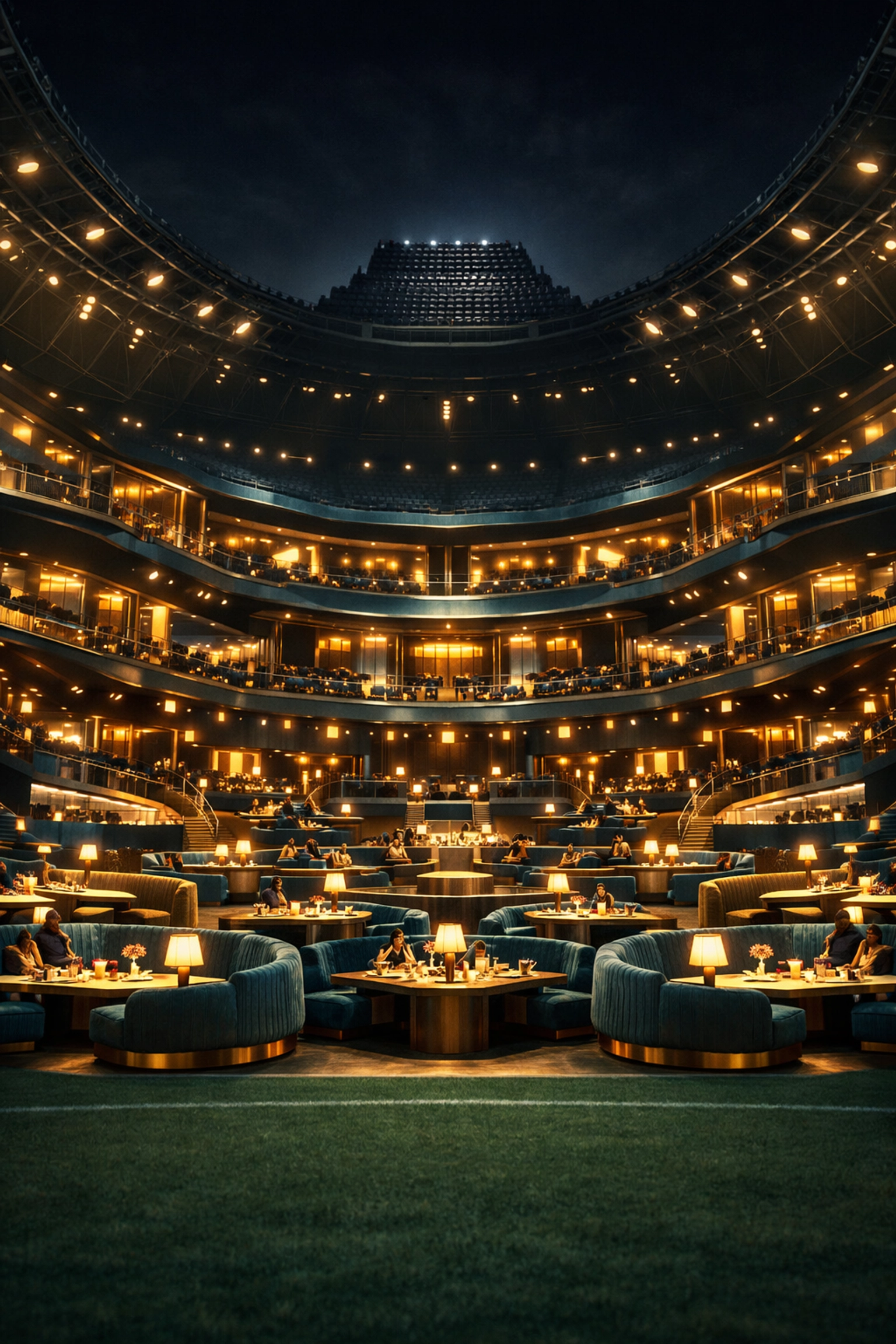
This is the "Regular Guy Economics" of 2026. We are being squeezed out of our own culture. Sports used to be the one place where the CEO and the plumber sat in the same row and cheered for the same thing. Now, the plumber is in the parking lot because he can’t justify the $40 "convenience fee" on a $150 ticket.
The GDP Myth and the AI Bubble
This brings us to a bigger point about how the economy is being measured right now. If you listen to the news, they’ll tell you the GDP is doing great. They’ll point to "unprecedented growth" and "investment booms." But here’s the kicker: a huge chunk of that GDP growth is being driven by massive AI investment.
The big tech companies are pouring billions into chips, data centers, and algorithms. On paper, it looks like the economy is roaring. But look around. Does that AI money "trickle down" to the guy trying to take his son to a baseball game? Does it result in better-paying jobs for the people in your neighborhood?
Hardly. AI investment is creating a massive bump in the GDP numbers, but it’s a "jobless" growth for the most part. It’s creating wealth for the people who own the algorithms, while the "resultant revenues" never seem to find their way into the pockets of the people actually doing the work. It’s a bubble of valuation that makes the rich feel richer while the price of a hot dog at the stadium hits $14.

We’re told the economy is "healthy," but if the average citizen can’t afford the basic leisure activities that defined American life for a century, who is that health for? It’s for the billionaire’s club.
Why the "Accessible" Ticket is a Lie
Now, some folks will point to "deals." They’ll say, "Hey John, I saw a ticket for $15 on a Tuesday afternoon in April!"
Sure. If you want to take off work at 1:00 PM on a workday to watch two teams that are already mathematically eliminated from the playoffs, you can find a "deal." But that’s not the point. The point is that the meaningful games, the ones that matter, the ones your kids want to see, have become "Veblen goods." That’s a fancy economic term for something that people buy specifically because it’s expensive and shows off their status.
When sports become a status symbol rather than a community event, the soul of the game starts to rot. You can feel it in the stadium. The energy is different when the crowd is full of people who are there to "be seen" rather than people who actually know the stats of the backup shortstop.
What’s the Move for the Regular Guy?
So, what do we do? We have to stop playing their game.
The billionaires win when we stretch ourselves thin to pay these prices. They win when we buy into the idea that we have to be there to be a "real fan."
- Go Local: Your local high school or community college needs your support. The beer is cheaper (or non-existent, but hey, your liver will thank you), the seats are close, and the players are actually playing for the love of the game, not a $200 million contract.
- The Home Experience: For the price of one night at a pro stadium, you can buy a massive 4K TV and enough wings to feed the entire block.
- Vote with Your Wallet: When the Lakers or whoever else announces a massive hike, don't just complain: don't go. The only thing a billionaire understands is a line item that stops growing.
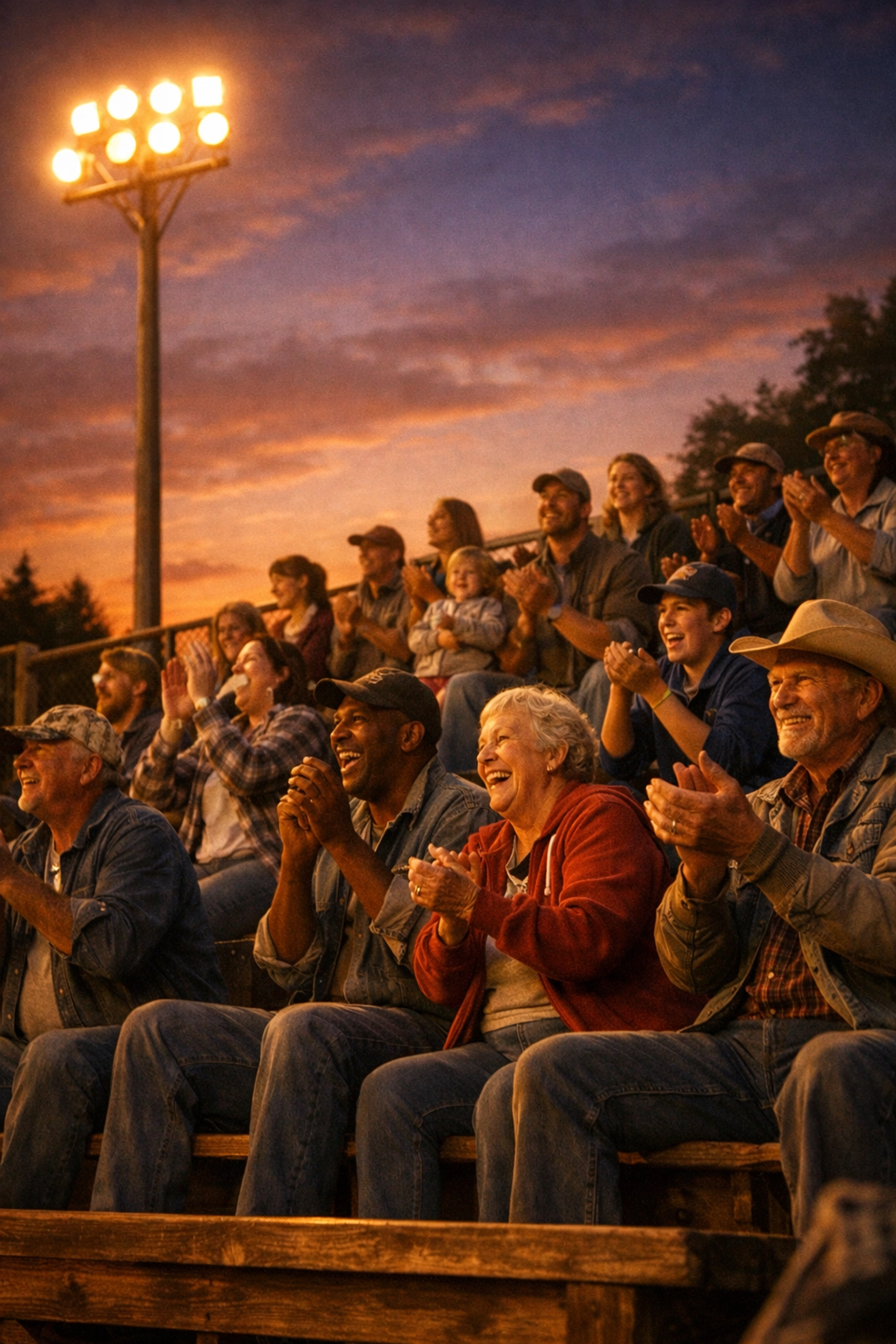
We are at a tipping point. If we continue to allow professional sports to be nothing more than an "investment vehicle" for the 1%, we are going to lose the very things that make sports great. The "Regular Guy" built these leagues. We bought the jerseys, we watched the commercials, and we passed the love of the game down to our kids.
It’s about time the billionaire owners realized that without us, they’re just guys in expensive suits sitting in an empty, very quiet room.
If you want to keep up with how the big-money players are trying to tilt the scales against you, keep checking in at regularguyeconomics.com. We’re looking at the numbers they don’t want you to see.
Be mindful, be watchful and good luck!