



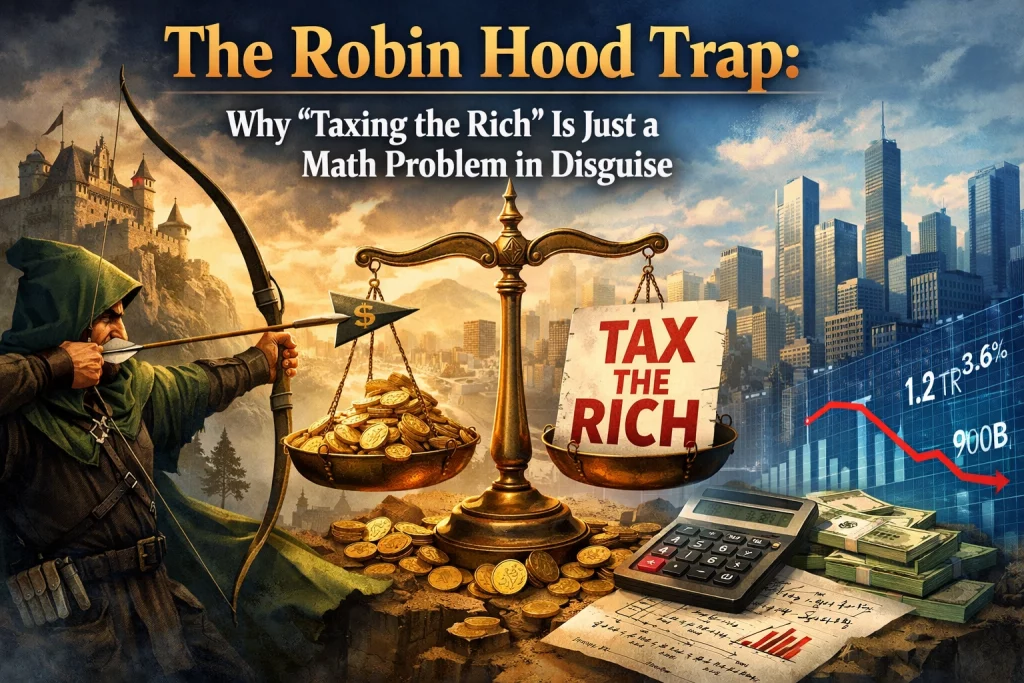
There's something incredibly seductive about the Robin Hood state. Tax the billionaires. Make them pay their fair share. Fund healthcare, education, infrastructure, all the good stuff, and nobody gets hurt except people with yachts.
It's political catnip. Who doesn't love the idea of someone else footing the bill?
Politicians from New York to California are lining up to promise exactly that. Tax the rich, save the middle class, fund the programs everyone wants. It sounds fantastic. It polls well. It makes for great campaign slogans.
There's just one problem: the math doesn't work.
The Billionaire Mirage
Let's start with a simple question: Are there enough rich people to actually fund the government?
The answer is no. Not even close.
Take California, which has one of the world's greatest concentrations of billionaires. Tech moguls in Silicon Valley. Entertainment executives in Los Angeles. The kind of wealth that makes regular people's eyes water. Surely, if you tax those people, you could fund a state government, right?
California proposed a wealth tax that would be a one-time, massive levy on the ultra-rich. The projection? It would raise about 2% of the state's annual economic output.

Two percent. For a swingeing, one-time tax in the place with more billionaires per square mile than almost anywhere on Earth.
That's not a solution. That's a rounding error.
Now let's look at New York. Zohran Mamdani, a progressive legislator, has proposed his own version of "tax the rich" to fund state programs. It's bold. It's popular in certain circles. And according to the numbers, it would raise approximately 0.25% of the state's economic output annually.
Zero. Point. Two. Five. Percent.
You could tax every billionaire in New York at confiscatory rates and you wouldn't come close to funding the state's budget. Because here's the dirty little secret nobody wants to talk about: there simply aren't enough fat cats to fund modern welfare states.
The European Reality Check
If taxing the rich was the golden ticket, Europe would have figured it out by now. European countries have larger welfare states than America. They spend more on healthcare, education, pensions, and social programs. Surely they're just soaking the rich, right?
Wrong.
European governments fund their big spending with broad-based taxes. Value-added taxes (VAT) that hit everyone. Payroll taxes that come out of regular workers' paychecks. Fuel taxes. Property taxes. Consumption taxes that touch every transaction.
In Germany, the VAT is 19%. In France, it's 20%. In Sweden, it's 25%. These aren't taxes on billionaires: they're taxes on everyone who buys anything.
Why? Because that's where the money actually is. There's only so much wealth concentrated at the top. But there are hundreds of millions of regular transactions happening every day. A 20% tax on all those transactions raises real money. A 5% wealth tax on billionaires raises headlines.
The math is brutal but simple: you can't fund a big government by only taxing a tiny slice of the population. The numbers don't add up. They never have. They never will.
The Vanishing Tax Base
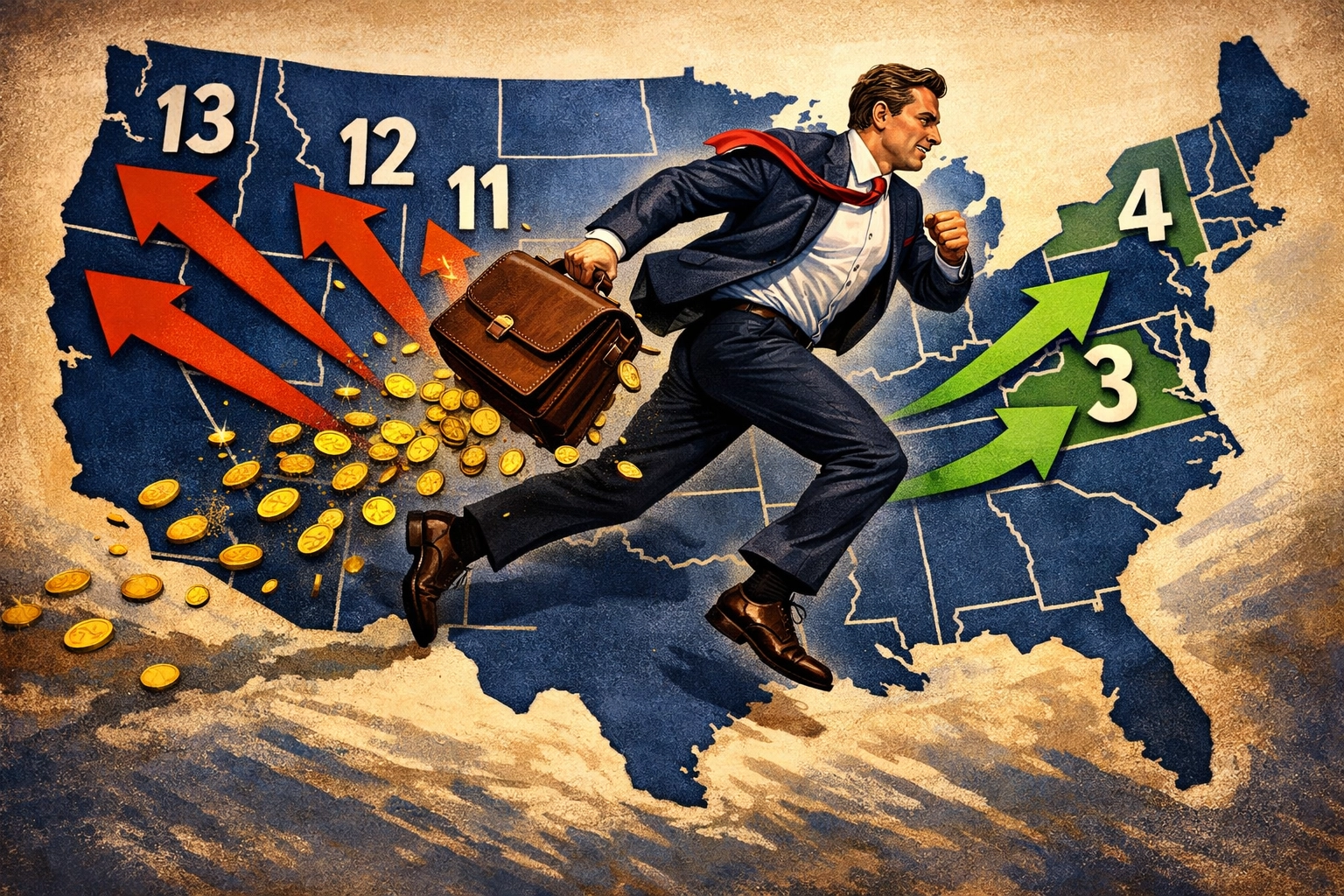
But wait, it gets worse. Even the modest revenue projections from "tax the rich" schemes are probably overstated because they assume rich people will just sit there and take it.
They won't.
Here's a fascinating data point: In the 1970s, when the top income tax rate in America was 70%, the richest 1% paid about 19% of all federal income taxes. Fast forward to 2011, when the top rate had dropped to 35%. How much were the rich paying then?
Close to 38%.
Wait, what? Lower tax rates, but the rich paid more of the total? How does that make sense?
It makes sense because people respond to incentives. When tax rates are confiscatory, wealthy people hire armies of accountants and lawyers to find loopholes. They move money offshore. They restructure their compensation. They invest in tax-free municipal bonds. They relocate to lower-tax states or countries. They do everything possible to avoid the tax.
When rates are more reasonable, the game isn't worth the candle. It's easier to just pay the tax and move on with your life.
There's even academic research on this. A study of Texas's "Robin Hood" school funding program found that while it successfully reduced spending gaps between rich and poor school districts by about $500 per student, it simultaneously destroyed approximately $27,000 per student in property wealth. The redistribution worked, but it killed the golden goose in the process. Property values tanked because people moved, businesses relocated, and the tax base evaporated.
Robin Hood taxes don't just redistribute wealth: they destroy it. And once it's destroyed, there's nothing left to tax.
The Shell Game
Here's what really happens with "tax the rich" proposals:
Step 1: Politicians promise to tax billionaires to fund popular programs.
Step 2: The taxes raise far less money than projected because (a) there aren't that many billionaires, and (b) the billionaires who exist are highly mobile and skilled at tax avoidance.
Step 3: The programs are popular and politically impossible to cut.
Step 4: The government needs more money to fund the programs.
Step 5: They come for the middle class.
It's the oldest bait-and-switch in politics. Promise to tax someone else, deliver programs to everyone, and then quietly expand the tax base to people who can't easily flee to Monaco.
This isn't speculation. It's exactly what happened in Europe. The VAT was supposed to be a modest tax on luxury goods. Now it's 20-25% on everything and it hits the poor harder than anyone because they spend a larger percentage of their income on consumption.
The Real Problem Nobody Talks About
The debate about taxing the rich is a distraction from the actual issue: spending.

Governments across the developed world have made promises they can't keep. Pensions for aging populations. Healthcare costs that grow faster than the economy. Infrastructure that's crumbling and expensive to replace. Defense spending that never seems to go down.
The bills are coming due and nobody wants to admit that the math doesn't work.
Taxing the rich sounds like a painless solution. But it's not a solution: it's a fairy tale. The money isn't there. Even if you confiscated every penny from every billionaire, you couldn't fund the U.S. federal government for more than a few months.
Jeff Bezos has a net worth around $200 billion. Sounds like a lot, right? The U.S. federal budget is over $6 trillion annually. You could take everything Bezos has: not tax him, but literally seize all his wealth: and you'd fund the government for about 12 days.
Then what?
The Uncomfortable Truth
If the government spends it, someone has to pay for it. That's not ideology. That's accounting.
You can play games with who pays. You can shift the burden around. You can hide taxes in complicated structures. But at the end of the day, the money has to come from somewhere.
The appeal of the Robin Hood state is that it promises something for nothing. Tax the billionaires, not you. Make someone else pay. Get all the benefits without any of the costs.
It's a seductive lie.
The reality is that big government costs big money, and there aren't enough billionaires to pay for it. If you want European-style social programs, you need European-style taxes. And those taxes hit everyone, not just the rich.
Politicians know this. They just don't want to say it out loud because "we're going to raise your taxes" doesn't poll well.
So instead they promise to tax billionaires, knowing full well that the actual revenue will fall short, and they'll eventually need to expand the tax base to regular people. By then, the programs are in place, politically untouchable, and the middle class is on the hook.
It's not a conspiracy. It's just math. Bad math wrapped in good marketing.
The Robin Hood trap is believing that you can have something for nothing if you just tax the right people hard enough. You can't. The numbers don't work. They never did.
And when politicians come promising free stuff paid for by billionaires, the first question you should ask is: what happens when the billionaire money runs out?
Because it will. It always does. And then they'll be coming for you.
Be mindful, be watchful and good luck.