



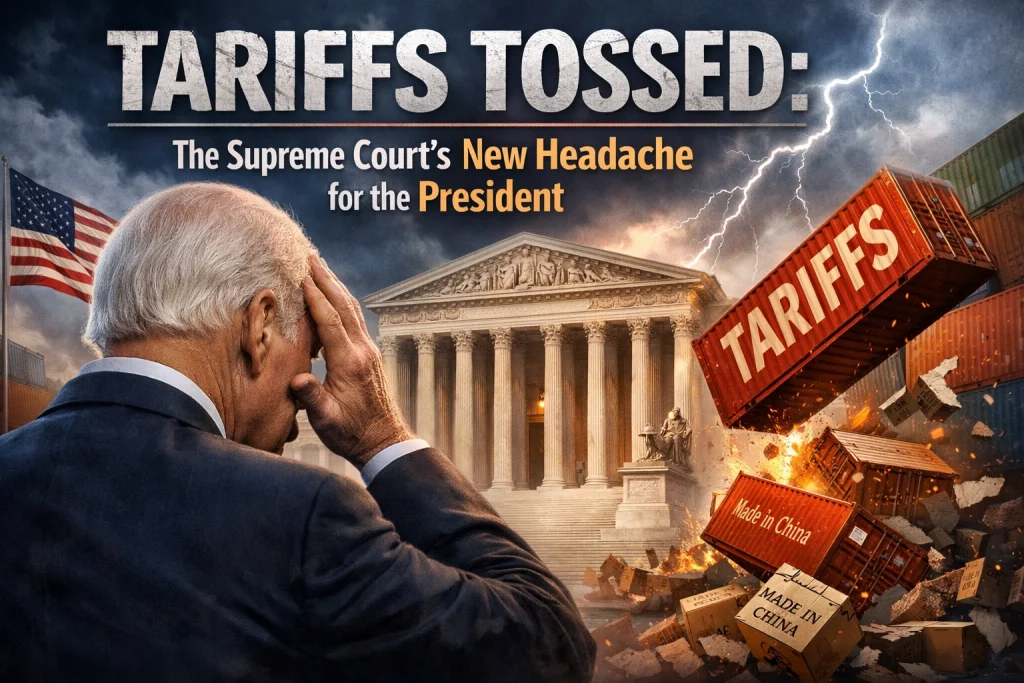
So the Supreme Court just took a sledgehammer to President Trump's tariff strategy, and the mess it created is about as clean as a shattered piñata in your living room. On February 20th, in a 6-3 decision, the Court basically said "Nope, you can't do that" to billions of dollars in tariffs that have been in place. And now everyone, the President, importers, trade partners, and yes, you, gets to deal with the aftermath.
Let's break down what just happened and why your wallet should care.
The Court Says "Read the Constitution"
The Supreme Court ruled that the International Emergency Economic Powers Act (IEEPA) doesn't give the President the power to slap tariffs on everything that moves. Chief Justice John Roberts wrote that Trump's interpretation would give the President the ability to impose "unbounded tariffs" unilaterally, which is a fancy way of saying "unlimited power to tax imports without asking Congress."
The Court invoked something called the "major questions doctrine", which essentially means that if a power is a Really Big Deal with massive economic consequences, Congress has to explicitly say "Yes, you can do this" in clear language. They can't just leave it vague and let the President fill in the blanks.
Here's the kicker: Article I of the Constitution gives Congress, not the President, the power to impose tariffs because tariffs are taxes. The Founders were pretty clear about this stuff. They'd just fought a war over "taxation without representation," so they weren't about to hand one person the keys to the tax kingdom.
Three justices dissented (Thomas, Alito, and Kavanaugh), with Kavanaugh arguing that tariffs are a traditional tool of trade regulation and the Court should defer to executive interpretation. But the majority wasn't buying it.
The $200 Billion Question
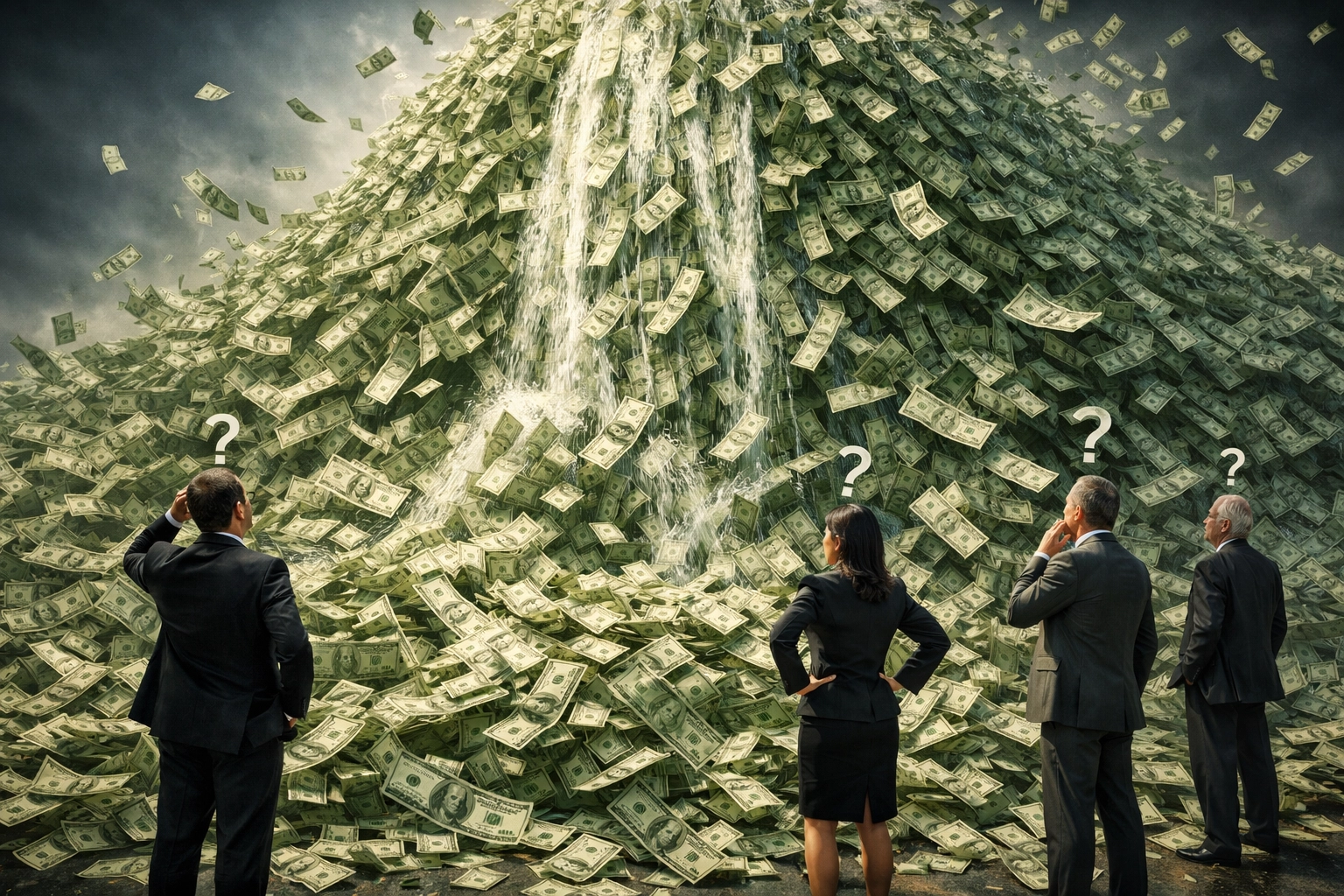
Here's where things get messy. The government collected over $200 billion in tariffs in 2025 under these now-invalidated rules. The Court didn't answer the obvious question: Does all that money need to go back?
Importers, companies bringing goods into the U.S., paid those tariffs. Some of them ate the cost. Many passed it along to consumers, which means you've already paid higher prices on everything from electronics to clothing to car parts. Now there's talk of refunds potentially reaching $175 billion.
But to whom? The importers who paid them? The consumers who absorbed the higher prices? And how exactly does Customs and Border Protection unscramble this egg?
Justice Kavanaugh pointed out in his dissent that importers "may be required to refund billions of dollars" even though they've already passed the costs down the line. It's a financial nightmare wrapped in a legal headache, stuffed inside a bureaucratic mess.
The practical reality is that U.S. Customs can't just stop collecting tariffs on their own. The executive branch has to issue a directive to cease or modify the tariff orders. Until then, business continues as usual, which means continued confusion for everyone involved.
The Trade Deals That Just Fell Apart
Now let's talk about leverage, or more accurately, the sudden lack of it.
The administration had negotiated reciprocal tariff arrangements with 19 countries. These weren't simple deals. They included commitments on non-tariff barriers, investment pledges, and supply chain agreements. South Korea committed approximately $350 billion in U.S. investments. The European Union pledged $550 billion in strategic sectors.
These countries made concessions because they wanted tariff reductions. They signed deals. They made promises. They moved chess pieces around the global trade board.
And now? Those deals are built on a foundation that the Supreme Court just declared illegal.
Imagine you're negotiating with your neighbor over a fence dispute. You agree to paint your house a certain color if they trim their trees. Then the homeowners association steps in and says you never had the authority to make that deal in the first place. Your neighbor's standing there with tree trimmers, you've got paint cans in the garage, and suddenly nobody knows what's enforceable.
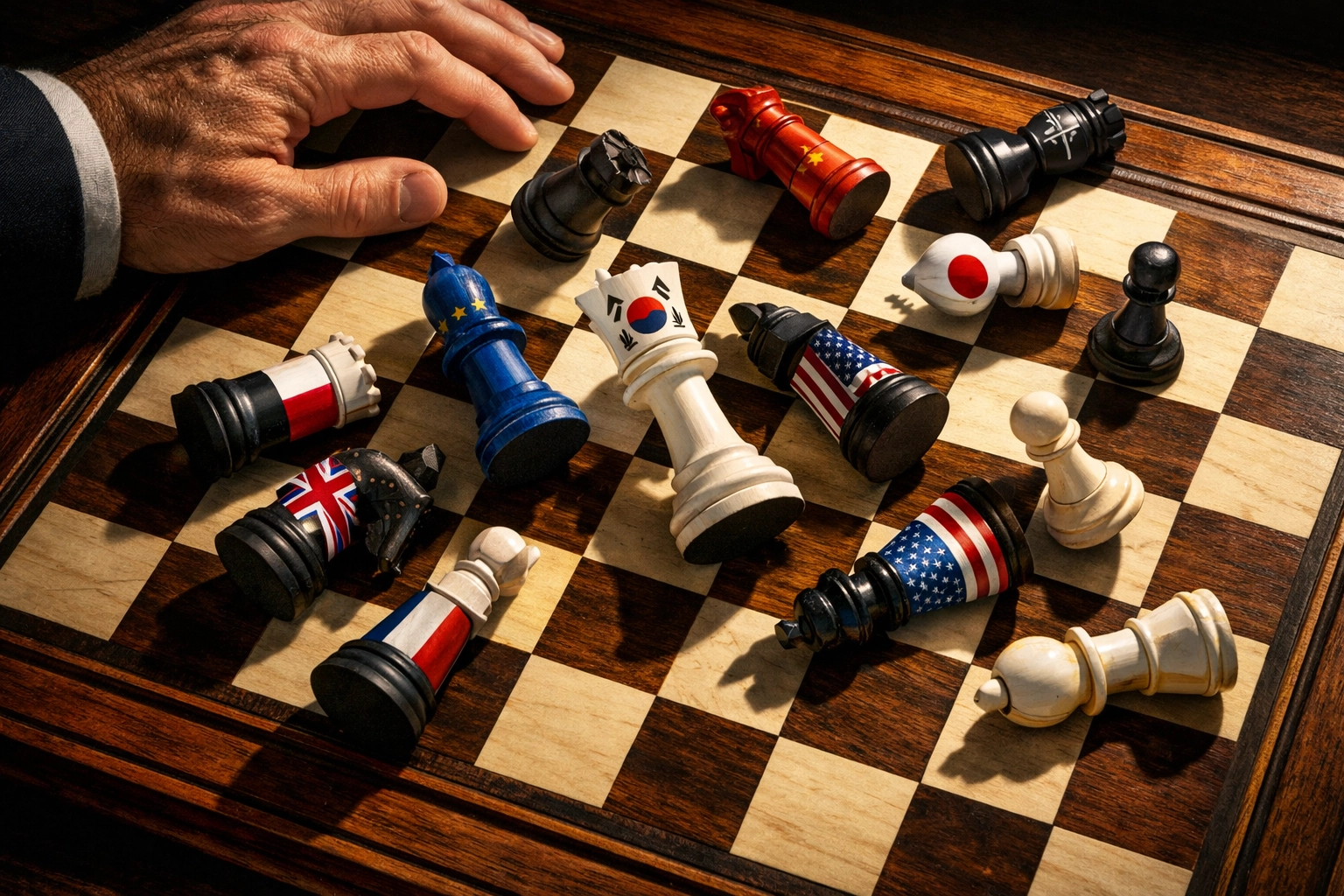
That's where the President is right now with 19 countries. The leverage is gone. The deals are in limbo. And those countries are probably wondering if they can take back their investment commitments since the U.S. can't deliver on its end of the bargain.
Domestic Industries in Free Fall
Here's what everyone forgets about tariffs: they're not just about punishing foreign competitors. They protect domestic industries.
Steel manufacturers, aluminum producers, solar panel makers, and dozens of other industries have been operating under the assumption that foreign competition would face a hefty tax at the border. Some of them expanded. They hired workers. They invested in new facilities and equipment. They made long-term business plans based on the tariff protection.
Now that protection might vanish faster than your paycheck on rent day.
If those tariffs disappear, cheaper foreign goods flood back into the market. Domestic producers can't compete on price. They cut production. They lay off workers. They shutter plants. This isn't a slow adjustment: it's an economic cliff.
The sudden shift creates winners and losers. Importers and retailers might see lower costs. Consumers might see cheaper products (eventually, though prices are sticky on the way down). But domestic manufacturers and their workers? They're about to get crushed.
What This Means for Your Wallet
So what does all this chaos mean for you, the Regular Guy trying to pay bills and maybe save a few bucks?
In the short term, confusion. Prices on imported goods won't drop immediately even if tariffs disappear. Retailers don't rush to cut prices: they pocket the difference until competition forces them to pass savings along. It's the old "prices rise like a rocket, fall like a feather" problem.
If refunds happen, they'll go to importers first, not consumers. You won't get a check in the mail for the higher prices you've already paid. The companies might: might: lower future prices, but don't hold your breath.
In the medium term, you might see some relief on certain products as tariff-free imports return. But you'll also see the economic impact of domestic plant closures and layoffs ripple through communities. Fewer jobs means less spending means weaker local economies.
And let's not forget: trade partners are watching this circus. If the U.S. can't maintain consistent trade policy because the courts keep stepping in, why would other countries negotiate in good faith? Uncertainty is expensive. It gets priced into everything.
The Plan B Nobody Asked For
President Trump didn't waste time. Shortly after the ruling, he announced he'd impose tariffs under Section 122 instead, with a global rate of 10 percent. It's like getting kicked out of one door and immediately trying the window.
But Section 122 has its own legal vulnerabilities. The administration also mentioned using Section 301 and other statutory authorities. Translation: they're going to tariff-shop until they find something that sticks, and each attempt will generate more lawsuits, more uncertainty, and more economic disruption.
This isn't a strategy. It's whack-a-mole with trade policy, and every swing of the mallet costs real people real money.
The Bigger Picture
The Supreme Court decision isn't just about tariffs. It's about the scope of executive power and who gets to make decisions with massive economic consequences. It's about whether we follow the Constitution even when it's inconvenient.
But for the Regular Guy, it's about stability. Businesses need predictable rules to make long-term decisions. Workers need stable industries to plan their careers. Families need consistent prices to budget their lives.
This decision tosses all that stability out the window, and nobody knows where the pieces will land.
Be mindful, be watchful and good luck.