



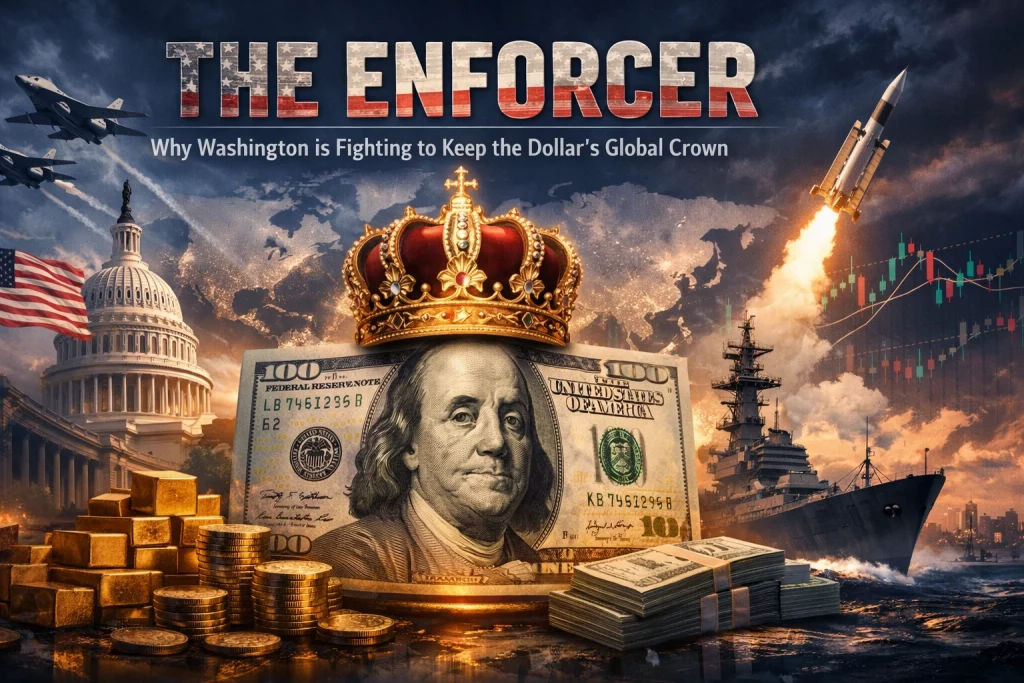
Let's talk about the best magic trick in American economic history, one that's been running for over fifty years and might be coming to an end.
Here's the trick: We print green paper with dead presidents on it, hand it to other countries, and they give us cars, electronics, oil, and cheap stuff to fill our homes. Then, and here's the kicker, when we print too much of that paper and it loses value, the other countries feel the pain while we keep our Walmart prices low and our tanks full of gas.
It's the economic equivalent of having a credit card that never comes due. And it only works because the U.S. dollar isn't just a currency, it's the currency. It's the global reserve, the lingua franca of money, the only ticket that gets you into every economic club on the planet.
But lately, some countries are trying to cancel their membership. And Washington is not happy about it.
The Secret Sauce: Dollar Hegemony for Dummies
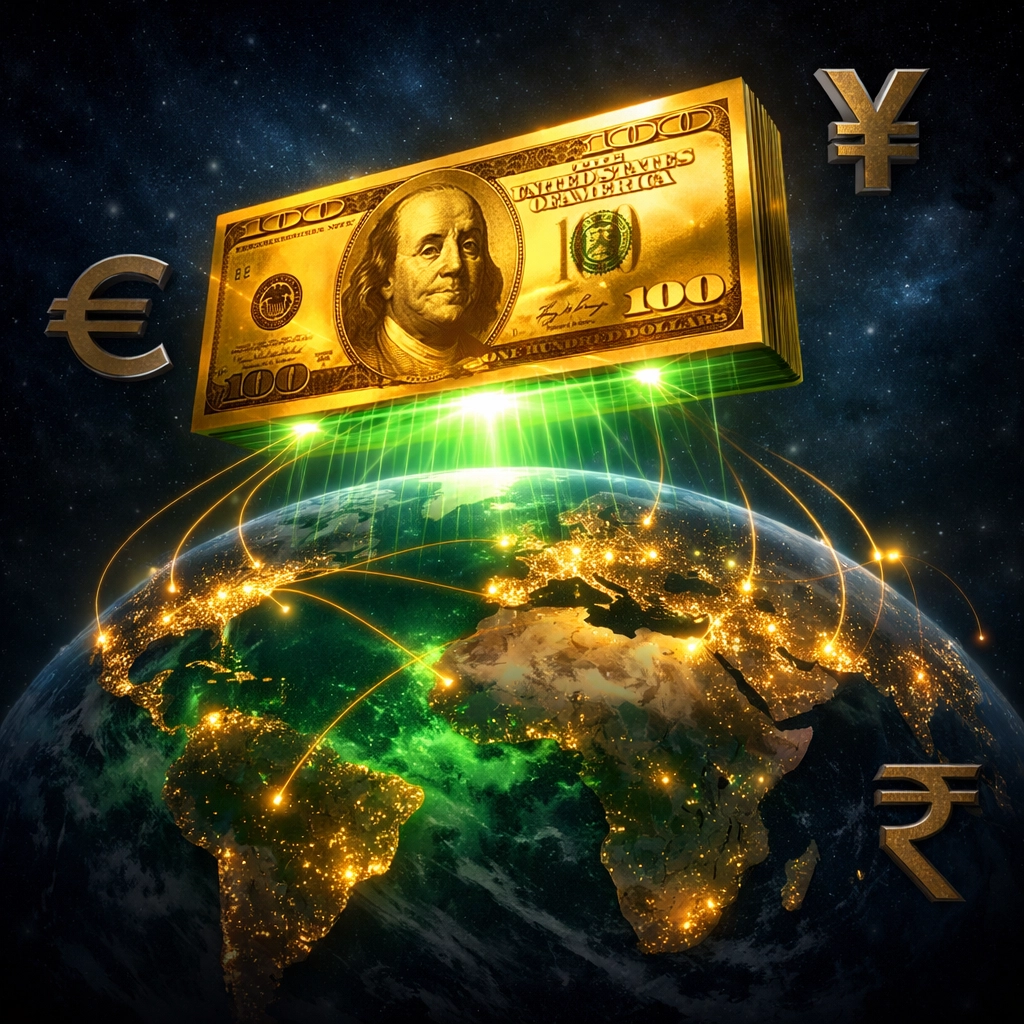
Back in 1944, while Europe was still digging itself out of rubble, the United States basically convinced the world to make the dollar the foundation of international trade. By 1971, Nixon took us off the gold standard entirely, but the dollar stayed on top because of one critical deal: oil.
Saudi Arabia and other major oil producers agreed to sell their black gold exclusively in U.S. dollars. This created the "petrodollar system." If you wanted oil, and everyone needs oil, you needed dollars first. Suddenly every country on Earth had to keep a big pile of U.S. currency in their vaults just to keep their economies running.
This arrangement is absurdly beneficial to Americans. Here's why:
When the Federal Reserve prints money (which it does, a lot), that new cash flows into the global economy. Other countries hold those dollars to buy oil and other commodities. Essentially, we export our inflation. We get to buy real goods, German cars, Chinese electronics, Colombian coffee, with paper we print ourselves, and the inflation pressure gets distributed across the entire planet instead of just hitting us.
It's like having a get-out-of-jail-free card for economic policy. Run up massive debts? Print money to service them. Need to stimulate the economy? Print more. The inflation that should crush us gets absorbed by every country holding our currency.
The numbers are staggering: As of late 2025, the U.S. dollar still accounts for 88% of foreign exchange transactions and over 50% of global payments. Even after recent declines, it makes up 56% of global reserve holdings. No other currency comes close.
This is why Americans enjoy cheap goods, why our interest rates stay relatively low despite insane debt levels, and why we can run trade deficits year after year without our economy collapsing. The rest of the world subsidizes our standard of living by holding and using our currency.
It's a hell of a deal, if you can keep it.
The Rebels Are Getting Restless
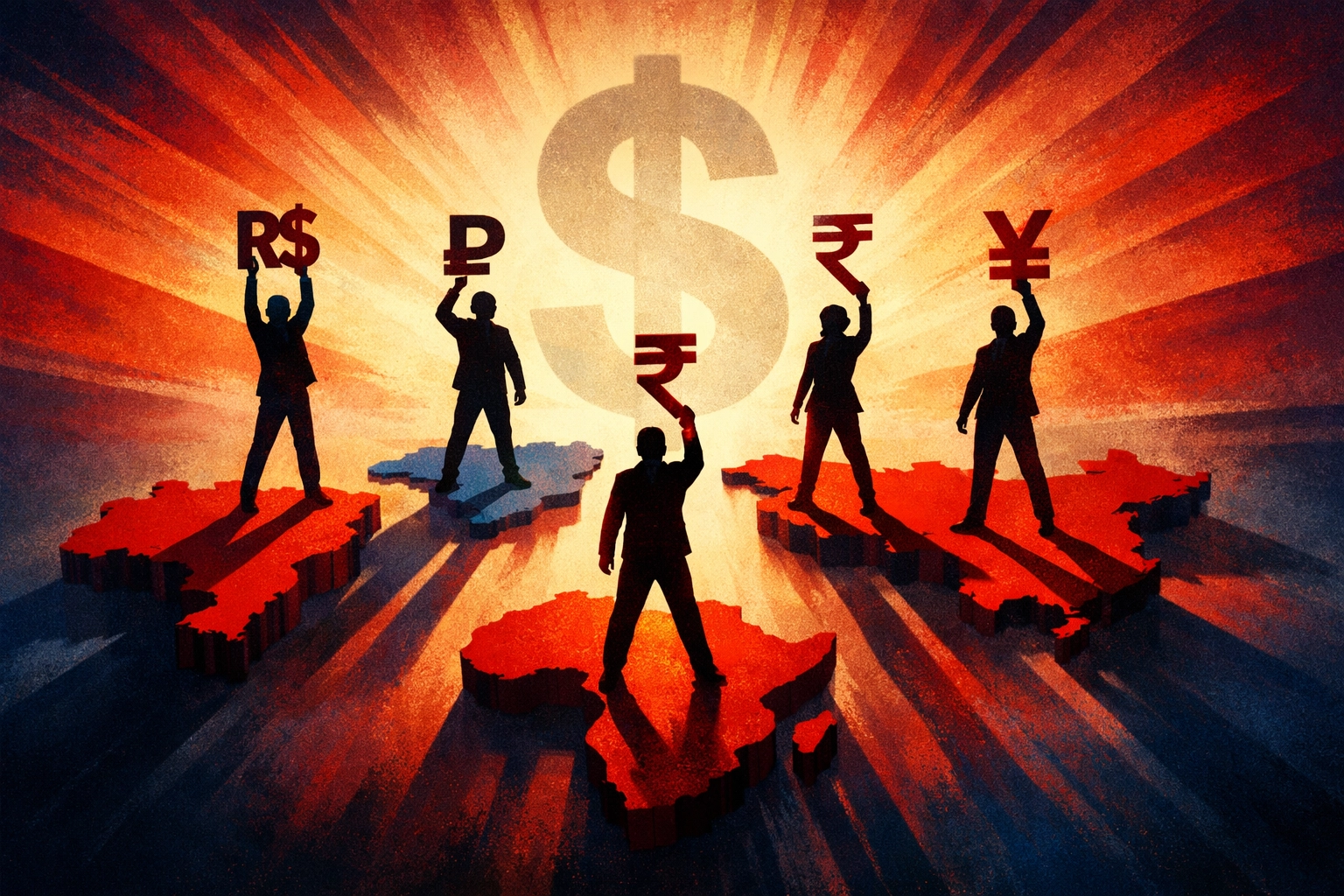
But here's the problem: some countries are getting tired of playing by our rules.
The BRICS nations, Brazil, Russia, India, China, and South Africa, plus a growing list of wannabe members, are actively working to dethrone the dollar. They're not doing it out of spite (well, maybe a little spite). They're doing it because they're tired of getting hit with U.S. sanctions, tired of their trade being monitored by Washington, and tired of absorbing American inflation every time the Fed fires up the money printer.
China and Russia have been trading oil and gas in yuan and rubles for years now. India is buying Russian oil in rupees. Saudi Arabia, our oldest and most critical petrodollar partner, announced in 2023 that it's open to selling oil in other currencies. That's not just a crack in the foundation; that's a wrecking ball taking a swing at it.
Then there's mBridge, a new cross-border payment system developed by China, Thailand, the UAE, and others that lets countries trade without touching the dollar at all. It's basically SWIFT without American oversight. Early tests moved $22 million in transactions, and more countries are expressing interest.
Even Brazil and China, two of the world's largest economies, have started settling trade directly in their own currencies, bypassing the dollar entirely for billions in transactions.
The message is clear: the rest of the world is building an exit ramp from the dollar highway.
Enter the Enforcer
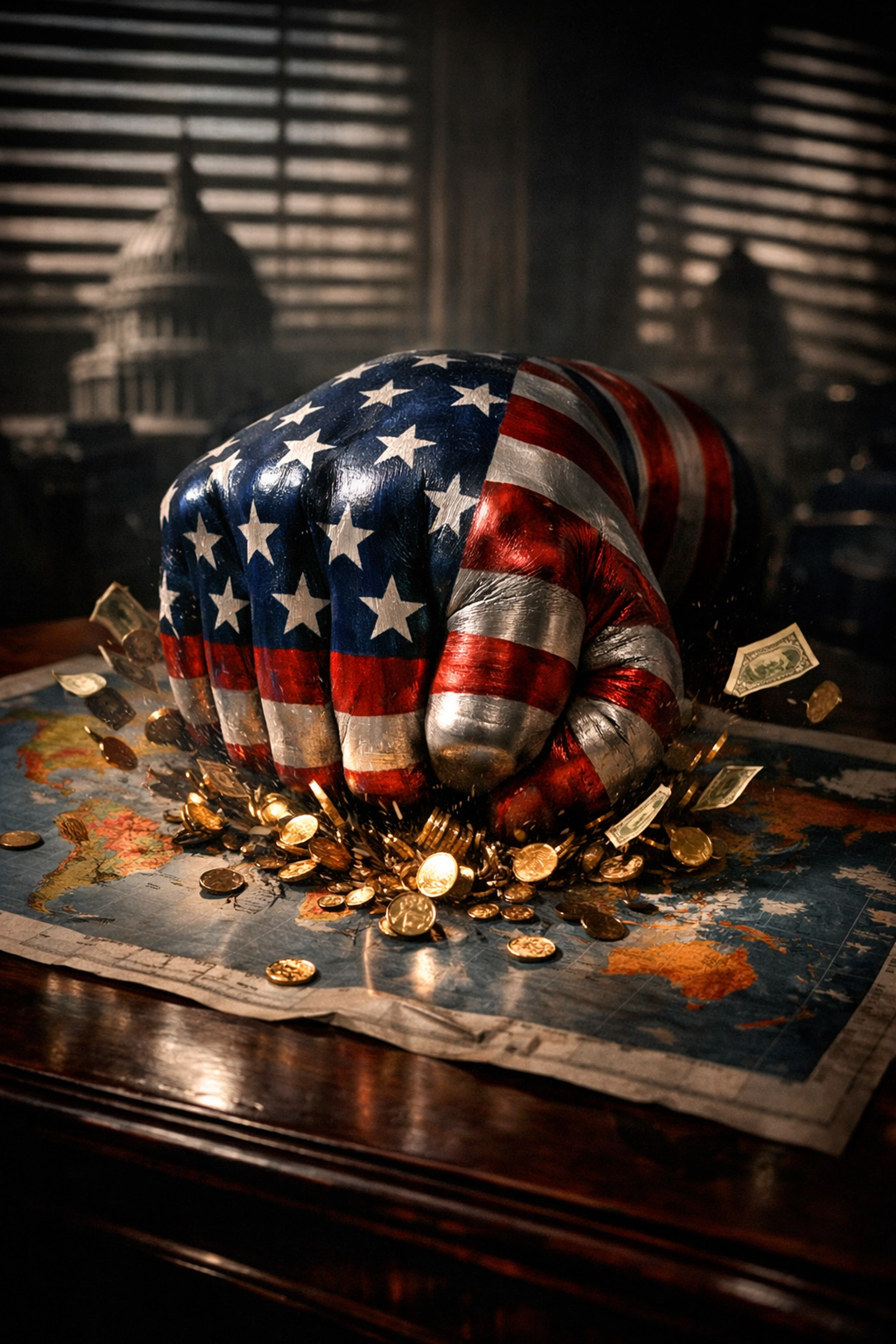
Washington is not sitting idly by while countries plot their dollar escape.
U.S. foreign policy has quietly but decisively shifted toward protecting dollar dominance, and the tools aren't subtle: sanctions, tariffs, diplomatic pressure, and in some cases, military posturing.
Look at the pattern:
Libya's Muammar Gaddafi proposed a gold-backed African currency to replace the dollar for oil trades in Africa. Shortly after, NATO intervened in Libya's civil war, Gaddafi ended up dead in a ditch, and the gold-dinar idea died with him.
Iraq's Saddam Hussein announced in 2000 that Iraq would sell oil in euros instead of dollars. By 2003, the U.S. was invading. One of the first acts of the new Iraqi government? Switching oil sales back to dollars.
Venezuela tried to sell oil in yuan and euros. Suddenly, U.S. sanctions intensified, cutting them off from global financial markets.
Coincidence? Maybe. But it's a hell of a pattern.
In the current landscape, the threats are more economic than kinetic. The Trump administration and subsequent U.S. leadership have used tariffs as a weapon against countries that stray too far from dollar dependence. Sanctions have become America's go-to tool for punishing nations that try to build alternative payment systems.
Just this year, there's been talk of sanctioning countries participating in mBridge or other dollar-bypass schemes. The message is unmistakable: if you want access to U.S. markets, to Wall Street, to the dollar-based financial system, you play by our rules.
It's economic warfare, plain and simple. And the stakes couldn't be higher.
What This Means for You (Yes, You)
Here's where this stops being a geopolitical chess game and becomes a grocery store problem.
If the dollar loses its reserve currency status: or even just loses significant ground: all that inflation we've been exporting? It comes home.
Imagine this scenario:
Countries dump their dollar reserves. Demand for dollars drops. The currency weakens. Suddenly, everything we import: which is almost everything: gets more expensive. Gas prices double. Your grocery bill explodes. That cheap TV from China now costs twice as much.
The "cheap stuff" era that Americans have enjoyed for decades ends overnight.
And it's not just consumer goods. U.S. Treasury bonds are priced in dollars. If global demand for dollars drops, demand for our bonds drops too. That means the government has to offer higher interest rates to attract buyers. Higher rates mean more expensive debt service, which means either higher taxes or cuts to programs, or: more likely: more money printing, which creates more inflation.
It's a doom loop.
The deep, liquid U.S. capital markets that have supported dollar dominance are built on confidence. If that confidence cracks, the whole structure wobbles. And unlike past currency crises in smaller countries, there's no bailout big enough to save the dollar. We are the bailout.
Right now, we're still the world's reserve currency because there's no clear alternative: not yet. The euro is solid but tied to too many weak economies. The yuan is growing but lacks the transparency and rule of law that inspires confidence. But that doesn't mean the dollar's position is safe forever.
Every percentage point of reserve status we lose is a percentage point of our economic privilege evaporating.
The Club Nobody Wants to Leave (Until They Do)
Think of dollar hegemony like an exclusive club membership. For decades, everyone wanted in. The benefits were obvious: stability, access to global markets, the ability to trade with everyone.
But the membership fees kept going up. U.S. sanctions became more frequent and more punishing. American foreign policy became more unpredictable. And the club's management: Washington: started looking less like benevolent administrators and more like bouncers shaking down members at the door.
Now countries are whispering about starting their own club across the street. The new club doesn't have all the amenities yet, but it's getting better. And more importantly, it doesn't come with a side of American foreign policy baggage.
Washington sees this and is doing everything it can to keep members from walking. Some of it is diplomatic: strengthening alliances, offering trade deals. But increasingly, it's coercive. Leave the dollar behind, and you might find yourself sanctioned, isolated, or staring down the barrel of American economic warfare.
The problem is that coercion only works for so long. Eventually, the cost of staying in the club exceeds the cost of leaving. And when that happens: when enough countries decide the dollar isn't worth the hassle: the whole system unravels fast.
We're not there yet. But we're closer than most Americans realize.
The enforcer is working overtime to protect the dollar's crown, because once it's gone, it's not coming back. And neither is the magic trick that's kept our standard of living artificially high for half a century.
Be mindful, be watchful and good luck.