



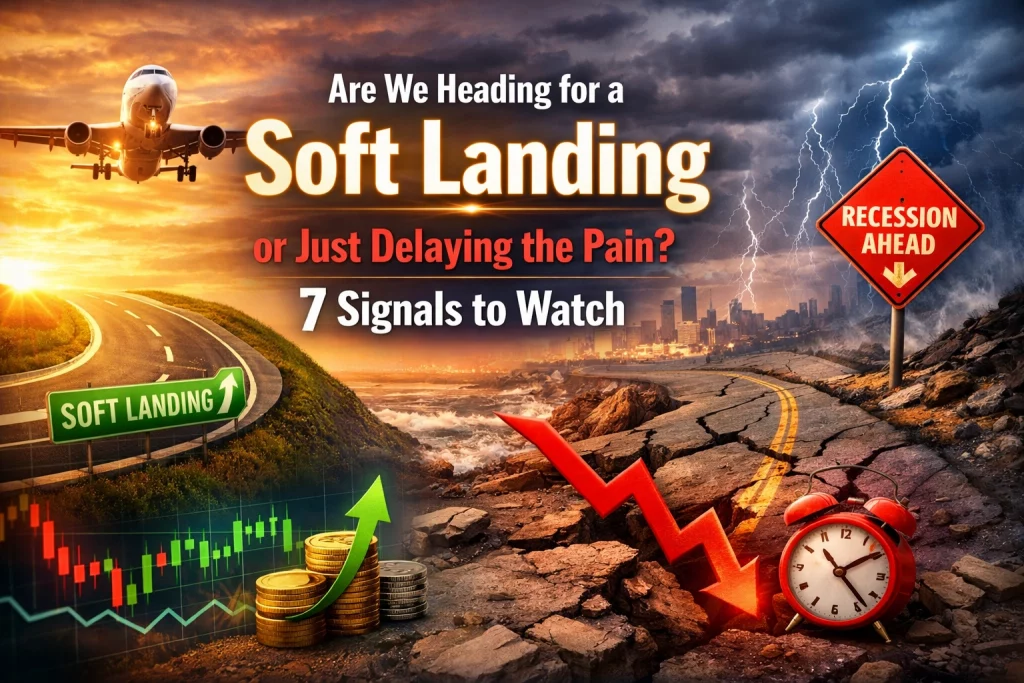
The Federal Reserve keeps telling us we're headed for a "soft landing." That's economics-speak for "we're going to slow down the economy just enough to kill inflation without crashing into a recession." It's like threading a needle while riding a rollercoaster, technically possible, but you wouldn't want to bet your retirement account on it.
Here's the thing: economists have predicted nine of the last five recessions. They're really good at explaining what happened yesterday and spectacularly terrible at predicting what happens tomorrow. So instead of listening to the suits on CNBC debate whether we're landing on a pillow or a pile of bricks, let's talk about the signals you can actually watch in your own life.
These aren't complex economic indicators that require a PhD to understand. These are the things happening right in front of you, at the grocery store, in your neighborhood, and in your own wallet. If you know what to look for, you can see the economic weather changing before the storm hits.
Signal #1: Your Neighbor's Credit Card Situation
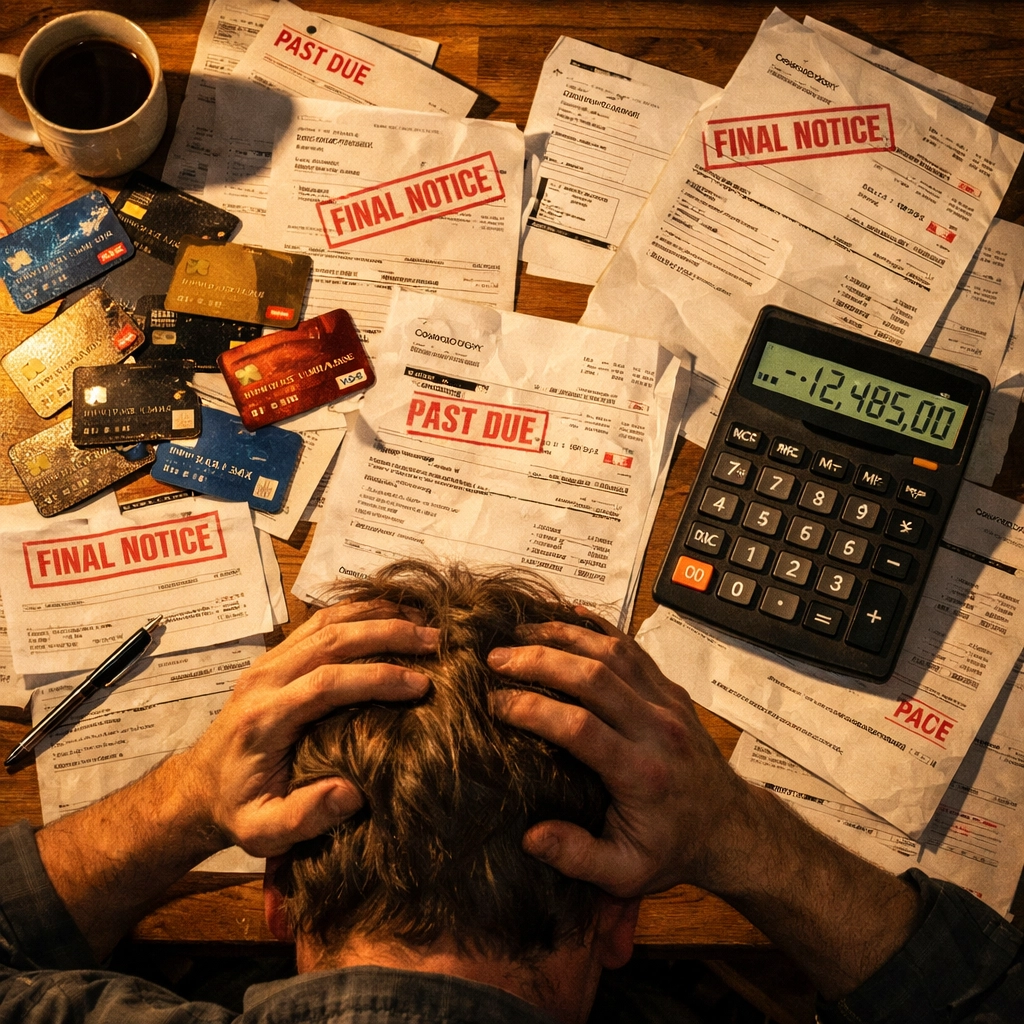
You don't need to ask your neighbor about their finances (please don't), but credit card default rates tell us everything we need to know about whether people are keeping their heads above water. When defaults start climbing, it means regular folks are running out of rope.
Right now, credit card debt is at record highs, and the average interest rate is hovering around 20%. That's loan-shark territory. If people start missing payments in bigger numbers, that's your canary in the coal mine. Banks will tighten lending, businesses will see less spending, and the dominoes start falling.
What to watch: News stories about rising credit card delinquencies. If you start seeing headlines about it, the soft landing is getting bumpier.
Signal #2: The "Help Wanted" Sign Count
Take a drive through your town and count the "Help Wanted" signs. Seriously. Are they everywhere, or are they disappearing? A healthy labor market means businesses are still hiring and people are still spending. When those signs start coming down, it means businesses are circling the wagons.
The Fed wants the job market to cool down just enough to stop wage inflation from spiraling, but not so much that unemployment shoots up. It's like trying to cook a steak to exactly medium-rare, easy to talk about, hard to execute.
What to watch: Job postings in your local area. If businesses that were desperate for workers six months ago suddenly aren't hiring, that's a red flag.
Signal #3: Gas Prices (Yes, Still)
Everyone's tired of talking about gas prices, but they matter. Not because filling your tank is fun (it's not), but because fuel costs ripple through everything. When gas is expensive, trucking is expensive. When trucking is expensive, everything that gets trucked (which is everything) gets expensive.
The Fed has been raising interest rates to cool inflation, and now they're starting to ease off. If gas prices start climbing again despite the Fed's efforts, it means inflation isn't as tamed as they think. If prices keep falling, maybe we really are landing this plane.
What to watch: The trend, not the daily price. Is gas consistently cheaper than it was three months ago? Six months ago? That's the direction that matters.
Signal #4: Your Landlord's Mood (Or Your Neighbor's For Sale Sign)
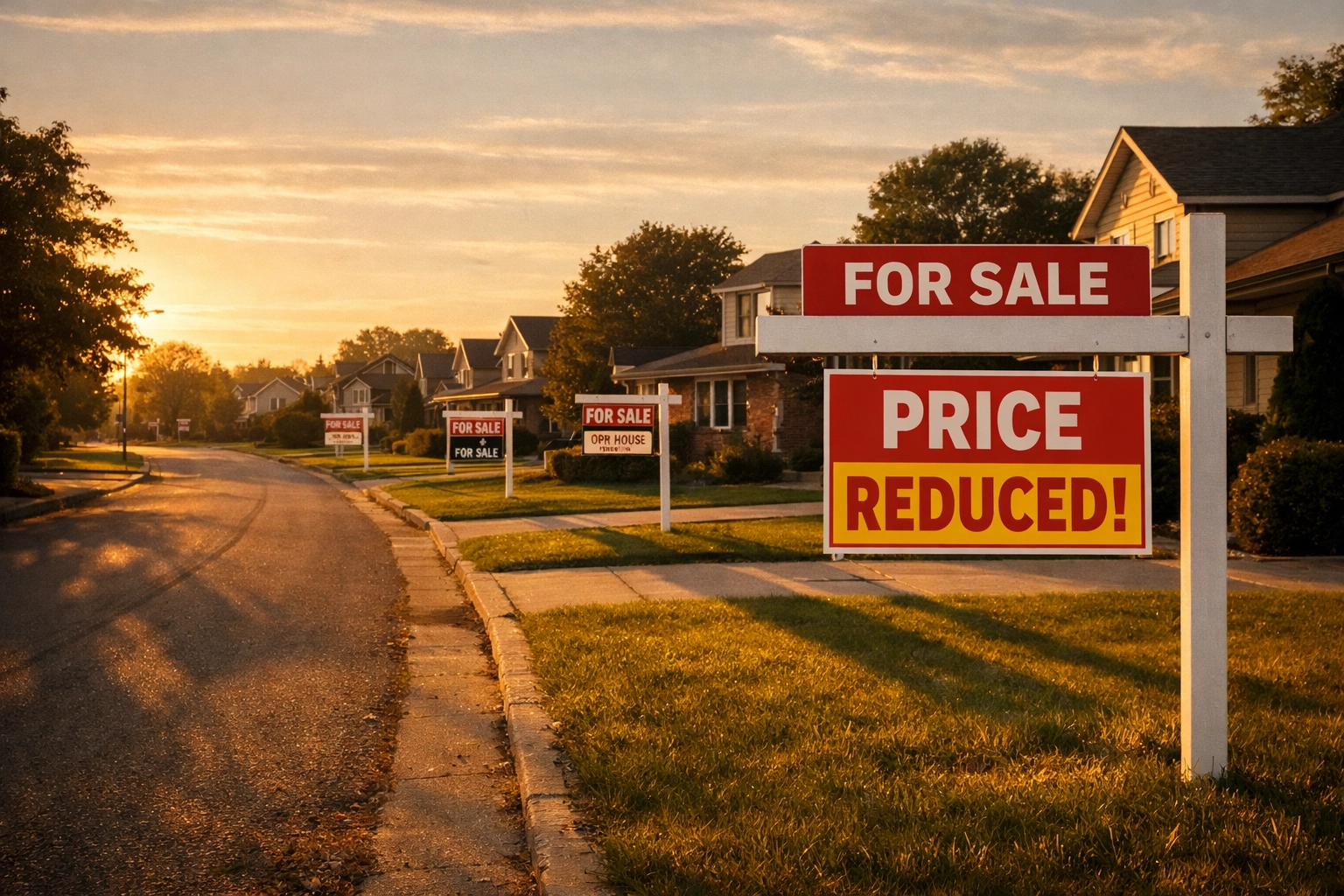
Housing is where economics gets personal. If you're a renter, you know exactly how much your landlord raised the rent this year. If you're a homeowner, you know what comparable houses in your neighborhood are selling for. Housing is also the single biggest expense for most Americans, so when it moves, everything else shakes.
Here's the soft landing dilemma: home prices are still elevated, mortgage rates are still high, and affordability is terrible. For a true soft landing, we'd need to see home prices stabilize (not crash) while wages slowly catch up. If prices start falling hard, that's not a soft landing: that's 2008 knocking on the door again.
What to watch: Are houses in your neighborhood sitting on the market longer? Are prices starting to drop, or are they stubbornly high? Both extremes are bad news.
Signal #5: The Small Business Death Watch
Big corporations can weather a storm. They have cash reserves, credit lines, and entire departments dedicated to "risk management." Small businesses? They live month-to-month. When the economy gets shaky, the local pizza shop closes before JPMorgan Chase blinks.
Pay attention to the businesses around you. Are new ones opening? Are old standbys shuttering? Small business closures are the early warning system for a recession. If Main Street is dying, Wall Street's optimism doesn't mean much.
What to watch: Empty storefronts in your town. If spaces that used to be thriving businesses are now "For Lease" signs, the economy is cooling faster than the Fed wants.
Signal #6: Your 401(k) Roller Coaster
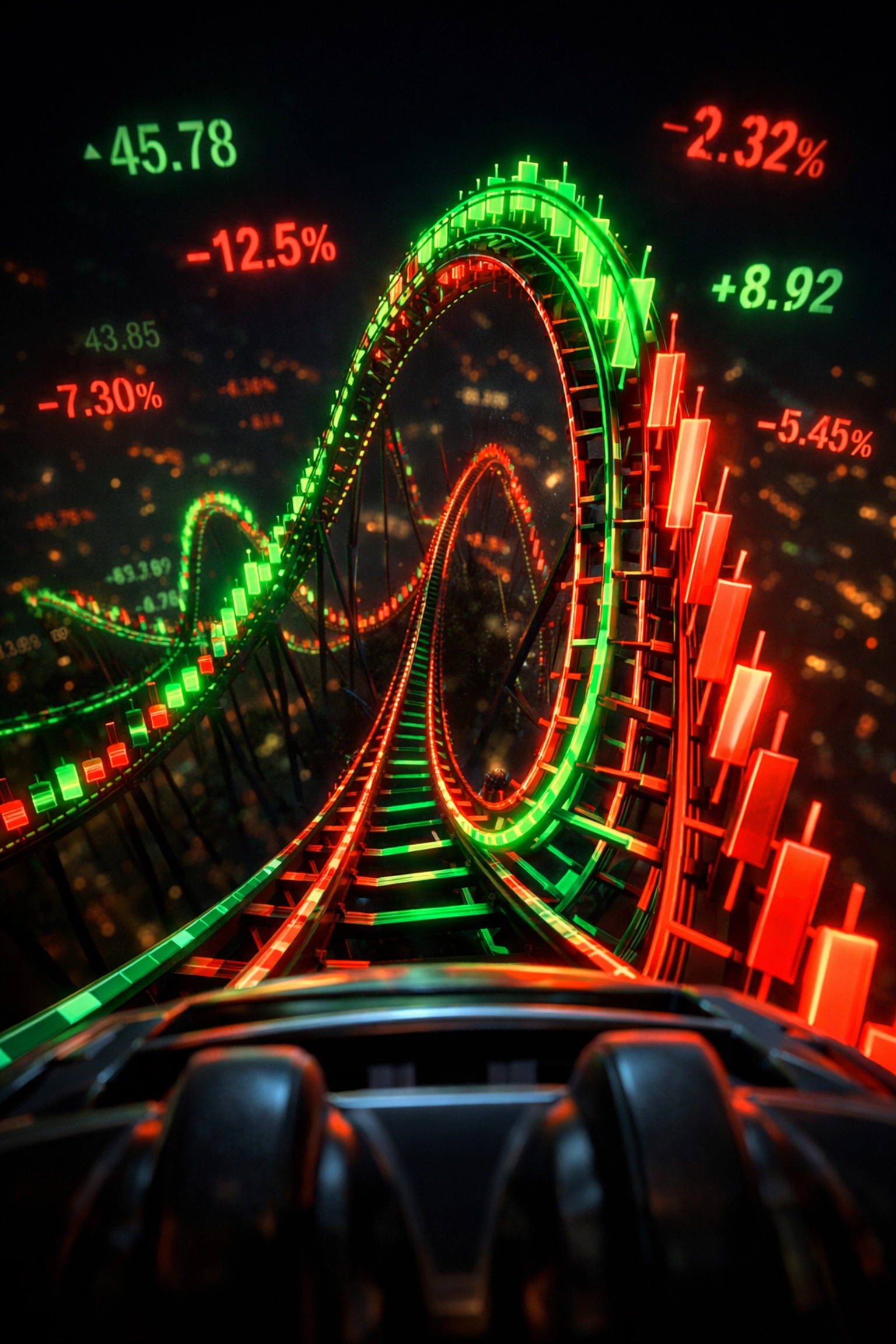
The stock market isn't the economy, but it's a pretty good mood ring for how investors feel about the future. Right now, stock valuations are high: really high. That means there's not much room for error. If corporate earnings disappoint or if the Fed miscalculates, stocks could tumble fast.
A soft landing means stocks stay relatively stable while inflation cools. If we start seeing wild swings: big drops followed by desperate rallies: that's a sign that nobody actually knows what's happening, and the "landing" might be rougher than advertised.
What to watch: Volatility. Are markets calm and steady, or are they whipsawing every other week? Calm markets suggest confidence. Chaotic markets suggest panic barely held in check.
Signal #7: What's Actually in Your Grocery Cart
This is the most personal signal of all. Are you buying the same things you bought a year ago, or are you trading down? Are you buying name-brand cereal or the store brand? Are you splurging on the good coffee or making do with the cheap stuff?
Consumer spending drives about 70% of the U.S. economy. If people keep spending, the economy hums along. If people start pinching pennies and trading down, businesses notice, earnings fall, and the soft landing turns into a hard stop.
What to watch: Your own behavior: and your friends'. When everyone starts talking about cutting back, clipping coupons, or skipping dinners out, the economy is cooling faster than the headlines suggest.
The Bottom Line: Trust Your Eyes, Not the Experts
The Fed's goal is admirable: slow the economy just enough to tame inflation without causing a recession. But the track record for pulling this off is pretty thin. Most of the time, aggressive rate hikes lead to recessions. It's not pessimism: it's history.
So instead of hanging on every word from Jerome Powell, watch the seven signals around you. Your credit card bill, the job market, gas prices, housing, small businesses, your retirement account, and your grocery cart will tell you everything you need to know about whether we're landing smoothly or just delaying the inevitable crash.
The economy is a lot like a long road trip. The experts can tell you the route and show you maps, but you're the one in the driver's seat watching the gas gauge, listening for strange engine noises, and deciding when to pull over. Pay attention to what you can see and control, and you'll navigate whatever's coming a lot better than if you're just hoping the experts got it right this time.
Be mindful, be watchful and good luck.