



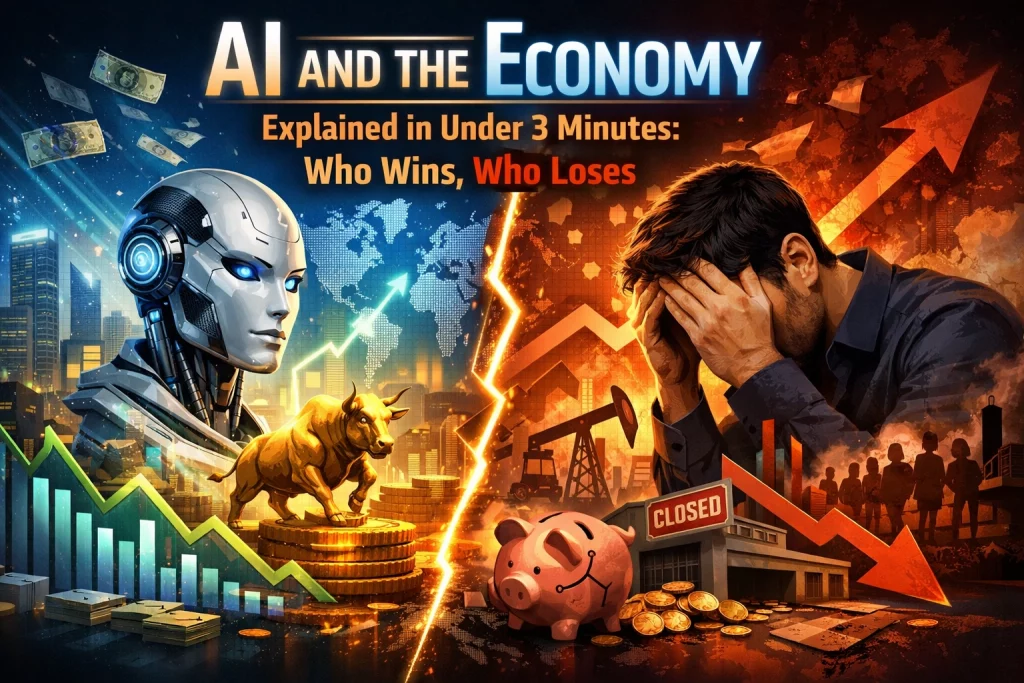
Artificial intelligence isn't coming for the economy. It's already here. And while everyone's arguing about whether robots will take over the world, the real story is more nuanced and honestly more interesting. Some people are going to make out like bandits. Others are going to get squeezed. And the gap between winners and losers is about to get a whole lot wider.
Let's cut through the hype and look at what's actually happening.
The Big Picture: Modest Gains, Not Magic
First, let's talk about what AI will actually do for the economy overall. Economists are projecting GDP increases somewhere between 1.5% and 3.7% by 2055. Goldman Sachs threw out a sexier number: a $7 trillion increase in global GDP over the next decade: but more conservative estimates suggest we're looking at growth closer to 1% to 1.8%.
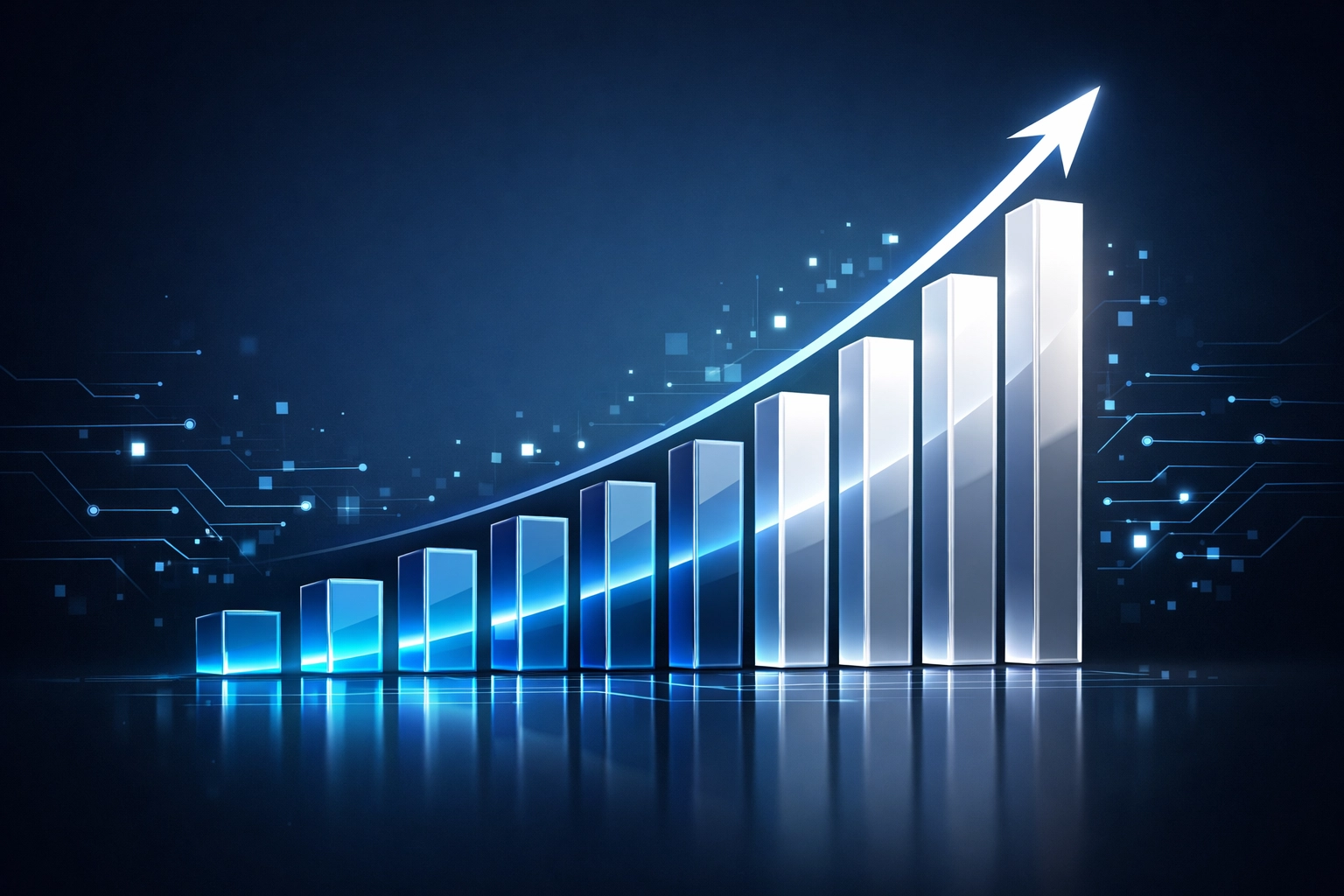
That's not nothing, but it's not the revolutionary transformation some people are selling. The biggest productivity boosts will probably hit in the early 2030s, and then things will level off as AI adoption saturates the market. Think of it like the internet boom: massive initial gains, then a plateau as everyone catches up and the technology becomes standard.
The reality is that AI is a tool, not a miracle worker. It'll make some things faster and cheaper, but it's not going to rewrite the laws of economics.
Who Wins: The People Already Winning
Here's where it gets uncomfortable. The people who benefit most from AI are the same people who've been winning for the past few decades.
High-earning workers are sitting pretty. The wealthiest occupations face the least risk of AI displacement. Why? Because high-level decision-making, strategic thinking, and complex interpersonal work are harder to automate than routine tasks. A CEO isn't getting replaced by ChatGPT anytime soon.
More importantly, high earners who learn to leverage AI tools will see their productivity: and their paychecks: soar. If you're a well-paid consultant who can use AI to do the work of three people, you're golden. You become more valuable, not less.
Tech investors and shareholders are also in the winner's circle. Companies adopting AI will boost their capital returns, which means bigger dividends and stock gains for the people who own shares. Tech companies themselves will obviously benefit, growing faster than the broader economy as AI adoption spreads.
Professional services and software development sectors will experience outsized growth. These are industries where AI amplifies human capabilities rather than replacing them entirely.
The theme here is clear: if you already have money, skills, and access to technology, AI makes you more powerful.
Who Loses: The Middle Gets Squeezed
Now for the harder truth. Middle-income workers are facing the biggest threat from AI, and it's not because they're lazy or unskilled. It's because of where they sit in the economic structure.
Workers around the 80th earnings percentile: think skilled office workers, mid-level managers, certain technical roles: are the most exposed to automation. Roughly half of their work is susceptible to AI. We're talking about jobs that involve predictable tasks, information processing, and routine problem-solving.
About 40% of global employment is exposed to AI in some way. In advanced economies, that exposure rate is even higher. Some of these exposed jobs will evolve and benefit from AI integration. People will learn to work alongside the technology and become more productive.
But others? They're looking at wage cuts or elimination. When AI can do 60% of your job, employers start asking why they need to pay you the same salary. Or whether they need you at all.

Lower-income workers face a weird paradox. In the short term, they're somewhat protected because routine manual labor and low-wage service work are harder to automate. A janitor's job is safer than a data analyst's right now because robots still struggle with the physical and adaptive demands of cleaning.
But this protection won't last forever. As AI gets better and robotics improve, those jobs will eventually be on the chopping block too. Lower-income workers are just later in the automation queue.
The Inequality Problem: It's About to Get Worse
Here's the uncomfortable reality that economists are starting to talk about more openly: AI is going to make inequality worse, not better.
Workers who can harness AI will pull ahead. Those who can't will fall behind. It's that simple and that brutal. If you're adaptable, tech-savvy, and in a position to integrate AI into your work, you're fine. If you're not, you're in trouble.
Younger workers have a natural advantage here. They grew up with technology and can adapt faster. Older workers who are set in their ways and less comfortable with new tools will struggle to transition. That creates a generational divide on top of the income divide.
The productivity gains and capital returns from AI primarily benefit people at the top. If you're a shareholder or a high-earning professional, you capture most of the value. If you're a middle-manager getting replaced by software, you capture none of it.
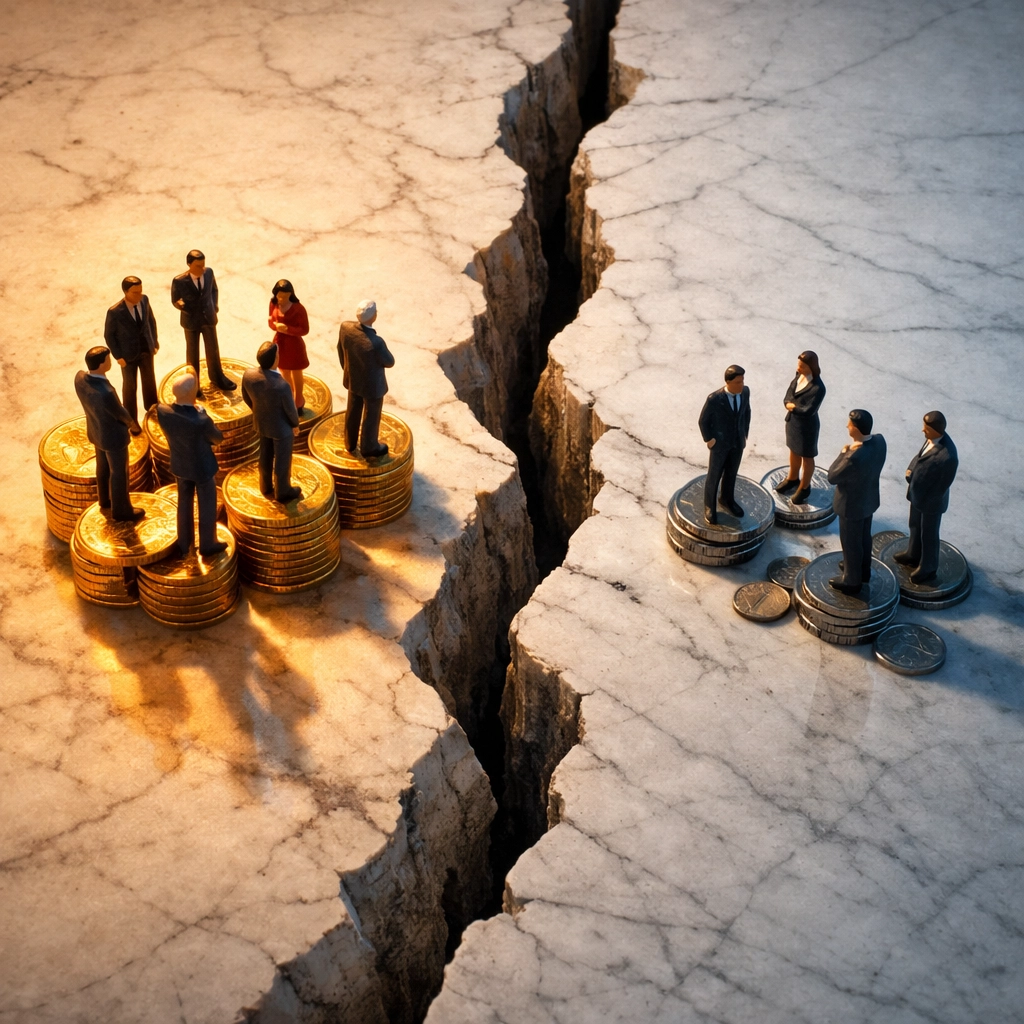
This isn't just about job loss. It's about wages, benefits, bargaining power, and economic security. When capital wins and labor loses, wealth concentrates at the top. We've been living through this trend for decades, and AI is about to hit the accelerator.
What This Actually Means
Strip away the economics jargon and here's what we're looking at: AI is creating a two-tier economy. The people who own the technology and the people who can use it effectively will thrive. Everyone else will fight for scraps.
This isn't inevitable doom. Policy matters. Education matters. How companies choose to implement AI matters. But right now, we're headed toward a future where the benefits of AI flow overwhelmingly to people who are already comfortable while everyone else scrambles to adapt or gets left behind.
The three-minute version? AI will grow the economy modestly, make rich people richer, squeeze the middle class hard, and widen the gap between winners and losers. It's not a sci-fi apocalypse. It's just capitalism doing what capitalism does, but faster and more efficiently than ever before.
Be mindful, be watchful and good luck.